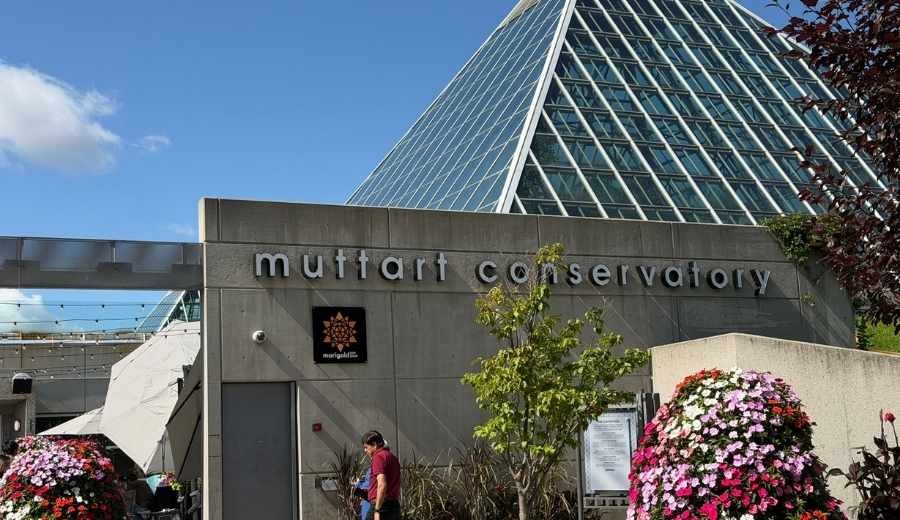
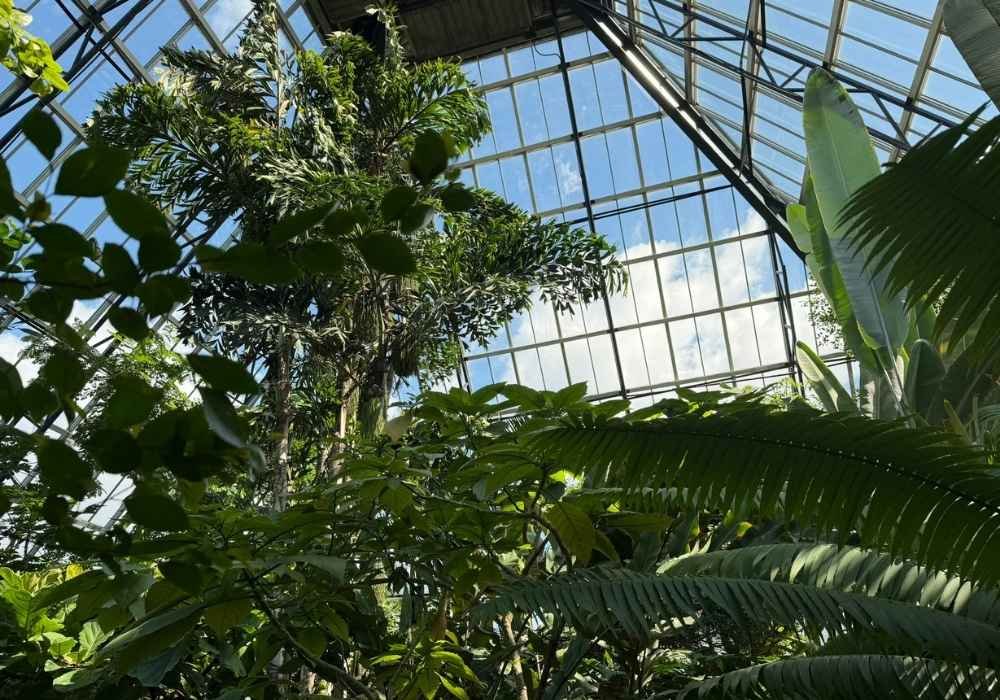
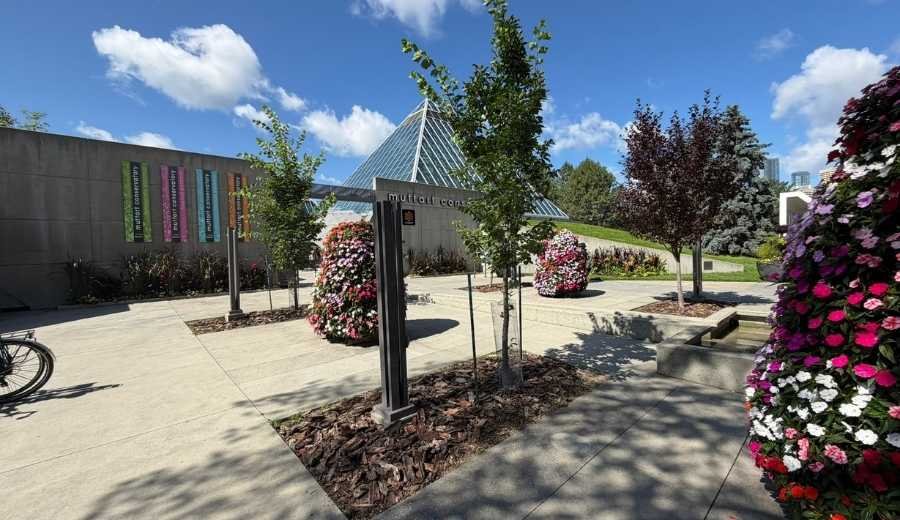
Ask an Edmontonian to name the buildings that define their city, and the four glass pyramids in the river valley come up almost every time. The Muttart Conservatory has been part of Edmonton's skyline for decades, and it remains one of the city's most rewarding places to spend a couple of hours.
Even after living in Edmonton for years, walking into the Muttart Conservatory still feels like stepping into something new. You step out of a prairie winter or a windy spring day, and within a few minutes you are standing under palm leaves in air so warm and humid that it can fog your glasses.
That contrast is the whole magic of the place. It is one of the best indoor attractions Edmonton has, and it earns a spot on any Edmonton itinerary, summer or winter.
This guide covers what each pyramid is like, how to get there, tickets, accessibility, photography, food nearby, and the practical tips that make a visit go smoothly.
About this guide: During my visit to Muttart Conservatory, I spent about two hours exploring all four pyramids without feeling rushed. Every photo in this guide was taken during my visit. What follows combines that first-hand experience with practical advice to help you plan your own trip.
Quick Facts
Location: 9626 96A Street, Edmonton, in the North Saskatchewan River Valley
The 4 glass pyramids: Tropical, Temperate, Arid, and a rotating Feature pyramid
Open every day of the year except December 25
On-site parking: On-site.
Typical visit: 1 to 2 hours
What is Muttart Conservatory?
The Muttart Conservatory is Edmonton's botanical garden, housed inside four glass pyramids on the south bank of the North Saskatchewan River.
Three pyramids each recreate a different climate zone, and the fourth changes its entire display several times a year. Together they hold hundreds of plant species, cared for year-round by City of Edmonton horticulture staff.
History
The Muttart Conservatory opened in 1976 and was named after the Muttart Foundation, which helped fund its construction. After a major renovation between 2018 and 2021, it reopened with improved accessibility, a new restaurant, and refreshed displays while preserving its four iconic glass pyramids. Today, it's one of Edmonton's best-known landmarks, with generations of locals returning for everything from family outings to wedding and graduation photos.
Architecture
Designed by renowned Edmonton architect Peter Hemingway, the conservatory features four separate glass pyramids, each with its own climate-controlled environment. This innovative design allows visitors to experience tropical, temperate, arid, and seasonal displays in one visit, while the illuminated pyramids have become one of Edmonton's most recognizable sights, especially after dark.
The four glass pyramids
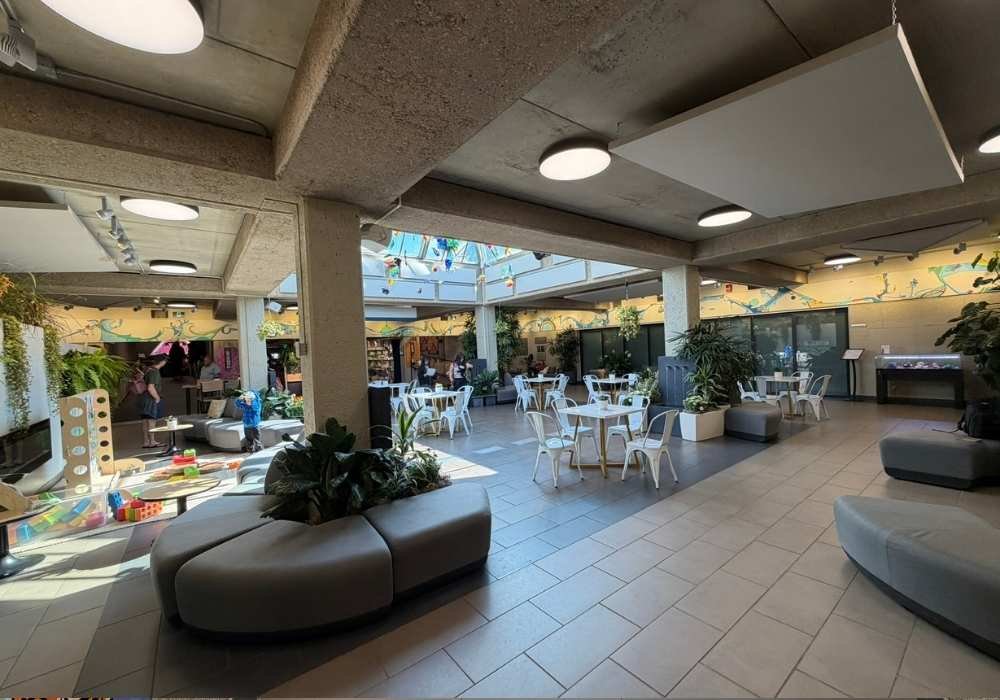
Two large pyramids and two smaller ones sit around a central indoor courtyard, with a fifth, much smaller pyramid above it as a skylight. Each display pyramid has its own temperature, humidity, and lighting, so walking between them feels like crossing continents in ten steps.
Why it's unique in Canada
Plenty of Canadian cities have conservatories. None look like this. The pyramid architecture, the river valley setting, and the rotating Feature pyramid make the Muttart one of a kind, and it is one of the few botanical attractions in Canada that is genuinely better in winter, when the contrast with the cold outside is strongest.
Where is Muttart Conservatory?
The Muttart sits at 9626 96A Street, directly across the river from downtown Edmonton, in Cloverdale, a quiet river valley neighbourhood beside Gallagher Park, home of the Edmonton Folk Music Festival every August.
Driving
From downtown, it is about a five-minute drive across the river; from West Edmonton Mall or the south side, plan for 15 to 25 minutes. Once you are in the river valley, the pyramids are impossible to miss.
Transit
The Valley Line LRT has its own Muttart stop, a short walk from the entrance, and two bus stops serve the area. If you are staying downtown without a car, the LRT is the simplest option.
Parking
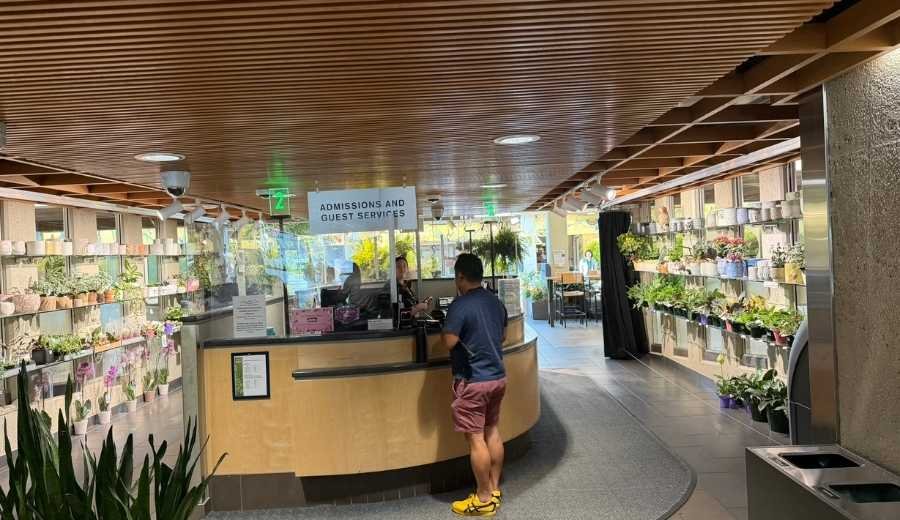
Parking is available on site, and the lot is conveniently located right beside the conservatory. During my visit, visitors were required to register their vehicle's licence plate inside the building to receive complimentary parking, so don't forget to do this before you start exploring.
The lot can fill up on weekend afternoons and during popular Feature Pyramid shows, so arriving earlier in the day is a good idea.
Walking and cycling
The Muttart connects directly to Edmonton's river valley trail system. In summer, walking or biking from downtown across the Low Level Bridge is a genuinely nice trip. For directions, search "Muttart Conservatory" on Google Maps.
Getting There
Details
Address
9626 96A Street, Edmonton, AB
Neighbourhood
Cloverdale, in the river valley
Driving from downtown
About 5 minutes
LRT
Valley Line, Muttart stop
Parking
On-site parking is available
Walking
Connected to river valley trails
The Four Pyramids
The pyramids are the reason you come. Here is what to expect in each one.
Tropical Pyramid
Click on an image to expand.
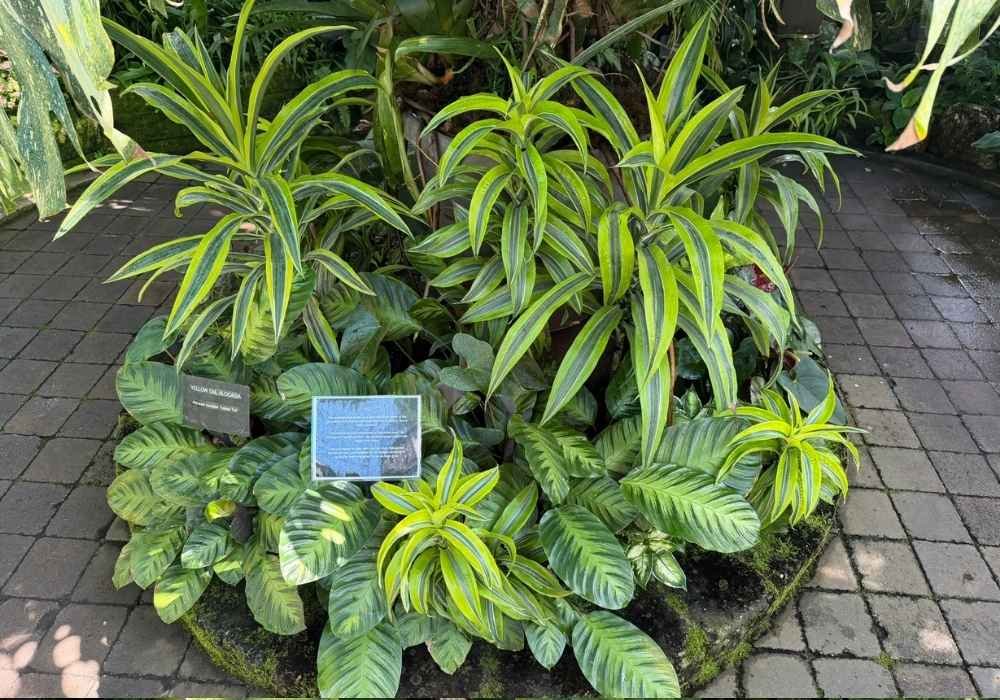
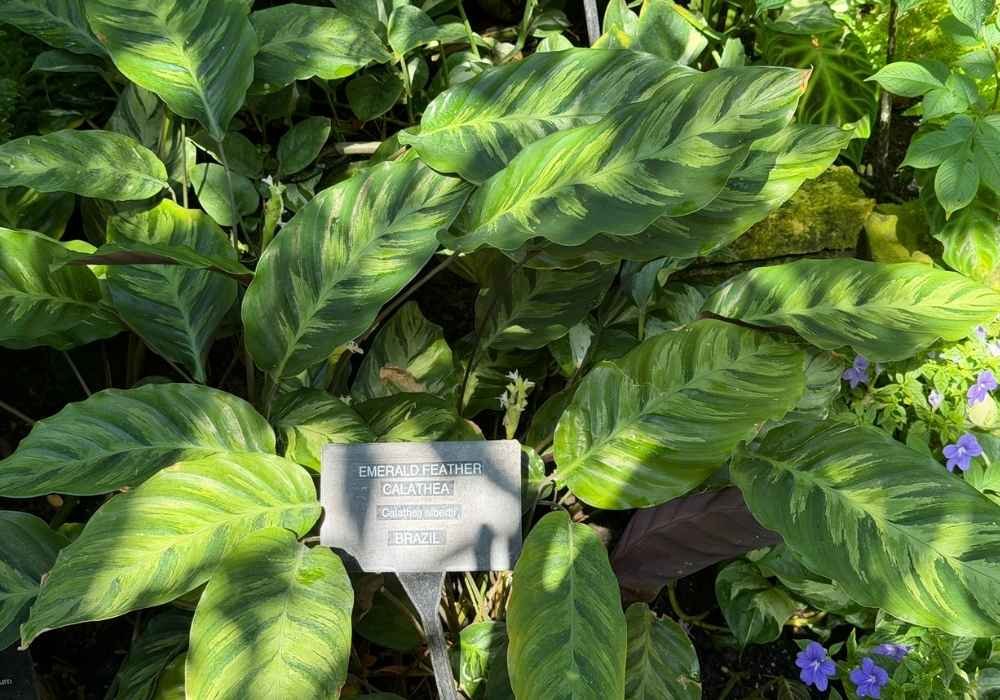
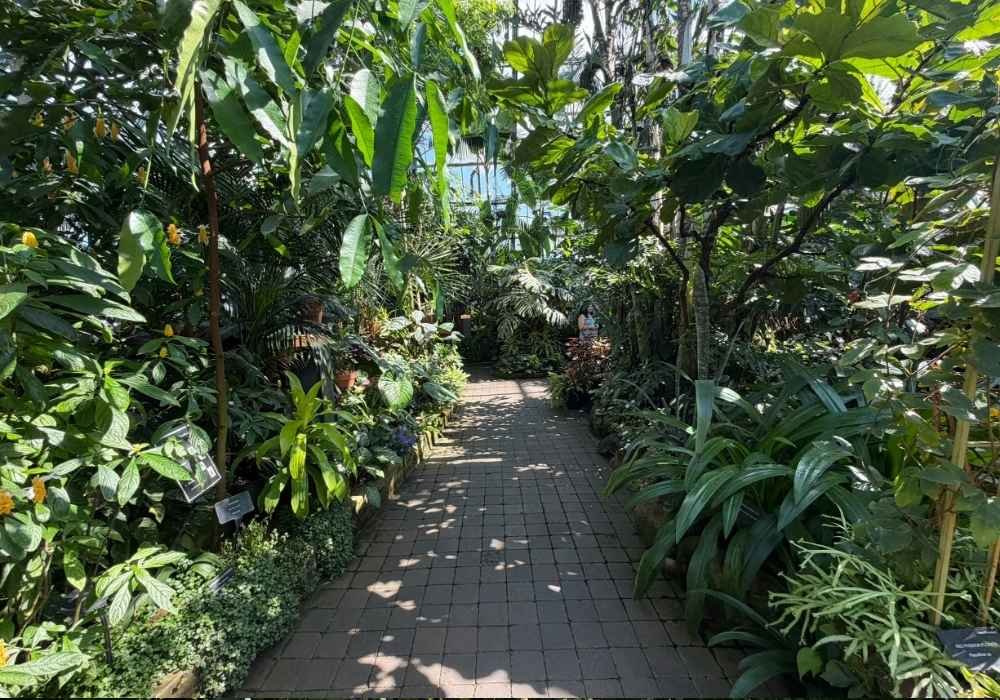
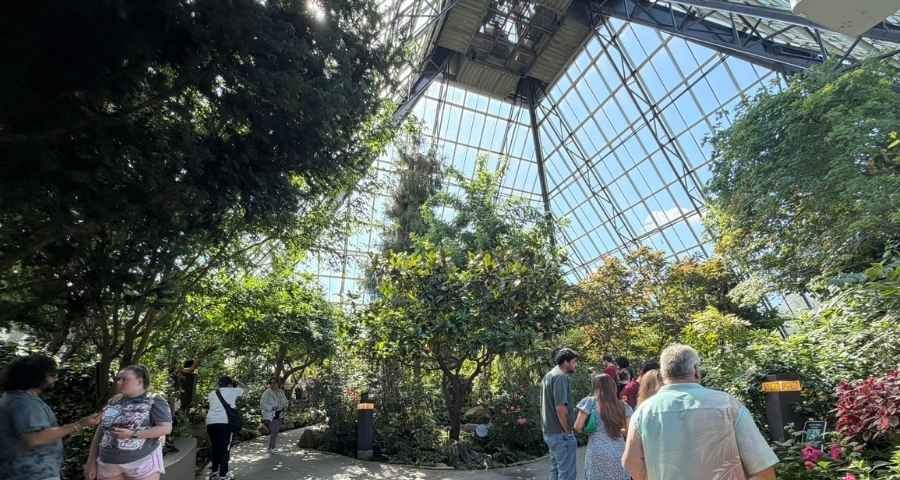
This is the big one, and it was my favourite. Walking in felt like stepping into another country: warm, heavy, humid air, winding paths, and greenery thick enough to make you forget you are still in Edmonton. It smells green in there, like soil and leaves and growing things, and it fogs camera lenses and glasses instantly.
Inside are palms, banana plants, orchids, and plants you normally only see in produce aisles, including a papaya tree that sometimes carries real fruit. A waterfall anchors the space, and the sound of moving water follows you around the path.
The tropical pyramid is at its best in January and February. Standing in jungle humidity while snow slides down the glass above you is a strange and wonderful experience, and the single best argument for visiting in winter.
Photography here is rewarding but tricky: give your lens a few minutes to warm up, or everything will be fog. Who will enjoy it: everyone, especially anyone stuck in an Edmonton winter.
Temperate Pyramid
Click on an image to expand.
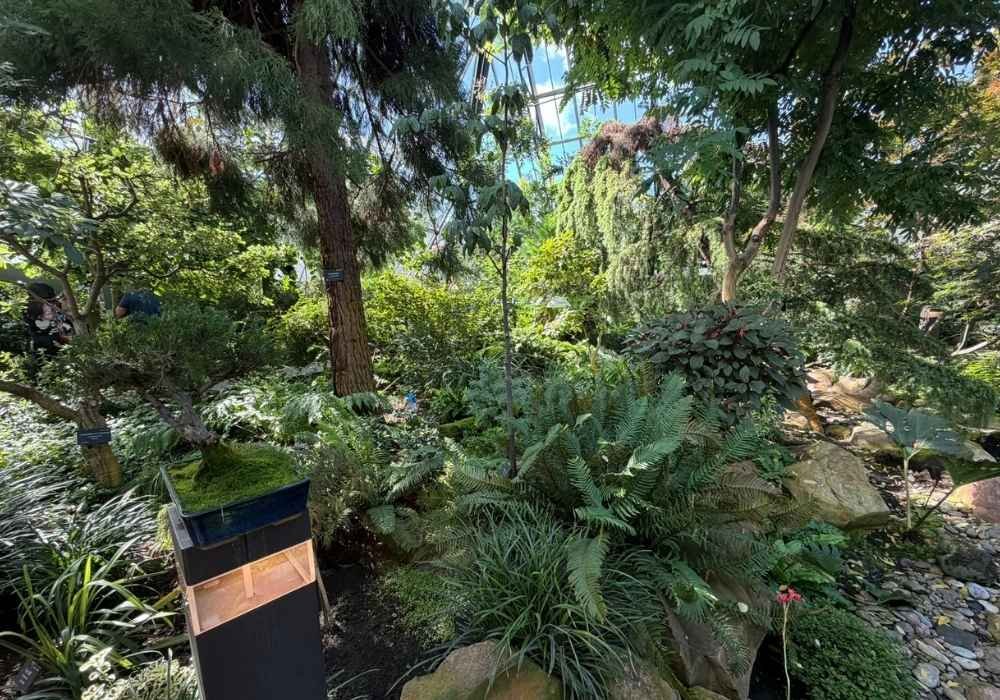
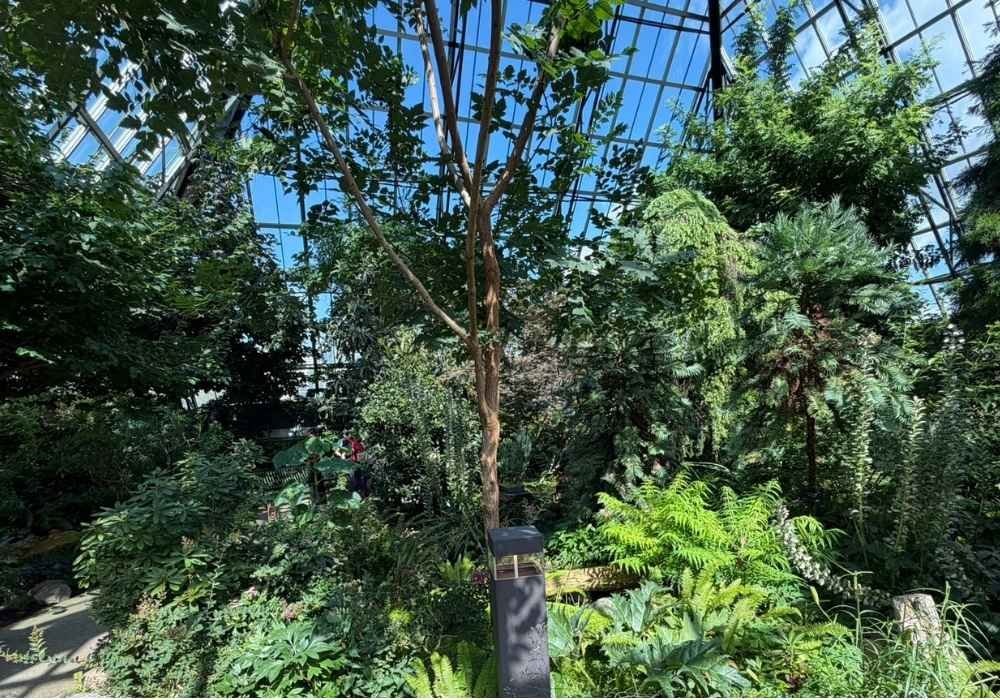
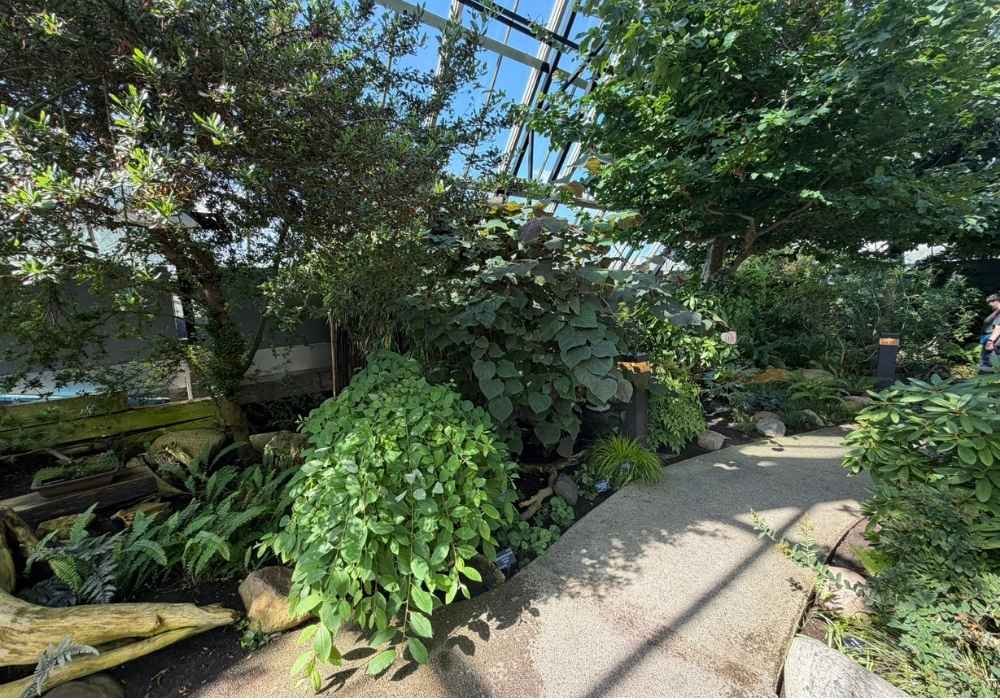
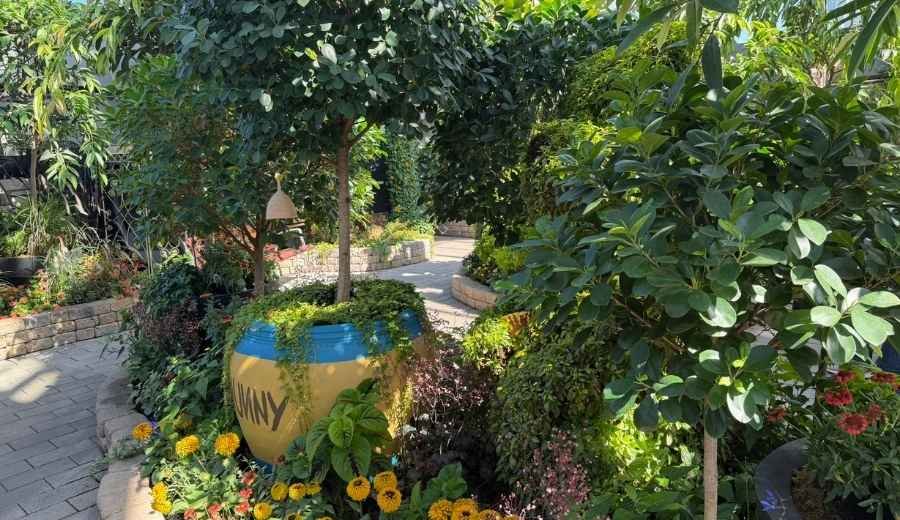
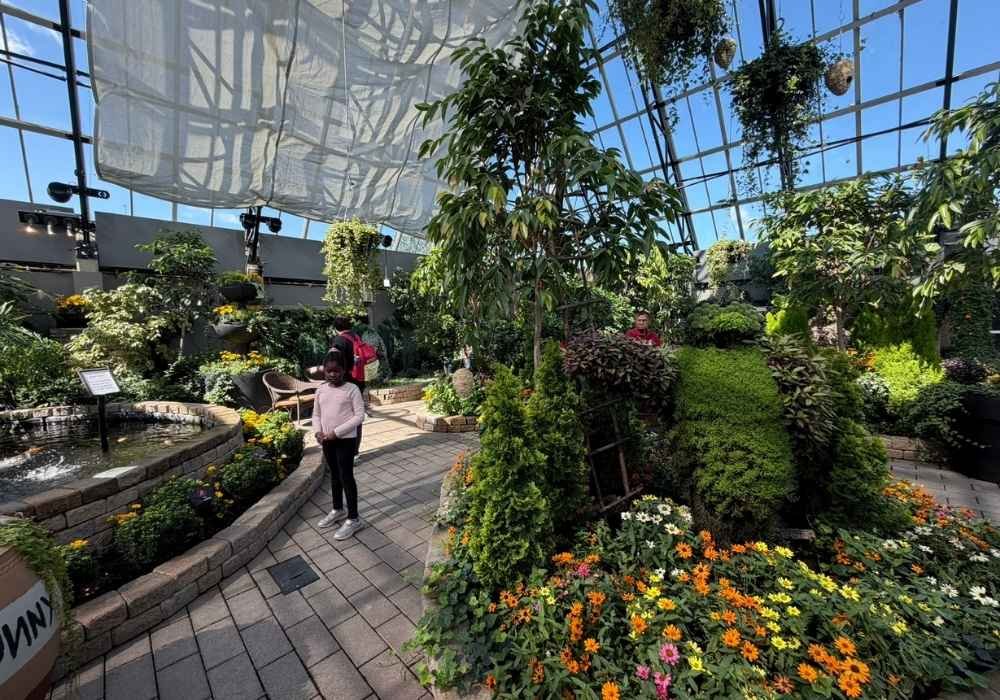
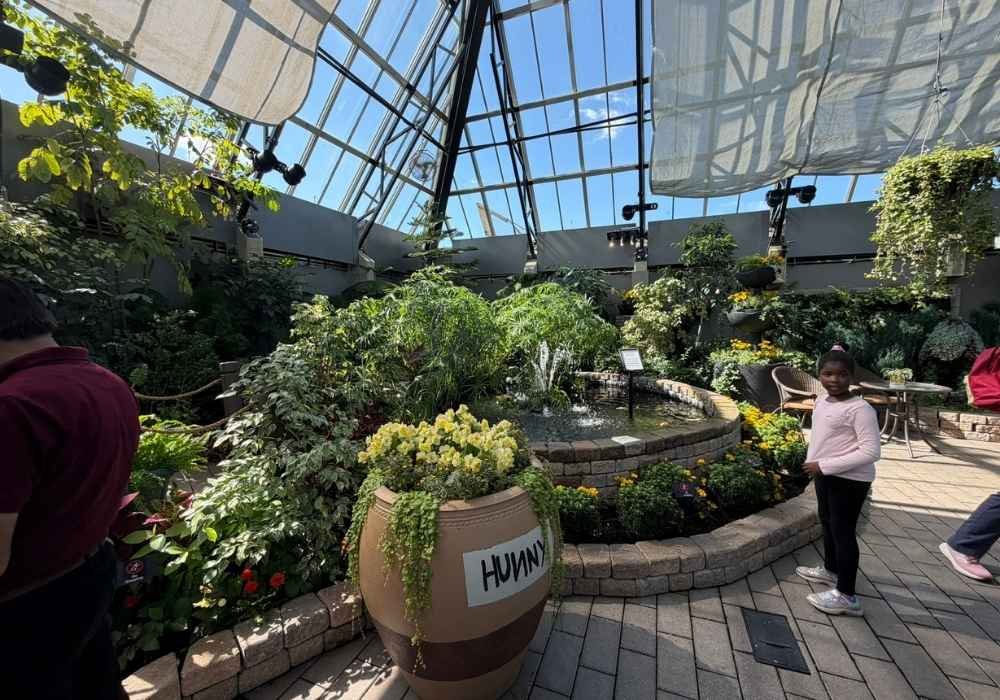
The temperate pyramid feels the most familiar to Canadians, holding plants from climates like ours and slightly milder ones across Australia, Asia, and North America. The air is comfortable, neither hot nor humid, a nice place to slow down after the tropical pyramid.
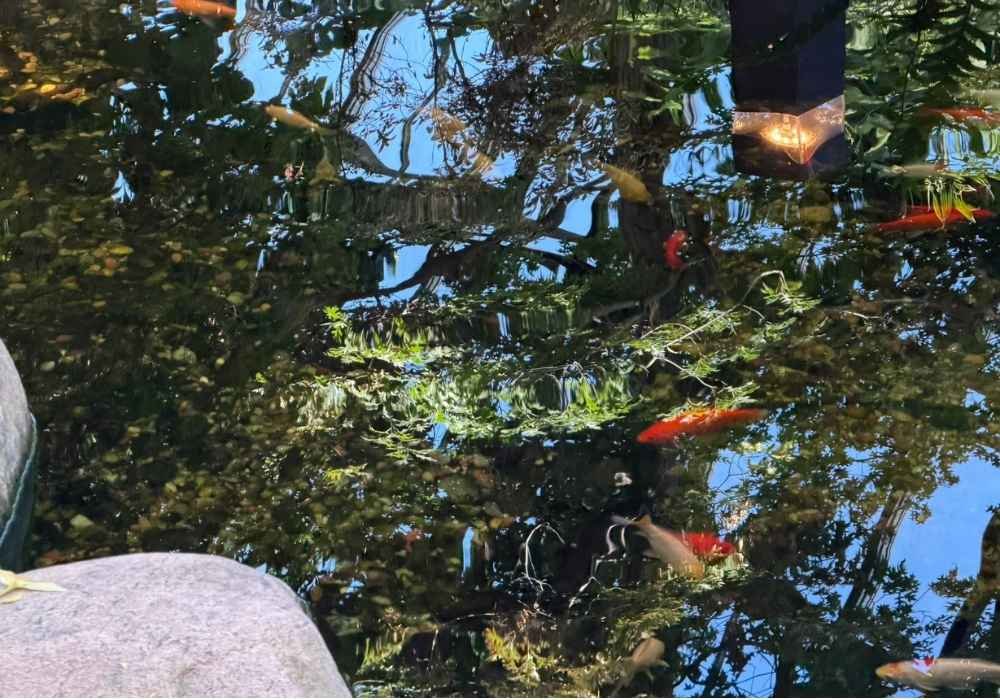
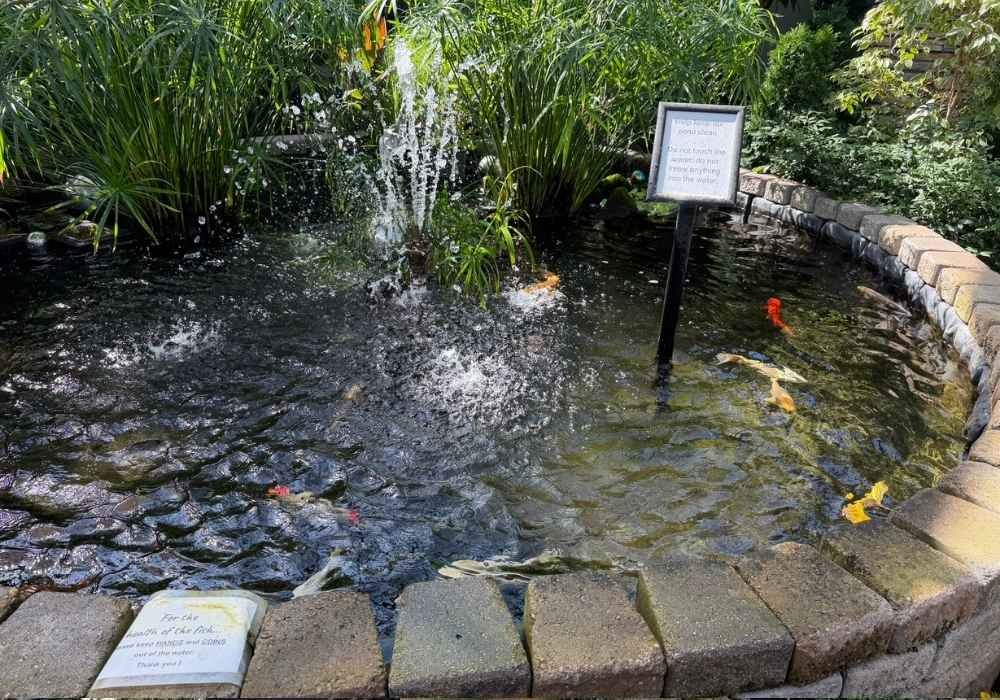
It also has a lovely pond, which became one of our favourite spots. Watching the colourful koi swim beneath the reflections of the glass overhead was surprisingly relaxing, and it is exactly the kind of thing you miss if you rush through.
This pyramid changes with the seasons more than the others. Spring brings blossoms, autumn brings colour changes, and the gardeners rotate displays through the year. Repeat visitors often say this is the pyramid that rewards coming back.
It is also the calmest of the four. There are benches throughout the conservatory, and this is the pyramid where you will most want to use one, with a few quiet minutes among the trees. Who will enjoy it: garden lovers, seniors, and anyone who wants a peaceful corner.
Arid Biomes Pyramid
Click on an image to expand.
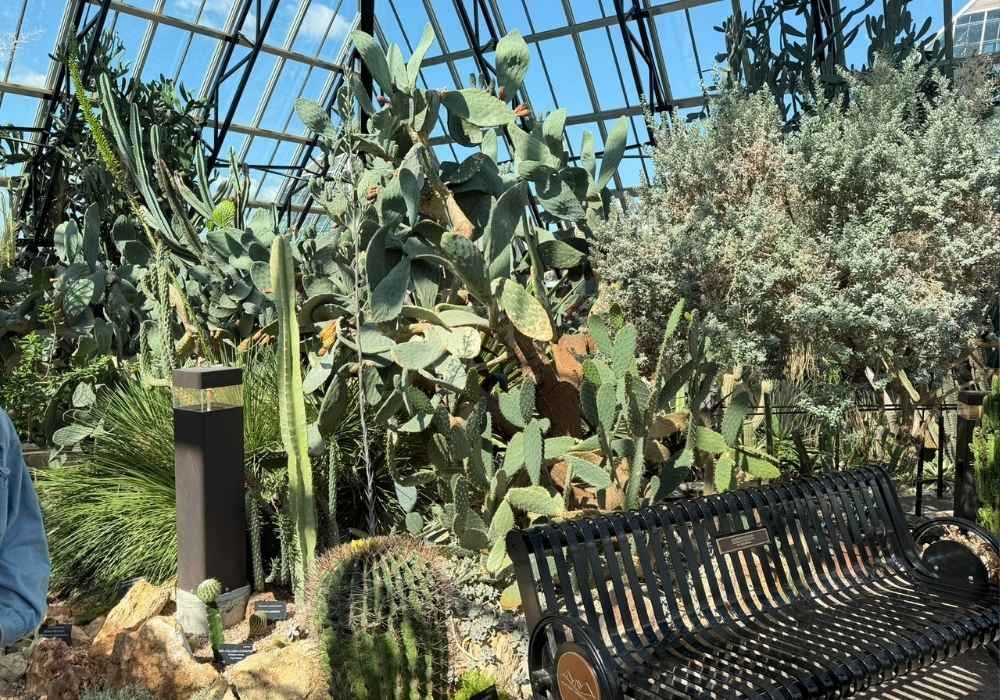
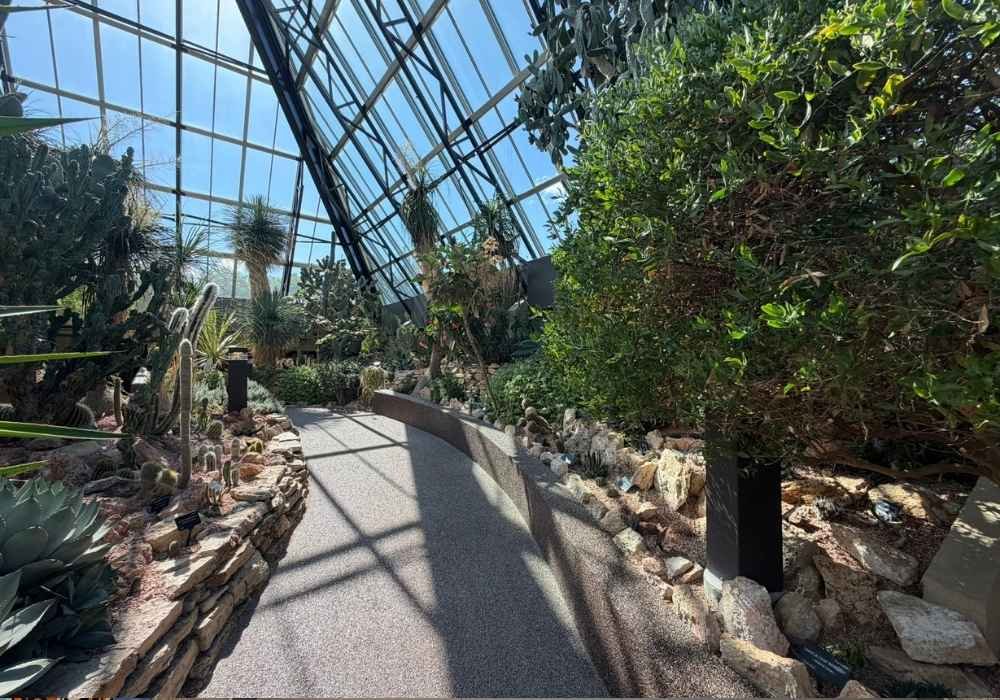
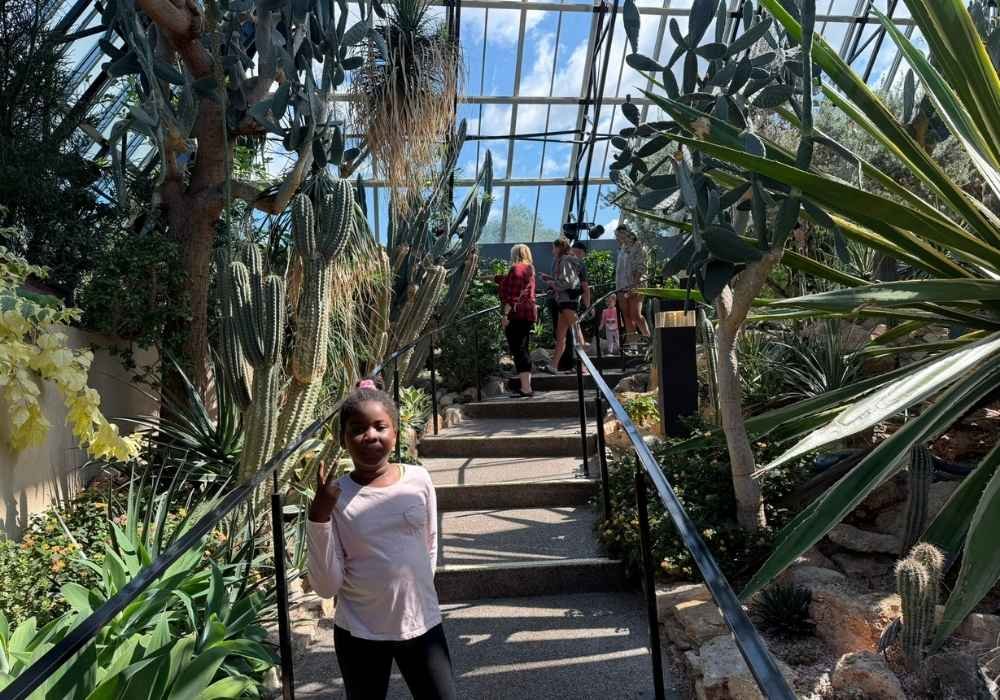
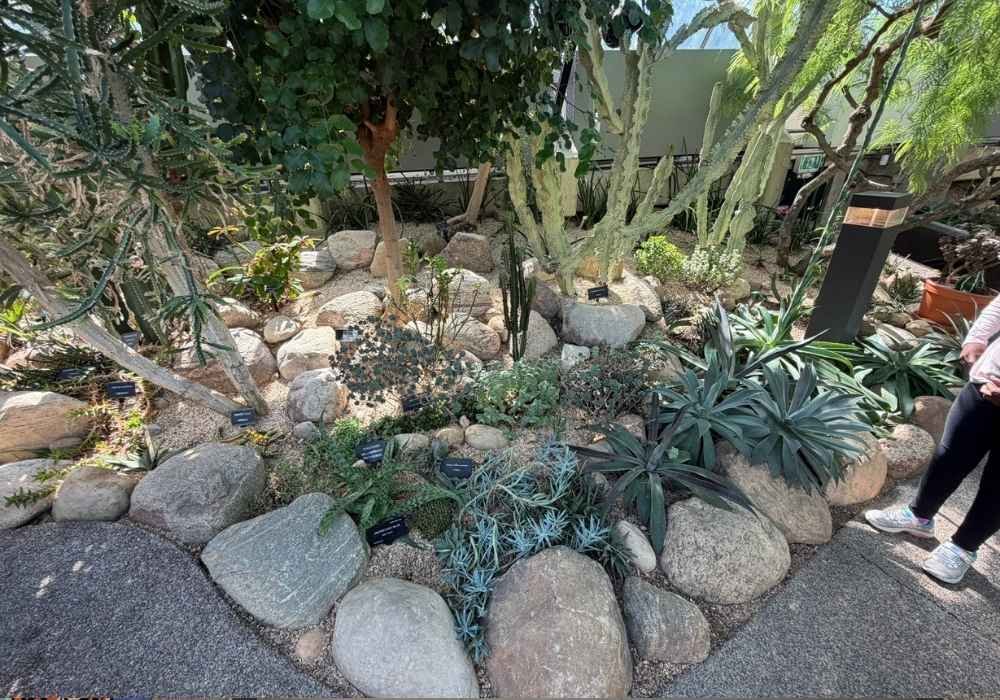
The arid pyramid flips the script: dry air, warm light, and an entire landscape of cacti, succulents, and desert plants from Africa, the Americas, and Australia. Some of the cacti are enormous, far bigger than anything you can grow on a windowsill, and the shapes and textures are fantastic to look at up close.
The light in this pyramid is beautiful, especially on sunny afternoons when shadows from the glass panels fall across the sand and stone. It tends to photograph better than you expect.
One practical note: the arid pyramid has some steps and uneven sections, so it is the least accessible of the four. There is still plenty to see from the main path. Who will enjoy it: photographers, kids who think cacti are cool (most kids), and anyone curious about desert plants.
Feature Pyramid
Click on an image to expand.
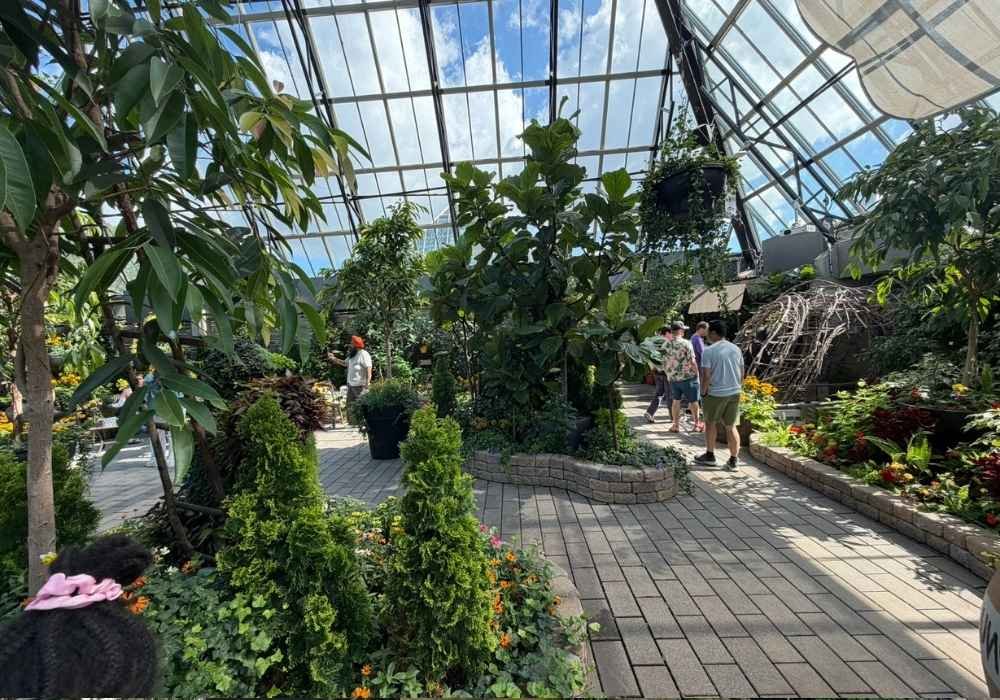
The feature pyramid is the wild card. Its entire display changes several times a year, built around a theme or season. Past shows have covered everything from prehistoric plants to harvest scenes and holiday displays.
During my visit, the Feature Pyramid had a themed seasonal display that completely transformed the space. One of the things I like most about the Muttart is that this pyramid changes throughout the year, giving returning visitors a different experience each time.
The feature pyramid is the reason locals buy annual memberships and come back every couple of months. Check the official website to see what is on before you go.
Did You Know? A fifth, smaller pyramid sits above the central courtyard. It works as a skylight, flooding the space between the four display pyramids with natural light.
What Surprised Me Most
What surprised me most wasn't the plants—it was how peaceful the Muttart Conservatory felt. Even with other visitors around, everyone seemed to slow down and enjoy the surroundings. Each pyramid had its own personality, making every transition feel like a new adventure rather than another greenhouse.
I also didn't expect to take so many photos. The changing light through the glass, colourful plant life, koi pond, and unique architecture kept giving me new scenes to capture. My daughter especially enjoyed the fish, flowers, and different environments, and before we knew it, two hours had flown by.
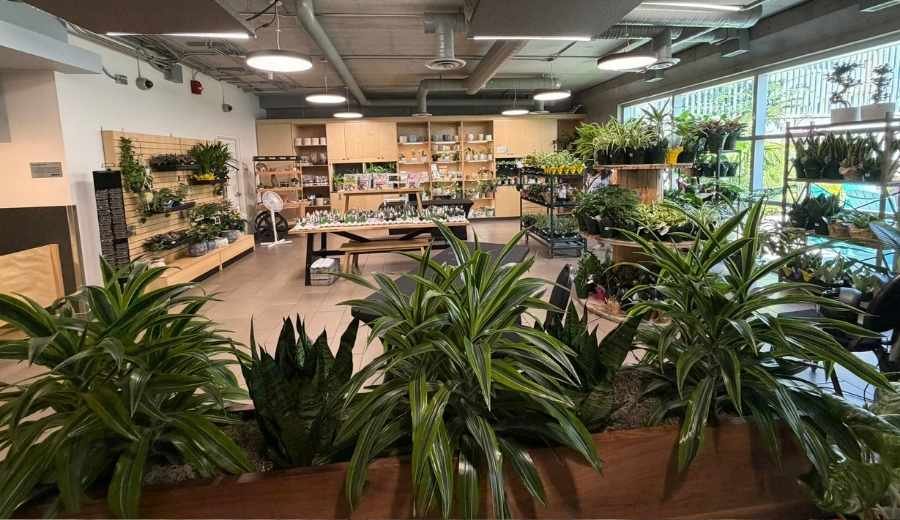
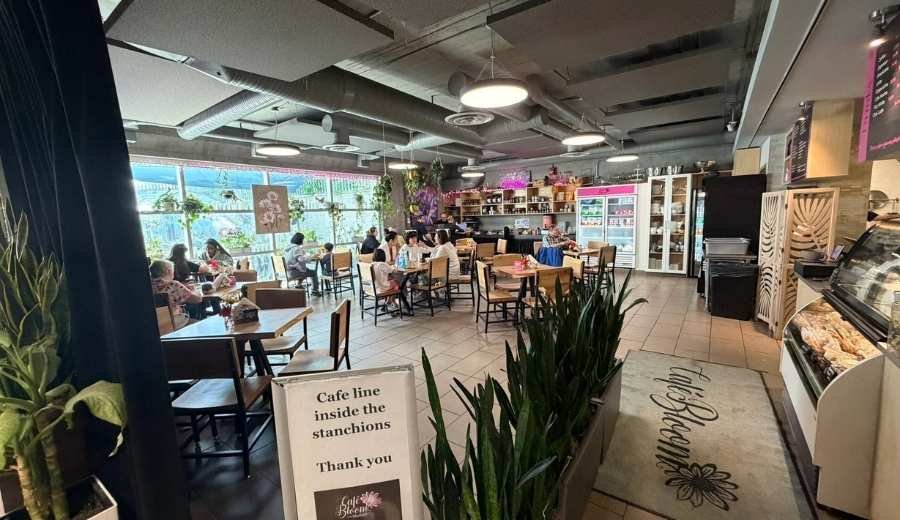
The Muttart offers more than beautiful gardens. Thoughtful amenities like Café Bloom, the gift shop, and seasonal Feature Pyramid displays make it easy to spend a relaxed afternoon here.
Best Time to Visit
The honest answer: there is no bad time, but some times are clearly better.
By season, winter is the sleeper pick. The tropical pyramid feels like a vacation when it is minus twenty outside, and the pyramids look beautiful in snow. Spring and fall bring the best temperate pyramid displays. Summer works too, paired with river valley walks, but July in Edmonton has a lot of competition.
By weekday, Monday through Thursday mornings are the quietest. Weekends are busiest, especially Saturday and Sunday afternoons and any weekend during a popular feature show.
Morning versus afternoon: mornings win for quiet and for photography without crowds. Afternoons win for light in the arid pyramid.
Rainy days are perfect. The Muttart is one of the best attractions in Edmonton, and a grey, wet day outside makes the pyramids feel even more like a refuge.
One more thing: Wednesday evenings are adults-only at the Muttart, which locals use for date nights. If you are planning an evening visit with kids, pick a different night and check current evening hours on the official website first.
When
Crowd Level
Best For
Weekday mornings
Low
Quiet visits, photography
Weekday afternoons
Low to medium
Flexible visits
Weekend mornings
Medium
Families beating the rush
Weekend afternoons
High
Expect crowds during feature shows
Winter days
Varies
The tropical-pyramid-in-a-blizzard experience
Wednesday evenings
Low
Adults-only visits and date nights
How Long Does It Take?
Visitor Type
Recommended Time
Best For
Quick Visit
45–60 minutes
Seeing all four pyramids at a relaxed pace.
Most Visitors
1.5–2 hours
Exploring every pyramid, reading displays, and taking photos.
Photography Enthusiasts
2–3 hours
Waiting for good lighting, letting lenses adjust to humidity, and capturing different angles.
Families
2+ hours
Exploring at a child's pace, visiting the Feature Pyramid, and stopping at Café Bloom or the gift shop.
Local tip: The Muttart Conservatory isn't a full-day attraction. Pair it with the Royal Alberta Museum, the Edmonton River Valley, or the Alberta Legislature Grounds to create a memorable half-day or full-day Edmonton itinerary.
Tickets
You can purchase tickets online or inside the facility. Ticket prices are reasonable, roughly in line with a museum visit, and kids under two are free. Family rates are available, and the feature pyramid shows are included with general admission.
Prices change from time to time, so check the official City of Edmonton Muttart Conservatory page for current rates rather than trusting numbers in any article. You can buy tickets online with a timed entry or at the door. Walk-ups are welcome, but booking online is smart on weekends and during popular shows.
If you live in the Edmonton area, look at the annual membership. It pays for itself in a few visits, and the rotating feature pyramid gives members a different experience each time. Combo discounts exist with other city attractions, so ask if you already hold a zoo or attractions pass.
Budget Tip The LRT stops at the door and parking is free if you drive. So getting there costs little. Watch the city's website and social channels for occasional special admission days too.
Facility Hours
The Muttart is open year-round, every day except December 25. Doors open mid-morning, and on Wednesdays and Thursdays the conservatory stays open into the evening, which is when it is at its most atmospheric: the pyramids glow, and the crowds thin out. Wednesday evenings are reserved for adults only. Last admission is 30 minutes before closing.
Exact opening and closing times shift occasionally with seasons and events, so confirm current hours on the official City of Edmonton website before you go, especially for an evening visit.
Hours at a Glance
Details
Open
Every day of the year except December 25
Evenings
Extended hours on Wednesday and Thursday
Wednesday evenings
Adults only
Last admission
30 minutes before closing
Exact times
Check the official website before visiting
Accessibility
The Muttart Conservatory is one of Edmonton's more accessible attractions. The entrance, central courtyard, and the Tropical, Temperate, and Feature pyramids are wheelchair-friendly, with wide, mostly level paths throughout. Accessible washrooms are located near the lobby.
The Arid Pyramid is the only exception. It includes a few steps and uneven sections, so it is only partially accessible, although much of the display can still be viewed from the main path. Strollers can access the rest of the conservatory without difficulty, making it a good choice for families with young children.
Benches are available throughout the conservatory for anyone who wants to take a break, and the single-level layout makes it easy to move between the pyramids. If you have specific accessibility questions, call 311.
If you have specific accessibility questions, call 311 in Edmonton or check the accessibility section of the official page before your visit.
Photography Tips
The Muttart is one of the most photogenic indoor spaces in Alberta, and it will punish you if you are not prepared for the humidity. I went in planning to take a handful of photos and left with far more than I expected. The sunlight through the glass creates light and shadow patterns all through the building, and it makes shooting here more enjoyable than most indoor attractions.
Best pyramid: tropical for lush, dense frames; arid for clean shapes, texture, and dramatic light.
Lens fog is the big enemy. Your gear comes in cold and hits warm, wet air. Let your camera or phone sit for five to ten minutes in the tropical pyramid before shooting, and keep a microfibre cloth in your pocket.
Best lighting: late morning to mid-afternoon on sunny days, when light through the glass panels creates strong shadow patterns, especially in the arid pyramid.
Camera settings: bump your ISO rather than using flash. Flash flattens the plants and bothers other visitors. A wide aperture helps isolate single blooms like orchids.
Phone photography: portrait mode on orchids and cacti works surprisingly well. Wipe your lens often; humidity smears build up fast.
Shoot up. The pyramid geometry overhead, with leaves against the glass grid, makes some of the best frames in the building.
Outside, the trails toward the river give you the pyramids-plus-skyline shot. Blue hour, when the pyramids glow from inside, is the money shot.
Be respectful: stay on paths, never move or touch plants for a photo, and give other visitors space. Tripods can be awkward on busy days; if a professional shoot is your goal, contact the Muttart about their photo policies first.
Photography Tip If winter photography is your thing, visit during or right after a snowfall. Snow sliding down the glass above the tropical canopy is a shot most people never think to look up for.
Tips Before You Visit
Dress in layers. You will move between a jungle, a desert, and a mild zone, and a heavy winter coat becomes a burden fast.
Use the coat hooks or carry a light bag so your hands are free.
Book online for weekend visits and popular feature shows; walk up on quiet weekdays.
Check what the feature pyramid is showing before you go. It changes several times a year and shapes the whole visit.
Go on a weekday morning if you want the place close to yourself.
Give your camera time to defog in the tropical pyramid before judging your shots.
Wear glasses? Expect them to fog on entry. It passes in a minute.
Start with the tropical pyramid and save the feature pyramid for last.
Build in time to just sit. The courtyard and temperate pyramid benches are half the experience.
Bring a water bottle; the tropical pyramid is genuinely warm.
Kids' energy burns fast in the humidity, so plan a snack stop at Cafe Bloom.
The gift shop sells live plants. In winter, ask them to wrap plants for the trip to the car, because tropical plants and minus twenty do not mix.
Pair your visit with a river valley walk in summer or the Royal Alberta Museum in winter.
Remember Wednesday evenings are adults-only, and confirm evening hours online before planning a night visit.
Visiting at Christmas time? The Muttart is open every day except December 25, and the holiday feature shows are popular, so book ahead.
Locals: price out a membership if you think you will come twice or more in a year.
Family Tip The Muttart runs drop-in programs for preschoolers on weekday mornings, and the feature shows are often built with kids in mind. Regular admission covers the programs, so a toddler morning here is one of the best-value activities in Edmonton.
Who Should Visit?
Families: yes, strongly. I visited with my daughter, and the mix of flowers, koi, and changing environments held her interest the whole way through. Wide paths and kid-focused feature shows help too. If you're travelling with children, don't miss my guide to Family Attractions in Edmonton for Kids.
Couples: yes. The Wednesday adults-only evenings exist for a reason, and Cafe Bloom's dinner events make it a proper date.
Photographers: yes, with the fog warnings above taken seriously.
Garden lovers: obviously. Plan extra time to read every label.
Tourists: yes. It is one of the few attractions that shows you something you cannot see in most other Canadian cities.
Locals: yes, especially with a membership, since the feature pyramid resets the experience a few times each year.
Kids: the tropical waterfall, giant cacti, and themed shows do the work for you.
Seniors: comfortable, mostly flat, plenty of seating, and quiet on weekday mornings.
Who might find it underwhelming: anyone expecting acres of outdoor gardens. The Muttart is compact and indoors, which is its strength in winter and its limit in summer.
Nearby Attractions
The Muttart sits in the middle of Edmonton's best sightseeing corridor, so if you are building a list of things to do in Edmonton, it pairs easily with several of them in a single day.
Café Bloom (on site): The most convenient option for coffee, snacks, lunch, and seasonal dinner events.
Little Brick (Riverdale): A charming café in a historic house, perfect for brunch or coffee after your visit.
Old Strathcona / Whyte Avenue: Just 5–10 minutes away, with everything from casual cafés to upscale restaurants.
Downtown Edmonton: A wide selection of restaurants, including the historic Hotel Macdonald for a special meal with river valley views.
Hours and menus can change, so check the restaurant's website before your visit, especially for Café Bloom's seasonal dinner events.
Frequently Asked Questions
How long do you need at the Muttart Conservatory?
Most people spend 1 to 2 hours. A quick walk-through takes 45 minutes; photographers and families should plan for two hours or more.
Is the Muttart Conservatory worth visiting?
Yes, especially in winter, when the tropical pyramid feels like a two-hour vacation. It is compact, so expect a rich 90 minutes rather than a full day.
Is the Muttart Conservatory open in winter?
Yes. It is open every day of the year except December 25, and winter is arguably the best season to visit.
How much does it cost?
Prices are similar to a museum admission, with discounts for kids, and children under two are free. Check the official City of Edmonton website for current rates, since they change periodically.
Do I need to book tickets in advance?
Not usually. Walk-ups are welcome. Booking a timed entry online is smart for weekends, holidays, and popular feature pyramid shows.
Is parking free at the Muttart Conservatory?
Yes, but the lot can fill up on weekend afternoons, and the LRT is a good alternative.
Can you get there by LRT?
Yes. The Valley Line LRT has a Muttart stop, a short walk from the entrance.
Is the Muttart Conservatory good for kids?
Very. Paths are stroller-friendly, feature shows are often kid-themed, and weekday preschool drop-in programs run in the mornings.
Is it wheelchair accessible?
Mostly, yes. The entrance, courtyard, and three of the four pyramids are accessible. The Arid pyramid has steps and is only partially accessible.
What are the four pyramids at the Muttart?
Tropical, Temperate, Arid, and the Feature pyramid, which changes its entire display several times a year.
Can you take photos inside Muttart Conservatory?
Yes, and it is a photographer's favourite. Expect lens fog in the tropical pyramid, skip the flash, and contact the Muttart first if you are planning a professional or wedding shoot.
Is there food at the Muttart Conservatory?
Yes. Cafe Bloom operates on site, serving lunch and hosting special dinner events in the colder months.
Are dogs allowed?
No, only service animals. Pets stay home for this one.
How old is the Muttart Conservatory?
It opened in 1976 and was fully renovated between 2018 and 2021.
Is the Muttart busy?
Weekday mornings are quiet. Weekend afternoons and popular feature shows draw crowds. Wednesday evenings are adults-only and generally calm.
Can you see the Muttart pyramids without paying?
From outside, yes. The nearby river valley trails offer free views, but the plants are all inside the paid area.
Final Verdict on Muttart Conservatory
The Muttart Conservatory may sound simple on paper—four glass pyramids filled with plants—but after exploring it, I left with a completely different impression.
From the warm, fragrant eucalyptus trees in the Tropical Pyramid to the cooler alpine displays and ever-changing seasonal exhibits, every pyramid offers a different perspective on the world's remarkable plant life. It's easy to see why the Muttart has become one of Edmonton's most recognizable landmarks.
I recommend visiting if you're travelling with children, enjoy photography, appreciate nature, or simply want a peaceful escape from the city's pace. It's especially rewarding during the colder months, when stepping from an Alberta winter into a lush tropical environment feels almost surreal. If you're hoping for a sprawling outdoor botanical garden, this may not be the right attraction, but if you enjoy discovering unique places at a relaxed pace, the Muttart Conservatory is well worth your time.
One thing I tell visitors is that you do not need to spend much money to enjoy Edmonton. Some of my favourite days here have cost nothing at all. A walk through the river valley, an afternoon on Whyte Avenue, or an evening watching the Legislature grounds light up in winter can be just as memorable as any paid attraction.
Edmonton has one of the largest stretches of urban parkland in North America, a free downtown funicular, a museum you can visit at midnight, and a library that surprises almost everyone who walks in. Most of these places sit close together, so you can see several in a single day without a car.
This guide covers the 10 best free things to do in Edmonton, based on my own visits over the past years. For each one, I explain why it is worth your time, when to go, and the small details that first-time visitors usually miss.
Whether you're looking for free attractions in Edmonton, free activities in Edmonton, or simply want to explore the city without spending much money, these local favourites deliver excellent value.
Quick Comparison: Free Things to Do in Edmonton
If you're wondering which free attractions in Edmonton are worth your time, this quick comparison will help you choose the right ones for your trip.
All ten attractions and activities are completely free to enjoy. Parking is free at most locations too, and I point out the exceptions throughout the guide.
1. Alberta Legislature Building
The Legislature building is one of the first places I take friends who are visiting Edmonton for the first time. The building itself is over a hundred years old, with a sandstone dome you can see from across the river valley, and the grounds around it are some of the best-kept public spaces in the city.
Why It Made My List
Free guided tours run year-round inside the building, and they are genuinely good. The guides know their history and take you through the rotunda, the marble staircases, and the chamber where Alberta's laws are passed. I have done the tour three times over the years, usually with out-of-town family, and I still notice something new each visit.
Outside is where the Legislature really earns its spot, though. In summer, the wading pools and fountains on the south grounds turn into an unofficial splash park.
On a hot July afternoon, you will see hundreds of kids running through the water while parents relax on the grass. It is one of the few places in any Canadian capital where you can wade in a fountain in front of the seat of government, and nobody minds.
When I Go
Summer weekday afternoons are ideal if you want the fountains without heavy crowds. In December, the grounds are covered in thousands of Christmas lights, and I would honestly rank the light display among the best free things to do in Edmonton in winter. Dress warm and walk the full loop around the building.
Tips From My Visits
Tours are free, but check the schedule online before you go, since times change on weekends and holidays.
The pedway under the grounds connects to the Federal Building, which has a free interpretive centre and clean washrooms.
Street parking nearby is metered on weekdays, but the Grandin/Government Centre LRT station is right there, so transit is the easier option.
Bring towels in summer if you have kids. They will end up in the water whether you planned it or not.
Nearby, you can walk down into the Edmonton River Valley, where hundreds of kilometres of trails connect many of the city's parks and viewpoints. Or head east along the top of the bank toward the funicular, which is next on this list.
2. 100 Street Funicular
Edmonton built a free outdoor funicular in 2017, and I still think most visitors do not know it exists. It is a glass elevator on rails that carries you down the steep river valley bank from downtown to the trails below, and it costs nothing to ride.
I will be honest: I am not great with heights, and the glass walls made me hesitate the first time. But the ride is short, smooth, and over in about a minute, and the view on the way down is worth the sweaty palms. If I can do it, anyone can.
The View Is the Real Attraction
At the bottom of the funicular, a long staircase and lookout platform called the Frederick G. Todd Lookout extends out over the valley.
From there you get a clear view of the North Saskatchewan River, the Walterdale Bridge with its big white arches, and the treed slopes on both sides. In late September, when the aspens turn yellow, this is one of the best free views in the city.
How I Recommend Doing It
Ride the funicular down, walk to the lookout, then follow the stairs and paths down to the river if you have energy. You can walk along the water toward the Walterdale Bridge and loop back up. The funicular runs daily and is fully accessible, which makes it a good option for strollers and wheelchairs that could never handle the old wooden stairs.
A few practical notes from my trips:
It occasionally closes for maintenance, especially in freezing rain. Check the City of Edmonton site if it is a special trip.
Early mornings are quiet. Summer evenings get busy with joggers and photographers.
The top station is at 100 Street and Macdonald Drive, a short walk from the Hotel Macdonald, which is worth seeing from the outside on its own.
Pair this stop with the Legislature and Victoria Promenade for an easy half-day walking route along the top of the valley.
3. Churchill Square
Churchill Square is Edmonton's main downtown gathering space, sitting between City Hall, the art gallery, and the Winspear Centre. On an ordinary weekday, it is a wide open plaza where office workers eat lunch. During festival season, it becomes the busiest free entertainment venue in the city.
What Happens Here
Edmonton calls itself a festival city, and Churchill Square is where that reputation gets earned. Through the summer, the square hosts a rotating lineup of free events: Canada Day celebrations, food truck gatherings, cultural festivals, and outdoor concerts. I have wandered through the square on a random Saturday and stumbled into live music more times than I can count.
City Hall, on the north side, is open to the public and free to walk through. The pyramid-shaped glass roof looks great from inside, and in winter the fountain out front becomes a small free skating rink. If you have skates, it is a classic Edmonton experience. If you do not, watching from the steps with a coffee works too.
My Honest Take
On a quiet day with no events, Churchill Square itself will not hold your attention for long. The trick is to treat it as a hub. Check the city's event calendar before you visit, and combine the square with the Milner Library next door and the Neon Sign Museum a few blocks away. Together they make a solid free downtown afternoon.
Many of Edmonton's biggest summer festivals take place in and around Churchill Square, making it one of the best times of year to visit.
Best time to visit: July and August, when something is happening almost every weekend. Arrive by LRT since Churchill Station opens directly onto the square, and downtown parking near the square is rarely free.
4. Stanley A. Milner Library
If you think a library is a strange thing to put on a list of Edmonton attractions, you have not seen the Stanley A. Milner Library. The downtown branch reopened in 2020 after a full rebuild, and the angular metal exterior alone stops people on the sidewalk. Locals either love the design or hate it, but nobody ignores it.
Inside is where it wins everyone over. When people ask me about free activities in Edmonton on a rainy day, the Milner Library is usually my first recommendation.
What You Get for Free
A huge children's area with an indoor play structure that my kids treated like a full attraction on its own when they were younger
A simulation lab and gaming areas with equipment you can actually use
A makerspace with 3D printers and recording studios (some services need a free library card)
Quiet reading floors with big windows looking over Churchill Square
Clean washrooms and comfortable seating, which matter more than people admit when touring a downtown
I have spent whole winter afternoons here with the kids, and it did not cost a dollar. Non-residents can walk in and use most of the public spaces freely.
Planning Your Visit
Weekday mornings are calm. Weekends bring more families, and the children's floor gets loud by early afternoon. The library sits right on Churchill Square, so it pairs naturally with a downtown walking day.
If you are visiting Edmonton in January or February, put this at the top of your indoor list along with the pedway system that connects much of downtown so you can walk between buildings without going outside.
5. Neon Sign Museum
The Neon Sign Museum is the most unusual free attraction in Edmonton, and my personal favourite to show visitors after dark. It is not a building. It is a collection of restored vintage neon signs mounted on the outside walls along 104 Street downtown, glowing over the sidewalk every night of the year.
Why It Works
Each sign came from a real Edmonton business, some going back to the 1940s and 50s. There are signs from old pawn shops, diners, cleaners, and theatres, all repaired and lit up again.
Walking under them feels like stepping into an old photograph of the city. Because it is an outdoor wall display, it never closes, never charges admission, and never has a lineup.
I usually swing past when I am downtown in the evening anyway. It takes twenty minutes to see everything, which is exactly why it is so easy to recommend. It asks nothing of you and still gives you something you will not see in another Canadian city at this scale.
Getting the Most Out of It
Go after sunset. The signs are on during the day, but they mean nothing without the glow. In winter, that can be as early as 4:30 pm, which is one small perk of Edmonton's short days.
Bring a camera or a phone with night mode. This is one of the best free photo spots in the city, and I share specific camera tips later in this guide.
The museum wall is on 104 Street just north of 104 Avenue, near Rogers Place. If there is an Oilers game that night, the whole area is buzzing; if not, it is a quiet, slightly gritty block, so evening visitors may prefer going as a pair.
Combine it with the weekend downtown farmers market area on 104 Street in summer, when the street has the most life.
6. Whyte Avenue
Whyte Avenue is one of the most enjoyable free attractions in Edmonton because the experience comes from walking, exploring, and soaking up the atmosphere rather than buying anything. It is a whole neighbourhood experience that costs nothing unless you decide to spend.
The strip runs through Old Strathcona on the south side of the river, lined with century-old brick buildings, independent shops, record stores, buskers, and some of the best people watching in Alberta.
A Local's View of the Strip
I have walked Whyte Avenue in every season since 2011, and it never feels the same twice. Saturday afternoons in summer are the peak: patios full, street performers out, and the Old Strathcona Farmers Market running in the old bus barn just off the avenue.
The market is free to enter and worth an hour even if you buy nothing, though the fresh bread usually breaks my willpower.
The architecture is half the appeal. Old Strathcona was its own town before joining Edmonton, and the buildings show it. Look up above the modern storefronts, and you will see dates from the early 1900s carved into the brick.
Free Things to Do on Whyte
Browse the used bookstores and record shops. Nobody rushes you.
Walk the murals and back alleys between 103 and 105 Street, which have become an open-air gallery.
Catch free street performances during summer festival weekends, especially during the Fringe Festival in August, when the whole district turns into a stage. Outdoor Fringe performances are free to watch, with tips appreciated.
End Steel Park and the rail museum area at the south edge give you a quieter break from the crowds.
When to Come
Saturday mornings for the market, summer evenings for the buzz, and weekday afternoons if crowds are not your thing. Friday and Saturday nights shift toward bar crowds, which is fun for some visitors and less so for families. Street parking is free on side streets if you are patient, and the area is a short bus ride or a pleasant river valley walk from downtown.
After exploring Whyte Avenue, it's easy to spend the rest of the day discovering some of the best restaurants in Edmonton, many of which are just a short walk away.
Mill Creek Ravine, later in this list, starts just a few blocks east of Whyte, so the two combine perfectly.
7. William Hawrelak Park
Hawrelak Park is Edmonton's big classic city park, built around a lake in the middle of the river valley. It reopened fully after several years of rehabilitation work, and the refreshed version is better than ever.
If you're searching for free things to do in Edmonton with kids, Hawrelak Park is one of the city's best options. Wide open spaces, playgrounds, skating in winter, and picnic areas make it a favourite for local families. Enjoy a leisurely walk or rent a paddleboat to explore the lake.
Summer at the Park
In warm months, the park is picnic central. Wide lawns, barbecue sites, paddleboat rentals on the lake (the boats cost money, but watching them does not), and paved loops for biking and walking.
My family has spent countless Sunday afternoons here with nothing more than a cooler and a frisbee. The 2.3 km loop around the park is flat and easy, which makes it good for small kids and grandparents alike.
The park also hosts major festivals like the Heritage Festival in early August, a food and culture event that draws huge crowds. Entry is free, though food tickets are where your wallet comes in. I would call Heritage Festival weekend the single best free cultural event in Edmonton if you time your trip for it.
Winter at the Park
This is the part visitors do not expect. The lake freezes into one of the largest outdoor skating surfaces in the city, maintained and free to use. There is also an IceWay skating trail through the trees, lit up in the evenings. Skating under lights on a snowy path is about as Canadian as an experience gets, and it costs nothing if you bring your own skates.
Practical Notes
Free parking inside the park, but lots fill by mid-morning on summer weekends and festival days. Arrive before 10 am or expect a walk.
Washrooms and a concession operate seasonally.
The park connects to river valley trails, so you can walk or bike to the funicular area in under an hour if you are ambitious.
8. Victoria Promenade
Victoria Promenade is the quiet one on this list, and that is exactly its charm. It is a landscaped walkway along the top of the river valley bank on the west edge of downtown, running along 100 Avenue near 116 to 121 Street, with benches, old-fashioned lampposts, and an uninterrupted view over the valley.
Why I Love it
Sunsets. The promenade faces south and west over the river, and on a clear summer evening the light over the valley is the kind of thing you stop mid-conversation for. It draws a small, steady crowd of walkers, joggers, and couples, but it never feels busy the way the funicular lookout can.
This is also where I bring people who want to see Edmonton's high-level view without stairs or effort. You park or walk in, sit on a bench, and the valley does the rest. There is a statue and small plaza partway along, and several staircases lead down into the valley trails if you want to extend the walk.
Making an Evening of It
Come an hour before sunset in June or July, when the sun does not set until nearly 10 pm. Bring coffee or ice cream from one of the shops on nearby 124 Street, which has grown into one of Edmonton's best small business districts. Then walk the promenade end to end, which takes about twenty minutes at a slow pace.
The area around the promenade is residential and calm, with free street parking in the evenings. It links naturally with a 124 Street gallery walk if you visit on the first Thursday of the month, when local galleries hold free open evenings.
9. Mill Creek Ravine Park
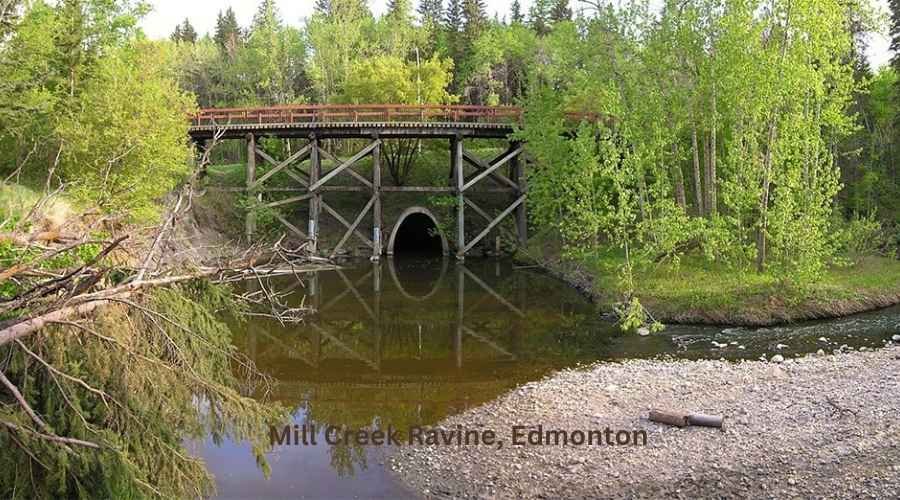
Mill Creek Ravine is where Edmonton stops feeling like a city. It is a deep, wooded ravine cutting through the south side neighbourhoods, with a creek running along the bottom and trails following an old rail line. Within five minutes of walking in, traffic noise disappears, and you are surrounded by poplar and spruce.
My Experience With the Trails
This is my pick for the best free nature walk in Edmonton proper. The main trail follows the old railway grade, so it is wide, mostly flat, and crosses the creek on a series of restored wooden trestle bridges. The bridges are the highlight. Standing on hundred-year-old rail trestles over a creek, still inside city limits, is something visitors do not expect.
In fall, usually late September, the ravine turns gold, and the light through the trees is unreal. That is when I make a point of walking it every year. In winter, the packed trails stay walkable, and you will share them with cross-country skiers and a lot of very happy dogs, since parts of the ravine are off-leash.
Know Before You Go
Main access points are at the north end near 98 Street and Connors Road, and further south around 76 Avenue near the Mill Creek outdoor pool. The pool itself has free admission days in summer, which is a bonus few people know about.
Trails range from paved to dirt single track. Regular shoes are fine on the main path; the side trails get muddy after rain.
The north end of the ravine connects to the river valley system, so strong walkers can go from Old Strathcona all the way to the river.
Cell coverage is fine throughout, but the ravine bottom feels remote, so families with small kids should stick to the main trail.
Pair the ravine with Whyte Avenue. Walk the trees first, then reward yourself with coffee on Whyte. That is my standard Saturday routine in October.
10. Queen Elizabeth Park Viewpoint
If you only have twenty minutes and want the single best free view of Edmonton's skyline, this is the spot. The Queen Elizabeth Park viewpoint sits on the south bank of the river, just up from the Walterdale Bridge, looking straight across the water at the downtown towers.
The Photo Everyone Takes
Nearly every skyline photo of Edmonton you have seen was taken here or close to it. The white arch of the Walterdale Bridge frames the left side, the river runs below, and the full downtown skyline stacks up behind it.
At sunset the towers catch the light, and at night the bridge lights reflect off the water. I have taken family photos, visitor photos, and about a thousand phone shots from this railing over the years, and it has not gotten old.
The viewpoint was rebuilt with a proper plaza, seating, and paths, so it is an easy stop rather than a hike. A small pay lot and street parking sit close by, and the walk from the car to the view takes two minutes.
Timing It Right
Sunset is the obvious answer, but blue hour, the half hour just after sunset, is when the skyline photos really work.
Winter nights are underrated. Cold, clear air makes the lights sharper, and steam rising off the river adds atmosphere. Dress for it, because the wind off the valley bites.
Summer weekend evenings bring wedding photographers and grad photo sessions, which tells you everything about the quality of the view.
From here you can walk across the Walterdale Bridge itself, which has a dedicated pedestrian path and its own great angles, and connect to the funicular stairs on the far side. Ending a downtown walking day at this viewpoint is the closing scene I recommend to every visitor.
11. Enjoy Free Festivals
Edmonton is known as the Festival City, and one of the best things about it is that many of these festivals are free to attend! If you’re looking for fun, there’s no better way to enjoy the local culture than by visiting one of Edmonton’s free festivals.
One of my personal favourites is the Street Performers Festival. It usually happens in July at Churchill Square, and it's packed with talented artists.
Another amazing event is the K-Days Parade, which kicks off in late July. It's such a fun way to experience the city’s history and celebration of summer, with colourful floats, marching bands, and street performers.
If you're a music lover, you should check out the Edmonton International Jazz Festival in late June. The festival offers free concerts around the city, often in open public spaces like Churchill Square or downtown streets.
For winter fun, Deep Freeze: A Byzantine Winter Festival in January is a must-see. It celebrates winter with ice sculptures, outdoor games, and traditional performances. But it's far from the only celebration. Edmonton hosts several winter festivals featuring ice sculptures, outdoor games, live entertainment, and seasonal activities throughout the colder months.
Local Tips for Enjoying Edmonton on a Budget
A few things I have learned in fifteen years here that make free sightseeing easier:
Use the LRT for downtown attractions. Churchill Square, the library, the Legislature area, and the Neon Sign Museum are all within a short walk of stations, and parking downtown erodes a free day fast.
Summer daylight is your friend. In late June, the sky stays light until after 10 pm, so you can fit two or three of these attractions into a single evening after supper.
Festival season runs June through August, and most festivals have free admission. Check what overlaps with your visit before you plan your days.
Carry a water bottle and snacks. Concessions at parks are seasonal and pricey, and free drinking water is available at most park washroom buildings in summer.
Winter visitors should embrace the pedway system downtown and plan indoor-outdoor combos, like the library plus a short neon sign walk, so nobody freezes.
Mosquito repellent matters in the ravine and river valley from June to August. Locals joke about it, but we all carry it.
Photography Tips for These Attractions
Golden hour at Victoria Promenade and Queen Elizabeth Park gives you the two best skyline and valley shots in the city. Arrive 45 minutes before sunset and stay 20 minutes after.
For the Neon Sign Museum, turn off your flash and use night mode. Shoot slightly upward to keep parked cars out of the frame, and go on a damp night if you can, since wet pavement doubles the neon reflections.
The Legislature fountains photograph best in the early evening when the sandstone glows warm. In December, the light display is easiest to capture just after dusk, before full dark flattens the colours.
Mill Creek's trestle bridges look best in October with fall colour, shot from creek level looking up.
At the funicular lookout, wide shots work better than zoom. The view is about scale.
Winter photographers: cold kills phone batteries fast. Keep your phone in an inside pocket between shots.
Seasonal Advice: When to Visit Edmonton for Free Attractions
Summer (June to August) is the easiest answer. Every outdoor attraction on this list is at its best, festivals fill the calendar, and the long daylight hours stretch your sightseeing time. It is also peak season, so parks and Whyte Avenue are busiest.
Fall (September to early October) is my personal favourite. The river valley and Mill Creek Ravine turn gold, crowds thin out, and the weather usually holds. If you are coming mainly for walks and views, come in the last week of September.
Winter (November to March) changes the list rather than ending it. The Legislature lights, Hawrelak skating, the Milner Library, and the neon signs at 4:30 pm dusk are all genuinely good winter experiences. The catch is cold that can hit -30°C, so plan short outdoor stops between indoor ones.
Spring (April to May) is the awkward season. Snowmelt makes trails muddy, and the trees are bare until mid-May. It is still fine for the indoor and downtown attractions, but I would not plan a trip around the parks in April.
More Free Attractions Worth Visiting
If you have extra time, Edmonton has several other free attractions that are well worth adding to your itinerary. The Art Gallery of Alberta offers free admission on select evenings throughout the year, making it an excellent way to experience Canadian and local art without paying an entrance fee.
You can also browse the Old Strathcona Farmers' Market, where it's free to wander through dozens of local vendors, watch live entertainment, and soak up the lively atmosphere, even if you don't buy anything.
Another worthwhile stop is West Edmonton Mall. While many of its attractions require admission, simply exploring one of North America's largest shopping malls is an experience in itself. Wander through Europa Boulevard, admire the themed streets, or watch marine life from outside the aquarium viewing areas.
If you prefer spending time outdoors, head to Rundle Park, where you'll find scenic walking trails, picnic areas, playgrounds, and a free disc golf course. These attractions didn't make my top 10, but they're excellent additions if you have another day to explore Edmonton.
Final Thoughts
Edmonton rewards visitors who do not measure a trip by tickets. Fifteen years in, my best memories of this city are still the free ones: kids soaked at the Legislature fountains, October light in Mill Creek Ravine, neon glowing on a snowy sidewalk, and the skyline turning orange from the Queen Elizabeth viewpoint.
If you're planning a visit, start with the downtown cluster, save a golden evening for the river valley views, and check the festival calendar before you book your dates. If you're flying into the city, Edmonton International Airport is the main gateway to the region and an easy starting point for exploring the city.
Whether you're looking for the best free things to do in Edmonton, exploring free attractions in Edmonton, or planning a weekend filled with free activities in Edmonton, these local favourites prove you don't need an expensive itinerary to enjoy the city.
Frequently Asked Questions
What are the best free attractions in Edmonton?
The Alberta Legislature Building, the 100 Street Funicular, Hawrelak Park, and the Queen Elizabeth Park viewpoint top my list. Together they cover history, views, and outdoor space, and all four are completely free.
What are the best free things to do in Edmonton with kids?
Some of the best free things to do in Edmonton with kids include playing in the Alberta Legislature fountains, exploring the children's area at the Stanley A. Milner Library, picnicking at William Hawrelak Park, riding the free 100 Street Funicular, and walking the trails in Mill Creek Ravine. These family-friendly attractions offer fun without costing a dollar.
Is the Edmonton funicular really free?
Yes. The 100 Street Funicular is free to ride, runs daily, and connects downtown to the river valley trails. It closes occasionally for maintenance or extreme weather, so check the City of Edmonton website before a special trip.
What can families do in Edmonton for free?
The Legislature fountains in summer, the children's floor at the Stanley A. Milner Library, skating at Hawrelak Park in winter, and picnics in the river valley are the family favourites. My kids never once asked what any of it cost.
Are Edmonton's river valley trails free?
Yes, the entire river valley trail system is free, including Mill Creek Ravine, the funicular lookout, and the paths around Hawrelak Park. It is one of the largest connected urban park systems in North America.
What free things can I do in Edmonton in winter?
Skate for free at Hawrelak Park or the City Hall rink, see the Legislature Christmas lights in December, spend an afternoon at the Milner Library, or experience one of Edmonton's winter festivals for even more seasonal fun.
Is Whyte Avenue free to visit?
Walking Whyte Avenue, browsing the shops, seeing the murals, and visiting the Old Strathcona Farmers Market are all free. You only spend if you choose to eat or buy something, which I admit is hard to resist.
Where is the best free view of the Edmonton skyline?
The Queen Elizabeth Park viewpoint on the south side of the river, near the Walterdale Bridge. Victoria Promenade is the best runner-up, with a higher, quieter view over the valley from the downtown side.
Do I need a car to see these free attractions?
Not for most of them. Seven of the ten are downtown or reachable by LRT and a short walk. Hawrelak Park and Mill Creek Ravine are easier with a car or a bike, though city buses do serve both areas.
Are the free Legislature tours worth it?
Yes, especially on a cold or rainy day. The guided tours run year-round, last about 45 minutes, and cover the building's history and architecture. Combine one with the grounds, and you have a solid two-hour visit for free.
How many days do I need to see the free attractions in Edmonton?
You can cover the downtown cluster in one full day and the parks and south side in a second day. If you are visiting during festival season, add a third day, because the free events will keep pulling you in.
If you're looking for one of the best family attractions in Edmonton, the Edmonton Valley Zoo deserves a spot on your itinerary. Located in the beautiful North Saskatchewan River Valley, this compact but engaging zoo is home to more than 250 animals representing species from around the world.
From playful red pandas and majestic snow leopards to seals, lemurs, and Arctic wolves, the zoo combines wildlife encounters with conservation and education.
I've been many times with my kids, with family visiting from out of town, and sometimes just for an afternoon walking through the exhibits. The zoo is small enough that you can see everything in a few hours.
But I do want to be upfront about two things I've learned over the years, because they'll save you a wasted trip if you don't know.
First: the Edmonton Valley Zoo closes earlier than many people expect. The zoo closes at 5 PM daily, and the last admission is one hour before closing time. This means if you're planning an afternoon visit, you have less time than you might assume; arriving too late in the afternoon isn't ideal.
Second: the zoo occasionally books private events that can prevent regular public access. This has caught me off-guard before — showing up on what I thought was a normal Saturday, only to find the zoo closed or partially unavailable due to a corporate event or private booking. Always check the official City of Edmonton website before you go. It takes 30 seconds and can save you a real headache.
In this guide, I'll cover everything you need to know before visiting, including ticket prices, opening hours, the best animals to see, accessibility, nearby attractions, and practical tips to help you make the most of your day.
About Edmonton Valley Zoo
The Edmonton Valley Zoo has welcomed visitors since July 1, 1959. Originally as a replacement for the older Borden Park Zoo. It's owned and operated by the City of Edmonton and has been accredited by Canada's Accredited Zoos and Aquariums (CAZA).
Located in Edmonton's scenic river valley, it focuses on wildlife conservation, education, and animal care rather than being one of Canada's largest zoos. It remains accredited by Canada's Accredited Zoos and Aquariums (CAZA), reflecting its commitment to professional animal care and conservation standards.
Although it's smaller than major metropolitan zoos, its compact design allows visitors to spend more time enjoying the animals rather than walking long distances.
The zoo is home to over 250 exotic and native animals across 100+ species. It's genuinely committed to conservation, actively supporting the Makira Conservation Fund (protecting Madagascar's Makira forest and its lemur population) and various other endangered species programs.
In 2019, the zoo opened the first phase of Nature's Wild Backyard, an immersive exhibit for the zoo's red pandas that shows what a modern, animal-first zoo experience should look like.
Where Is the Edmonton Valley Zoo?
The Edmonton Valley Zoo is located at 13315 Buena Vista Road in Sir Wilfrid Laurier Park, in the beautiful North Saskatchewan River Valley on Edmonton's west side.
The zoo is easily reached from anywhere in Edmonton:
Parking is free and available in a large lot right outside the entrance. During busy summer weekends, the lot can fill up — arrive earlier in the day to avoid parking hassles.
For visitors without a car, Edmonton Transit Service (ETS) buses connect to the zoo area. Check the current ETS route options to find the best bus from your starting point.
Animals at Edmonton Valley Zoo
One of the biggest reasons to visit is the variety of animals from different habitats around the world. The zoo is home to more than 250 animals across many species.
Mammals
Snow Leopard
Red Panda
Arctic Wolf
Canada Lynx
Amur Tiger
Ring-tailed Lemur
Mongoose Lemur
Black-and-white Ruffed Lemur
River Otter
Harbour Seal
Northern Fur Seal
Reindeer
Bactrian Camel
Sichuan Takin
Birds
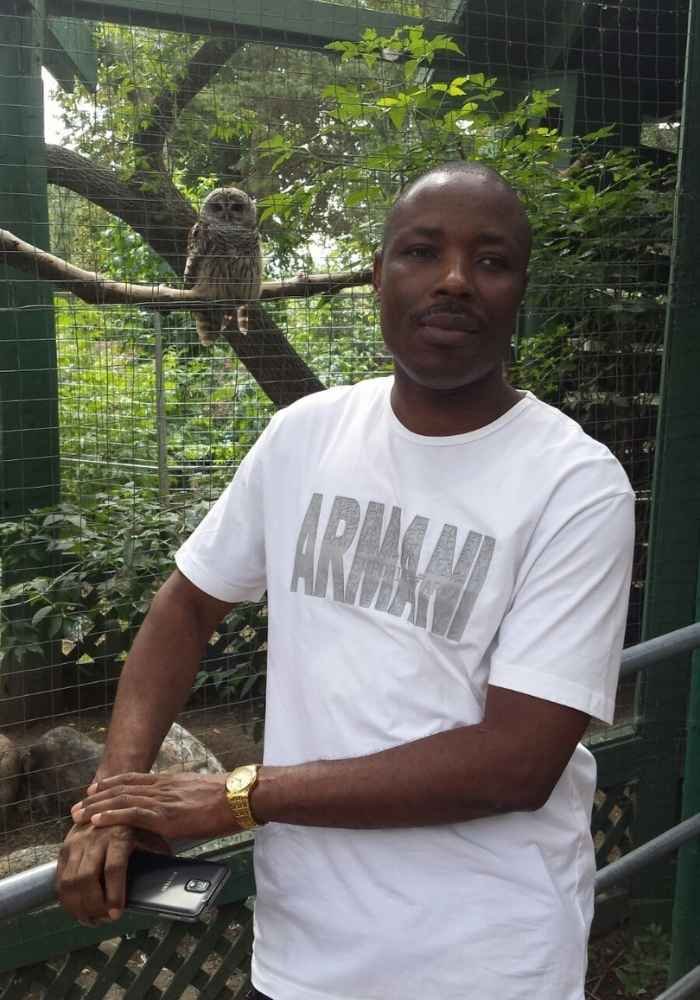
Snowy Owl
Peregrine Falcon
Eurasian Eagle Owl
Burrowing Owl
Reptiles & Amphibians
Inside the Saito Centre, visitors can see reptiles, amphibians, frogs, and other smaller species in climate-controlled habitats.
Must-See Exhibits
Nature's Wild Backyard
A favourite for families, featuring immersive habitats, the Urban Farm, and the popular red panda exhibit.
Urban Farm
Children can interact with:
Goats
Rabbits
Chickens
Sheep
Ponies
Juliana pigs
Makira Outpost
This Madagascar-themed exhibit showcases several lemur species while highlighting rainforest conservation efforts.
Arctic Shores
Watch harbour seals and northern fur seals glide through underwater viewing areas, offering one of the zoo's most engaging experiences.
Carnivore Alley
See impressive predators including:
Snow leopards
Amur tigers
Arctic wolves
Canada lynx
Red foxes
Servals
Birds of Prey
Learn about rescued raptors that cannot be released into the wild and play an important role in educational programs.
Sensory accommodations through its partnership with KultureCity, including sensory bags and trained staff to assist guests with sensory needs.
When Is the Best Time to Visit the Edmonton Valley Zoo?
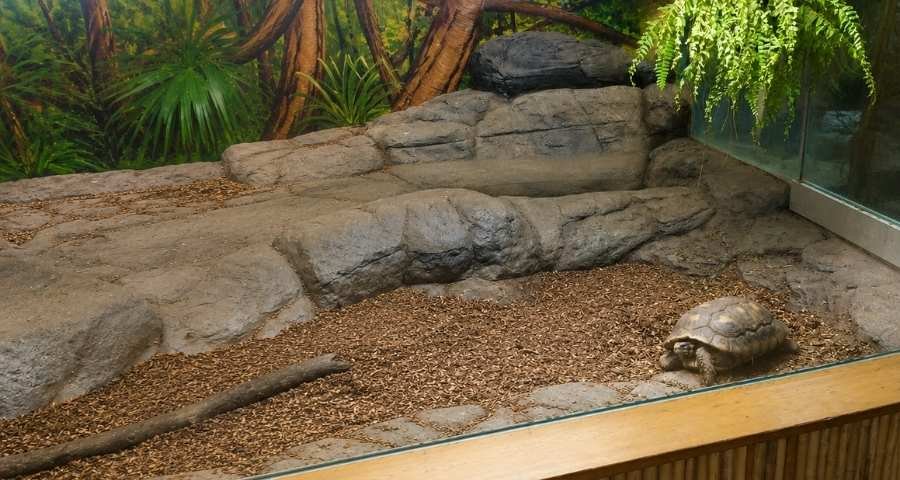
The Tortoise at Edmonton Valley Zoo
Hours change dramatically by season, so this matters more than you might think.
Peak Summer Season (May 9 – September 7, 2026)
2026 Summer Hours:
Open daily
10 AM to 5 PM
Last admission is 4 PM (one hour before closing)
Summer is the best time to visit — animals are more active, all exhibits are running, weather is warm, and events like conservation talks and special animal presentations are held regularly. The animals are also often most active right when the gates open at 10 AM or during the final hour before closing.
Fall and Spring Shoulder Seasons
Operating days may be reduced during shoulder seasons, but the zoo maintains its 10 AM to 5 PM hours when open. Check the current zoo website to confirm operating days.
Winter Season (January to March)
2026 Winter Hours (January 5 – March 27, 2026):
Open Thursday through Sunday only (10 AM to 5 PM)
Closed Monday through Wednesday
This is one of the biggest surprises for winter visitors. If you're planning a mid-week winter visit, the zoo may be closed. Plan accordingly.
Year-Round Notes
The zoo is open 364 days a year — closed only on Christmas Day
Hours change seasonally, so always check the current website before your visit
The zoo hosts once-a-year free admission days — check the schedule if you want to plan around this.
advertisement
Edmonton Valley Zoo Admission (2026 Rates)
Admission is affordable, one of the best-value zoo experiences in Canada.
Approximate 2026 rates (confirm current pricing on the official website):
Child (Ages 2–12): around $10.50
Youth (Ages 13–17): around $13.50
Adult (Ages 18–64): around $16.95
Senior (Ages 65+): around $13.75
Tot (0–23 months): Free
Annual Membership: Available with unlimited admission for one year
Money-Saving Tips
Annual Membership: If you plan to visit more than 2–3 times per year, an annual pass pays for itself quickly. Members also get:
Free admission during regular hours for a year
Discounts at participating zoos across Canada and the US (Greater Vancouver Zoo, Calgary Zoo, and others)
10% off at the Zootique gift shop (in-store only)
Access to members-only events and opportunities
2-for-1 Alberta Deal: In some years, the zoo offers a promotion where Alberta residents can purchase admission and get free entry to the nearby Muttart Conservatory (Edmonton's famous glass pyramids). Check the official website for current promotional deals.
Once-a-Year Free Admission Day — Watch for the annual free admission day. It gets busy, but it's a great way to visit.
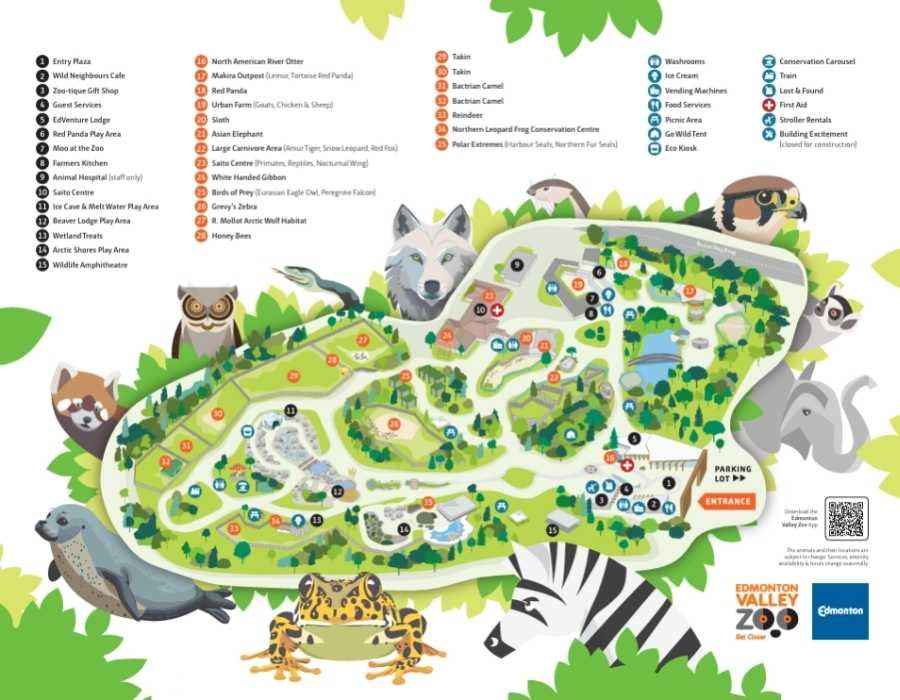
Edmonton Valley Zoo Map
Edmonton Valley Zoo map
Edmonton Zoo Special Activities and Events
The zoo hosts several ongoing activities during regular operating hours.
Daily Animal Talks and Feeding Times
Zoo staff give daily animal talks where you can meet and learn about specific species. Times are posted on the zoo's official app and information boards near the entrance.
The Zoo App
Download the official Edmonton Valley Zoo app for real-time updates on:
Animal talks and feeding times
Which animals are most active
Special events happening that day
Zoo maps
The app is your best friend if you want to time your visit to see specific animals at their most active.
Conservation Talks
The zoo hosts conservation talks on the first Thursday of every month during regular hours. General admission includes access.
Farmers Market (Summer Only)
Every Tuesday during summer, the Edmonton Valley Zoo Farmers Market runs from noon to 6 PM in the new entry plaza. Admission to the market is free — you don't need zoo admission to visit.
Sensory-Inclusive Site
The zoo is a designated sensory-inclusive site. If crowds or noise are overwhelming for you or a family member, you can borrow sensory bags at guest services. Bags include:
Noise-cancelling headphones
Fidget tools
Other sensory accommodations
Conservation Carousel
A charming ride designed with 100% of proceeds going to conservation programs supported by the zoo. Each carousel animal represents an endangered species that lives at the zoo, making it a fun and educational experience for kids.
Requirements: Riders must be under 50 inches (127 cm) in height
Cost: Free (donations for conservation accepted)
Miniature Train
A small train that circles part of the zoo grounds — a fun way to give kids a break from walking and see the zoo from a different angle.
Cost: Free with admission
Location: Near the camel exhibit
Hours: Daily, 10 AM–5 PM
Edmonton Zoo Dining Options
The Edmonton Valley Zoo offers casual dining options where you can enjoy snacks, beverages, and family-friendly meals during your visit. You'll typically find favourites such as burgers, sandwiches, fries, ice cream, coffee, and kid-friendly options.
If you prefer, you can bring your own lunch and enjoy it in one of the zoo's picnic areas. After your visit, you'll also find a variety of cafés and restaurants just a short drive away in Laurier Heights, Whyte Avenue, and downtown Edmonton.
Parking at Edmonton Valley Zoo
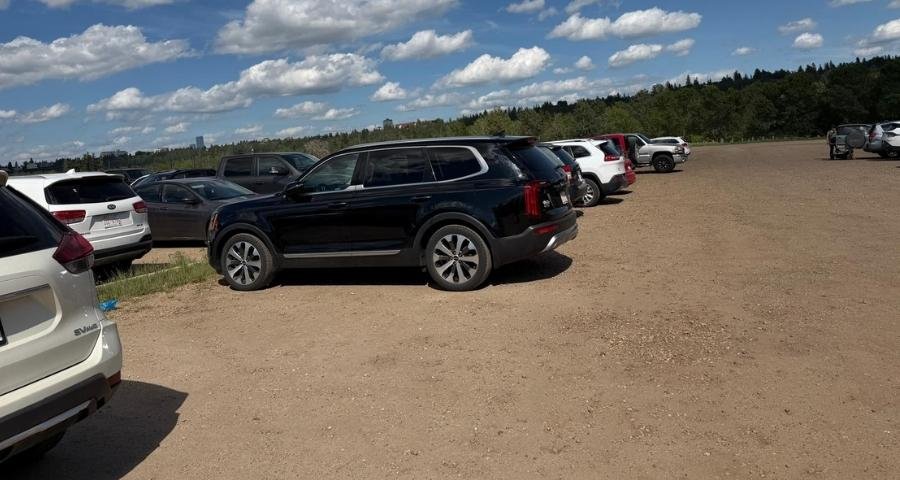
Edmonton Zoo Parking is free and big
A dedicated parking lot is located just outside the Edmonton Valley Zoo entrance, with accessible parking spaces available for visitors with valid permits. Parking fees may apply, so it's a good idea to check the latest information before you visit.
During weekends, holidays, and the busy summer season, the parking lot can fill up quickly. Arriving early or taking Edmonton Transit Service (ETS) are great ways to avoid parking delays.
Practical Tips for Your Visit
A few honest tips from years of visits.
Arrive between 10:30 AM and noon for the best experience. Animals are most active early. The zoo closes at 5 PM daily, and last admission is 1 hour before closing.
Check the website before you go. Private events, special closures, and seasonal hour changes can affect your visit.
Reserve timed entry online. During busy periods, reserving your entry time online guarantees your slot and speeds up entry.
Download the zoo app. It has real-time information about animal talks, feeding times, and special events.
Wear comfortable walking shoes. The zoo is spread out over a fairly large area, and you'll be walking a lot.
Bring water and snacks. The zoo has food options but bringing your own is more affordable and convenient for kids.
Dress in layers. Summer days in Edmonton can vary. Winter visits require warm gear.
Bring a stroller for young kids. The zoo is stroller-friendly, and small children get tired fast.
Plan for at least 2–3 hours. Rushing through the zoo takes away from the experience. Longer visits let you enjoy multiple animal talks and take breaks.
Support conservation efforts. The Zootique gift shop, carousel donations, and admission fees all support zoo conservation programs.
Attractions Near Edmonton Valley Zoo
Since you're already in the River Valley, here are some other places to combine with your zoo visit.
Sir Wilfrid Laurier Park: The park surrounding the zoo has walking trails, picnic areas, and playgrounds. Great for extending your day outdoors.
Fort Edmonton Park: (about 10 minutes' drive) — Canada's largest living history museum, featuring recreated streets from different eras of Edmonton's history.
Whitemud Amusement Park: (about 15 minutes' drive) — A family-friendly amusement park with rides, mini golf, and go-karts.
Kinsmen Park and the John Janzen Nature Centre: Nature trails, a beach on the North Saskatchewan River, and interactive nature exhibits.
Downtown Edmonton and the Alberta Legislature: (about 15 minutes' drive) — For visitors wanting to combine the zoo with more urban Edmonton attractions.
Who Is the Edmonton Valley Zoo Best For?
Families with young children: Absolutely. The petting zoo, carousel, miniature train, and manageable size make it perfect for families with kids ages 2 to 12.
Adults on a nature outing: Yes. The River Valley setting, thoughtful exhibits, and educational programming appeal to adults too.
Photography enthusiasts: The zoo offers beautiful photo opportunities, especially of the snow leopards, red pandas, and the tigers.
Nature and conservation lovers: The zoo's focus on conservation and educational programming will resonate.
Visitors expecting a mega-zoo like San Diego or Toronto: Manage your expectations. The Edmonton Valley Zoo is smaller than the Calgary Zoo; the Calgary Zoo has more exhibits, more animal species, larger habitats, and more attractions overall. The Edmonton Valley Zoo is more of a "half-day experience" than an "all-day adventure." Some exhibits are older. If you're comparing the two, Calgary Zoo has more scale, while Edmonton Valley Zoo has a quieter, more intimate feel and a stronger river valley setting.
Final Thoughts: Edmonton Valley Zoo — Small, But Worth the Visit
After many visits to the Edmonton Valley Zoo, my honest verdict is that this is one of the best-value zoo experiences in Canada — as long as you know what to expect.
It's not the biggest zoo in Canada. It's not the flashiest. But it's genuinely well-designed, focused on conservation, and beautifully situated in Edmonton's River Valley. The snow leopards and red pandas alone are worth the visit, and the setting itself is peaceful and green.
Just do yourself a favour and check the website before you go. Note the 5 PM closing time and 4 PM last admission. Book your entry online if possible. Bring your kids on a Saturday morning before the crowds pick up. And plan to spend a slow morning or afternoon here — not a rushed hour.
Frequently Asked Questions
Where is the Edmonton Valley Zoo located?
The Edmonton Valley Zoo is located at 13315 Buena Vista Road in Sir Wilfrid Laurier Park, in Edmonton's West End River Valley. From downtown Edmonton, it's about a 15-minute drive.
How much does it cost to go to the Edmonton Zoo?
Admission is affordable: approximately $16.95 for adults, $13.75 for youth and seniors, $10.50 for children (2–12), and free for tots under 24 months. Annual memberships offer unlimited admission for a year and are great value for locals. Check the official website for current pricing.
What time does the Edmonton Valley Zoo close?
The Edmonton Valley Zoo closes at 5 PM daily. Last admission is one hour before closing time (4 PM). Always check the current hours on the official City of Edmonton website before your visit — hours are consistent year-round, but the operating days can change seasonally.
Is the Edmonton Valley Zoo open in winter?
Yes, but with reduced operating days. During the winter season (typically January through late March), the zoo is open Thursday through Sunday, 10 AM to 5 PM, and closed Monday through Wednesday. Always confirm current operating days before a winter visit.
Should I book Edmonton Valley Zoo tickets online?
Yes, booking timed entry online through the City of Edmonton's Move Learn Play platform is highly recommended. It guarantees your entry slot, speeds up entrance, and lets you reserve up to two weeks in advance. Online purchases must be made before the zoo's operational hours for that day.
Is Lucy still at the Edmonton Valley Zoo?
Yes, as of 2026, Lucy the Asian elephant is still living at the Edmonton Valley Zoo. Lucy was orphaned in Sri Lanka and brought to the zoo on May 19, 1977, at approximately two years old. She celebrated her 50th birthday on July 1, 2025.
How many animals are in the Edmonton Valley Zoo?
The Edmonton Valley Zoo is home to over 250 exotic and native animals from more than 100 different species. Notable residents include snow leopards, Amur (Siberian) tigers, Arctic wolves, red pandas, ring-tailed lemurs, red-fronted lemurs, North American river otters, Asian elephant Lucy, farm animals in the petting zoo, birds of prey, and many more. It's an accredited zoo (CAZA-accredited) with active conservation programs supporting endangered species around the world.
Is the Edmonton Valley Zoo family-friendly?
Very. With a petting zoo, conservation carousel, miniature train, sensory-inclusive amenities, and a manageable size perfect for young children, it's one of the most family-friendly attractions in Edmonton.
Is there free parking at the Edmonton Valley Zoo?
Edmonton Zoo's parking is free; it is a large lot right outside the entrance. On busy summer weekends, arrive earlier in the day to avoid parking hassles.
How long should you spend at the Edmonton Valley Zoo?
Plan for 2 to 3 hours for a complete visit. Rushing through takes away from the experience. If you want to include lunch, animal talks, and time on the carousel and train, allow up to 4 hours.
Is the Edmonton Valley Zoo smaller than the Calgary Zoo?
The Edmonton Valley Zoo is noticeably smaller than the Calgary Zoo. Calgary Zoo has more animal exhibits, more species, larger habitats, and a bigger overall footprint. Edmonton Valley Zoo is more compact and better suited to a half-day visit than a full day. However, Edmonton Valley Zoo has a quieter atmosphere, a beautiful river valley setting, and lower admission prices, making it a great local option for families with young kids. If you're a visitor to Alberta and can only pick one, Calgary Zoo has more overall variety, but Edmontonians and visitors already in Edmonton will find the Valley Zoo well worth the trip.
Used only with old Urchin versions of Google Analytics and not with GA.js. Was used to distinguish between new sessions and visits at the end of a session.
End of session (browser)
__utmz
Contains information about the traffic source or campaign that directed user to the website. The cookie is set when the GA.js javascript is loaded and updated when data is sent to the Google Anaytics server
6 months after last activity
__utmv
Contains custom information set by the web developer via the _setCustomVar method in Google Analytics. This cookie is updated every time new data is sent to the Google Analytics server.
2 years after last activity
__utmx
Used to determine whether a user is included in an A / B or Multivariate test.
18 months
_ga
ID used to identify users
2 years
_gali
Used by Google Analytics to determine which links on a page are being clicked
30 seconds
_ga_
ID used to identify users
2 years
_gid
ID used to identify users for 24 hours after last activity
24 hours
_gat
Used to monitor number of Google Analytics server requests when using Google Tag Manager
1 minute
_gac_
Contains information related to marketing campaigns of the user. These are shared with Google AdWords / Google Ads when the Google Ads and Google Analytics accounts are linked together.
90 days
__utma
ID used to identify users and sessions
2 years after last activity
__utmt
Used to monitor number of Google Analytics server requests
10 minutes
__utmb
Used to distinguish new sessions and visits. This cookie is set when the GA.js javascript library is loaded and there is no existing __utmb cookie. The cookie is updated every time data is sent to the Google Analytics server.