
Most museums ask you to look at history through glass. Fort Edmonton Park asks you to walk down the middle of it, on wooden sidewalks, past shopfronts that look the way they did more than a hundred years ago.
I visited Fort Edmonton Park for a family day out, which turned out to be the right way to see it. We walked more than we expected, we got tired in places, and we found out the hard way which parts are worth planning around.
Inside one ticket, you can ride a steam train, walk through four different eras of the city, and lose half an hour to a midway game. The trick is knowing the order to do it in.
This guide covers what to see, how long you actually need, what tickets cost, and how to get there.
What Is Fort Edmonton Park?
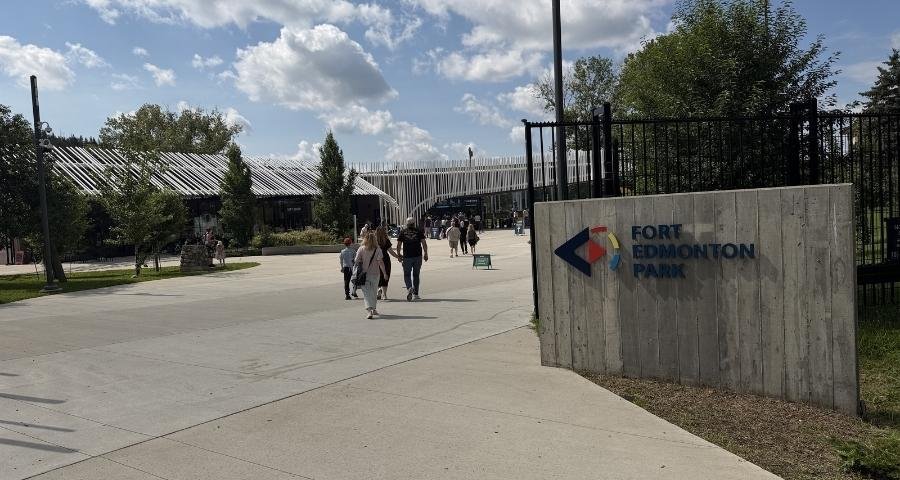
Fort Edmonton Park is a living history museum in the river valley, run by the City of Edmonton and the largest of its kind in Canada. It works nothing like the other museums in Edmonton.
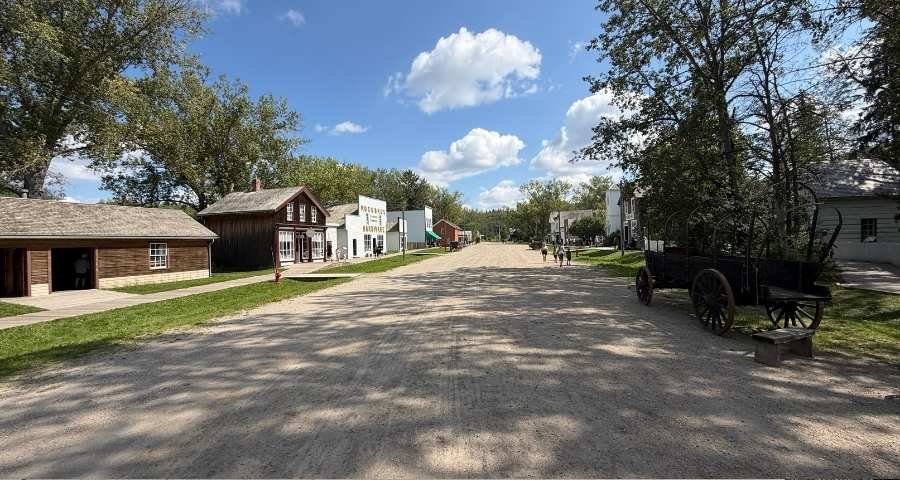
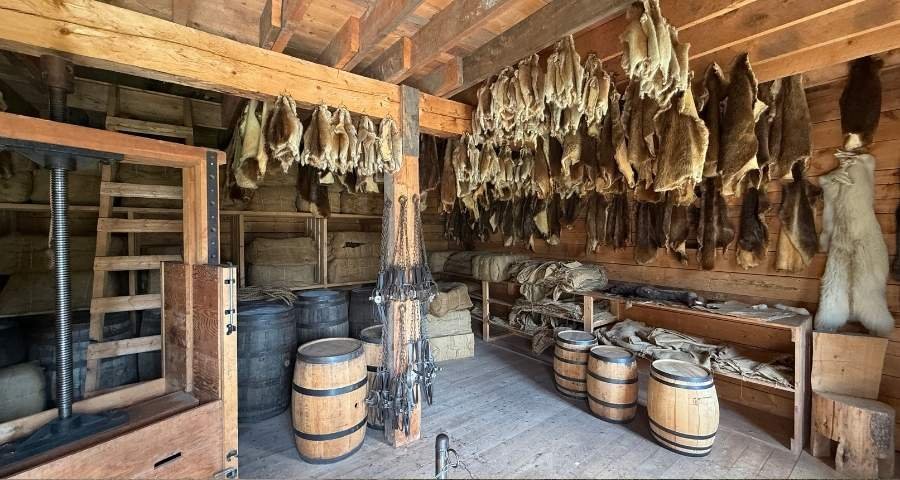
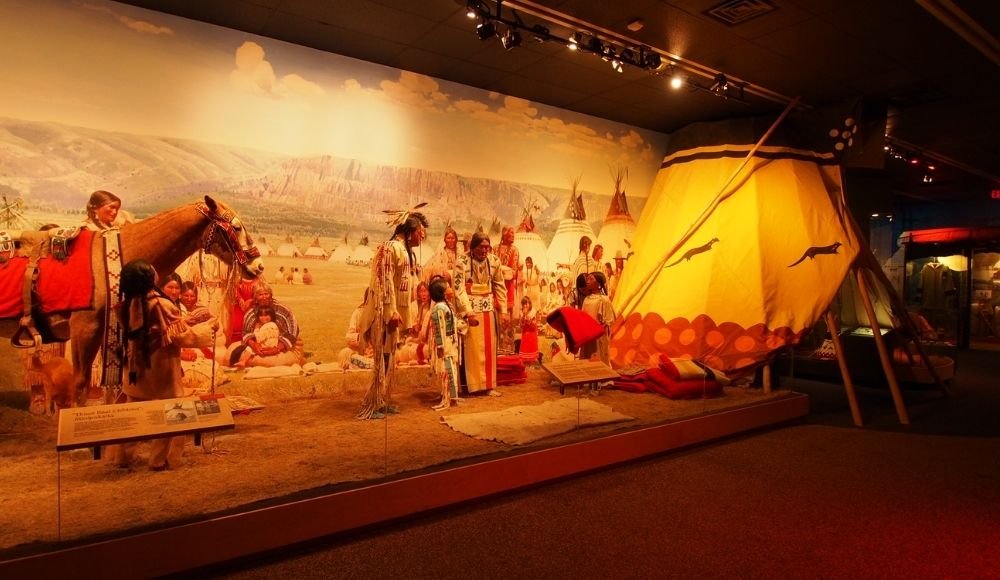
Instead of display cases, it is laid out as full-size historical settings you walk through in order: a fur trade fort, then three streets set in 1885, 1905, and 1920. An indoor Indigenous Peoples Experience covers thousands of years of history here before and after that timeline begins. The buildings are staffed by costumed interpreters who stay in the role of someone living in that period.
Why it matters to Edmonton is simple. Much of the city's early architecture is gone. This is where a lot of it still stands, either as original buildings moved here or as careful reconstructions.
My Visit to Fort Edmonton Park
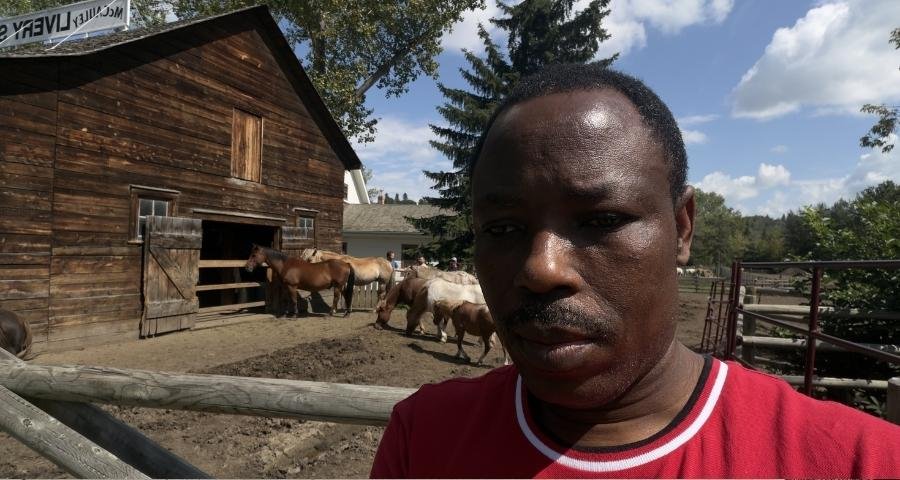
The first thing I noticed is how big it is. This is not a two-hour attraction, and the walking distances between areas are real.
We started at the front entry and walked the historical streets rather than taking the train down first. By the time we reached the 1846 Fort at the far end, our legs were weak. The fort sits at the back, and walking there uses more energy than you expect.
What saved us was the horse-drawn wagon on 1885 Street. It passed the fort and carried on through the settlement era past Ottewell Farm, and sitting down for it was as much a rest as a ride.
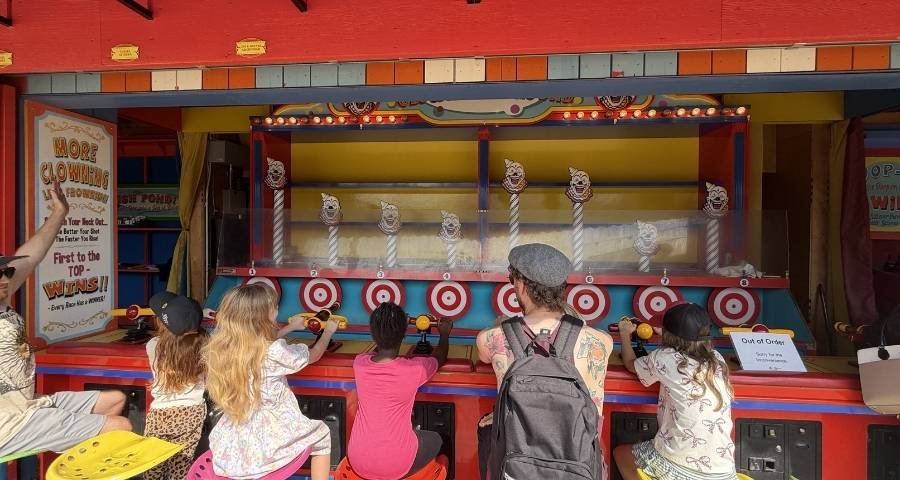
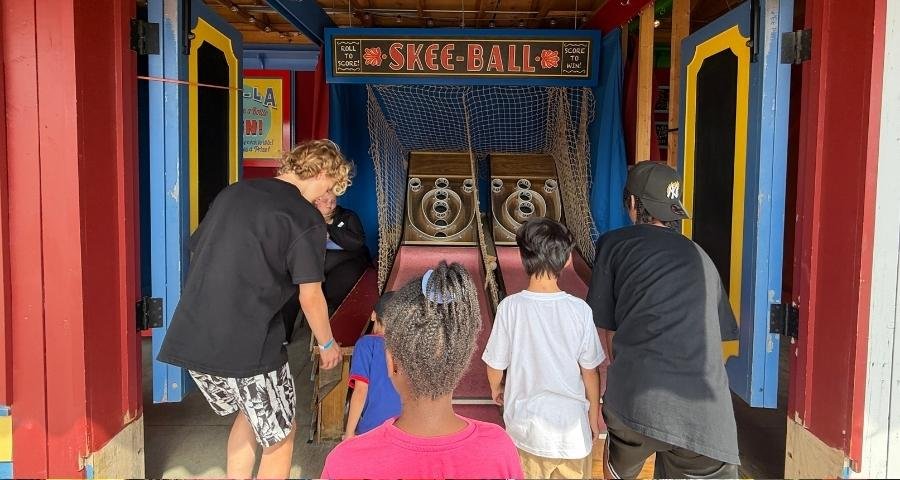
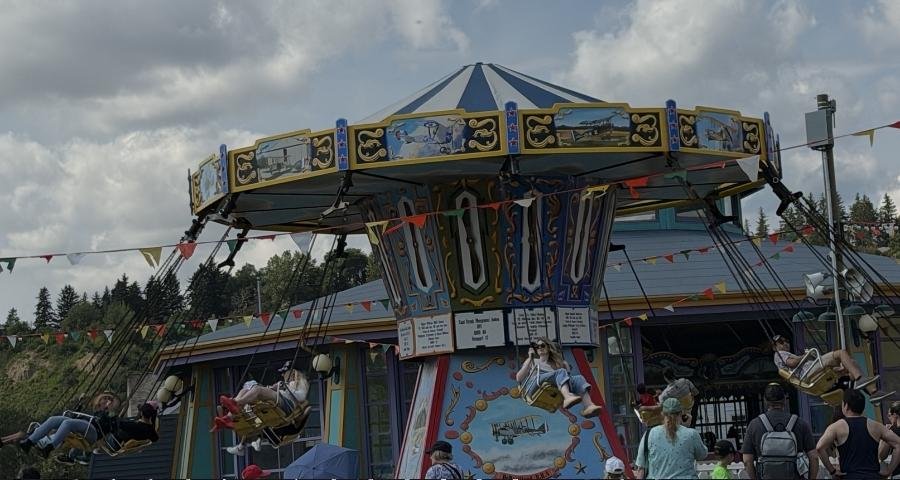
We left the Midway for the way back, after the streets were done, and that was the right order. The games are addicting, and I would not have wanted to walk the streets afterwards.
Our last ride was the 1919 Baldwin steam train. It circles the park on its own track around the outside, unlike the streetcar, which runs along the historical streets themselves. Finishing on the train, sitting down and watching the park go past, was a good way to end.
This is mostly an outdoor site, so the weather you get is the visit you get.
Fort Edmonton Park Map
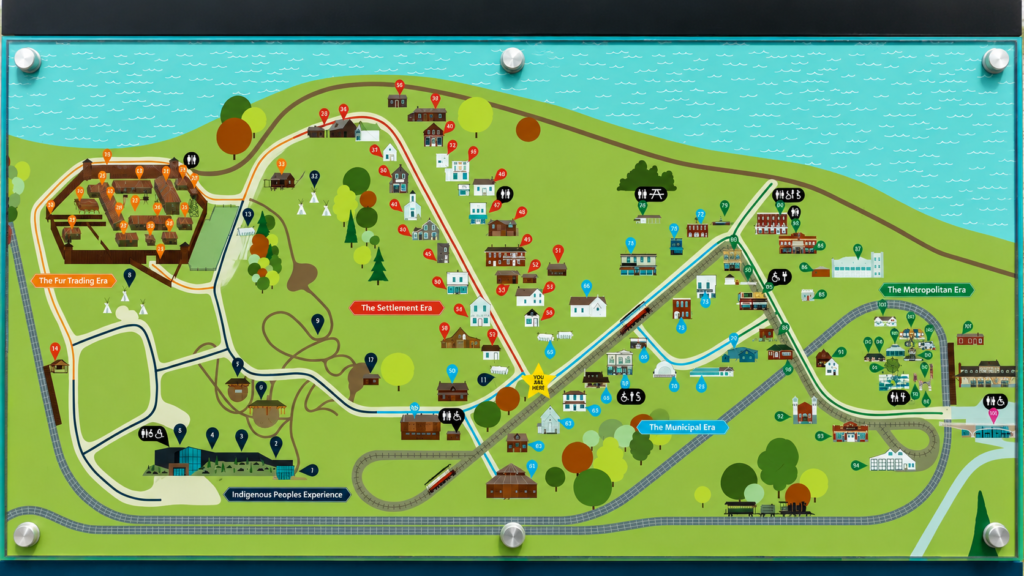
Things to Do at Fort Edmonton Park
What to expect in each area during the summer season, and roughly how long to give it.
| Area | Good for | Suggested time |
|---|---|---|
| Indigenous Peoples Experience | All ages, indoor break | 45–60 min |
| 1846 Fort | History fans, kids | 45–60 min |
| 1885 Street | Everyone | 45–75 min |
| 1905 Street | Everyone | 45–75 min |
| 1920 Street | Families, food stops | 60–90 min |
| Midway | Kids and teens | 45–90 min |
| Train and streetcar | All ages | 20–40 min total |
Indigenous Peoples Experience
An indoor, interactive exhibit built with input from Treaty 6 First Nations and the Métis Nation of Alberta, covering the history and culture of Indigenous Peoples here well before the fur trade. It is the most modern space in the park and a good quiet break on a hot day. A market inside sells hand-crafted goods.
1846 Fort
A reconstruction of the Hudson's Bay Company trading post that gave the park its name. Inside the palisade gates are the trading room, workshops, living quarters, and the Chief Factor's house. Kids like it because the buildings are small and easy to explore, and adults get more from the interpreters. It sits at the far end of the site.
1885 Street
Edmonton as a small settlement finding its feet after the fort era, and the most rural of the three streets. Along it are Kelly's Saloon, Lauder's Bakery, Ottewell Farm and its animals, and McDougall's General Store, which sells pioneer goods and ride tickets. The horse-drawn wagon runs here.
1905 Street
By 1905, Alberta was a province, and Edmonton was growing fast. This street shows that, with larger buildings and a busier main-street feel. The Masonic Hall operates as a food hall, a practical lunch stop halfway through the park. The change from 1885 to 1905 is the clearest jump here.
1920 Street
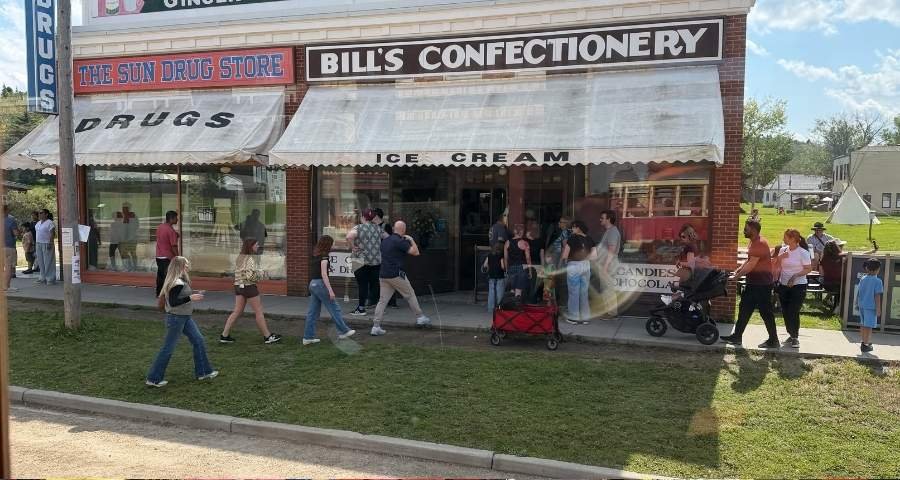
The largest and busiest street, closest to a recognizable modern city. It has the Capitol Theatre, Hotel Selkirk, Johnson's Cafe, Bill's Confectionery, and Tom Thumb Mini Golf. Families spend the most time here, partly for the food and partly because there is more to do than walk.
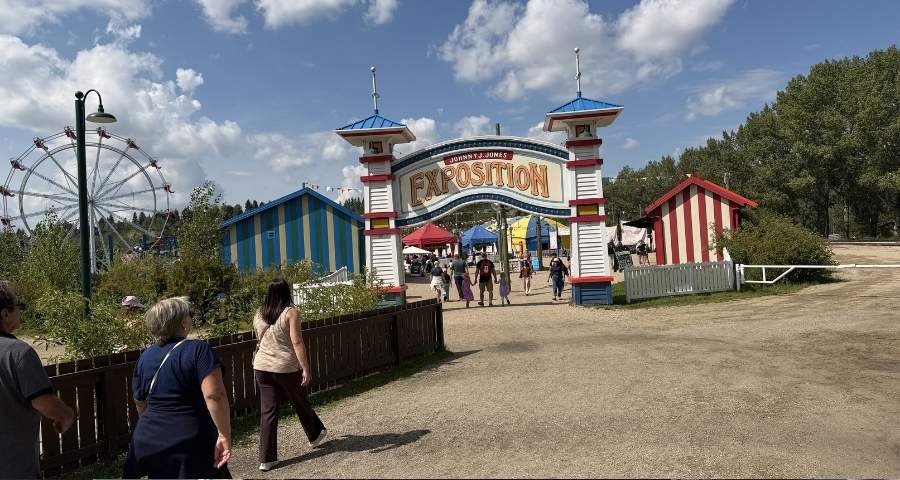
The Midway and Exhibition
The fairground area. Admission covers unlimited rides and games, and it is the part of the ticket I rate highest.
Kids and teenagers will push for this section, and it works as a reward for getting through the streets first. Fair warning: the games are addicting, and you will spend longer here than you plan. The Treasure Trove candy store is here too.
Train and Streetcar Rides
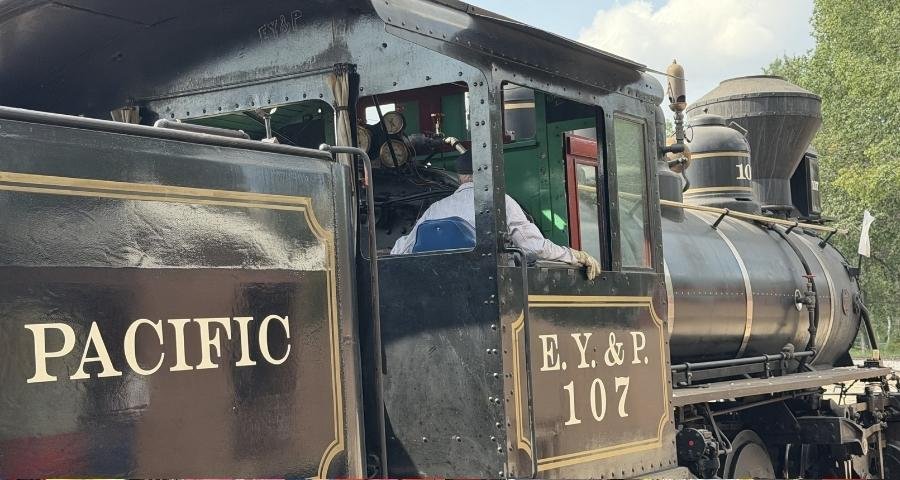
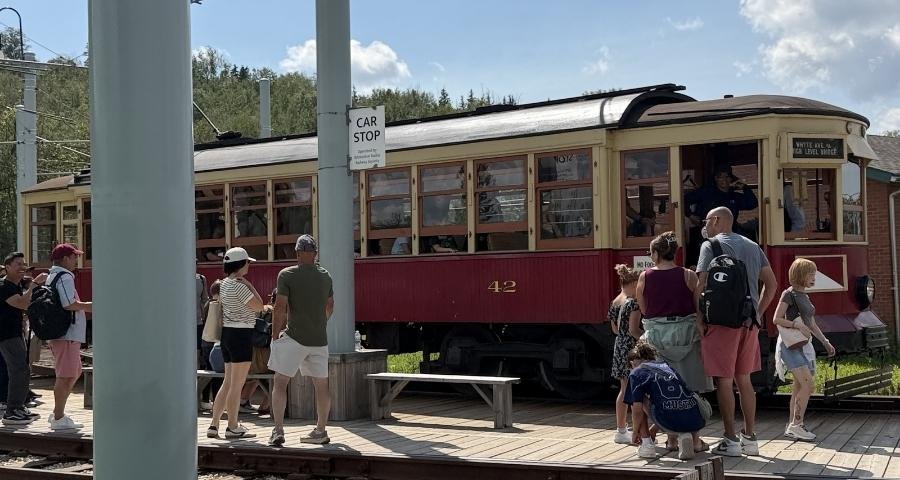
Two different experiences, both worth doing. The 1919 Baldwin steam train runs on about four kilometres of track from the front entry station to a platform at the back near the 1846 Fort. The streetcar line is roughly one kilometre, with stops on 1905 and 1920 Streets, running along the streets rather than around.
Both are included and work as transport. The streetcar takes no strollers, walkers, or wheelchairs; the steam train is wheelchair-equipped.
Wagon, Pony, and Carriage Rides
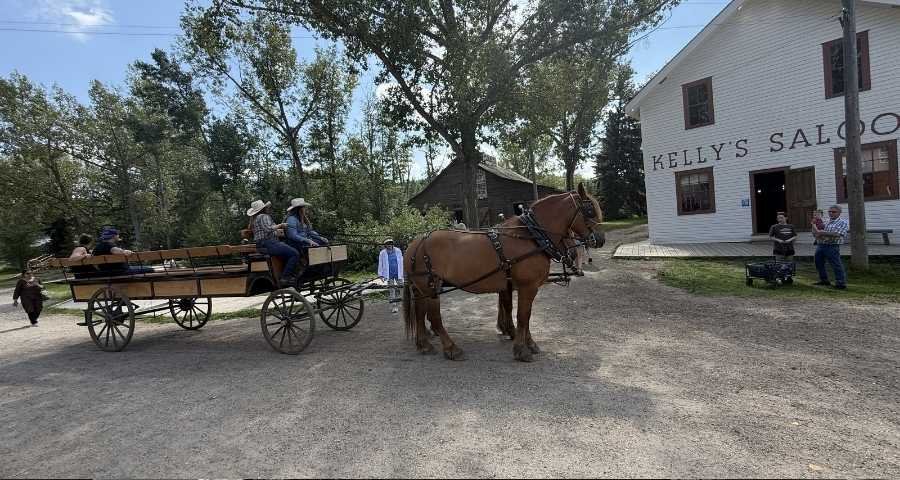
The one thing not covered by your ticket, and it caught me out. Pony rides for children 10 and under and horse-drawn wagon rides both cost $8 per person; children 2 and under are free on the wagon. The wagon runs along 1885 Street past Ottewell Farm. Buy tickets online or at McDougall's General Store.
The midway costs nothing extra, so it is easy to assume the wagon does too. I would still pay it: arriving there with tired legs, sitting down behind a pair of horses was worth $8.
A private vis-à-vis carriage ride, about 20 minutes, covers a wider part of the park on selected dates. The park also keeps horses, ponies, donkeys, goats, pigs, sheep, chickens, and turkeys, and asks you not to feed them.
One safety note from my visit: I went to rub a horse from behind and was corrected straight away. Approach from the front and rub the forehead. Standing behind a horse puts you where it can kick.
Capitol Theatre and Events
The Capitol Theatre runs programming through the season. There is also an escape game, weekend brunch at Johnson's Cafe, and summer stays at Hotel Selkirk. Check the calendar before booking.
Food and Shops
Food is spread across the site:
- Front entry: café and gift shop
- 1885 Street: Kelly's Saloon, Lauder's Bakery, McDougall's General Store
- 1905 Street: Masonic Hall food hall
- 1920 Street: Johnson's Cafe, Bill's Confectionery, Midway Delights food truck, Treasure Trove candy store
Johnson's Cafe in Hotel Selkirk is the only sit-down option. The I.A.M Collective and the Indigenous Market sell hand-crafted Indigenous goods.
What I Liked About Fort Edmonton Park
The strongest thing here is the structure. Moving from 1846 to 1920 gives the visit a shape a normal museum cannot match. You feel the city changing under your feet.
I also liked that most extras are included. Unlimited midway rides and games, the train, and the streetcars are covered by admission. The horse-drawn wagon is the exception.
Variety is the other strength: an indoor exhibit, four historical areas, a fairground, mini golf, farm animals, live theatre, and places to eat. Having three different ways to ride around it matters more than it sounds, because it lets you keep going once the walking catches up with you. The river-valley setting helps, too, since the city noise mostly disappears.
Is Fort Edmonton Park Worth Visiting?
Yes, for most people, as long as you give it enough time and go in the summer.
You will probably enjoy it if you are:
- A family with kids roughly 4 to 12, who get the most from the interpreters, animals, and rides
- Someone interested in Edmonton or Western Canadian history
- A visitor with a couple of days in the city, working through an Edmonton itinerary
- A local who last went on a school trip
You may want to skip it if:
- You have only a couple of hours, or you are out with toddlers. The Edmonton Valley Zoo is an easier day at that age
- Mobility is a concern. The site is large, only partly accessible, and several historic buildings are hard or impossible to enter with a wheelchair
- You are visiting in fall or winter and expect the full park. Only the Indigenous Peoples Experience stays open then
One more honest note: the price is not small for a family, and rain would take a lot away from the day.
How Long Do You Need at Fort Edmonton Park?
The park's own advice is at least four hours, and that is fair.
2 to 3 hours. The Indigenous Peoples Experience, the train, and one or two streets. You will skip most buildings.
Half a day, 4 hours. All four historical areas at a decent pace, the train, a streetcar, and a meal.
Most of a day, 5 to 7 hours. What I would recommend: time to go inside buildings, talk to interpreters, eat properly, and let kids loose on the Midway.
Best Time to Visit Fort Edmonton Park
Season matters here more than at almost any other Edmonton attraction.
Summer is when the full park operates: 10:00 AM to 5:00 PM, Wednesday through Sunday plus holiday Mondays, closed Mondays and Tuesdays. Last admission is an hour before closing. Watch the tail end of the season: in 2026 the Wednesday-to-Sunday schedule runs to early September, then the final stretch is Saturdays and Sundays only, September 12 to 20.
Fall and winter are limited. The general park closes, and select exhibits such as the Indigenous Peoples Experience stay open on reduced schedules. Ticketed events still run through the off-season, including winter wagon rides, Indigenous storytelling, and seasonal evening events, but do not arrive in November expecting to walk 1905 Street.
Aim for a weekday in July or August, or one of those September weekends once crowds thin. If you are planning around Alberta as a whole, the same months work. Arrive close to opening, since the main lot fills by afternoon.
Fort Edmonton Park Tickets and Admission
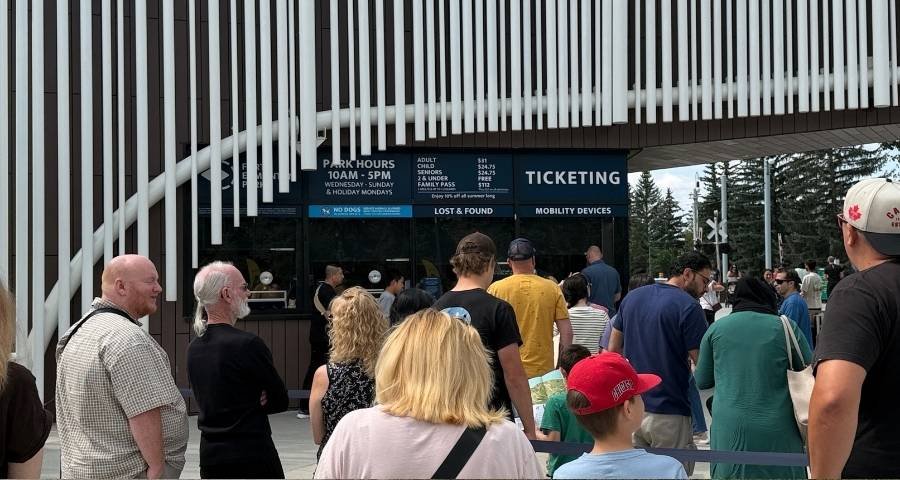
Buy online in advance. The gate sells tickets too, with cash, debit, Visa, or Mastercard, but capacity can limit that on busy days.
The rates posted at the gate for 2026, with 10% off all summer. GST is added on top.
| Ticket | Posted | With 10% off |
|---|---|---|
| Adult | $31.00 | about $27.90 |
| Child | $24.75 | about $22.28 |
| Senior | $24.75 | about $22.28 |
| Family pass (2 adults, up to 4 children) | $112.00 | about $100.80 |
Children 2 and under are free but still need a ticket. The family pass only beats separate tickets once you have three or more children.
Admission includes unlimited midway rides and games, the train, and the streetcars. Pony and wagon rides are $8 per person on top.
It is not a cheap day out, so if the budget is tight, check out the free things to do in Edmonton article. Prices change between seasons, so check the official site. Tickets are non-refundable but can usually be exchanged for another date, Leisure Access Passes are accepted in summer, free admission is extended to Indigenous Peoples, and group discounts exist. A membership pays for itself in two or three visits.
How to Get to Fort Edmonton Park
The park is at 7000 143 Street NW, Edmonton, down in the river valley on the south side.
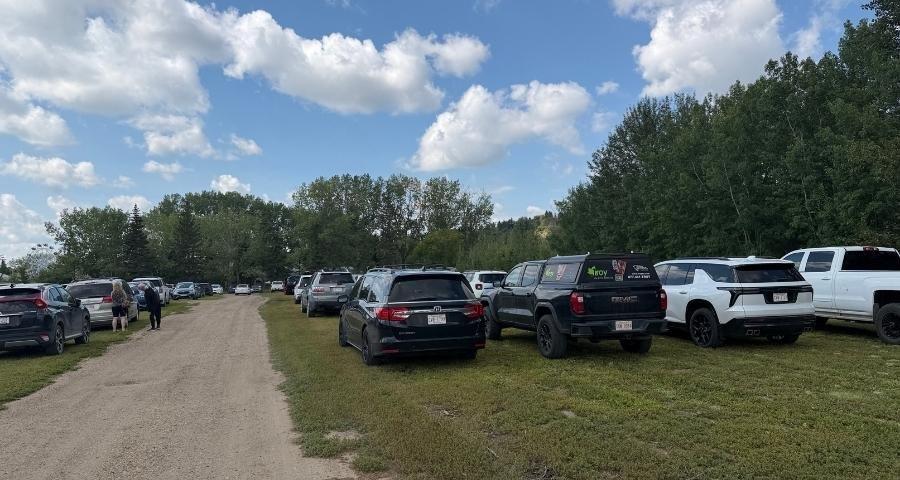
Driving. Take Fox Drive to Fort Edmonton Park Road and follow it in. Parking is free, but the main lot fills by afternoon. An overflow lot sits near the administration building.
Public transit. No regular bus drops you at the gate. Get to the South Campus/Fort Edmonton Park Transit Centre by LRT or bus, then book an On Demand Transit trip. Check fares on the City of Edmonton site.
Cycling. The park connects to the river valley trail system, and it is too far to walk from anywhere.
Tips for Visiting Fort Edmonton Park
- Check the calendar first. The park is closed Mondays and Tuesdays, and the season is shorter than people assume.
- Arrive within the first hour of opening. Easier parking, quieter streets, more attention from interpreters.
- Wear shoes you can walk in all day. You will cover several kilometres on gravel, boardwalk, and grass.
- Take the steam train down to the fort first. We walked instead and paid for it. Riding down and walking back saves your legs for the streets.
- Save the Midway for the end. The historical streets are harder to face after the games.
- Dress for changing weather. A hat, sunscreen, and a layer for wind or rain all earn their place.
- Download the park app. Buildings occasionally close for maintenance, and the app shows what is open.
- Plan your food stop around the map. Sit-down dining is on 1920 Street and the food hall on 1905 Street, so eating at the wrong moment means walking back.
- Talk to the interpreters. A direct question is the difference between looking at old buildings and learning something.
- Budget $8 each for the wagon ride, and bring a stroller for small kids. The wagon doubles as a sit-down break near the far end of the park. Stroller rentals are not available, and strollers are not allowed on the streetcar.
Fort Edmonton Park vs. Other Edmonton Attractions
The Royal Alberta Museum gives you the province's story indoors in a couple of hours, in any weather. Muttart Conservatory is a focused, ninety-minute visit. West Edmonton Mall is an all-weather day of shopping and rides with no historical angle at all.
Of the main attractions in Edmonton, this is the only one where the draw is a place rather than a collection: you are not looking at Edmonton's history, you are inside a version of it. It also depends far more on the season, which is the main thing to weigh when you pick a date.
Frequently Asked Questions
Is Fort Edmonton Park worth visiting?
Yes, if you go in summer and give it at least four hours. First-timers and lifelong Edmontonians both get something out of it.
How long should I spend at Fort Edmonton Park?
Four hours is the practical minimum; five to seven is better, especially with kids.
What can you do at Fort Edmonton Park?
Explore four historical areas and the Indigenous Peoples Experience, ride a steam train and streetcars, go on midway rides and games, play mini golf, see farm animals, eat at period restaurants, and shop.
Are wagon rides included in the admission?
No, they are $8 per person, as are pony rides. Midway rides and games, the steam train, and the streetcars are included.
Is Fort Edmonton Park good for families?
Very good. Children roughly 4 to 12 get the most out of it, and admission covers the rides and transport that would normally cost extra.
What is the difference between the train and the streetcar in Fort Edmonton Park?
The steam train loops around the park on its own track between the front entry and the 1846 Fort. The streetcar runs along 1905 and 1920 Streets. Both are included and show you different parts of the site.
Is Fort Edmonton Park indoors or outdoors?
Mostly outdoors. Many buildings are open to enter, and the Indigenous Peoples Experience is indoors, but the walking happens outside.
Can you visit Fort Edmonton Park in winter?
Only in a limited way. The general park closes and select exhibits stay open on reduced schedules. Ticketed seasonal events do run.
Where is Fort Edmonton Park located?
At 7000 143 Street NW, in Edmonton's river valley on the south side, reached from Fox Drive.
Final Verdict
Fort Edmonton Park earns the time it asks for. A plan, comfortable shoes, and a free afternoon make the difference between a decent day and a good one. Pace yourself, and use the rides.
I would recommend it most to families with school-age kids, to anyone curious about how Edmonton grew from a trading post into a city, and to visitors who have done the obvious stops. I would not squeeze it into a spare couple of hours, and I would check the forecast first.


0 Comments