
Edmonton is bigger than most first-time visitors expect. The city covers more than 700 square kilometres, making it larger in area than Toronto, Montreal or Vancouver. The North Saskatchewan River Valley cuts through Edmonton, and the city stretches across a large area, making some neighbourhoods feel surprisingly far apart.
That is why it helps to think about Edmonton areas before you think about individual attractions. Where you base yourself changes almost everything about your trip:
- How far you are from the attractions you actually came to see
- Whether you can walk to restaurants at night or need to drive
- How much shopping is within easy reach
- How quickly you can get into the river valley
- Whether transit works for you, or whether you need a car
- The general feel of your mornings and evenings
Edmonton is a driving city for most visitors. Distances are real, and winter weather can slow things down. A 15-minute trip in July can take 30 minutes in January. Getting the location right the first time saves you a lot of backtracking.
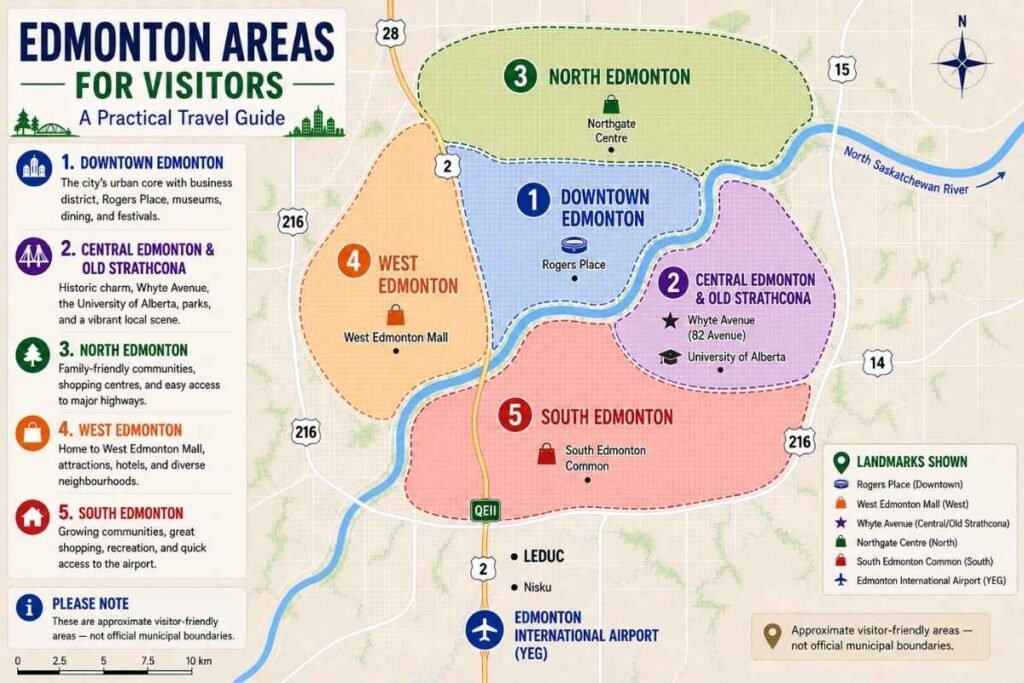
To keep things simple, this guide breaks the city into five broad areas: Downtown, Central Edmonton and Old Strathcona, North Edmonton, West Edmonton and South Edmonton. These are visitor-friendly groupings rather than official city boundaries; locals use them loosely, and you will hear other names too. They are just the clearest way to understand the different areas of the city before you book anything. If you want the wider picture first, our ultimate Edmonton travel guide covers seasons, history and trip length.
Downtown Edmonton
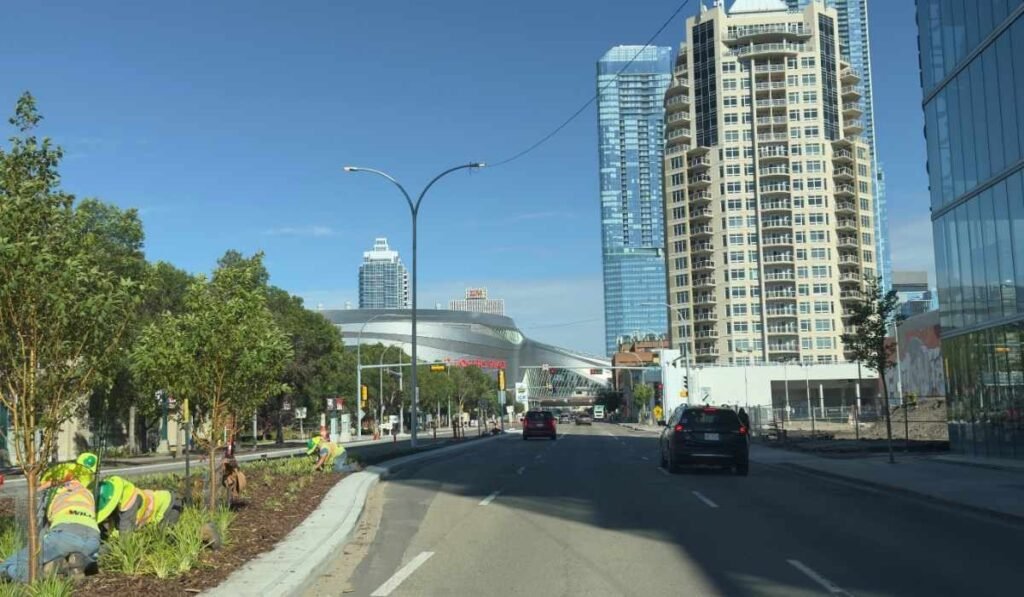
Downtown sits on the north bank of the river, roughly between 97 Street and 109 Street, with Jasper Avenue running through it as one of its main streets. Almost everything else in the city is described in relation to it, so it is worth understanding even if you decide to stay somewhere else.
This is the most compact part of Edmonton and the easiest to explore on foot. It is also the part of the city that has changed the most in the last decade. The ICE District, built around Rogers Place arena, added hotels, towers, restaurants and a public plaza to what used to be a quiet stretch of downtown. When the Oilers are playing, or a concert is on, the area fills up quickly.
The other downtown anchors are close together. Churchill Square hosts festivals through the summer and sits beside the Art Gallery of Alberta, the Stanley A. Milner Library and the Citadel Theatre. The Royal Alberta Museum is one of Western Canada's major museums and is easily worth half a day if you take your time.
The Edmonton Convention Centre sits along the riverbank overlooking the valley, and the Alberta Legislature grounds sit at the southwest edge of downtown, with free public gardens and a wading pool that turns into a skating rink in winter. If museums are a priority for your trip, our roundup of the best museums in Edmonton covers what is worth your time across the city.
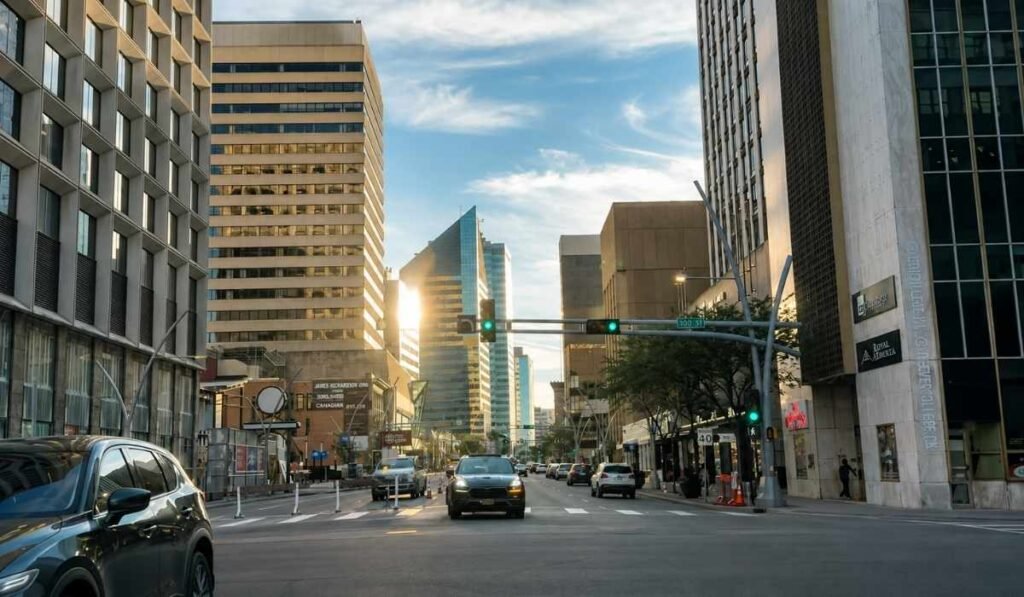
River valley access is one of the underrated things about staying downtown. You can be on a trail in Louise McKinney Riverfront Park or Victoria Park within 10 or 15 minutes of leaving a downtown hotel, which is not true of most city centres. Several of the free things to do in Edmonton are in or near this area.
Downtown also has the strongest transit connections in the city. The Capital, Metro and Valley Line LRT routes all pass through here, which matters if you are travelling without a car.
Downtown suits you if you are visiting Edmonton for the first time, coming for an event at Rogers Place or the Convention Centre, travelling for business, or you simply want restaurants and bars within walking distance of your room. It is less ideal if you are travelling with young kids who need space and easy parking, since most downtown hotels charge for parking.
One practical note for 2026: Valley Line West LRT construction is affecting 102 Avenue downtown, with lane closures in place through the construction season. Give yourself extra driving time in the core.
Central Edmonton & Old Strathcona
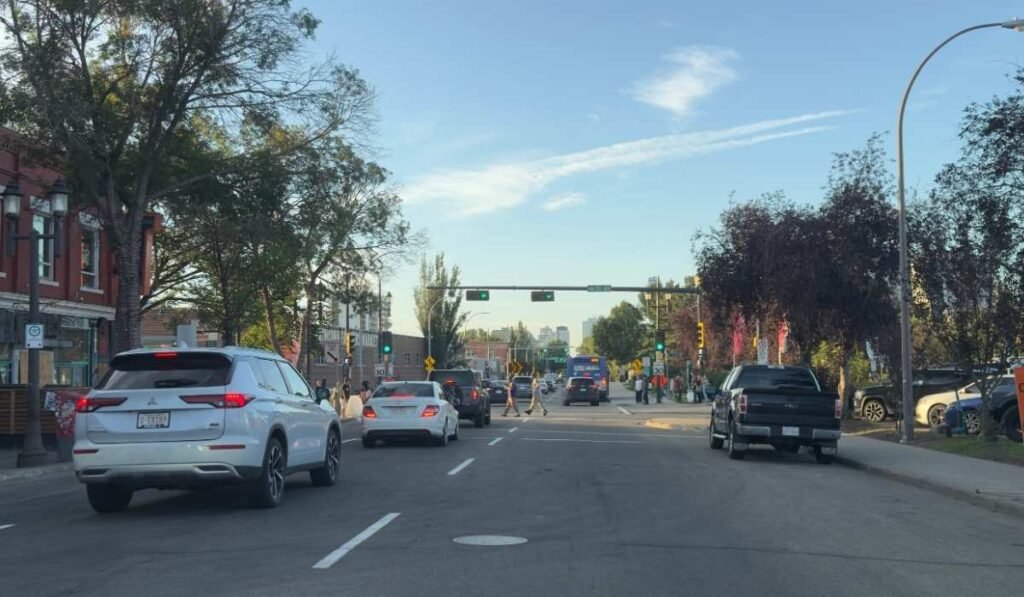
Central Edmonton is the ring of older, denser neighbourhoods around downtown, on both sides of the river. It gets its own section because the feel is genuinely different: fewer towers, more main streets, and more of the day-to-day life of the city.
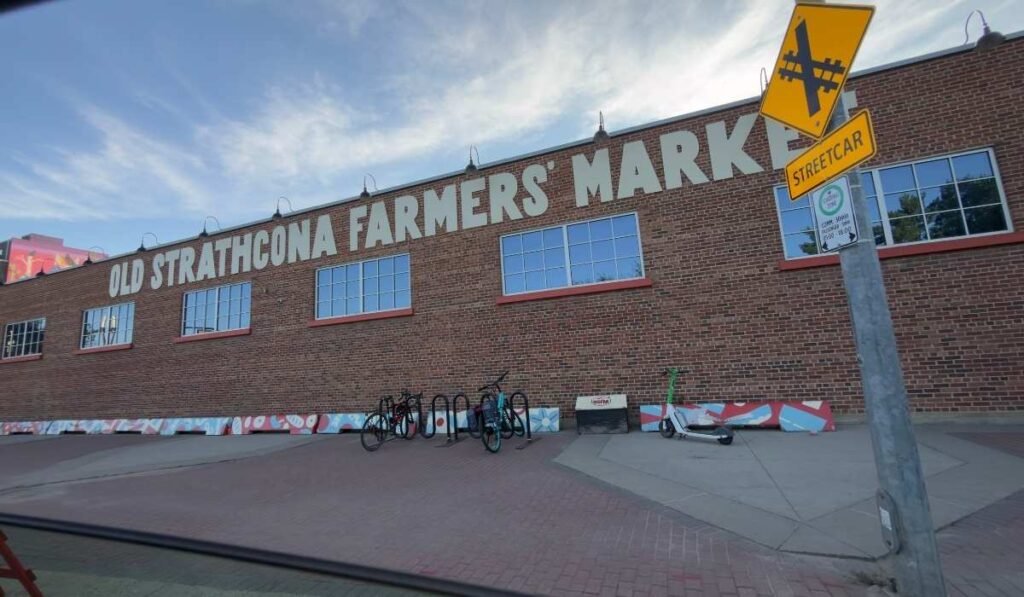
The best-known part is Old Strathcona, on the south side of the river. This was a separate town until 1912, and the brick storefronts along Whyte Avenue (82 Avenue) still show it. Whyte is where you go for independent shops, record stores, pubs, coffee, live music and late-night food.
The Old Strathcona Farmers' Market runs on Saturdays year-round and is a good place to start a morning. In August, the Edmonton International Fringe Theatre Festival takes over the whole district. It is the largest and oldest fringe festival in North America, and the streets change completely for about ten days. Our festivals and events section tracks what is on through the year.
Just north and west of Whyte is Garneau, a leafy older neighbourhood beside the University of Alberta campus. The student population keeps the area lively, with plenty of cafés, restaurants and shops serving the university community. Walk north from campus, and you reach the High Level Bridge, which carries you back to downtown on foot.
In summer, the High Level Bridge Streetcar runs across it, a restored streetcar with a genuinely good view of the valley, and one of the more memorable things you can do in the city for a few dollars.
On the north side of the river, Wîhkwêntôwin, the neighbourhood many people still call Oliver, was officially renamed in 2025 and sits immediately west of downtown. It is one of Edmonton's most densely populated areas, with good restaurants along 104 Street and Jasper Avenue and quick access to Victoria Park. A little further west, 124 Street has galleries, patios and a summer farmers' market.
Central Edmonton also has the best river valley access of any area. The Muttart Conservatory and its four glass pyramids sit in Cloverdale, just across the water from downtown, and the trail network connects most of these neighbourhoods to each other.
Central Edmonton suits you if you would rather stay in a neighbourhood than a hotel district. You want to walk to breakfast, browse shops in the afternoon and eat somewhere local at night. Accommodation here leans toward smaller hotels and short-term rentals rather than large chains, so book earlier than you would downtown, especially during Fringe in August.
Explore Central Edmonton & Old Strathcona →
North Edmonton
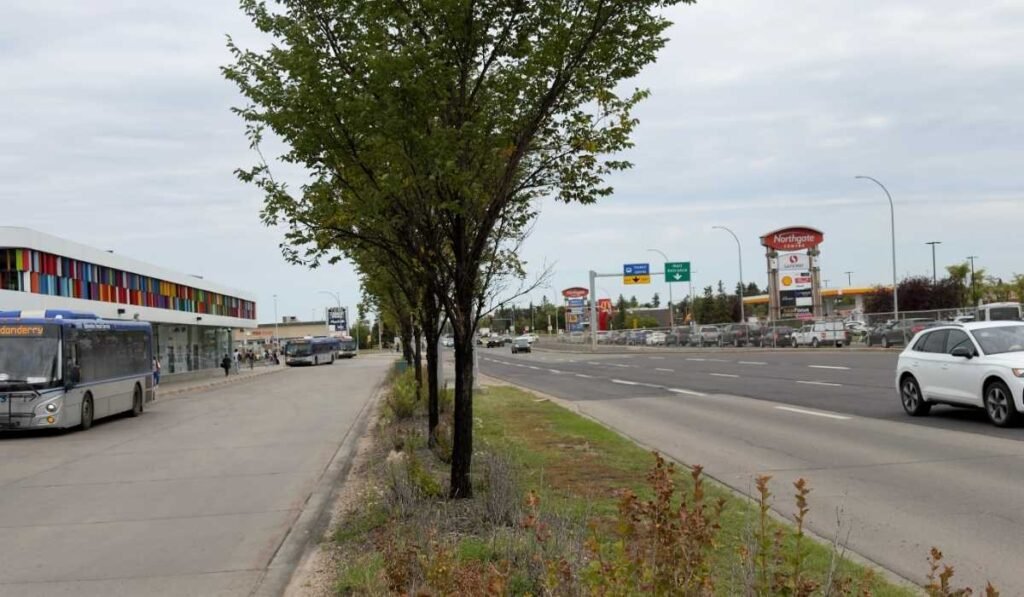
North Edmonton covers a wide band of the city above downtown, stretching from the Yellowhead Trail up to Anthony Henday Drive and out to both the northwest and northeast corners. Most visitors group all of it together, and that is how we treat it here.
The character is mostly residential. A large share of Edmontonians live here, in a mix of 1960s and 70s neighbourhoods and much newer developments. Castle Downs and the Northgate area sit in the central and northwest parts of North Edmonton. Clareview and Londonderry are further east.
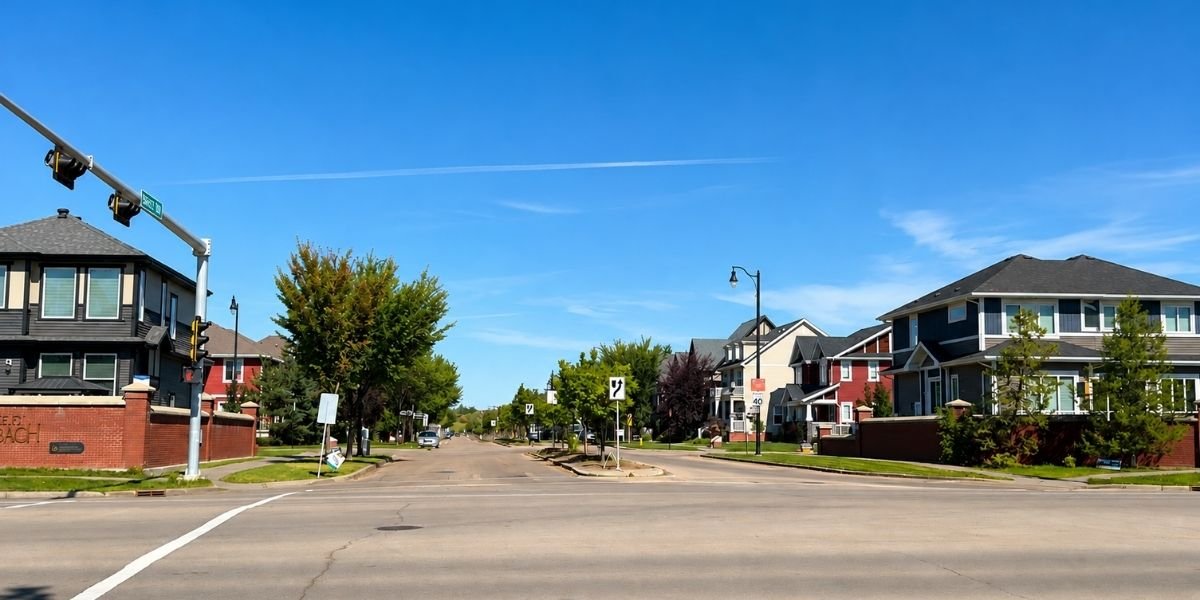
Griesbach, built on a former military base, is one of the newer communities and is noticeably different in layout from the older grid around it.
You will not find a dense cluster of headline attractions up here, and it is worth being honest about that. What you will find is everyday convenience: large grocery stores, big-box shopping along 137 Avenue, chain restaurants, recreation centres, arenas and some of the city's better neighbourhood parks.
Hermitage Park and Rundle Park in the northeast both sit along the river valley, with paved trails, picnic areas and open space that rarely feels crowded. The TELUS World of Science in Coronation Park, northwest of downtown, is the main family attraction in this part of the city.
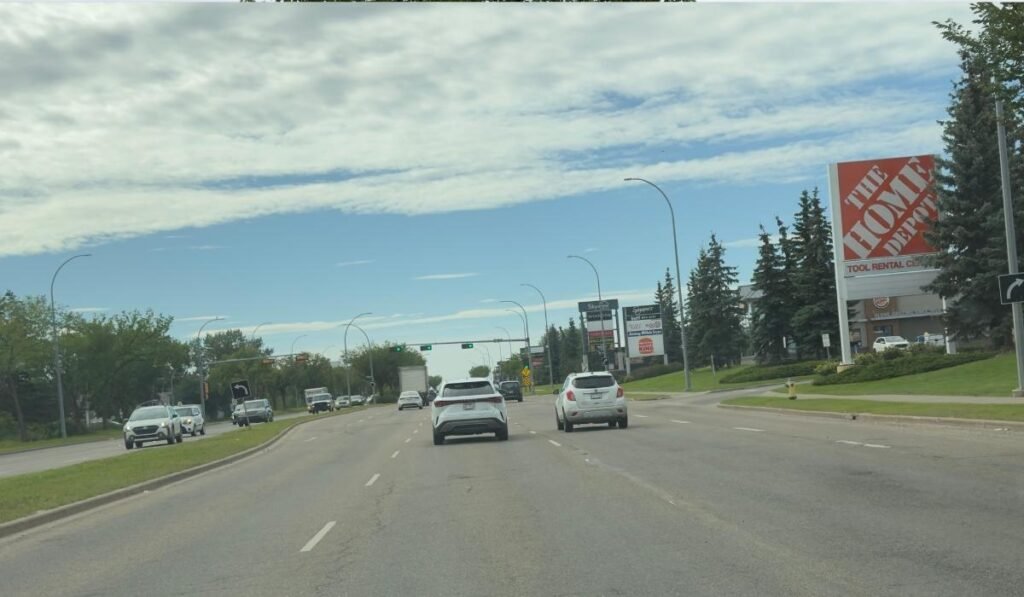
Getting around is straightforward if you have a car. Anthony Henday Drive rings the north side of the city, so you can reach the west end or cross to the south without going through the core.
The Capital Line LRT runs north to Clareview, and Edmonton Transit Service connects most of these neighbourhoods, though service is less frequent than in the centre. Our Edmonton Transit Service guide explains how fares and Arc cards work.
North Edmonton suits you if you are visiting family, you want a hotel with free surface parking rather than a downtown parkade, or you are heading somewhere north of the city: St. Albert, Fort Saskatchewan or the drive toward Elk Island National Park in the northeast.
Be realistic about the trade-off. If your plan is to walk to downtown attractions, restaurants and nightlife, North Edmonton will mean driving or a transit trip every single day. Choose it for a reason, not by default.
Explore North Edmonton →
West Edmonton
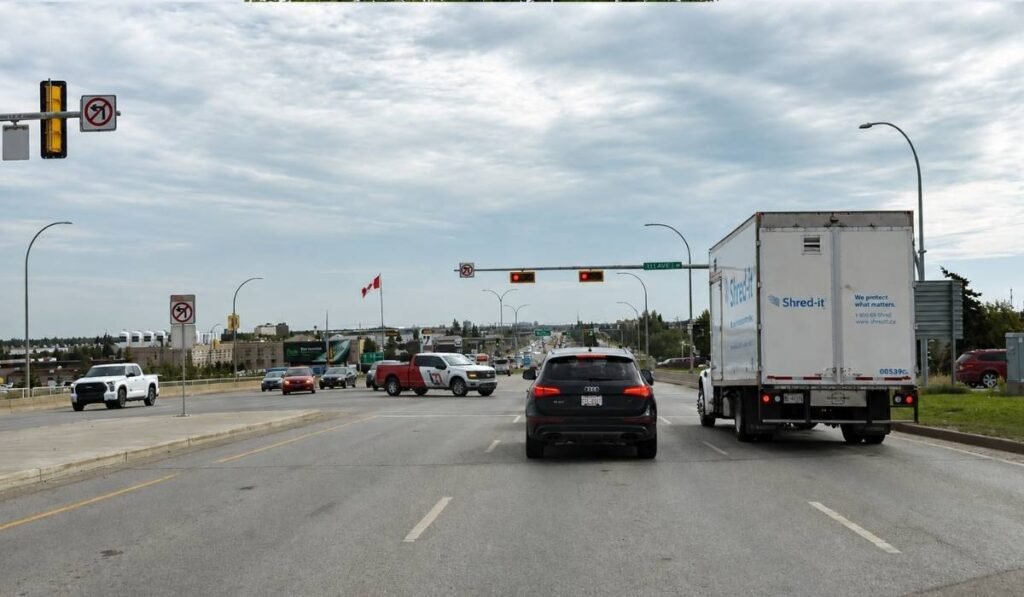
For many visitors, West Edmonton is synonymous with one attraction: West Edmonton Mall.
West Edmonton Mall opened in 1981 and is one of North America's largest shopping and entertainment complexes, with more than 800 stores and services. Calling it a mall undersells what it actually is: there is an indoor amusement park (Galaxyland), an indoor waterpark with a wave pool and slides, an ice rink, a sea lion habitat, a mini-golf course, two hotels attached to the property and more than 100 places to eat.
Families regularly build entire trips around it, particularly in winter when the weather makes outdoor plans unreliable. Our complete West Edmonton Mall guide covers tickets, timing and how to plan a day there without burning out.
The mall sits near 170 Street and 87 Avenue, and the surrounding area has developed around it. There is a large cluster of hotels within a few minutes' drive, at a wider range of prices than you will find downtown, and most of them have free parking, a real consideration if you are travelling by car. We keep an updated list of hotels near West Edmonton Mall if you are comparing options.
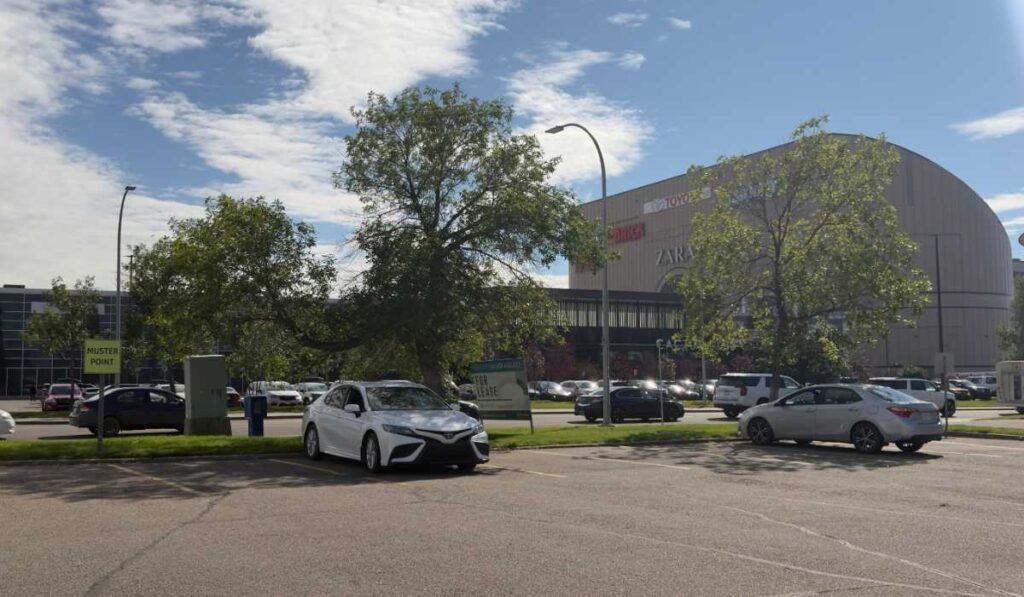
There is more out here than the mall, though. The Edmonton Valley Zoo sits in the river valley on the west side and is a manageable size for young children. Fort Edmonton Park, Canada's largest living history museum, is in the valley near Whitemud Drive, with costumed interpreters, four historical eras, a steam train and a midway.
Whitemud Park and the Terwillegar trail system are close by for walking and cycling. Beyond that, west Edmonton is made up of established neighbourhoods like Jasper Place, Meadowlark and Callingwood, and newer ones out toward Lewis Farms.
Road access is good. Whitemud Drive runs east-west across the south end of the area, Stony Plain Road heads into the core, and Anthony Henday Drive gets you around the city quickly. If you are continuing west toward Jasper, starting from here saves you crossing the whole city.
West Edmonton suits you if you are travelling with kids, you plan to spend more than a day at the mall, you want a hotel with easy parking, or shopping is a real part of your trip. More options are listed in our shopping and malls section.
One heads-up: Valley Line West LRT construction along 87 Avenue continues through 2026, with lane reductions between 161 Street and Anthony Henday Drive. When the line opens in 2028, it will connect the mall directly to downtown, but for now, budget extra driving time.
Explore West Edmonton →
South Edmonton
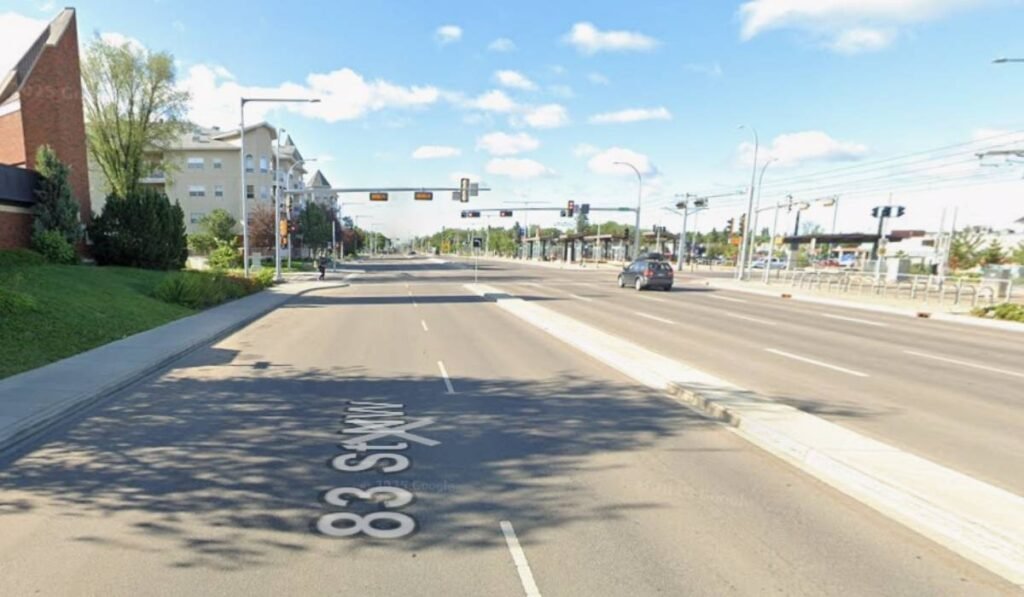
South Edmonton is the largest and most varied of the five areas, covering everything below the river from Terwillegar in the west across to Mill Woods in the east, and south to the city limits near Ellerslie and Heritage Valley.
It contains two different kinds of neighbourhood. There are established communities built from the 1960s through the 1980s (Mill Woods, Riverbend, Millbourne) and then a large band of newer development that has filled in over the past 20 years: Windermere, Summerside, Heritage Valley, Ellerslie, Terwillegar Towne.
The newer areas have wide roads, recent construction and shopping centres nearby. The older ones have mature trees and more established neighbourhoods.
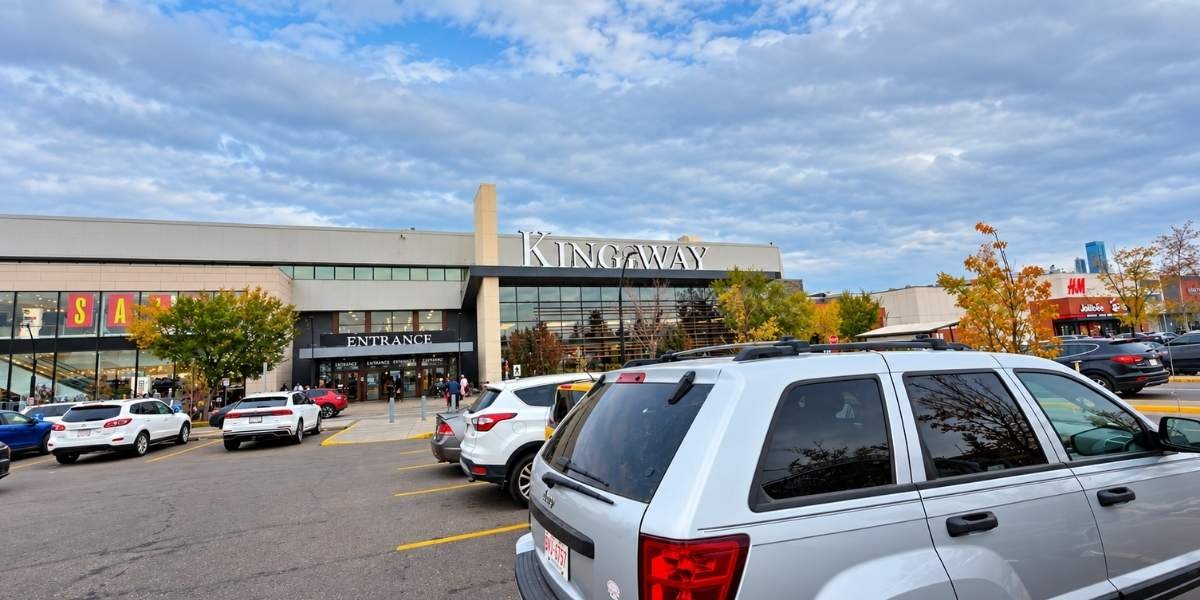
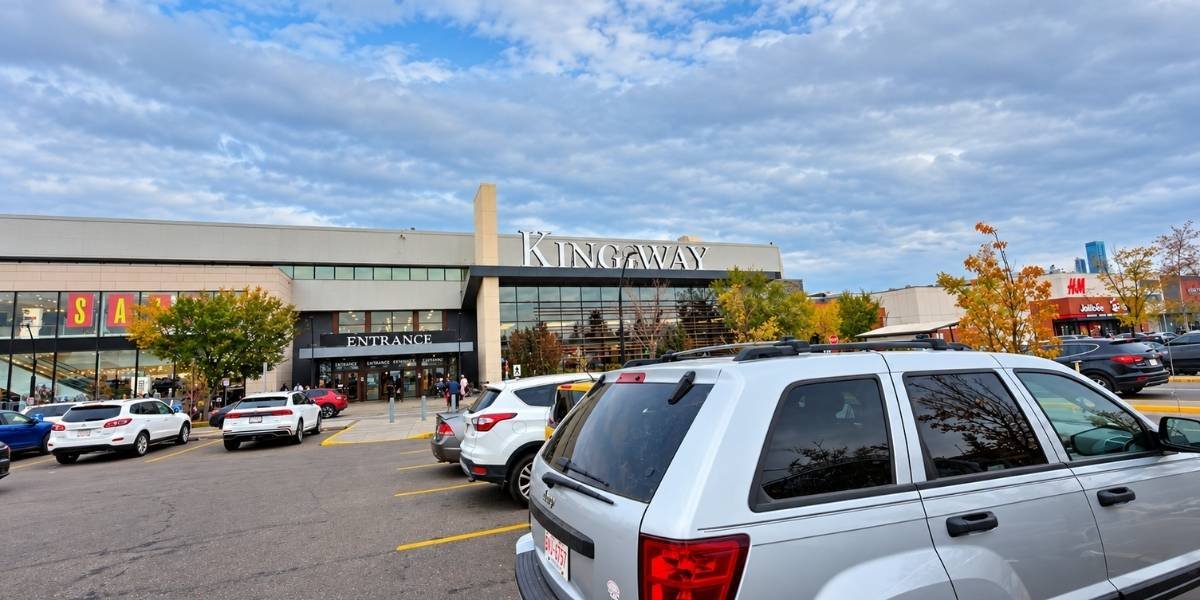
The defining feature for visitors is retail. South Edmonton Common, near 23 Avenue and Gateway Boulevard, is one of the largest open-air shopping developments in North America, with big-box stores, restaurants and cinemas spread across a very large site. Southgate Centre, further north near 51 Avenue, is an enclosed mall connected directly to the LRT.
Mill Woods in the southeast is more established, while Windermere in the southwest is newer and quieter. Together, these areas have a wide range of shopping options and restaurants, including some of Edmonton's best South Asian, Filipino, and Vietnamese food in and around Mill Woods.
The river valley curves along the northern edge of the area, and the ravine systems reach further south than people expect. Whitemud Creek and the Terwillegar Park trails are genuinely good walking, and Snow Valley operates as a small ski and tube hill right inside the city limits in winter.
South Edmonton also has a large selection of newer hotels, particularly in the Gateway Boulevard and Ellerslie corridors, and it is one of the most convenient areas of Edmonton for reaching Edmonton International Airport, which sits about 30 km south near Leduc.
If you have an early flight, staying south saves you a long drive. The Valley Line LRT connects Mill Woods to downtown, and Route 747 links the airport to Century Park station.
South Edmonton suits you if you have a car, you want newer accommodation, you are doing serious shopping, you are visiting family, or you are flying out early. Compare options across the city in our where to stay section.
The one thing to watch: this area is enormous. A hotel in Windermere and a hotel in Mill Woods are both "south Edmonton" and roughly 25 minutes apart. Before booking, check the actual address against wherever you plan to spend your days.
Explore South Edmonton →
Which Area of Edmonton Is Best for Your Trip?
There is no single best area to stay in Edmonton. It depends entirely on what you came for and whether you are driving. This table compares the five areas of Edmonton at a glance.
| Area | Best For | General Character |
|---|---|---|
| Downtown Edmonton | First-time visitors, events at Rogers Place, business travel, nightlife | Central and urban, walkable, best transit |
| Central Edmonton & Old Strathcona | Restaurants, cafés, arts, festivals, neighbourhood atmosphere | Older, denser main streets on both sides of the river |
| North Edmonton | Visiting family, parking, heading north of the city | Mostly residential and spread out |
| West Edmonton | Families, shopping, West Edmonton Mall stays | Shopping and attraction focused, car friendly |
| South Edmonton | Shopping, newer hotels, early flights, longer stays | Very large and varied, driving essential |
A few honest points that the table cannot capture:
- Without a car, downtown or Old Strathcona are the practical choices. The LRT and bus network work well in the core and get thinner as you move outward.
- With a car, the calculation flips. Parking is free and plentiful in the outer areas and costs money downtown.
- Winter changes things. Between November and March, an indoor-heavy plan built around West Edmonton Mall, museums or the Muttart makes more sense than a walking-based itinerary.
- Two nights in different areas is not a bad idea on longer trips: a couple of nights central, then a couple near the mall, for example.
Edmonton Areas at a Glance
- Downtown: Central attractions, arena events, hotels and nightlife within walking distance.
- Central Edmonton & Old Strathcona: Whyte Avenue, restaurants, cafés, arts, festivals and river valley access.
- North Edmonton: Residential communities, everyday shopping, parks, and a base for trips north of the city.
- West Edmonton: West Edmonton Mall, family attractions, and hotels with easy parking.
- South Edmonton: The biggest shopping districts, newer hotels, and the closest area to the airport.
Frequently Asked Questions About Edmonton Areas
What are the main areas of Edmonton?
For visitors, Edmonton can be grouped into five main areas: Downtown, Central Edmonton & Old Strathcona, North Edmonton, West Edmonton, and South Edmonton. Each has a different mix of attractions, restaurants, hotels, and things to do.
Is Edmonton divided into quadrants?
Yes. Edmonton uses a street-address system with quadrant designations, with NW being the most common. However, the five-area approach in this guide is easier for visitors planning their trip.
What is the best area to stay in Edmonton for a first visit?
Downtown is a good choice for first-time visitors because it is close to major attractions, Rogers Place, the river valley, restaurants, and public transit. Old Strathcona is another great option for a livelier neighbourhood atmosphere.
Do you need a car in Edmonton?
You can get around without a car if you stay in Downtown or Old Strathcona. For exploring attractions across the city, however, having a car is more convenient.
How far is West Edmonton Mall from downtown?
West Edmonton Mall is about 15 km from downtown, usually taking around 20–30 minutes by car, depending on traffic and weather.
Which area of Edmonton is best for families?
West Edmonton is a popular choice for families because of West Edmonton Mall, Galaxyland, the World Waterpark, Fort Edmonton Park, and the Edmonton Valley Zoo.
Which area is closest to Edmonton International Airport?
South Edmonton is one of the most convenient areas for reaching Edmonton International Airport. Staying around Gateway Boulevard or Ellerslie can be useful for early flights.
Which area of Edmonton is best for nightlife?
Old Strathcona is one of the best areas for nightlife, with pubs, restaurants, live music and entertainment around Whyte Avenue. Downtown is another good option, especially around 104 Street and Rogers Place.
Conclusion on Edmonton Areas
Edmonton makes far more sense once you stop looking at it as one large city and start looking at it area by area. The distances stop being a surprise, the hotel choices start to mean something, and it becomes obvious why a stay near West Edmonton Mall feels nothing like a stay on Whyte Avenue.
Use these five Edmonton areas as your starting framework, pick the one that matches the trip you actually want, and then dig into the detail. Each area has its own full guide:
- Downtown Edmonton Guide
- Central Edmonton & Old Strathcona Guide
- North Edmonton Guide
- West Edmonton Guide
- South Edmonton Guide
For everything else, from seasons and festivals to day trips and the attractions worth building a trip around, start with our ultimate Edmonton travel guide and our list of the best tourist attractions in Edmonton. You can also browse everything we have written about the city in our Edmonton destination section.



0 Comments