
Some places exceed expectations, and the Valley of the Ten Peaks is one of them. The first time I stood at the Rockpile overlooking Moraine Lake, I was completely captivated. Before me stood ten rugged, snow-capped peaks rising above our cherished lake; these peaks are some of the most breathtaking landscapes I have ever seen. It is easy to understand why this iconic view once appeared on the back of Canada's twenty-dollar bill.
Having lived in Alberta for years, I have visited the Valley of the Ten Peaks in different seasons and experienced its changing moods firsthand. In this guide, I will share what you need to know before visiting, including the history of the valley and its famous peaks, how to access the area, the best hiking trails, when to visit, and practical tips to help you make the most of your trip.
Whether you are planning a Canadian Rockies road trip, exploring Banff National Park for the first time, or looking for an unforgettable day trip from Calgary, the Valley of the Ten Peaks deserves a place at the top of your itinerary. It is one of Alberta’s most iconic natural wonders and a destination that continues to impress visitors from around the world.
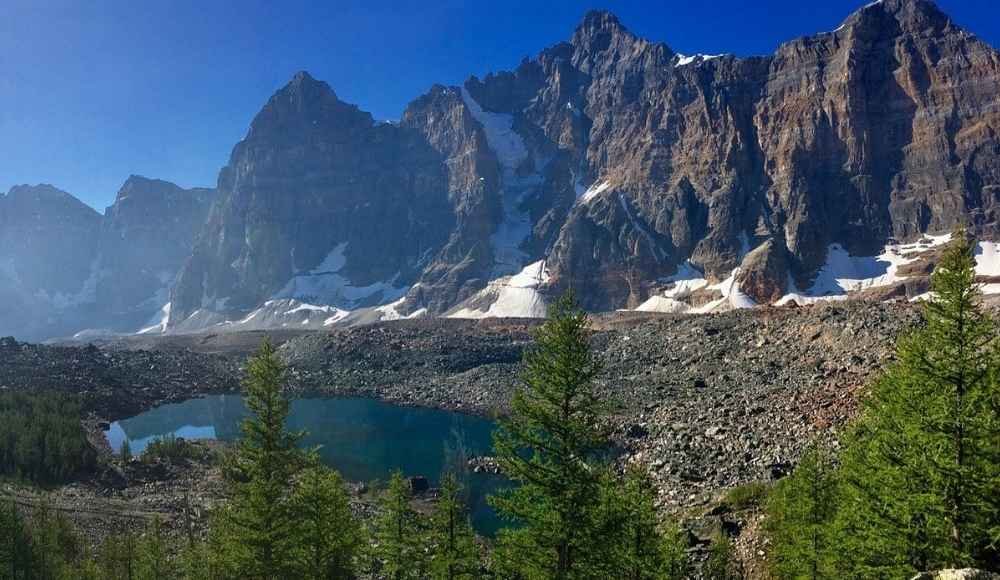
Quick Overview: The Valley of the Ten Peaks at a Glance
Before we dive deep, here is the short version:
- What it is: A glacial valley in Banff National Park, cradling the famous Moraine Lake and framed by ten towering mountain peaks.
- Where it is: About 15 minutes past Lake Louise, roughly a 2.5-hour drive west of Calgary.
- Why it's famous: The "Twenty Dollar View" of turquoise Moraine Lake beneath the wall of ten summits.
- How to get there: You cannot drive your own car here anymore. You must take a shuttle, a guided tour, transit, or cycle in.
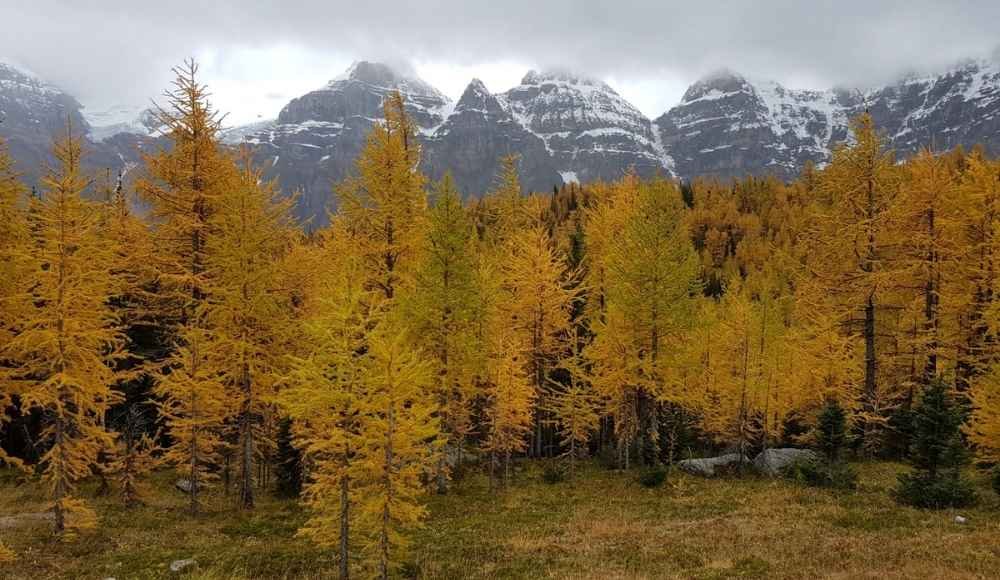
- Best time to visit: Mid-June to early October, with mid-to-late September being magical for golden larch trees.
- Don't miss: The Rockpile viewpoint, a canoe paddle on the lake, and the Larch Valley hike.
Now let's get into the details that will actually make your visit unforgettable.
What Is the Valley of the Ten Peaks?
The Valley of the Ten Peaks is a stunning glacial valley in Banff National Park, in the heart of the Canadian Rockies. At its base sits Moraine Lake, a glacier-fed lake famous for its intense turquoise-blue water. Rising up behind the lake is a dramatic chain of ten mountain summits, part of the Bow Range, that gives the valley its name.
The lake's vivid colour is not artificial in any way. It comes from "rock flour" — incredibly fine particles of rock ground up by the glaciers above. These particles hang suspended in the meltwater and reflect sunlight in a way that produces that unreal blue-green glow. The colour is at its most vivid in summer, once the glaciers are melting and the lake fills up.
The whole scene is so iconic that it was once featured on the back of the Canadian twenty-dollar bill, earning it the nickname the "Twenty Dollar View." Standing there in person, you understand exactly why it was chosen.
The Story Behind the Ten Peaks
The valley gets its name from the ten summits that line its southern wall. The naming story is a fascinating piece of Rockies history — and an important one to tell respectfully.
In the 1890s, American explorer Samuel Allen visited the region and numbered the peaks one through ten using words from the Stoney Nakoda (Îyârhe Nakoda) language, the Indigenous people whose traditional homeland this valley sits within. The original numbered names ran roughly from Heejee (one) in the east to Wenkchemna (ten) in the west.
Over time, most of those original names were replaced with names honouring surveyors and mountaineers. Today, only three peaks still carry versions of their Stoney Nakoda names: Tonsa, Neptuak, and Wenkchemna. There is a growing and meaningful movement to restore the full set of original Nakoda names to honour the people who have known this valley for thousands of years. Moraine Lake itself is known in the Stoney Nakoda language as Wenkchemna, meaning "ten."
Numbered from east to west as you look out from Moraine Lake, here are the ten peaks and the meaning behind them:
- Mount Fay (Wazi) — the tallest of the ten and the one with the Fay Glacier draped on its flank.
- Mount Little (Nûm, meaning "two") — named for a Boston mountaineer.
- Mount Bowlen (Yamnî, meaning "three") — named for a former Alberta lieutenant-governor.
- Tonsa Peak (meaning "four") — one of the three peaks that kept its Nakoda name.
- Mount Perren (Thaptâ, meaning "five") — named for a mountain guide.
- Mount Allen (Sakpe, meaning "six") — named for the explorer who first numbered the peaks.
- Mount Tuzo (Sagowî, meaning "seven") — named for an early female climber who summited it.
- Deltaform Mountain (Sarhnora, meaning "eight") — recognizable by its sharp, angular shape.
- Neptuak Mountain (meaning "nine") — another peak that kept its Nakoda name.
- Wenkchemna Peak (meaning "ten") — the westernmost summit, an extension of the Mount Hungabee ridge.
Knowing these names and their origins genuinely changes how you see the valley. It stops being just a pretty wall of rock and becomes a place with deep cultural history.
Where Is the Valley of the Ten Peaks?
The Valley of the Ten Peaks and Moraine Lake are located in Banff National Park, Alberta, just a short distance from the more famous Lake Louise. From the village of Lake Louise, Moraine Lake Road branches off and winds about 12 kilometres up into the valley.
Here are rough driving distances to give you a sense of the trip:
- From Lake Louise village: about 15 minutes (but you cannot drive the final road — more on that below).
- From Banff town: about 1 hour.
- From Calgary: about 2.5 hours.
- From Canmore: about 1.5 hours.
The valley sits high in the mountains, so it is genuinely seasonal. The road up only opens once the snow clears, usually in late May or June, and closes again in mid-October.
How to Get to Moraine Lake
This is the single most important section of the whole guide, because the access rules have completely changed and catch a lot of travellers off guard.
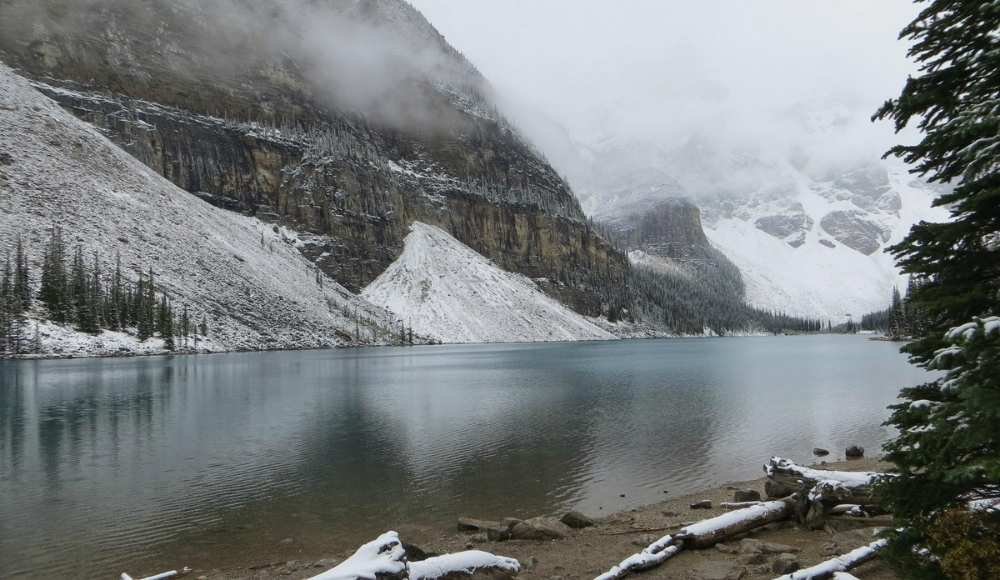
You cannot drive your own vehicle to Moraine Lake. Since 2023, Parks Canada has permanently closed Moraine Lake Road to personal vehicles. This was done to reduce traffic, protect the sensitive environment, and end the chaos of people arriving before 3 a.m. just to fight for a parking spot. The closure is not temporary — it is the new normal.
So how do you actually get there? You have a few options:
1. The Parks Canada shuttle. This is the most affordable official option. You park at the Lake Louise Ski Resort Park and Ride, then catch a shuttle that takes you straight to Moraine Lake in about 25 minutes. Reservations are required, and they sell out fast. Bookings for the summer season typically open in mid-April, with Parks Canada releasing a large chunk of seats upfront and the rest on a rolling basis two days before each departure.
2. A licensed commercial tour or shuttle. Several private companies run shuttles and guided tours from Banff, Canmore, and Lake Louise. They cost more than the Parks Canada shuttle but offer more pickup options and guaranteed seats, including popular sunrise trips.
3. Public transit (Roam Transit). With the right reservable pass, you can reach the lakes via the regional transit system.
4. Cycle in. You are allowed to bike up Moraine Lake Road. It is about a 12-kilometre ride with a solid climb, so it is for confident cyclists, but it is a wonderful crowd-free option for the fit and adventurous.
The only exceptions to the driving ban are registered guests of Moraine Lake Lodge and visitors with a valid government-issued accessible parking placard.
My honest tip: Book your shuttle the moment reservations open in April, and set an alarm for it. The sunrise "Alpine Start" shuttles are the first to vanish, sometimes within minutes. If you miss the first release, try two days again before your date when more seats drop. If the stress of the booking system feels like too much, a guided tour takes all that hassle off your plate — it is what I recommend for first-time visitors and anyone on a tight schedule.
Best Things to Do in the Valley of the Ten Peaks
Once you have made it to the valley, here is how to make the most of it. You can easily fill anywhere from two hours to a full day here.
Climb the Rockpile Trail (The Classic View)
If you do only one thing, do this. The Rockpile Trail is a short, steep walk up a pile of glacial boulders right beside the lake. It takes most people about 15 to 20 minutes to climb, and at the top you are rewarded with the view — the full sweep of Moraine Lake with all ten peaks behind it. This is the exact "Twenty Dollar View" you have seen in photos.
My tip: Go up the Rockpile early in your visit before the crowds thicken. The morning light on the peaks is gorgeous, and the lake is often at its calmest and most reflective.
Paddle a Canoe on the Lake
Renting a canoe and gliding out onto that impossibly blue water is a bucket-list experience. Floating in the middle of the lake, surrounded by the towering peaks, is something you will never forget. Canoe rentals are available right at the lake in summer, though they are pricey and lines can be long.
My tip: Rent a canoe first thing in the morning if you can. The water is calmest, the reflections are best, and you beat both the wind and the crowds.
Walk the Lakeshore Trail
For an easy, relaxed option, the Moraine Lake Lakeshore Trail follows the edge of the water for a flat, gentle stroll. It is perfect for families, anyone short on time, or those who simply want to soak in the scenery without a climb. The views across the water to the peaks are beautiful the whole way.
Hike to Larch Valley and Sentinel Pass
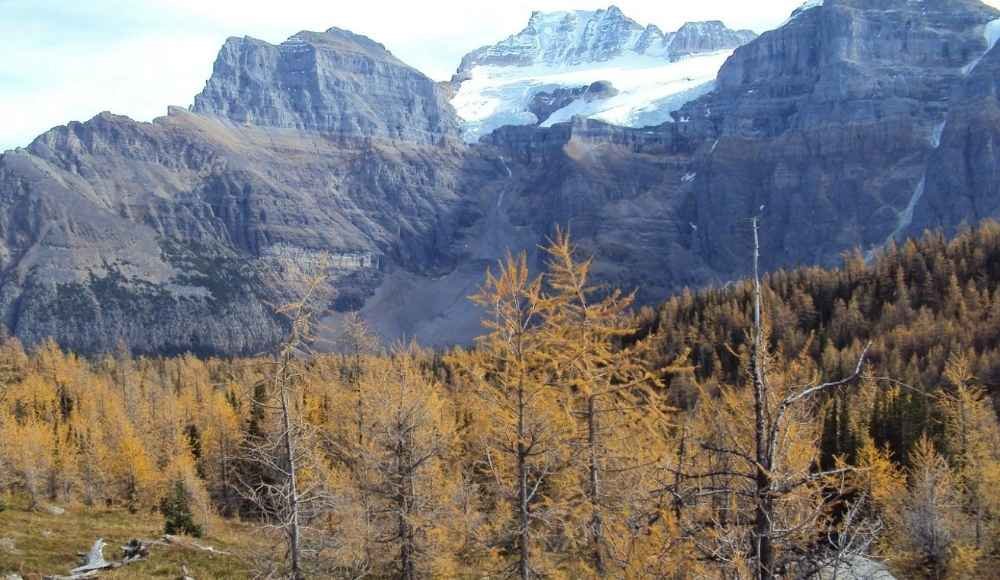
This is the standout day hike, and one of the most beloved trails in all of Banff. Starting at Moraine Lake, the trail climbs through forest switchbacks before opening up into Larch Valley — a high meadow filled with larch trees and framed by the Ten Peaks. In late September, those larches turn brilliant gold, and the valley becomes one of the most spectacular fall-colour spots in the Rockies.
If you have the energy, push on past the Minnestimma Lakes and up the switchbacks to Sentinel Pass, one of the highest trail-accessible passes in the park, with views down into Paradise Valley on the far side.
- Larch Valley round trip: roughly 9 km, about 3 to 4 hours.
- Continuing to Sentinel Pass: roughly 11 to 12 km round trip, about 4 to 5.5 hours, rated difficult.
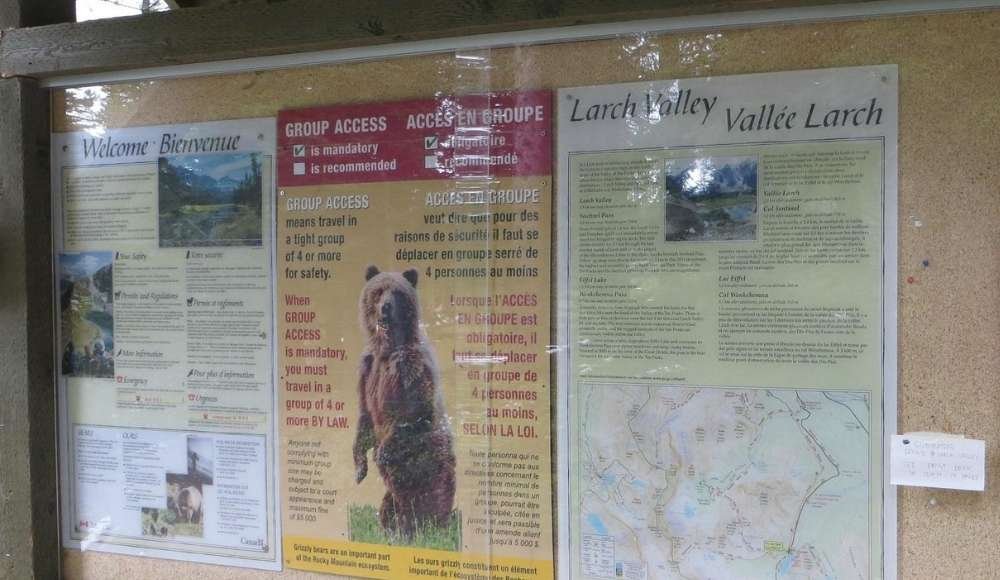
Important safety note: This is prime grizzly bear habitat. Parks Canada sometimes puts a mandatory group-access rule in place here, requiring a minimum group size (often four people) to hike. When that rule is active, hiking in a smaller group can earn you a fine — and more importantly, it puts you at real risk. Always check the trailhead sign and current bulletins, carry bear spray you know how to use, and make noise as you go.
Explore Nearby Trails
If Larch Valley is busy or closed, the valley has other gems. The trail to Consolation Lakes is a quieter forested walk, and the Eiffel Lake trail branches off the Larch Valley route to deliver stunning, less-crowded views straight down the Valley of the Ten Peaks.
Best Time to Visit the Valley of the Ten Peaks
The valley is highly seasonal, so timing matters more here than at most Alberta attractions.
Summer (mid-June to August) is peak season. The road and shuttles are running, the lake is at its most vivid turquoise, and all the canoe rentals and trails are open. The trade-off is crowds and the need to book your shuttle well ahead.
Early fall (September to early October) is my personal favourite, and the reason is the larches. For roughly two to three weeks in mid-to-late September, the larch trees in Larch Valley turn a glowing gold against the dark peaks. It is breathtaking — but it is also the busiest the hiking trails get, so book early.
Late spring (May to mid-June) can be hit or miss. The road may still be closed by snow early on, and the lake can be partly frozen and grey until the glacier melt fills it with colour, usually by mid-to-late June.
Winter (mid-October to May) means the road is closed and there is no public access to the lake itself. The valley sleeps under deep snow.
A quick note on the lake colour: do not be disappointed if you arrive in early June and the lake looks more grey than blue. The famous turquoise only fully arrives once the summer melt kicks in. For the most reliable colour, aim for July through September.
Recommended Posts:
- 23 Best Places to Visit in Alberta – Amazing Natural Wonders
- Top 10 Hiking Gear for Alberta Mountains: Ultimate Guide
- 15 Best Hiking Trails in Canmore, Alberta: From Easy Walks to Big Mountain Summits
- 3 day Banff Itinerary: How to Spend 3 Days in Banff
- How to Get to banff national park: Best Guide
Practical Tips for Visiting
A few things I always tell first-time visitors:
Book everything early. This cannot be said enough. Your shuttle reservation is the make-or-break detail of the whole trip. Lock it in the day bookings open.
Get your park pass. You need a valid Parks Canada pass (a Discovery Pass or a daily pass) to be in Banff National Park, on top of your shuttle ticket. Buy it online in advance to save time.
Dress in layers. The valley sits at a high elevation, and the weather changes fast. It can be sunny and warm at the lake and cold and windy up in Larch Valley, even in summer. Bring layers, a wind shell, and sturdy footwear.
Be bear-aware. This is serious grizzly country. Carry bear spray on the trails, keep it accessible, know how to use it, make noise, and respect any group-size rules posted at trailheads.
Start early. Early morning gives you the calmest water, the best reflections, the softest light for photos, and the smallest crowds. The first shuttles of the day are worth the early wake-up.
Bring water and snacks. There is limited food at the lake, and none on the trails. Pack what you need.
Respect the land. Stay on marked trails, pack out everything you bring in, do not stack rocks or disturb the shoreline, and remember this is a culturally significant place for the Stoney Nakoda people. Treat it with care.
Final Thoughts
The Valley of the Ten Peaks is, without exaggeration, one of the most beautiful places I have ever stood. That first view from the Rockpile — the turquoise water, the wall of ten summits, the crisp mountain air — is the kind of moment that stays with you for life. It is no wonder this scene was chosen to represent Canada on its currency.
My best advice is to plan ahead and slow down once you arrive. Book your shuttle the day reservations open, get there early, climb the Rockpile, and then give yourself time to just sit and take it in. Paddle the lake if you can, and if you are up for it, hike into Larch Valley to see the peaks from above.
This valley has welcomed travellers and held deep meaning for the Stoney Nakoda people for generations. Treat it with the respect it deserves, and it will reward you with a view you will never forget. Now go see it for yourself — and tell me it does not take your breath away.
Frequently Asked Questions:
How did the Valley of the Ten Peaks get its name?
The valley was named for the ten notable peaks that surround it. The ten peaks are: Mount Fay, Mount Little, Mount Bowlen, Tonsa Peak, Mount Perren, Mount Allen, Mount Tuzo, Deltaform Mountain, Neptuak Mountain, and Wenkchemna Peak.
Why is it called the Valley of the Ten Peaks?
It is named for the chain of ten mountain summits that rise above Moraine Lake. In the 1890s, explorer Samuel Allen numbered them one through ten using words from the Stoney Nakoda language. Three peaks — Tonsa, Neptuak, and Wenkchemna — still carry their original Nakoda names.
Can you drive to Moraine Lake and the Valley of the Ten Peaks?
No. Since 2023, Moraine Lake Road has been permanently closed to personal vehicles. You must take a Parks Canada shuttle, a licensed commercial tour, public transit with the right pass, or cycle in. The only exceptions are Moraine Lake Lodge guests and visitors with a valid accessible parking placard.
Which is nicer, Lake Louise or Lake Moraine?
Both are stunning, but many visitors consider Moraine Lake more beautiful because of its vivid blue water and dramatic mountain setting. Lake Louise is larger, easier to access, and offers more activities year-round. If you can, visit both; they each have their own unique charm.
What famous Lake is located in the Valley of the Ten Peaks?
The famous lake located in the Valley of the Ten Peaks is Moraine Lake. It is renowned for its brilliant turquoise water, stunning mountain backdrop, and one of the most photographed views in the Canadian Rockies.
When is the best time to see the Valley of the Ten Peaks?
July through September offers the most vivid turquoise lake colour. For the famous golden larch trees, aim for mid-to-late September. The road and shuttles only run from roughly mid-June to early October.
Is the Larch Valley hike hard?
The hike to Larch Valley is moderate, with a steady climb up forested switchbacks. Continuing to Sentinel Pass is rated difficult. Both start at Moraine Lake and pass through grizzly habitat, so bear safety is essential.
Is the Valley of the Ten Peaks the same as Moraine Lake?
They are part of the same place. Moraine Lake is the turquoise lake at the floor of the valley, and the Valley of the Ten Peaks is the wider glacial valley with the ten summits rising above it. People often use the names together.


0 Comments