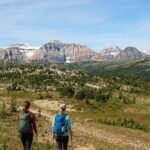
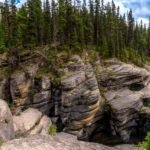
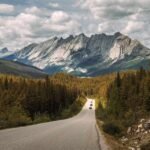
I still remember my first hike in Banff. It was a chilly June morning, my boots were stiff and brand new, and I had no idea what I was doing. I picked a trail that turned out to be way harder than I expected, ran out of water by lunchtime, and limped back to the car with one of the biggest smiles of my life.
That was almost a decade ago. Since then, I've spent dozens of summers hiking in Banff National Park, in every kind of weather you can imagine. Snow in July. Sunshine in October. Hailstorms in August that came out of nowhere. I've taken first-time hikers up easy lakeshore paths, and I've pushed myself up steep alpine passes where my legs were shaking by the end.
So when you ask me about the best hikes in Banff, I'm not going to read you a list from a guidebook. I'm going to tell you what each trail actually feels like, who it's right for, and the small details that will save you time and stress on the day.
Whether you're a complete beginner who just wants a pretty walk by a lake or a strong hiker chasing big alpine views, this guide has you covered. I've split the trails into three skill levels — easy, moderate, and hard — so you can pick what fits your fitness and your schedule.
Before You Hit the Trail: A Few Things You Need to Know
Before I take you through the hikes, here are some things I wish someone had told me on my first trip.
- You need a Banff National Park pass. Every car going into the park needs one, no matter what trail you're heading to. You can buy it online before you go and skip the lineup at the gate.
- Mountain weather changes fast. I've started hikes in t-shirts and finished them in rain jackets. Always pack layers, even on sunny days. A light waterproof shell, a warm mid-layer, sunscreen, sunglasses, and at least two litres of water are non-negotiable.
- Bear spray is not optional. This is bear country. I carry bear spray on every single trail, even short ones. You can rent it in Banff if you don't want to buy it, and learning how to use it takes about two minutes.
- Start early. The popular trailheads in summer fill their parking lots before sunrise. I'm serious. If you want a parking spot at Moraine Lake or Lake Louise, your only real option is the shuttle. Reserve it ahead of time on the Parks Canada website.
- Check trail reports before you go. Snow can linger on alpine trails well into July, and bear closures happen without much notice. The Parks Canada website and the Banff Visitor Centre always have the latest info.
Easy Hikes in Banff (Great for Beginners and Families)
These are the hikes you can do without much fitness or experience. They're short, mostly flat, and the views are wildly out of proportion to the effort. If you're visiting Banff for the first time, start here.
1. Lake Louise Lakeshore Trail
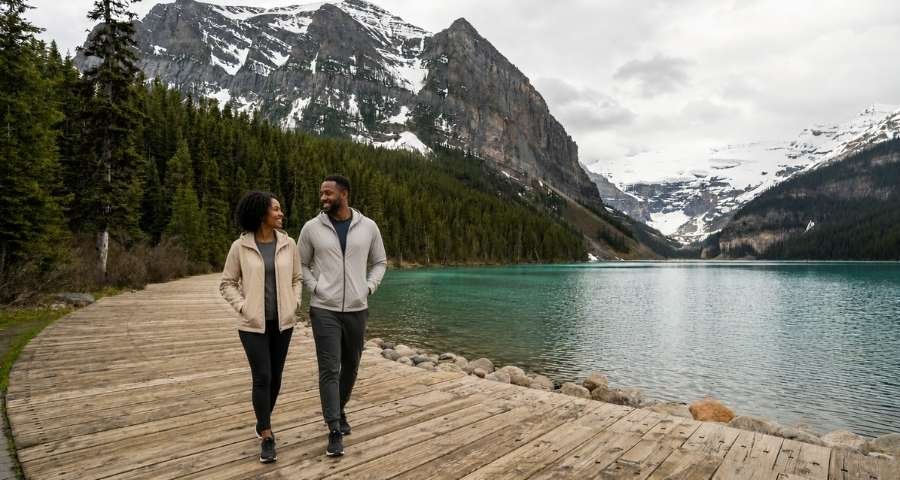
- Distance: 4.7 km return
- Elevation gain: 104 metres
- Time: About 1-1.5 hours
- Difficulty: Easy
Honestly, if you only do one easy hike in Banff, make it this one. You walk along the north shore of Lake Louise, with that famous turquoise water on one side and the cliffs of Mount Victoria rising up at the far end. It's flat, paved at the start, and friendly to strollers and wheelchairs for the first stretch.
I've done this trail more times than I can count, and it still gets me. My favourite trick: skip the crowds by walking the full length of the lake. Most visitors take a few photos near the Fairmont Chateau and turn around. If you keep going for another 20 minutes, you'll have the back end of the lake almost to yourself, with a much better view of the glacier.
My honest tip: Get there at sunrise if you can. The light is soft, the water is glassy, and the parking lot isn't a war zone yet.
2. Johnston Canyon (Lower Falls)
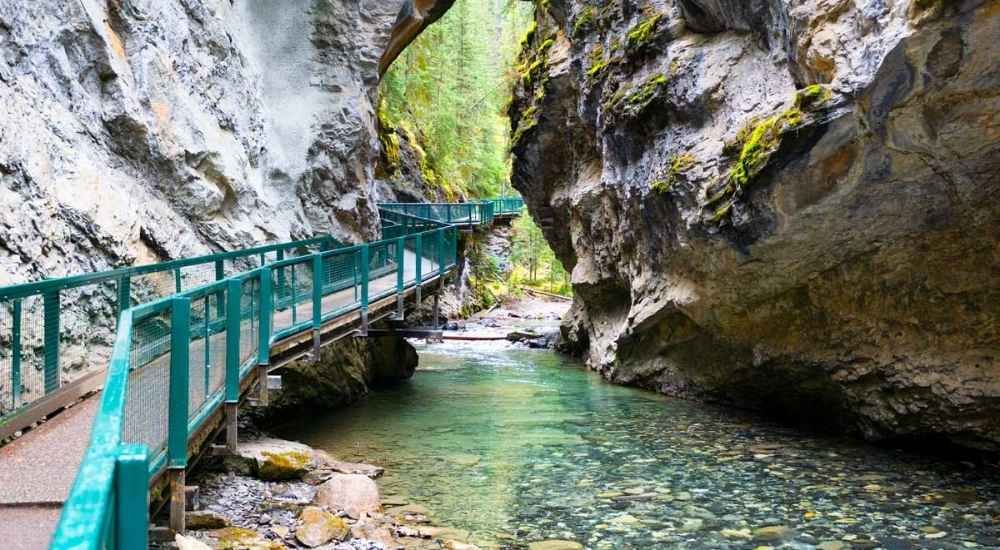
- Distance: 2.4 km return to Lower Falls
- Elevation gain: Small
- Time: About 1 hour
- Difficulty: Easy
This one feels like a movie set. You walk on metal catwalks bolted into the side of a limestone canyon, with rushing water right below your feet. Kids love it. Adults love it. Even the grumpiest member of your group will love it.
The trail to the Lower Falls is short and gentle. If you have more energy, push on to the Upper Falls (about 5 km return total) — and if you're really feeling it, continue to the Ink Pots, a quiet meadow with bright turquoise spring pools that hardly anyone bothers to visit.
I once did Johnston Canyon in light rain, and honestly, it was magic. The waterfalls were thundering, and the canyon felt alive. Just wear shoes with grip — those catwalks get slippery when wet.
My honest tip: The parking lot is a nightmare in summer. Take the Roam Transit bus from Banff. It runs daily and drops you right at the trailhead.
3. Moraine Lake Rockpile Trail
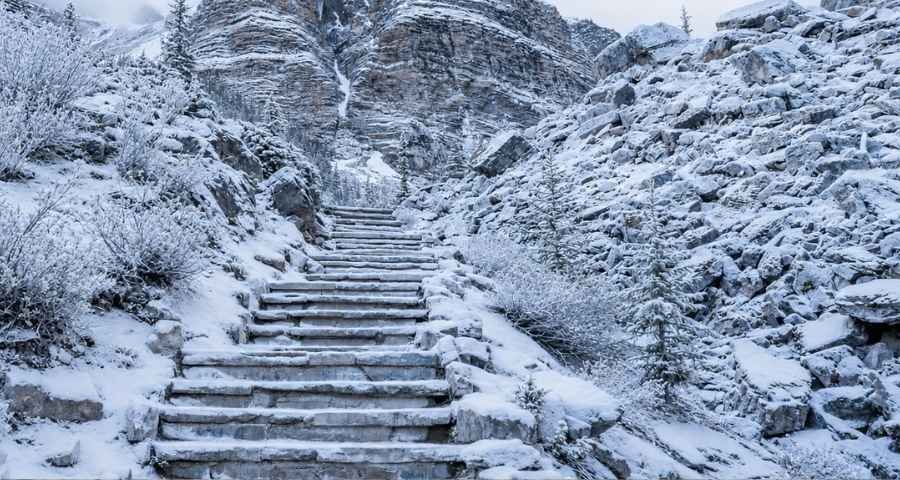
- Distance: 1 km return
- Elevation gain: About 25 metres
- Time: 30 minutes
- Difficulty: Easy
This is the shortest hike on the list, but the view is one of the best in the world. You climb a short, rocky path from the Moraine Lake parking area up onto a pile of boulders. From the top, you're looking out at Moraine Lake framed by the Valley of the Ten Peaks, the scene that used to be on the back of the Canadian twenty-dollar bill.
I'll never forget my first time standing up there. I'd seen photos of Moraine Lake my whole life, and I genuinely thought they had to be edited. They're not. The water really is that blue.
My honest tip: Moraine Lake Road is closed to personal cars year-round now. You need a Parks Canada shuttle, a commercial tour, or you can bike in (it's a long, hilly ride). Book your shuttle the day reservations open, which is usually mid-April.
4. Bow Falls Trail
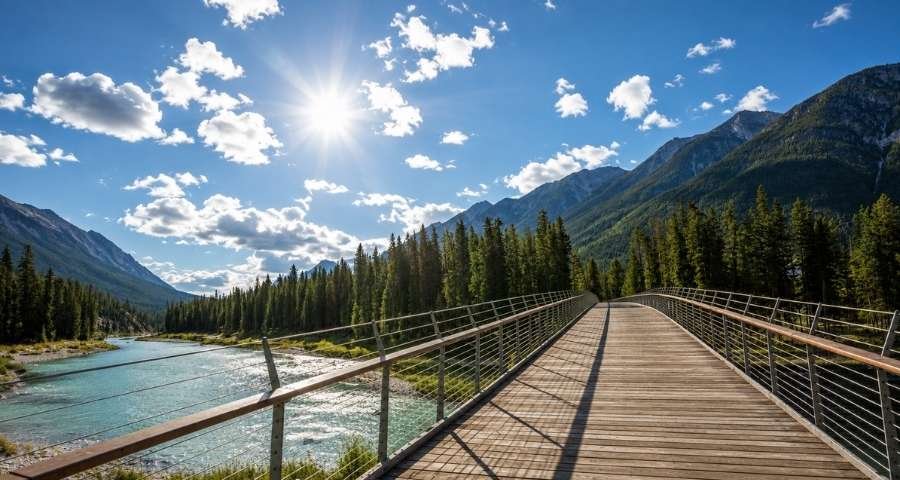
- Distance: Around 1.5 km return
- Elevation gain: Tiny
- Time: 30 to 45 minutes
- Difficulty: Easy
This is the easiest "real" hike I can think of in Banff, and a great one if you've got young kids or just got off a long flight and want to stretch your legs. The trail follows the Bow River through a forested path until you reach Bow Falls — a wide, powerful set of rapids tucked underneath the Fairmont Banff Springs Hotel.
You can walk this one straight from downtown Banff, which is great because you don't need to drive anywhere.
My honest tip: Pair it with a coffee at one of the cafés on Banff Avenue. It's a perfect "first morning in the mountains" kind of hike.
Moderate Hikes in Banff (For Visitors Comfortable with a Bit of Climbing)
Once you're warmed up, these hikes are the sweet spot. They're not easy, but you don't need to be an athlete. If you walk regularly, take your time, and pack snacks, you'll be fine.
5. Lake Agnes Tea House
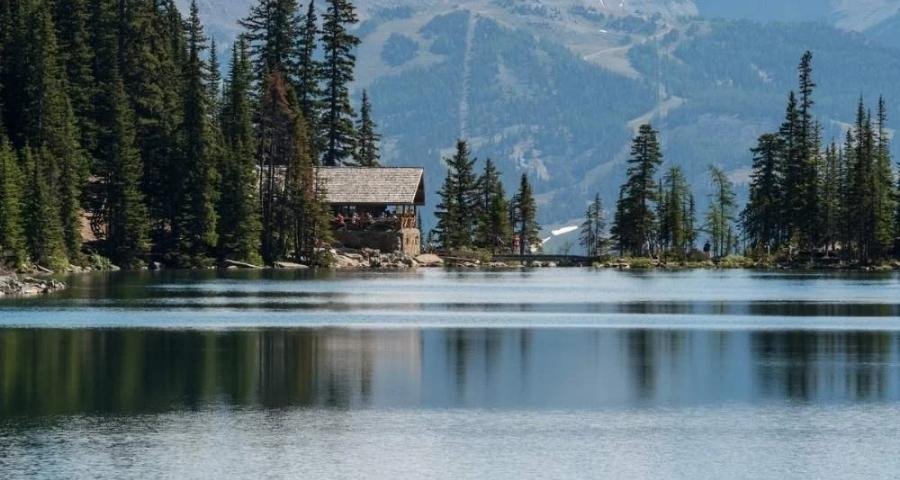
- Distance: 7 km return
- Elevation gain: About 400 metres
- Time: 3 to 4 hours
- Difficulty: Moderate
This was my first "real" hike in Banff, and it's still one of my favourites. You start at the Lake Louise lakeshore, then climb up through forest along switchbacks until you reach a small alpine lake hidden in the mountains above. Beside the lake sits the Lake Agnes Tea House, a charming wooden cabin that's been serving tired hikers since 1905.
Inside, you can order homemade soup, sandwiches, and pots of tea brought up the mountain by hand each morning. There's no electricity. They only take cash. And it might be the best lunch view of your life.
The first kilometre is the steepest. Once you push through that, the rest of the climb is steady but manageable. I've taken people up here who hadn't hiked in years, and they all made it.
My honest tip: Bring small Canadian bills for the tea house. They don't take cards, and the prices are very reasonable for a place where everything has to be hauled up by hand.
6. Plain of Six Glaciers
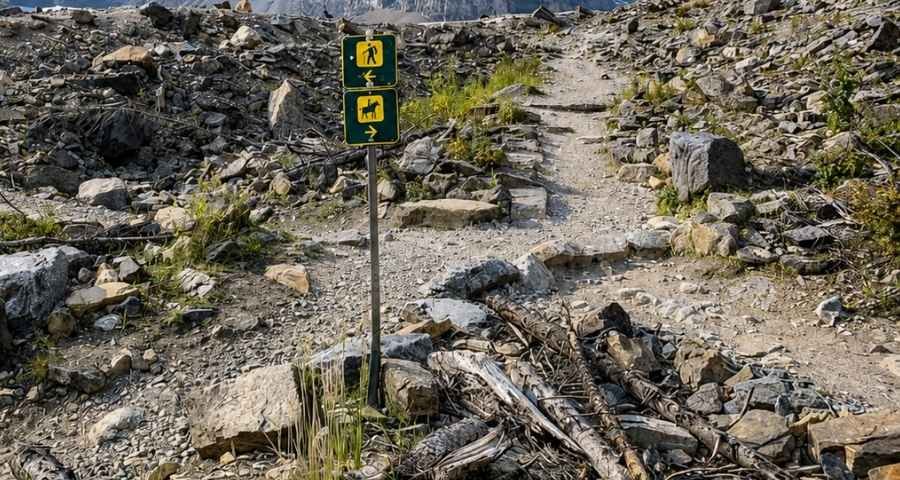
- Distance: 11 km return
- Elevation gain: About 365 metres
- Time: 4 to 5 hours
- Difficulty: Moderate
If Lake Agnes is too short for you, this is the next step up. The trail starts the same way — along the Lake Louise lakeshore — but instead of climbing up to Lake Agnes, you keep going straight, deeper into the valley behind the lake. As you walk, the mountains close in around you, the glaciers come into full view, and you can sometimes hear the cracks and rumbles of ice shifting on Mount Victoria.
There's another tea house at the end (yes, Banff has multiple alpine tea houses, and yes, it's wonderful). The food is simpler, but the views are bigger.
I did this hike on a hot August day a few years ago, and it remains one of my top three hiking days in my life. Sitting on that wooden porch, looking at the glacier, eating a slice of homemade cake — it was the kind of moment that makes the long drive to Banff worth it.
My honest tip: You can combine Lake Agnes and Plain of Six Glaciers into one big loop (often called the "Tea House Challenge") if you've got the legs for it. It's about 14 km total and one of the most rewarding days you can have in Banff.
7. Sulphur Mountain Trail

- Distance: 11 km return
- Elevation gain: About 700 metres
- Time: 4 to 6 hours
- Difficulty: Moderate
Sulphur Mountain is the one with the gondola. Most tourists ride the gondola to the top. But if you've got decent fitness and want bragging rights, you can hike up the back of the mountain on a series of switchbacks through the forest. The trail isn't very pretty for most of the way (you're in trees), but the summit views are incredible — 360 degrees over Banff townsite, the Bow Valley, and a wall of peaks in every direction.
The reward at the top? You can walk into the gondola summit complex, grab a hot meal, and ride the gondola down for free. Yes, free. (Hikers get a discounted one-way ticket — about $30 last time I checked.) After two hours of climbing, that gondola ride is a small miracle.
My honest tip: Start before 8 a.m. in summer. The trail bakes in the afternoon sun, and there's not much shade for the steeper sections.
8. Sunshine Meadows
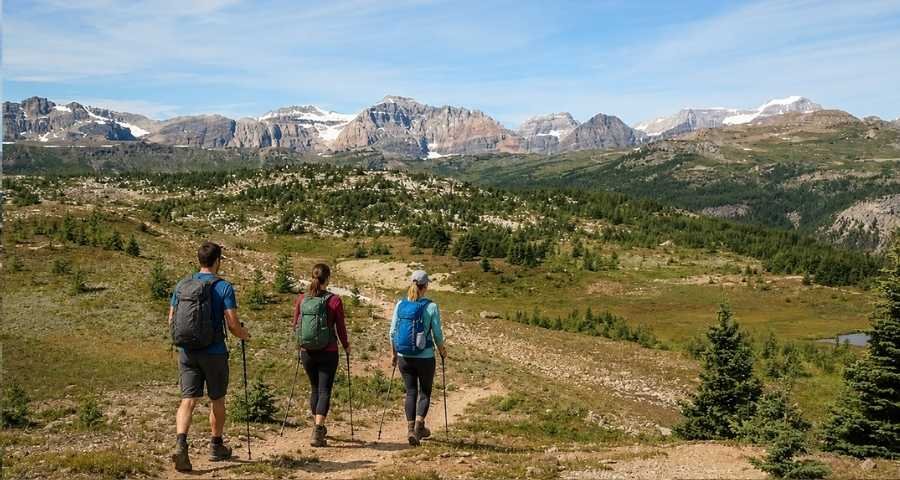
- Distance: Varies (loops from 5 to 12 km)
- Elevation gain: Mostly gentle once you're up top
- Time: Half a day
- Difficulty: Easy to moderate
This one is technically a cheat. You take a shuttle bus up to the top of Sunshine Village ski resort, which means most of the elevation work is done for you. From there, you wander through wide-open alpine meadows full of wildflowers, with views of Mount Assiniboine — sometimes called the "Matterhorn of the Rockies."
The meadows are at over 2,200 metres, so you're walking through real alpine terrain without the brutal climb to get there. In July and August, the wildflowers are out of control. I once sat in a field of paintbrushes and lupines for an hour just because I didn't want to leave.
My honest tip: You need to book the shuttle bus from Sunshine Village separately. Check their website for the operating dates; it's usually late June through early September.
9. Helen Lake Trail
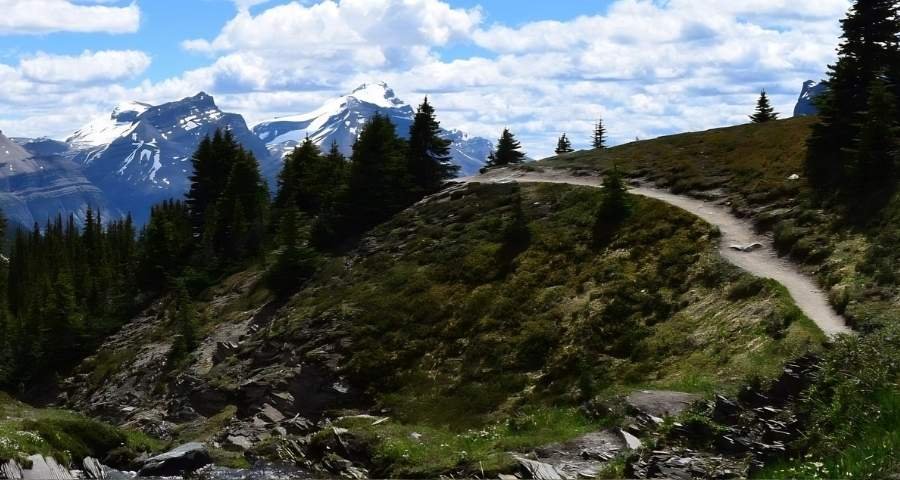
- Distance: About 12 km return
- Elevation gain: Around 460 metres
- Time: 4 to 5 hours
- Difficulty: Moderate
Helen Lake Trail is the hike I send people on when they want to escape the crowds. It's about 30 minutes north of Lake Louise on the Icefields Parkway, and it leads up to a quiet alpine lake surrounded by meadows and peaks. On a busy August Saturday, you might pass two dozen people the entire day. Compare that to Lake Agnes, where you'll cross paths with a few hundred.
The first half is a steady forest climb. The second half opens up into one of the most beautiful alpine areas in Banff — wildflowers, mountain goats on the slopes, and a perfect lake to sit beside for lunch.
My honest tip: This trail holds snow late. I tried to do it in mid-June one year and turned back because the upper section was buried. Aim for mid-July at the earliest.
Hard Hikes in Banff (For Strong Hikers Looking for an Epic Day)
These are the trails where you'll earn every view. They're long, steep, and tiring, but the payoff is some of the best mountain scenery on the planet. Don't attempt these unless you're in good shape and comfortable with longer days outdoors.
10. Sentinel Pass via Larch Valley
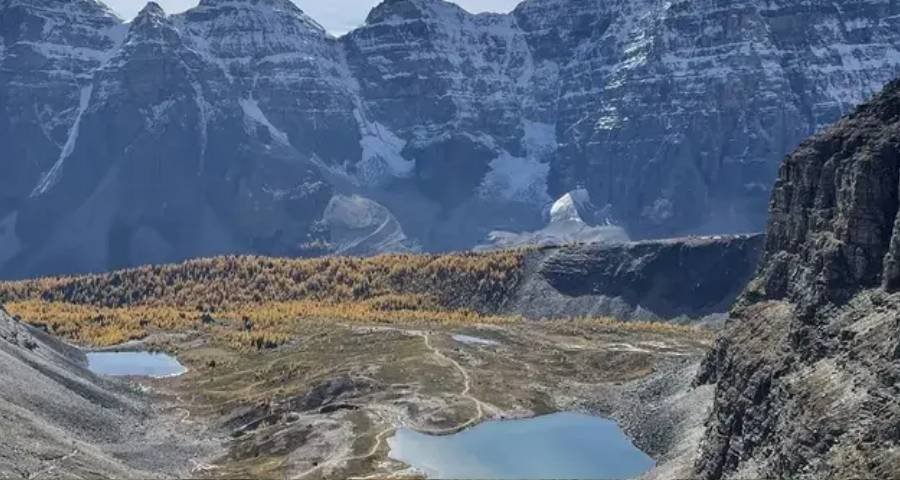
- Distance: 11.6 km return
- Elevation gain: About 730 metres
- Time: 5 to 7 hours
- Difficulty: Hard
This is the most famous hard hike in Banff, and it deserves the reputation. You start at Moraine Lake, climb up steep switchbacks through forest, then break out into Larch Valley — a wide bowl of alpine larch trees framed by jagged peaks. From there, you keep climbing up scree slopes to Sentinel Pass, the highest hiking pass in Banff at 2,611 metres.
In late September, the larch trees turn brilliant gold for about two weeks, and this trail becomes the busiest hard hike in the park. I once got to the parking lot at 5:30 a.m. during larch season, and there was already a line for the shuttle.
The views from the top of Sentinel Pass are some of the most dramatic I've ever seen. The Valley of the Ten Peaks on one side, Paradise Valley on the other.
My honest tip: Parks Canada requires groups of four or more at certain times of year due to bears. Check the rules before you go. And bring poles — the descent is rough on the knees.
11. Cory Pass Loop
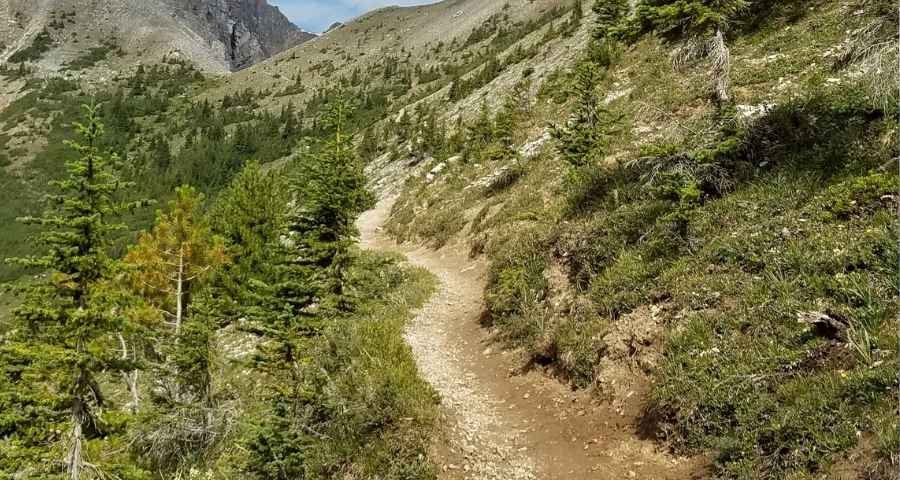
- Distance: 13 km loop
- Elevation gain: About 1,000 metres
- Time: 6 to 8 hours
- Difficulty: Hard
This was the hike that humbled me. I thought I was a strong hiker. Cory Pass disagreed.
The trail climbs hard and fast — you gain almost all of the elevation in the first half, much of it on a steep, exposed ridge. When you finally crest the pass, you're hit with one of the most jaw-dropping views in Banff: the sheer vertical south face of Mount Louis right in front of you. It's the kind of view that makes you forget how tired your legs are.
You can come back the way you went up, or do the full loop down through Edith Pass and back through the forest. The full loop is what I'd recommend if you've got the energy.
My honest tip: Start clockwise (going up Cory Pass first). If you do it the other way, the descent off Cory Pass is brutally steep and loose. Trust me on this one.
12. Cascade Amphitheatre (or Full Cascade Mountain Summit)
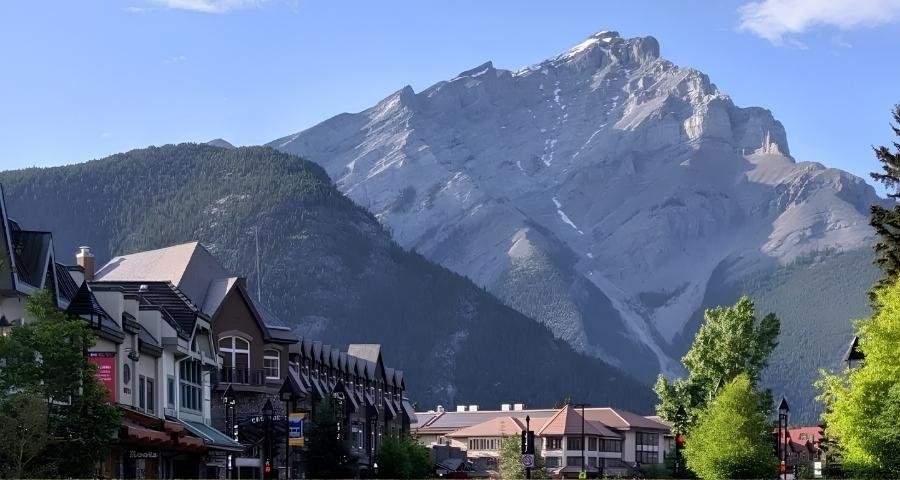
- Distance: 15 km return to the amphitheatre, or up to 20 km for the summit
- Elevation gain: Around 640 metres for the amphitheatre, much more for the summit
- Time: 5 to 7 hours for the amphitheatre, full day for the summit
- Difficulty: Hard
Cascade Mountain is the giant peak you see north of Banff townsite. The hike to Cascade Amphitheatre takes you up to a stunning natural rock bowl filled with wildflowers in summer. From there, very strong hikers can continue up to the summit of Cascade Mountain itself — but that adds serious elevation, some scrambling, and a long day.
I've only summited Cascade once. I was 24 years old, in great shape, and I was wrecked at the end. The view from the top is unforgettable, but I want to be honest: this is not a beginner's "stretch goal." Save the summit for when you've got real Rocky Mountain experience.
My honest tip: Even if you're not summiting, the amphitheatre alone is worth the trip. Go in late July or August when the wildflowers peak.
Quick Pick: Which Hike Is Right for You?
If you only have a few days in Banff, here's how I'd choose:
You want pretty views without much effort. Go with Lake Louise Lakeshore, Johnston Canyon, and the Moraine Lake Rockpile. You can do all three in a day.
You're a casual hiker who wants a real "I climbed something" feeling. Lake Agnes Tea House is the perfect challenge. Plain of Six Glaciers if you've got a bit more in you.
You want to escape the crowds. Helen Lake or Sunshine Meadows. Almost as scenic as the famous hikes, with a fraction of the people.
You want one big hard hike to remember. Sentinel Pass via Larch Valley in late September. There's a reason it's the bucket-list hike of the Canadian Rockies.
Final Thoughts From the Trail
After all these years and all these trails, the thing I love most about hiking in Banff isn't any single view. It's the way the mountains change your pace. You stop checking your phone. You start noticing wildflowers. You end the day tired and full of cold mountain air, and you sleep better than you have in months.
Whatever your skill level, there's a Banff hike with your name on it. Start small. Build up. Take photos, but also put the camera down sometimes. And whatever you do, get out on the trail — because the photos really don't do this place justice.
For more local guides, seasonal travel tips, and honest first-timer advice from across the province, keep exploring AlbertaTourist.com. We're here to help you plan the kind of trip you'll still be talking about in ten years.
Frequently Asked Questions
What is the best hike in Banff for beginners?
If you're a complete beginner, the Lake Louise Lakeshore Trail is hands-down the best place to start. It's flat, short, and the views are world-class. Johnston Canyon is a close second.
When is the best time to hike in Banff?
Mid-July through mid-September is the sweet spot. Snow has melted off most alpine trails, and wildflowers are out. Late September is special for larch season, but it's also crowded.
Do I need bear spray for Banff hikes?
Yes. I carry bear spray on every hike, even short ones. You can rent or buy it in Banff. Learn how to use it before you go.
Can I hike in Banff without a car?
Yes. Roam Transit serves Johnston Canyon, Lake Louise, and several other trailheads from downtown Banff. The Parks Canada shuttle is the only way to access Moraine Lake. With a bit of planning, you can do most of the popular hikes without renting a car.
How fit do I need to be to hike in Banff?
It depends on the trail. The easy hikes on this list are doable for almost anyone who can walk for an hour. The moderate ones require regular walking fitness. The hard ones are for people who hike often and can handle a long day with significant climbing.