The first sound I heard at Jurassic Forest was not a dinosaur. It was mosquitoes.
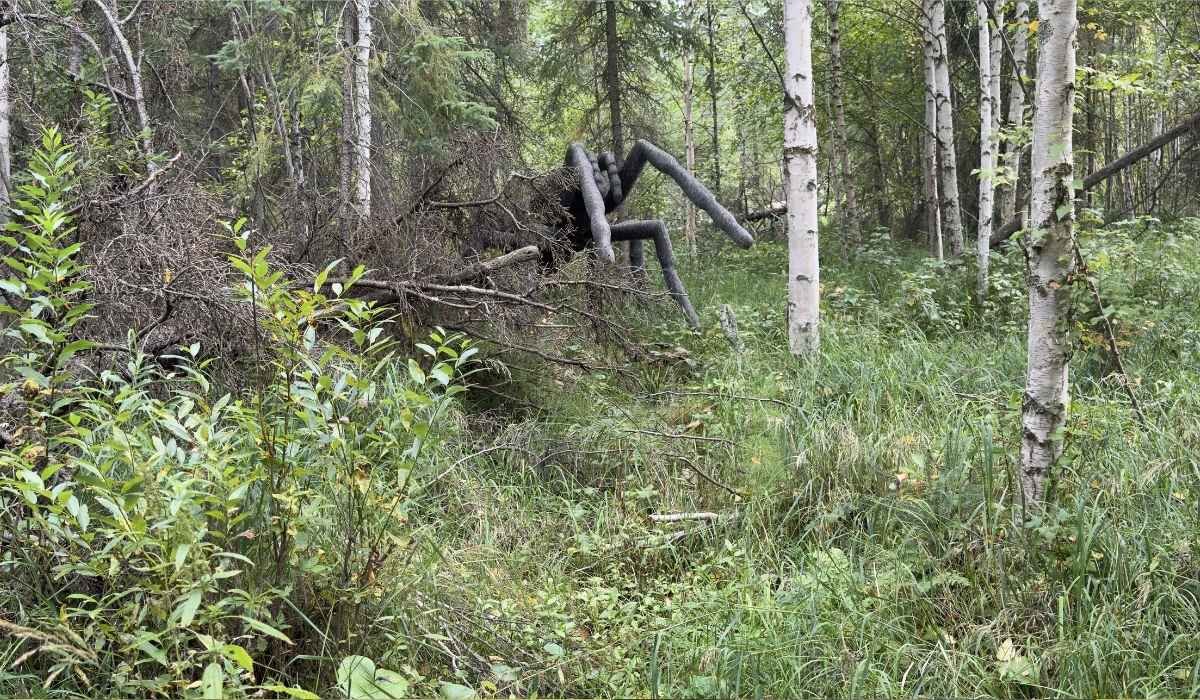
They found me in the parking lot and stayed with me for most of the walk. I am telling you that first because if I had known, I would have packed differently. Now you know. The rest of the day was better than I expected. I walked a wooden boardwalk through real old forest, and every so often something enormous started moving in the trees beside me and roaring.
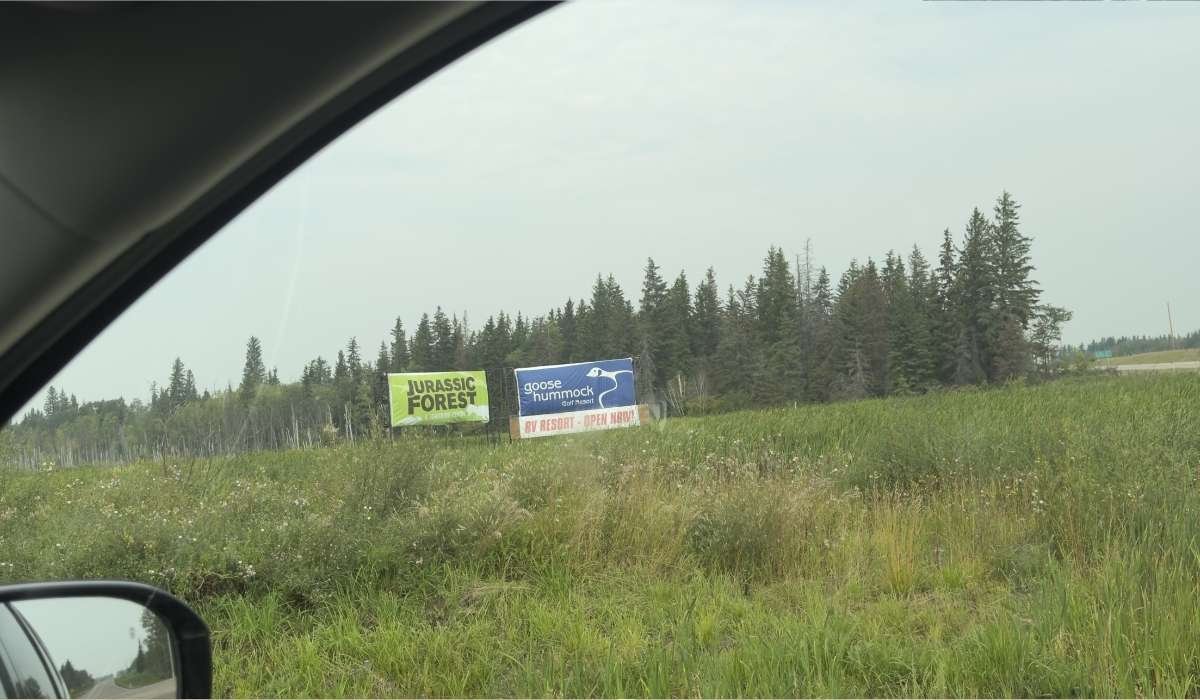
Here is the first thing I want to clear up. Jurassic Forest is not in Edmonton, even though nearly everyone searches for it that way. I drove out to Gibbons, Alberta, about 30 minutes north of the city on Highway 28. It is one of the easiest day trips from Edmonton I have done, and I did not plan it much at all. I went today, and this is what I would tell a friend who asked me about it.
What Is Jurassic Forest?
I want to set your expectations properly, because I had the wrong idea going in.
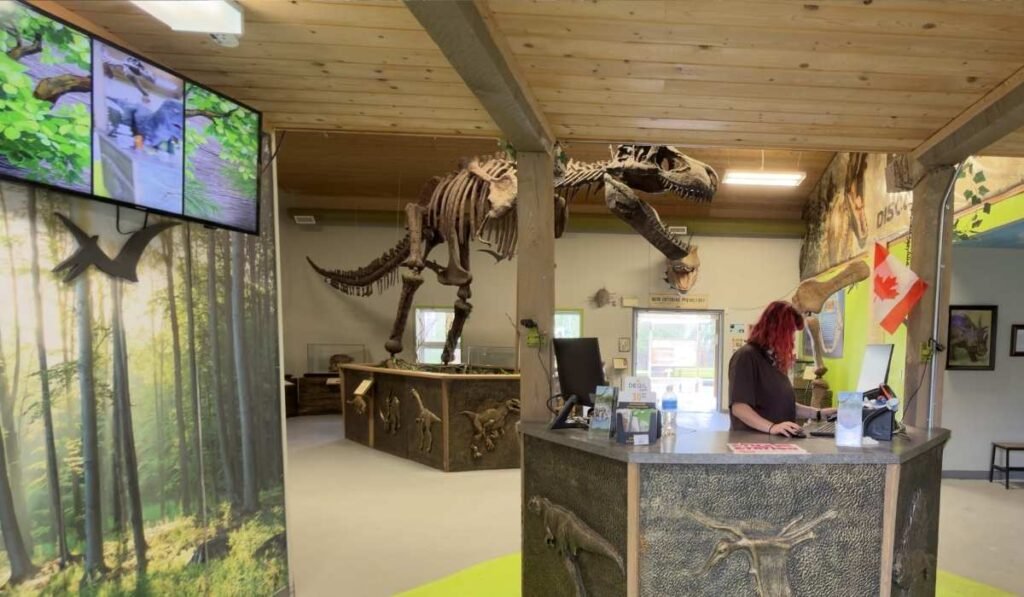
Jurassic Forest is an outdoor dinosaur park. It is not a museum with fossils behind glass, and it is not an amusement park with rides. The main thing you do there is walk.
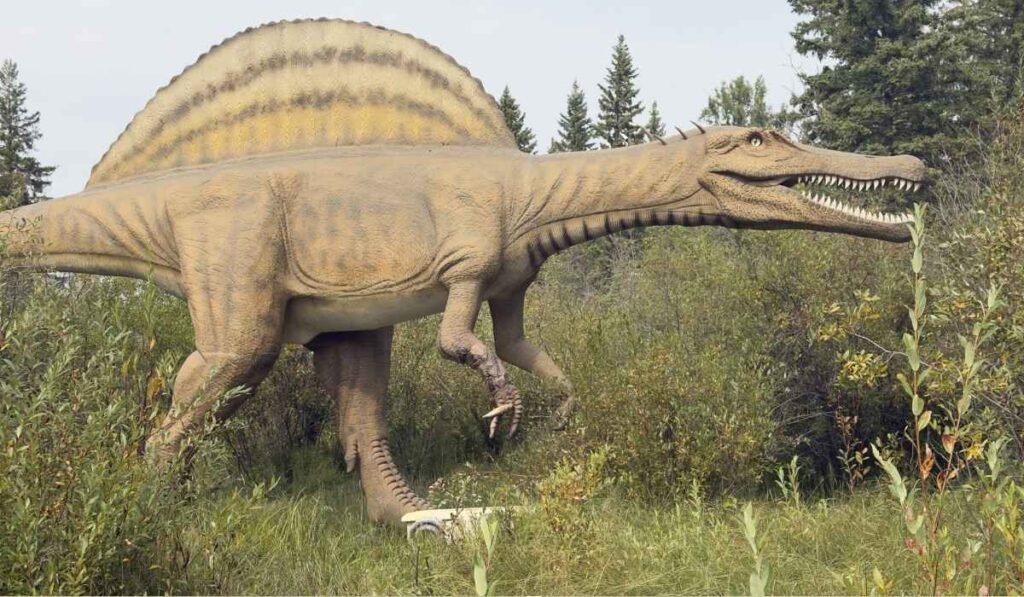
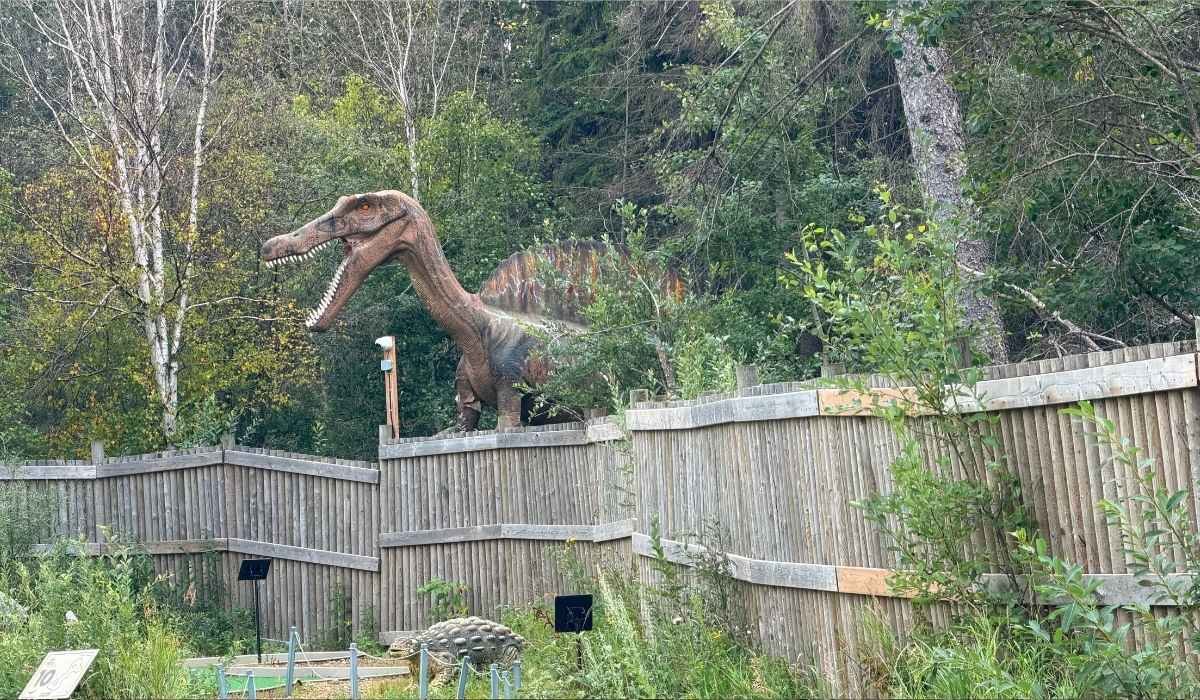
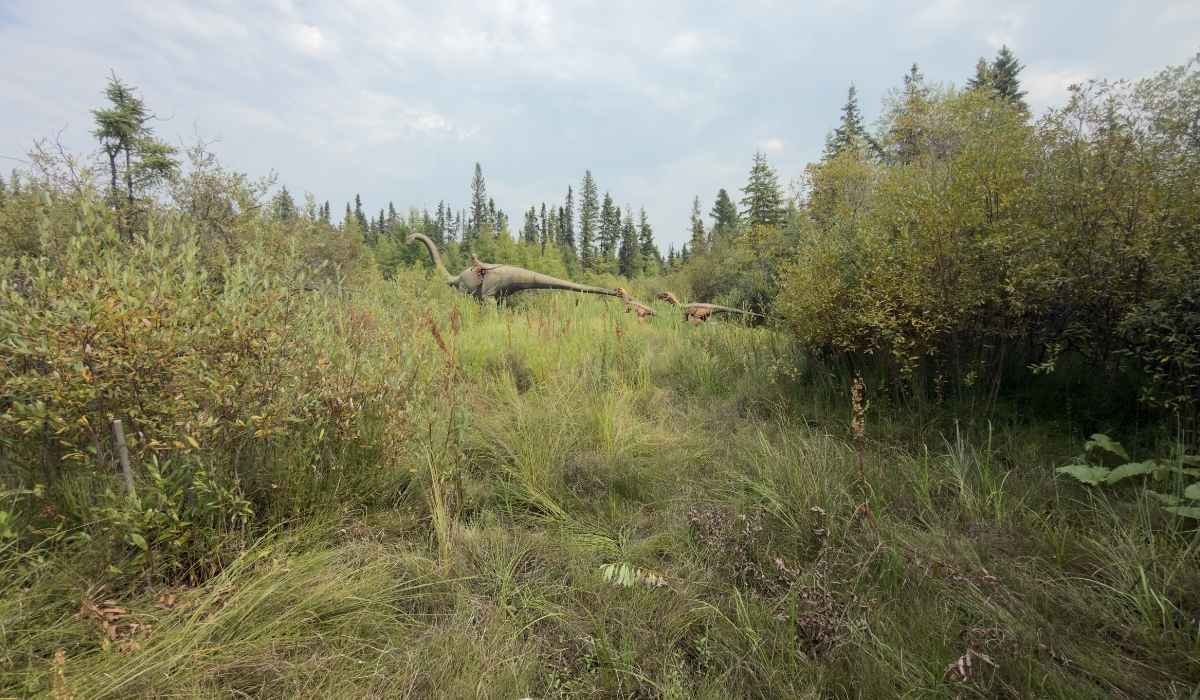
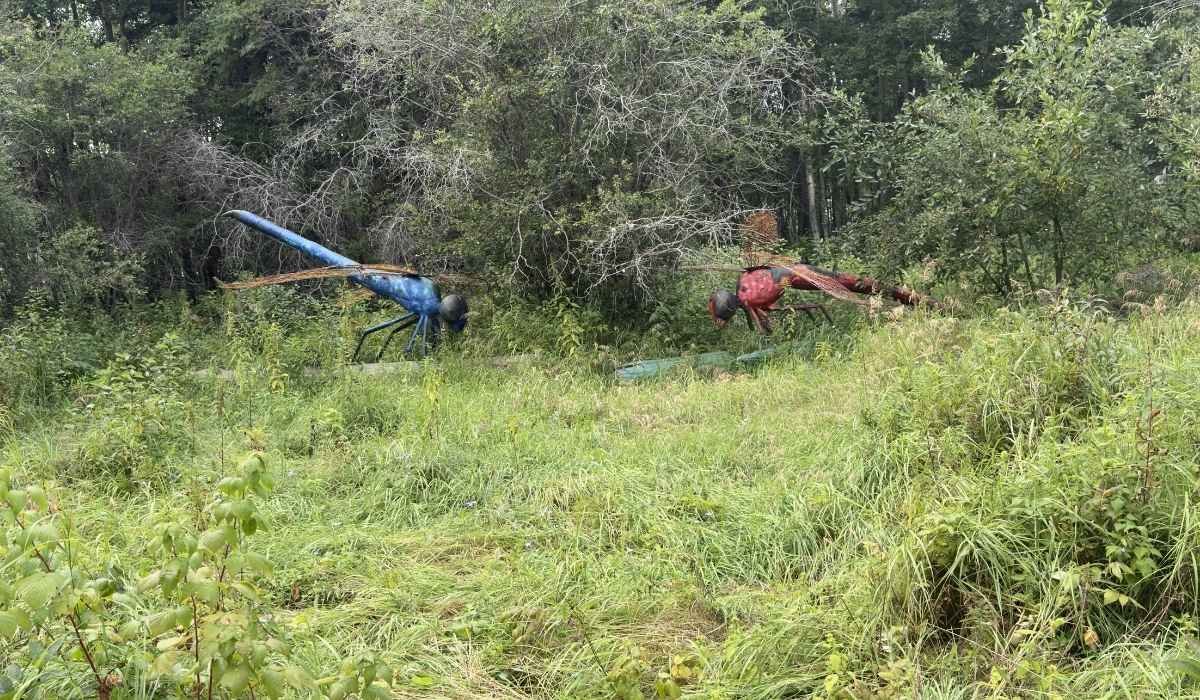
The park has more than 40 life-size animatronic dinosaurs spread along a 2 km boardwalk trail through old forest. Motion sensors set them off as you come near, so they move and make noise when you round a corner.
That is what makes it work, and I did not understand it until I was standing on the trail. The forest is thick and shaded, so I usually heard a dinosaur before I saw it. I was not looking at a statue in an open field. I was walking a path, and the path kept interrupting me.
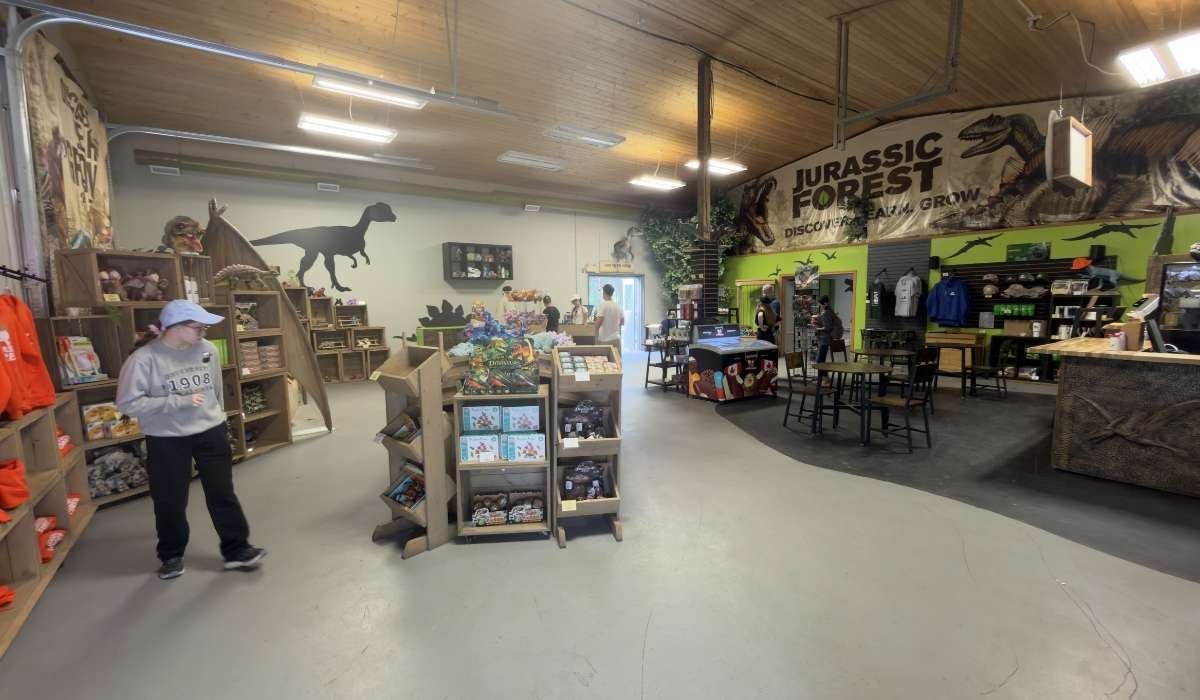
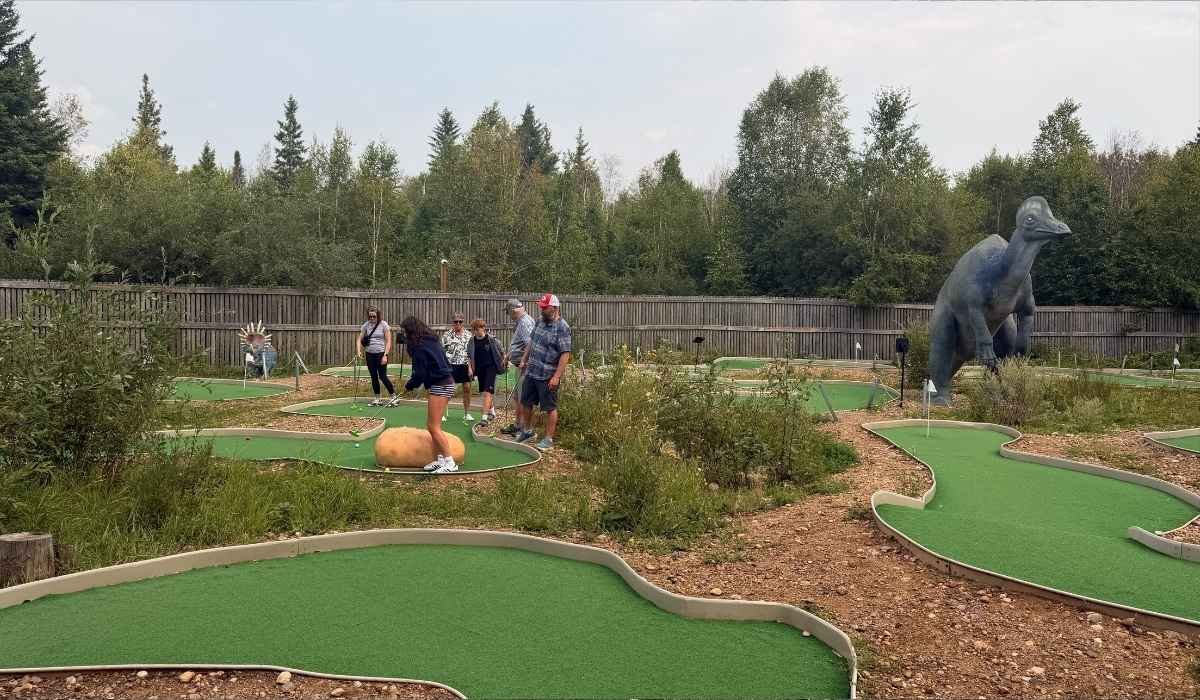
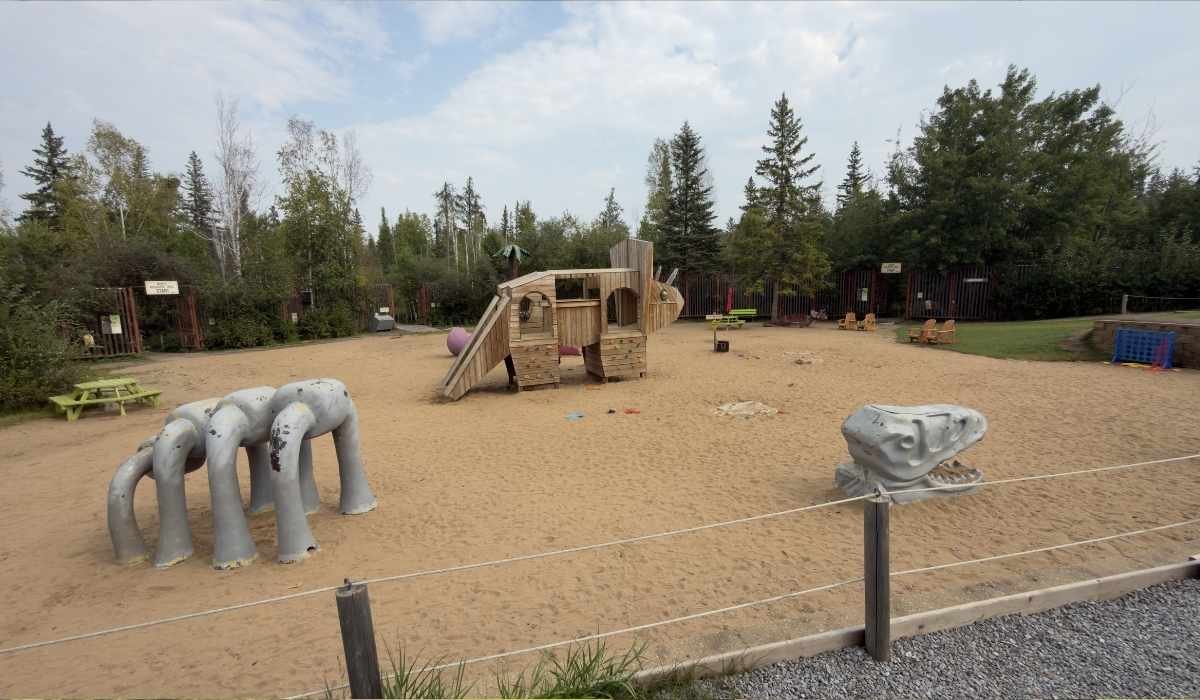
There is more than the trail. There is also an 18-hole dinosaur mini golf course called Journey to Extinction, an outdoor play area called the Active Learning Park where kids can brush for bones in sand, and two food spots, the Tar Pit Café and the Cretaceous Concession.
My Visit to Jurassic Forest
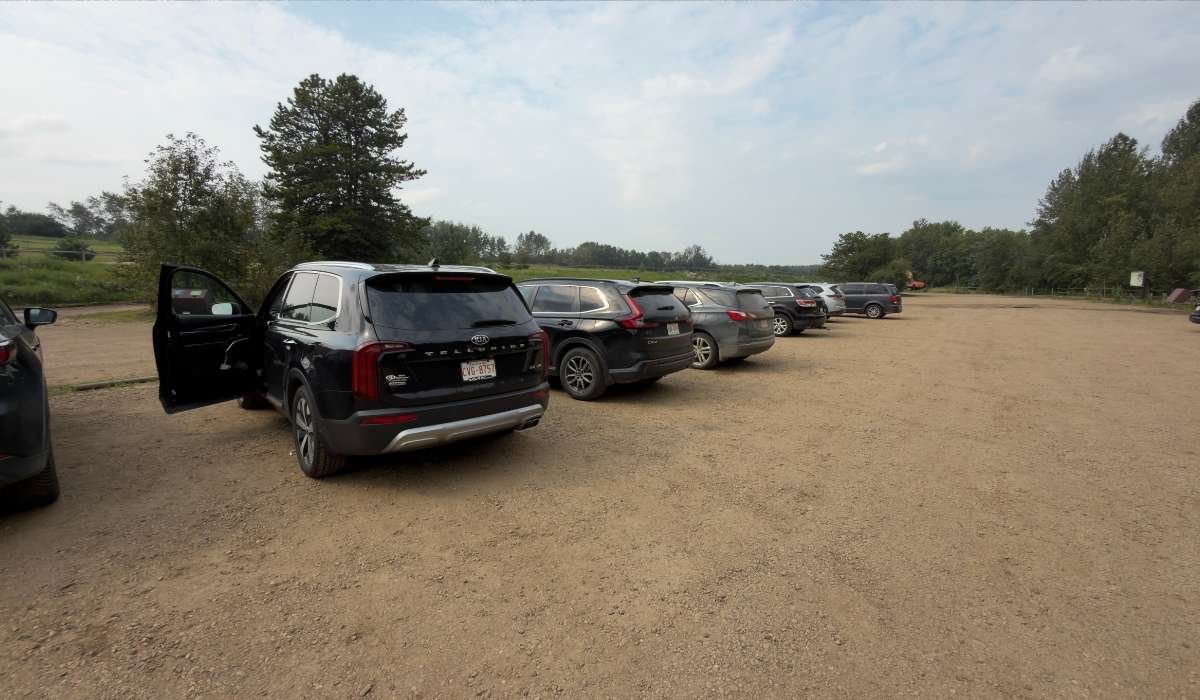
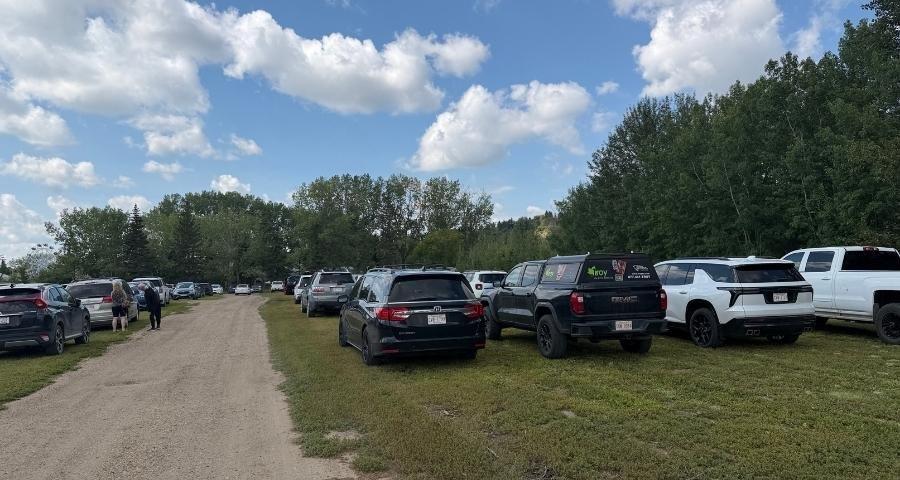
Getting there was simple. The drive north out of Edmonton is flat farmland and grain bins, and then I turned onto a township road and the trees closed in around me. Parking is free and sits right at the entrance. There was plenty of room when I pulled in.
The mosquitoes started at the car. I am not blaming the park for this. It is an old forest with wet ground in late August, and mosquitoes are simply part of that in this corner of Alberta. I just did not have repellent with me, and I paid for it all afternoon.
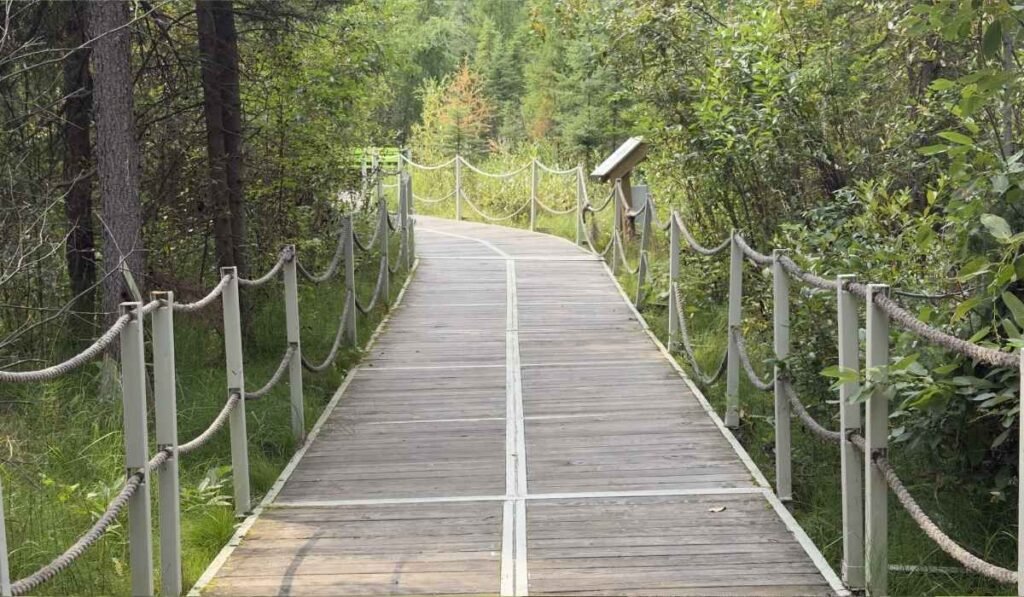
Once I stepped onto the boardwalk, the forest seemed to take over. The entire trail is a raised wooden boardwalk, so I never had to worry about mud, and the walk was easy. Sunlight filtered through the trees in patches, and the trail was quiet between the displays. Then, without warning, a sensor would pick up my movement, and a full-size dinosaur would suddenly start moving just a few metres away.
That is also where I learned how my kids felt about the whole idea. My toddler was a little afraid, and my baby was scared outright and refused to stand on the trail at all. We ended up carrying the little one for most of the walk.
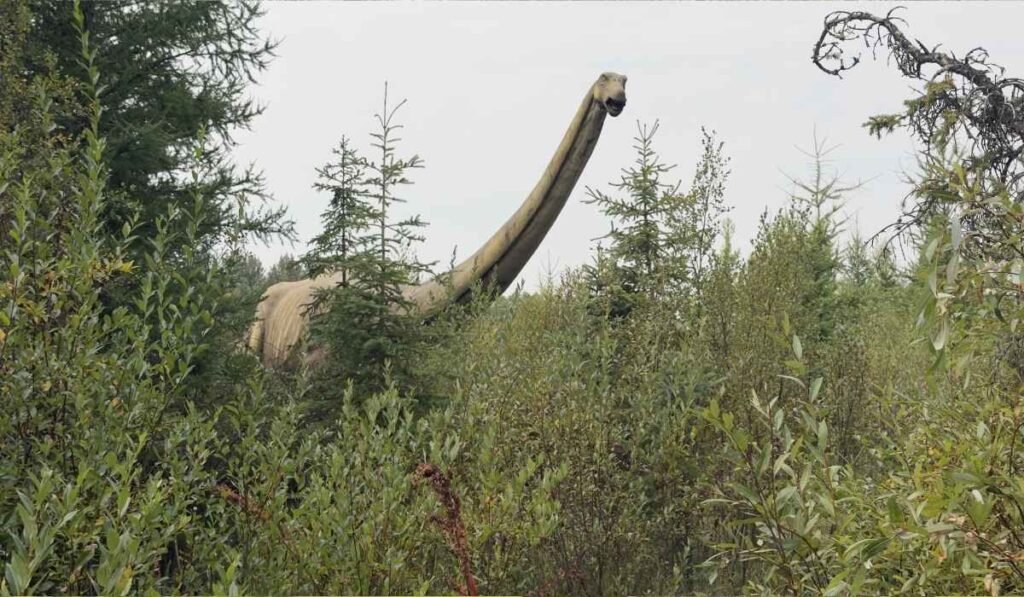
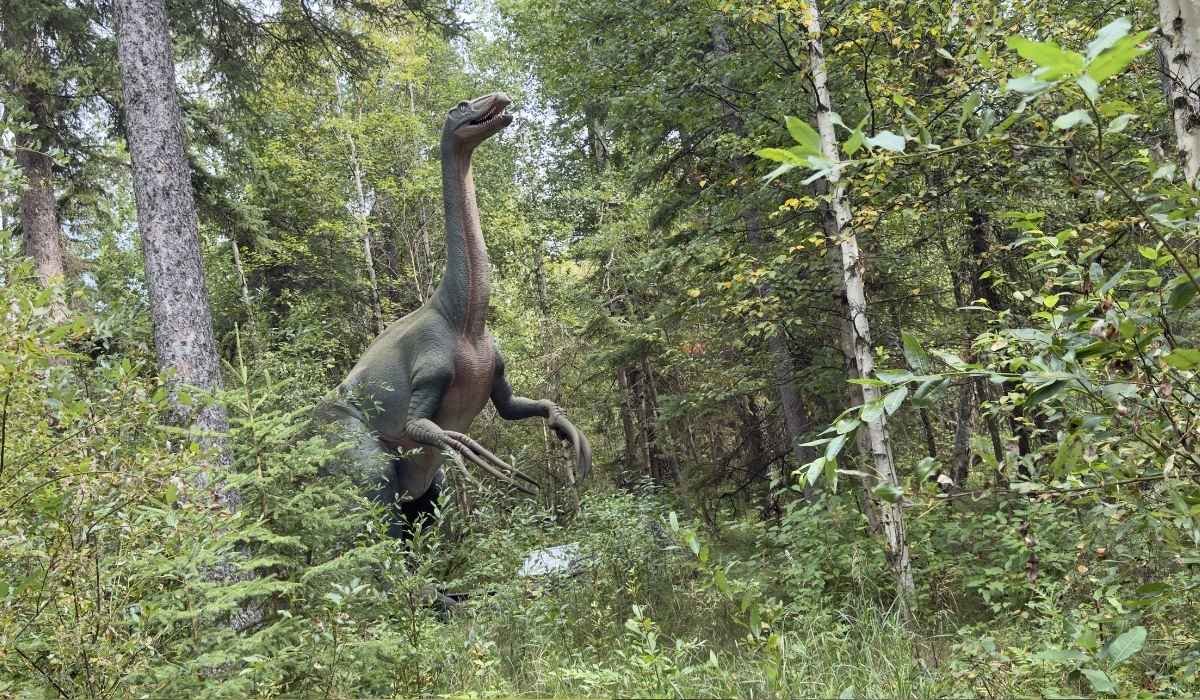
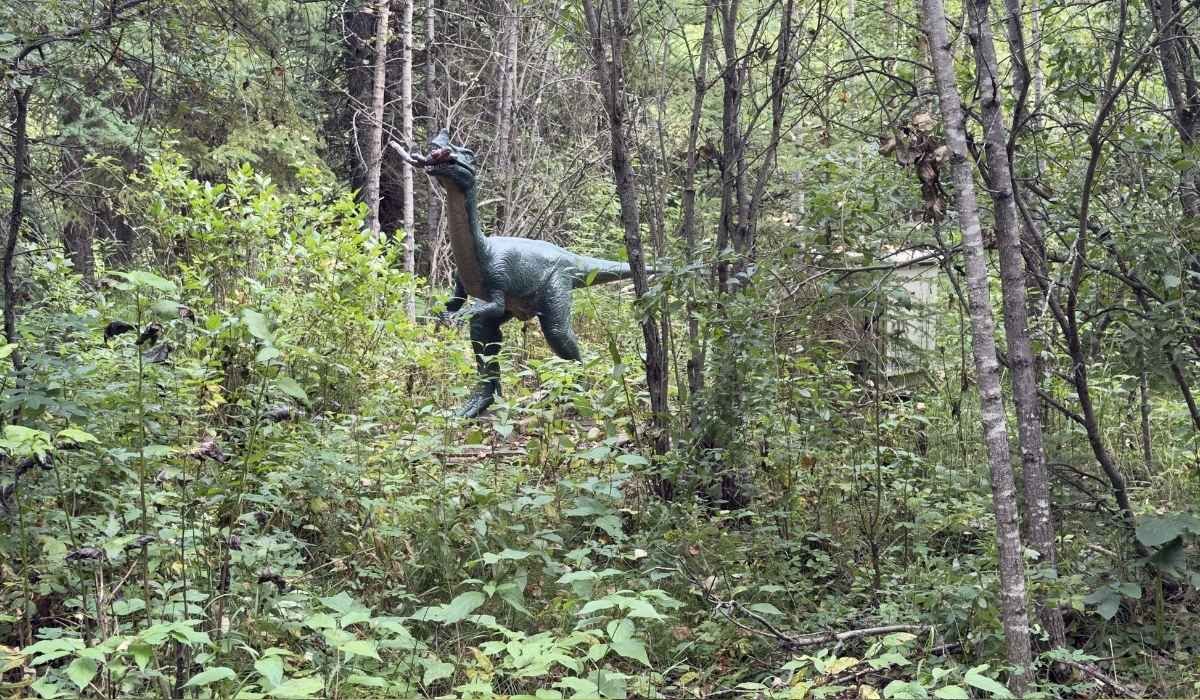
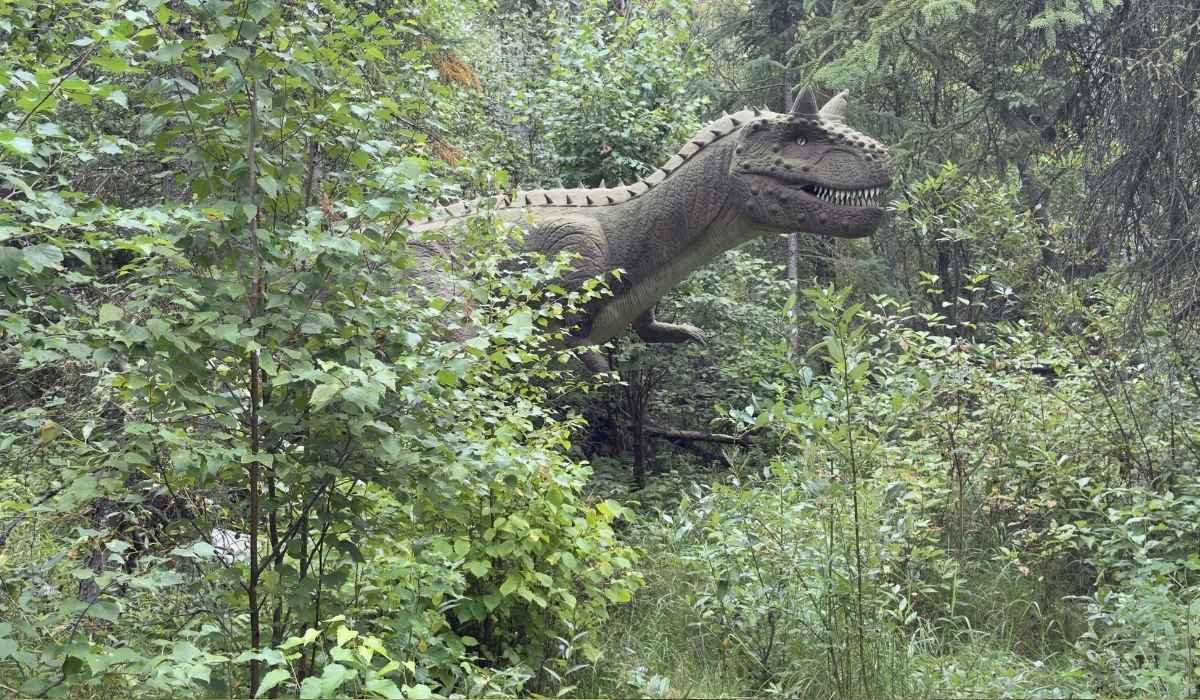
The scale is what surprised me most. Photos online don't really capture how large these dinosaurs feel. From the trail, the long-necked dinosaurs looked like they belonged among the trees around them, while the meat-eaters were positioned low and close to the boardwalk, making them feel surprisingly near.
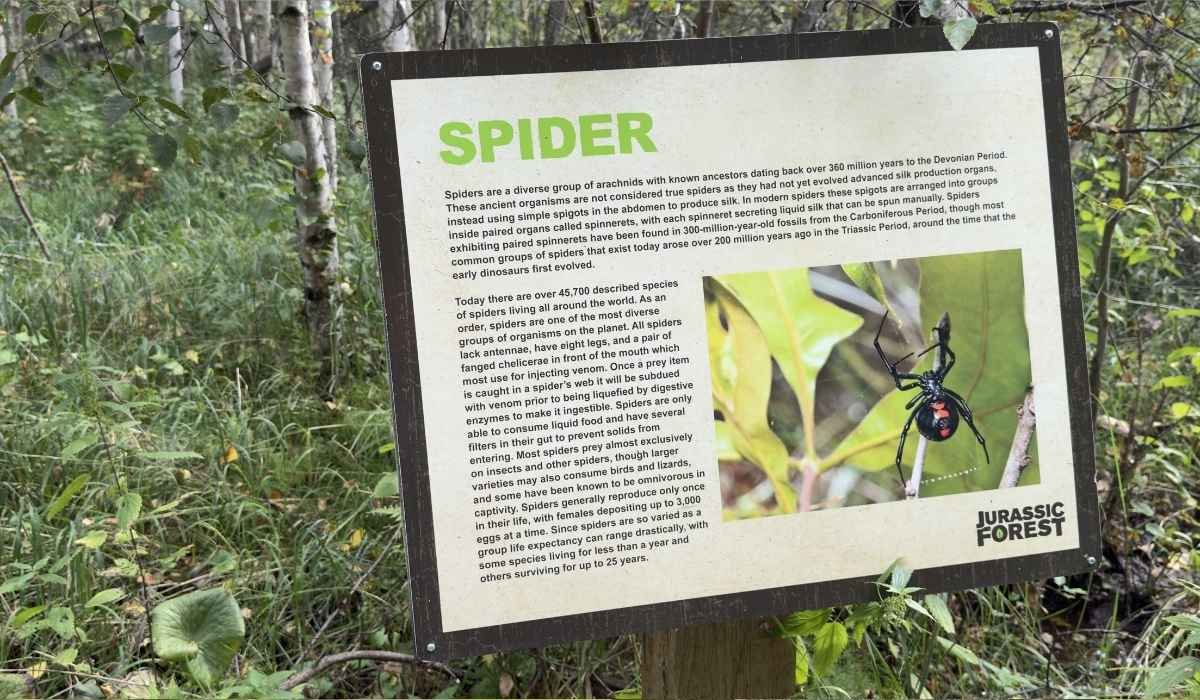
I found information boards along the route. Some are about the dinosaurs, and others explain the forest I was standing in, including the wetland sections the boardwalk crosses. I wanted to read more of them than I did, but I could not because of the bugs and a nervous baby in my arms.
My walk took about 15 minutes, and I was moving faster than I meant to. If you have repellent on and you can stand still without being eaten, you will take much longer than I did, and you should.
Three things I noticed that I think will help you. The boardwalk is smooth and wide, and I watched people push strollers along it without any struggle.
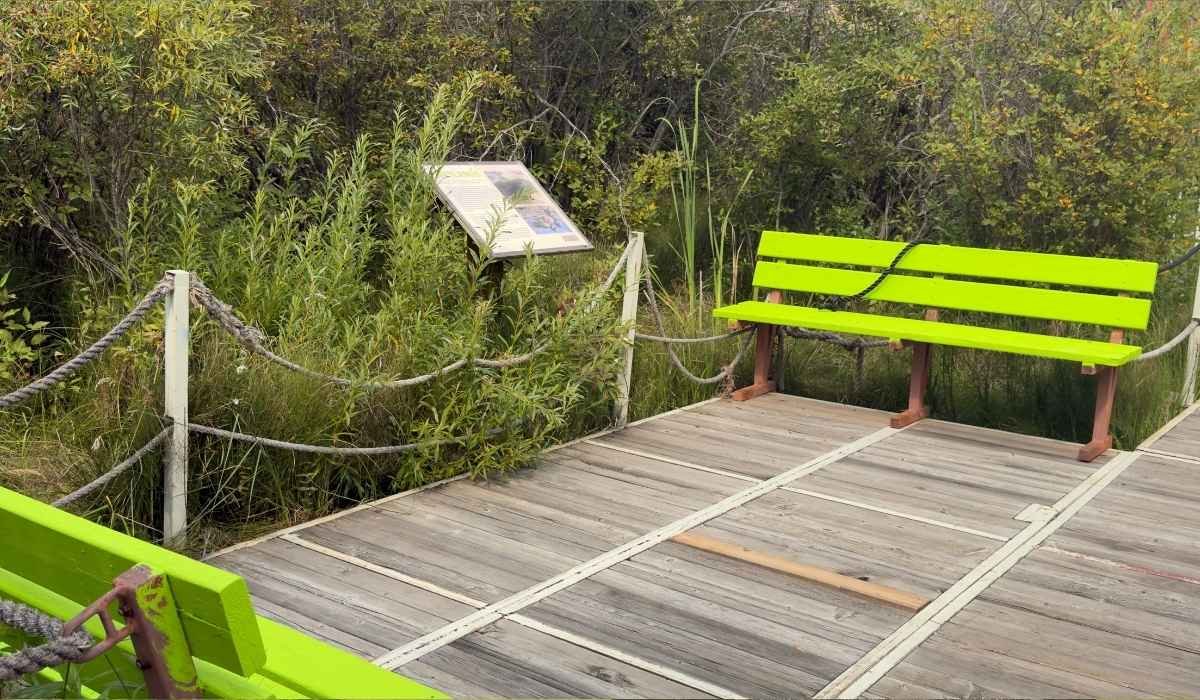
There are benches spaced out along the trail, often right beside an information board with a view into the trees, so you can sit whenever you want instead of pushing through to the end. And the sensors do not all fire at the same moment for every group, so if a dinosaur looks still, wait a second before you walk past it.
What You'll See at Jurassic Forest
The wooden boardwalk winds through the forest and past the dinosaur displays.
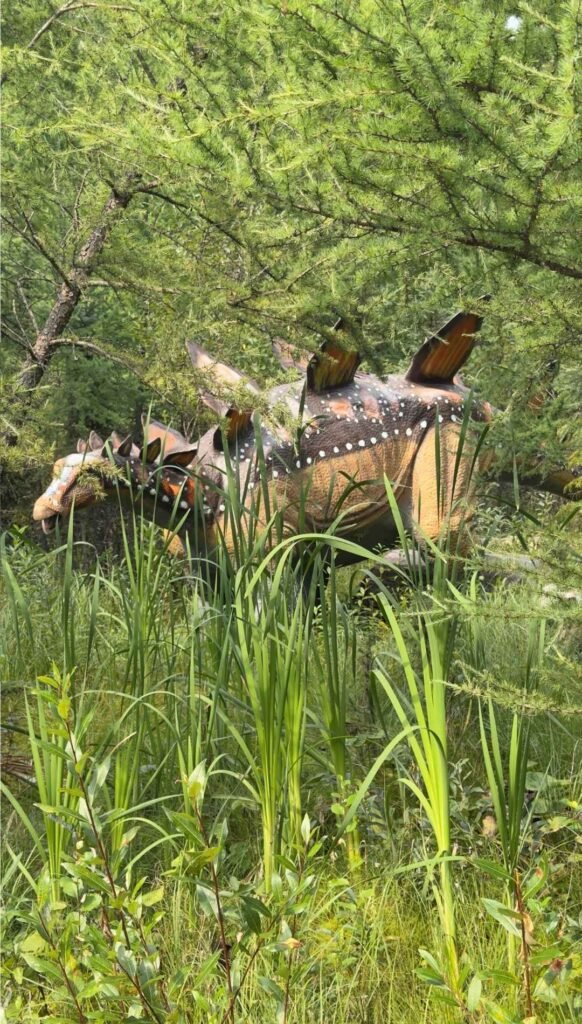
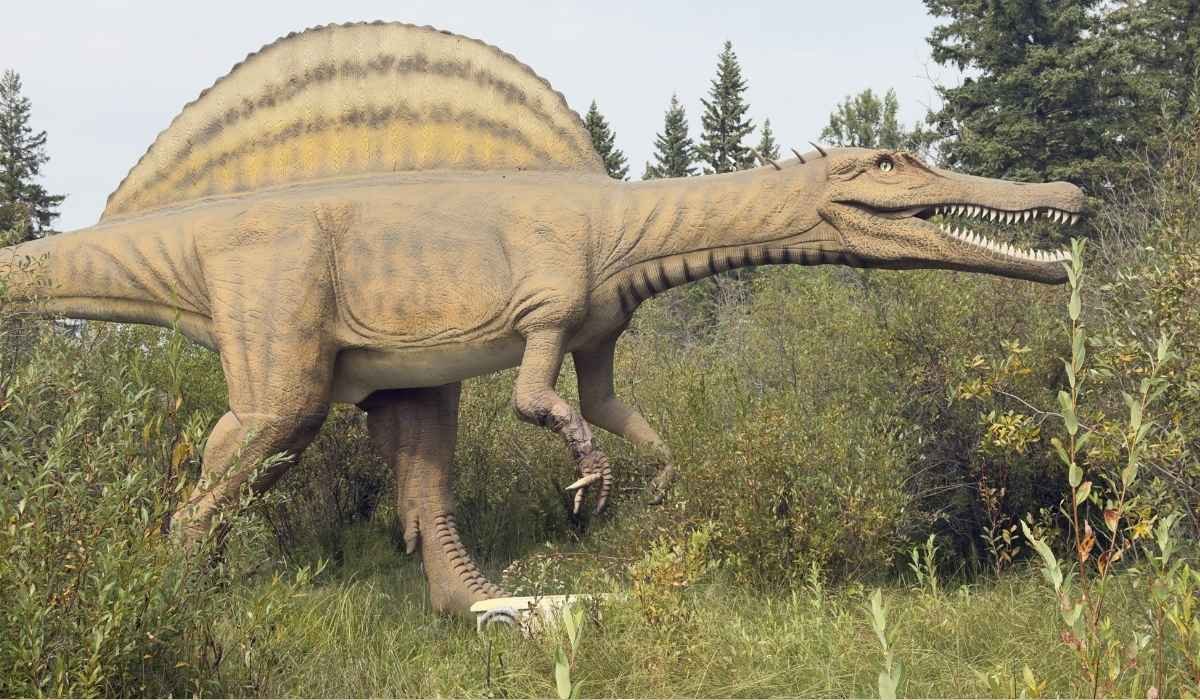
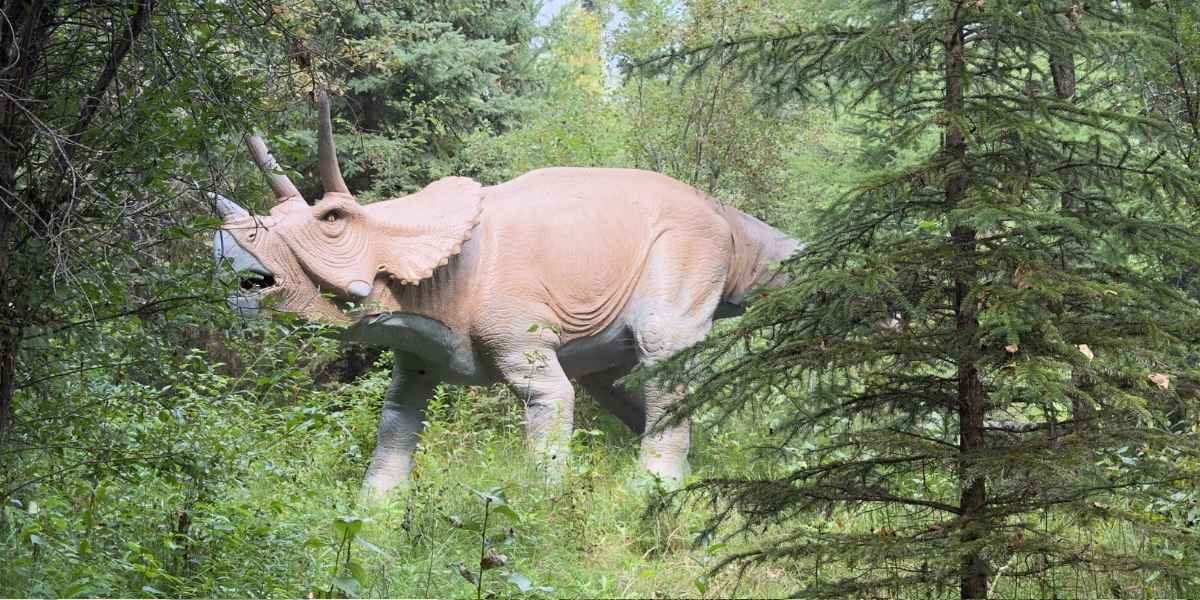
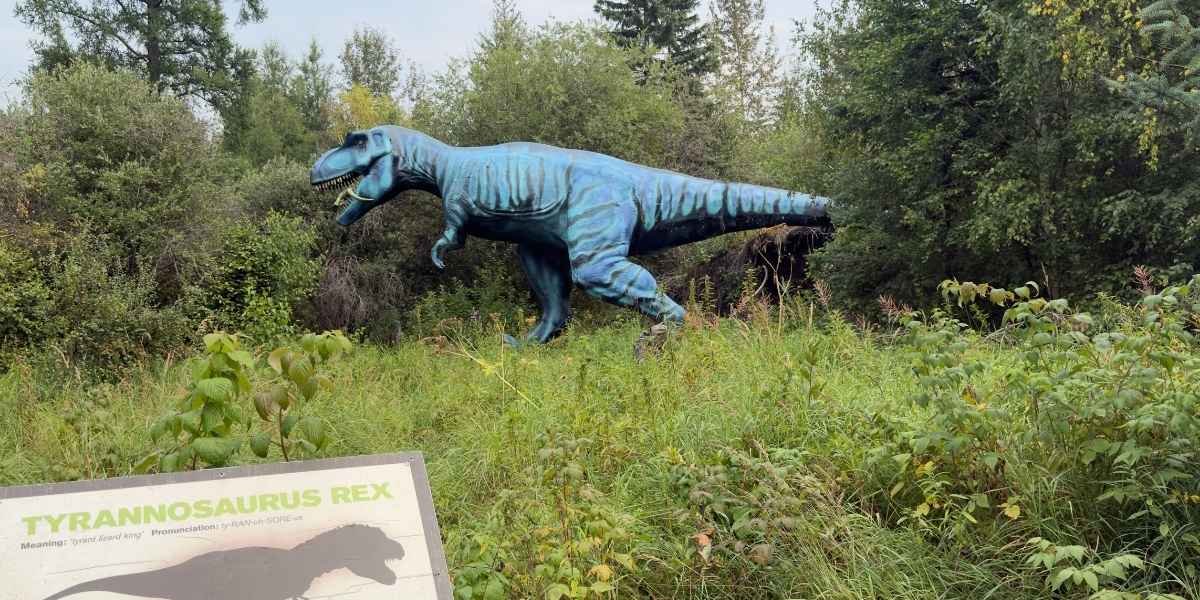
The trail is the main event. You will pass a mix of plant eaters and predators. Species you can expect to encounter include Albertosaurus, Tyrannosaurus rex, Triceratops and Stegosaurus, plus the very large long-necked dinosaurs that are impossible to miss.
I would not go in with a checklist of species. I got more out of letting the trail surprise me and reading the boards for the ones I liked.
Here is what else I found worth knowing about.
Discovery Trails
The boardwalk loop is 2 km in total, the dinosaurs are motion-activated, and it is all included with general admission. The park also offers printable scavenger hunt sheets in two age levels, one for ages 4 to 7 and one for ages 8 to 12. If you are visiting with older children, the scavenger hunt can be an easy way to keep them engaged throughout the walk. It is a free way to keep them interested for the whole walk.
Journey to Extinction Mini Golf
An outdoor 18-hole course with dinosaur-themed obstacles. It is an add-on rather than part of general admission. I saw the price posted as $8 per person on the admissions board at the gate when I visited, and you can play it on its own without paying full park admission.
Active Learning Park
A dinosaur-themed outdoor playground with climbing and slides, plus a sand pit where kids can brush for bones. I noticed families with younger kids spending extra time here.
Food Options
The Tar Pit Café serves coffee, tea and baked goods, including gluten-free options, and there is also the Cretaceous Concession. You can bring your own food and snacks in, though barbecues, stoves and cooking equipment are not allowed.
How Long Do You Need at Jurassic Forest?
I can tell you the trail goes quickly if you let it. Ours took roughly 15 minutes, but that pace was set by mosquitoes and a scared baby, not by interest. At a normal pace, stopping at the boards and letting each dinosaur finish its cycle, I would give it closer to an hour.
If you add everything else, the time climbs. Mini golf, the play park and a stop at the café can push a visit to two or three hours without much effort. Families with small kids may stay longer, especially if they spend time in the playground, mostly because the playground is hard to leave.
The things that will stretch your visit:
Actually reading the information boards
Waiting for each dinosaur to finish moving
Photography, because the forest light is good
Kids who want to see every display twice
Mini golf and the play area
One handy detail: you get a stamp when you arrive, and re-entry is allowed, so you can go back out to your vehicle for a jacket or a cooler and come straight back in.
Is Jurassic Forest Good for Families?
Yes, and I think the boardwalk is the reason why.
The park lists the Discovery Trails as stroller-friendly and suitable for most mobility levels. Every pathway is a wooden boardwalk; the park says it is fully wheelchair accessible, and there are accessible washrooms on site. I do not see that often at an outdoor attraction, and it means a nap in the stroller does not end your day.
A few things I would want a friend to know before taking their kids:
A few things I would want a friend to know before taking their kids. The biggest one is fear. My toddler was a little afraid and was hurrying me up to finish the trail quickly so she could get out of there, and my baby was scared enough to refuse to stand on the trail for pictures, so we carried the little one through.
The dinosaur displays are loud, and they move suddenly, and that is exactly the point that scared my kids more. Older kids love that. Very small ones may not.
If your child gets nervous easily, walk the first few metres and watch how they react before you commit to the whole loop.
It is fully outdoors. Once you're on the trail, there is nowhere indoors to escape if the weather turns, so check the forecast and dress for the conditions you’re likely to encounter.
If you are visiting with small children, the bugs may be harder for them to ignore than they were for me. Repellent on your kids matters more than repellent on you. I learned that lesson the hard way on my own arms.
Pets are not allowed anywhere in the park, so leave the dog at home rather than in the car.
Jurassic Forest for Adults
I went as an adult, and I enjoyed it, so I do not want to leave you thinking this is only a kids' attraction.
If you like photography, the mix of forest light and enormous dinosaur displays gives you plenty of interesting subjects to photograph. And if you have an interest in paleontology, seeing a full-size Albertosaurus in an Alberta forest feels very different from seeing one in a book.
It also works as a change of pace. If you have already worked through the best tourist attractions in Edmonton and you want something outdoors and a bit unusual, this fits. I think grandparents would do fine here too. The surface is flat and even, and those benches along the trail mean you can rest as often as you need.
Where Is Jurassic Forest?
Jurassic Forest sits near Gibbons, Alberta, north of Edmonton and slightly to the east. The address is 23210 Township Rd 564 #2, Gibbons, AB T0A 1N5.
The town of Gibbons is a few minutes away and has fuel and groceries if you want to stock up before or after. The attraction is in Sturgeon County, and the drive is mostly straightforward farmland highway, and the drive is straight farmland highway the whole way.
Calling it "Jurassic Forest Edmonton" is a habit more than a fact. It is close enough to the city for an easy afternoon, but you are leaving Edmonton to get there.
How to Get to Jurassic Forest from Edmonton
Drive. The park says it is roughly 30 minutes north of Edmonton on Highway 28 north, and there is plenty of on-site parking, including space for school buses. Parking is free, so there is no lot fee to add on top of your tickets.
Coming from north Edmonton, that 30-minute estimate held up for me. If you are starting from the south side or Sherwood Park, give yourself extra time just to cross the city first.
The last turn takes you onto a rural township road. Just type "Jurassic Forest" into Google Maps by name rather than entering the street address. Then watch for the sign once you leave the highway.
There is no practical public transit out there, and the site is rural, so plan on driving.
When Is the Best Time to Visit Jurassic Forest?
Jurassic Forest runs seasonally from May through October, and it stays open in rain, shine or smoke unless conditions are unsafe. Hours are 9:00 am to 7:00 pm daily with last admission at 6:00 pm, though they can shorten later in the fall, so confirm before a September or October trip.
What I would tell you about timing:
Mid to late summer is peak mosquito season in a wet forest like this one. That is the single thing I would change about my own visit. Do not treat repellent as optional.
September and early October should give you cooler temperatures, and a late-season visit may also mean fewer mosquitoes than I experienced in late August.
The canopy keeps the trail cooler than open ground on a hot day, which I appreciated. That is a real advantage in July and August.
Weekends and holidays can be busier, so booking online is a good idea to skip the line, though you can still buy at the gate.
What to Bring
Short and practical, based on what I wished I had:
Insect repellent. The one thing I would not leave home without again.
Comfortable walking shoes. The boardwalk is flat, but you are on your feet.
A light jacket or long sleeves. More bug protection, and useful in the shade.
Water bottle. Easier than having to buy drinks on site.
Sunscreen and a hat. The open areas near the entrance and mini golf have no cover.
Rain gear. The park stays open in wet weather.
Camera or phone. The size of these displays is worth capturing.
The park's own suggestion list is close to mine: repellent, sunscreen, a water bottle, a hat and a jacket.
Jurassic Forest Tickets, Hours and Practical Information
The prices below are what I saw posted on the admissions board at the gate on the day I visited, and the rest comes from the park's own visitor pages. Admission, add-on pricing and hours can change, so check jurassicforest.com for current information before you drive out.
Location: 23210 Township Rd 564 #2, Gibbons, AB T0A 1N5
Season: May through October
Hours: Daily 9:00 am to 7:00 pm, last admission 6:00 pm
Admission: Adult (18+) $18, Youth (13 to 17) $15, Senior (55+) $15, Child (3 to 12) $12, Family of Four $60, children 2 and under free
Add-ons: Dino Wagon $6, Mini Golf $8, both priced per person on top of admission
Parking: Free on site, with room for school buses
Accessibility: All pathways are wooden boardwalk; the park states they are fully wheelchair accessible, and accessible washrooms are available
Food: Tar Pit Café and Cretaceous Concession on site; outside food and snacks allowed, no cooking equipment
Booking: Online booking recommended to skip the line, gate tickets available, and online day passes can be used on any day of the season
Rules to know: No pets, no smoking or vaping, no bikes or scooters, stay on the boardwalk, and do not touch the displays or motion sensors
Season memberships are available if you think you will go back more than once.
🏨
Looking for a Place to Stay?
Staying overnight in Edmonton? Find a hotel that puts you within easy reach of Jurassic Forest.
For me, yes, and I would tell a friend to go. I would say go if you have kids roughly between 3 and 12, if you like dinosaurs, or if you want a short outdoor trip from Edmonton that does not eat a whole day in the car.
The boardwalk setting is the best part of it. Walking through real forest and running into a moving Albertosaurus felt different from looking at a skeleton behind glass, and the flat trail makes it work for people who usually get left out of outdoor attractions.
I will be honest about the other side. If you only do the trail, it is a smaller experience than the ticket price suggests, because the walk can be over quickly. If you want to make more of a day of it, add mini golf, the play park and a slower walk along the trail instead of treating it as a quick stop.
You might prefer somewhere else if you want real fossils and museum-grade science. In that case, the Royal Tyrrell Museum in Drumheller is the better drive, or the Royal Alberta Museum in Edmonton for an indoor day. I would also skip it if bugs ruin your mood and you will not spray, because on a warm late-summer afternoon in that forest, they will find you the way they found me.
I am glad I went. I would go back in late September with repellent in my pocket, and I would give myself the time to read every board I walked past today.
Jurassic Forest Photos
Click on each image to expand.
Final Thoughts on Jurassic Forest
Jurassic Forest is one of those Edmonton-area attractions that is easy to enjoy at your own pace. The trail takes you through a natural forest setting, with life-sized dinosaurs appearing among the trees and vegetation along the way. It feels less like walking through a traditional exhibit and more like discovering dinosaurs in their natural environment.
I especially enjoyed the combination of the forest trail, dinosaur displays, and quiet outdoor setting. The boardwalk, resting areas, and educational signs also make it an easy experience for families and visitors who want to take their time.
If you're looking for a fun outdoor attraction near Edmonton that combines dinosaurs, nature, and a little adventure, Jurassic Forest is well worth adding to your Edmonton itinerary.
Frequently Asked Questions
Where is Jurassic Forest located?
It is near Gibbons, Alberta, north of Edmonton. The address is 23210 Township Rd 564 #2, Gibbons, AB T0A 1N5. It is not inside Edmonton city limits, though it is close enough to feel like it.
How far is Jurassic Forest from Edmonton?
It is about 30 minutes north of Edmonton on Highway 28 north, and that matched my drive from the north side. Starting from south Edmonton, allow extra time to cross the city.
How much does Jurassic Forest cost?
The board at the gate on the day I visited listed $18 for adults 18 and over, $15 for youth 13 to 17, $15 for seniors 55 and over, $12 for children 3 to 12, and $60 for a family of four. Children 2 and under get in free. Mini golf is $8, and the Dino Wagon is $6 on top of admission, and parking is free. Confirm current pricing on the official site before you go.
How long does it take to visit Jurassic Forest?
My walk took about 15 minutes, but I was hurrying away from mosquitoes. Give the trail closer to an hour at a normal pace, and expect two to three hours once you add mini golf, the play park and food.
Is Jurassic Forest good for young children?
Yes. The trail is stroller-friendly. The one thing I would watch for is noise, since the animatronics move suddenly and roar; it makes my children scared. Yours may be scared too.
What should I wear to Jurassic Forest?
Comfortable walking shoes, clothes for the day's forecast, and long sleeves if the bugs are out. It is fully outdoors, and the park stays open in rain, shine or smoke unless conditions are unsafe.
Is Jurassic Forest open year-round?
No. It runs seasonally from May through October. Fall hours can be shorter than summer hours, so check before a late-season visit.
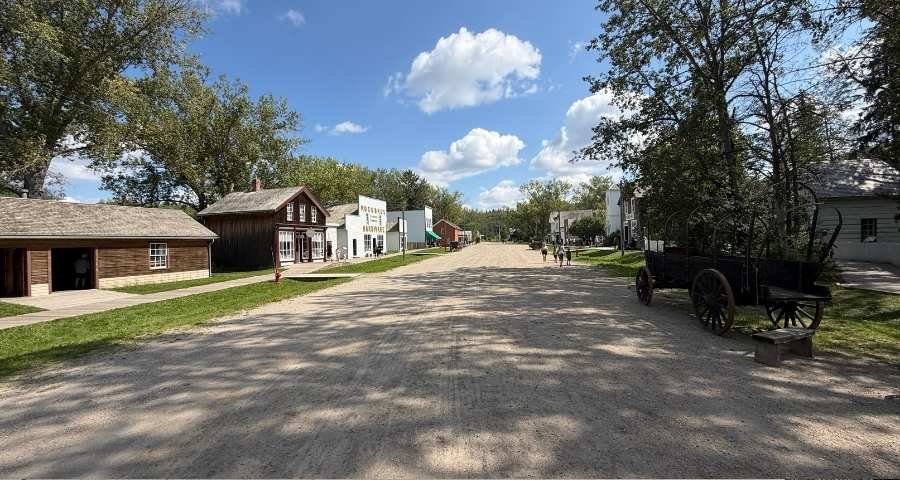
Most museums ask you to look at history through glass. Fort Edmonton Park asks you to walk down the middle of it, on wooden sidewalks, past shopfronts that look the way they did more than a hundred years ago.
I visited Fort Edmonton Park for a family day out, which turned out to be the right way to see it. We walked more than we expected, we got tired in places, and we found out the hard way which parts are worth planning around.
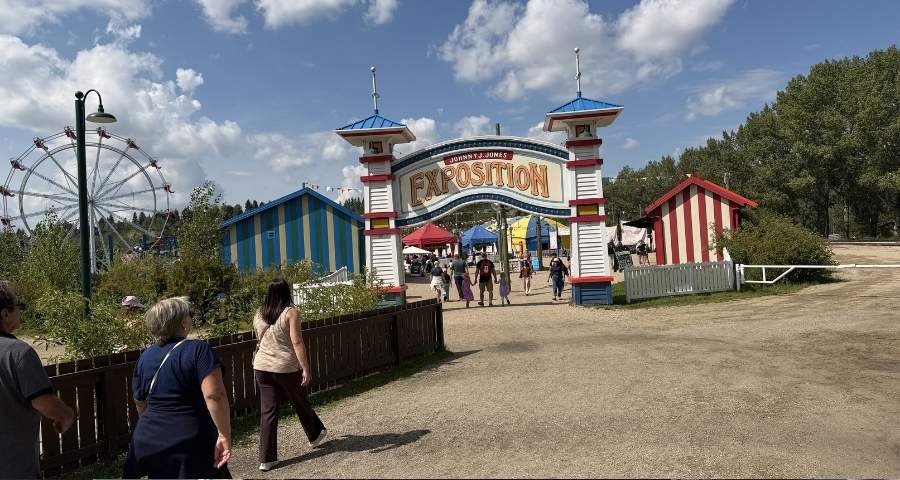
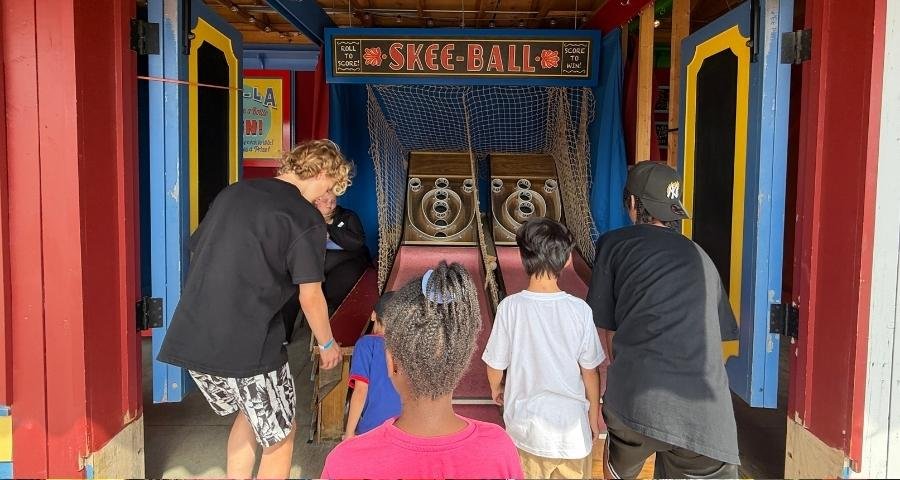
Inside one ticket, you can ride a steam train, walk through four different eras of the city, and lose half an hour to a midway game. The trick is knowing the order to do it in.
This guide covers what to see, how long you actually need, what tickets cost, and how to get there.
What Is Fort Edmonton Park?
Fort Edmonton Park is a living history museum in the river valley, run by the City of Edmonton and the largest of its kind in Canada. It works nothing like the other museums in Edmonton.
Instead of display cases, it is laid out as full-size historical settings you walk through in order: a fur trade fort, then three streets set in 1885, 1905, and 1920. An indoor Indigenous Peoples Experience covers thousands of years of history here before and after that timeline begins. The buildings are staffed by costumed interpreters who stay in the role of someone living in that period.
Why it matters to Edmonton is simple. Much of the city's early architecture is gone. This is where a lot of it still stands, either as original buildings moved here or as careful reconstructions.
My Visit to Fort Edmonton Park
The first thing I noticed is how big it is. This is not a two-hour attraction, and the walking distances between areas are real.
We started at the front entry and walked the historical streets rather than taking the train down first. By the time we reached the 1846 Fort at the far end, our legs were weak. The fort sits at the back, and walking there uses more energy than you expect.
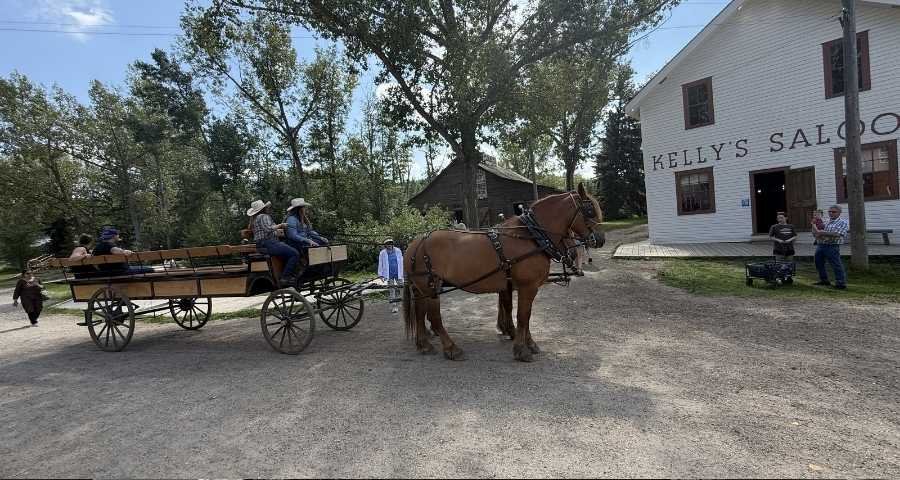
What saved us was the horse-drawn wagon on 1885 Street. It passed the fort and carried on through the settlement era past Ottewell Farm, and sitting down for it was as much a rest as a ride.
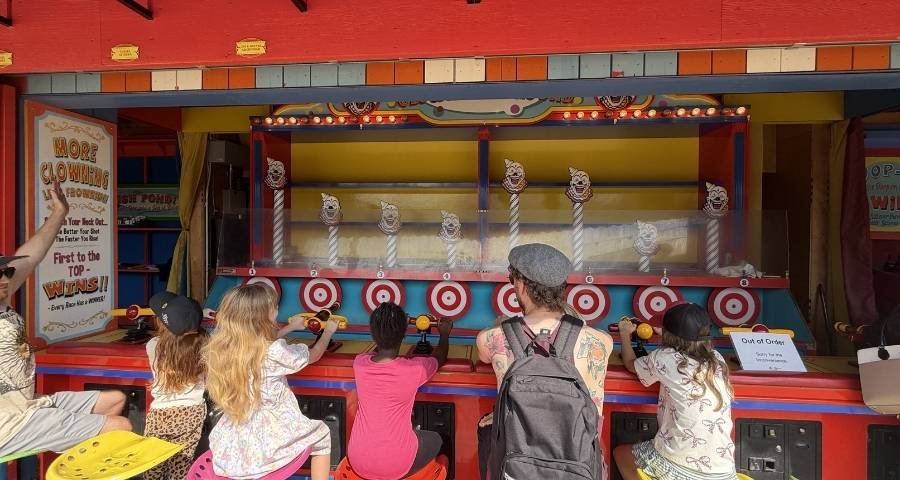
We left the Midway for the way back, after the streets were done, and that was the right order. The games are addicting, and I would not have wanted to walk the streets afterwards.
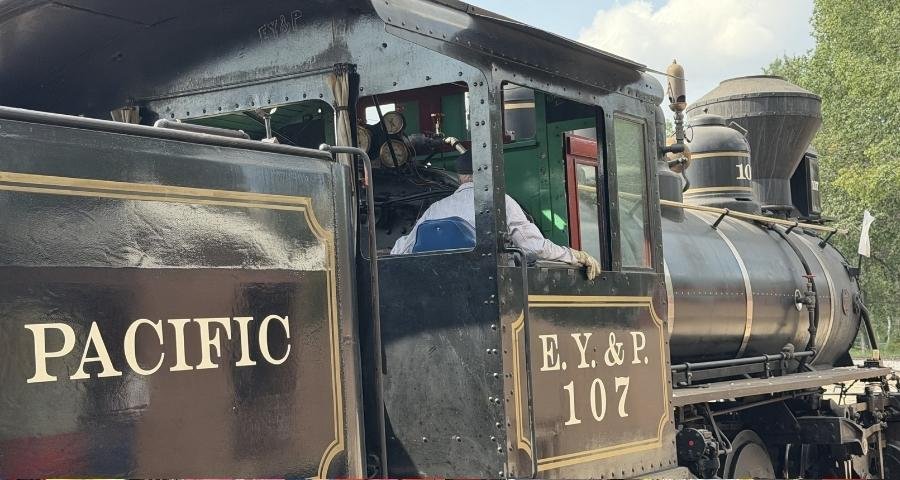
Our last ride was the 1919 Baldwin steam train. It circles the park on its own track around the outside, unlike the streetcar, which runs along the historical streets themselves. Finishing on the train, sitting down and watching the park go past, was a good way to end.
This is mostly an outdoor site, so the weather you get is the visit you get.
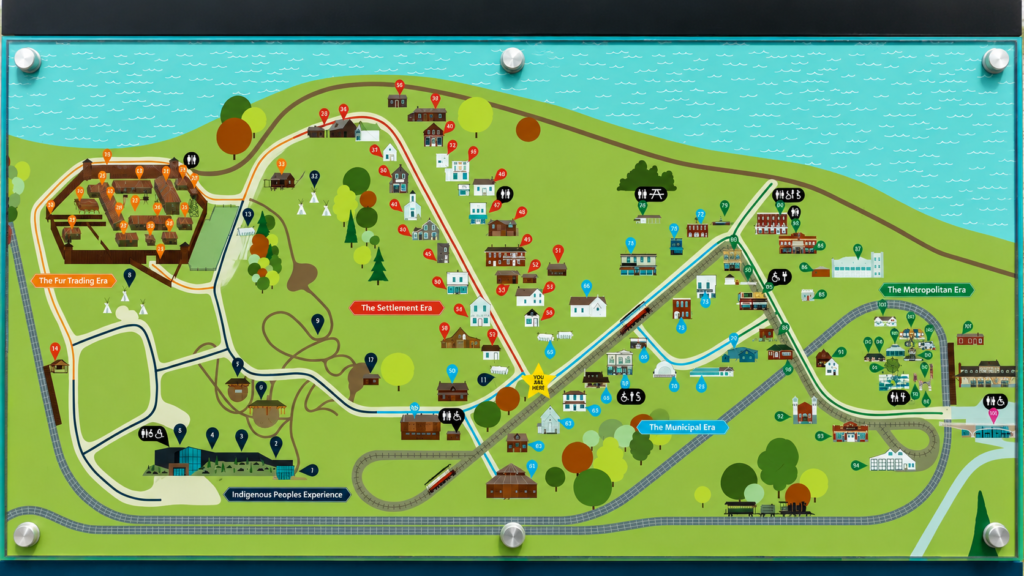
Fort Edmonton Park Map
Things to Do at Fort Edmonton Park
What to expect in each area during the summer season, and roughly how long to give it.
Area
Good for
Suggested time
Indigenous Peoples Experience
All ages, indoor break
45–60 min
1846 Fort
History fans, kids
45–60 min
1885 Street
Everyone
45–75 min
1905 Street
Everyone
45–75 min
1920 Street
Families, food stops
60–90 min
Midway
Kids and teens
45–90 min
Train and streetcar
All ages
20–40 min total
Indigenous Peoples Experience
An indoor, interactive exhibit built with input from Treaty 6 First Nations and the Métis Nation of Alberta, covering the history and culture of Indigenous Peoples here well before the fur trade. It is the most modern space in the park and a good quiet break on a hot day. A market inside sells hand-crafted goods.
1846 Fort
A reconstruction of the Hudson's Bay Company trading post that gave the park its name. Inside the palisade gates are the trading room, workshops, living quarters, and the Chief Factor's house. Kids like it because the buildings are small and easy to explore, and adults get more from the interpreters. It sits at the far end of the site.
1885 Street
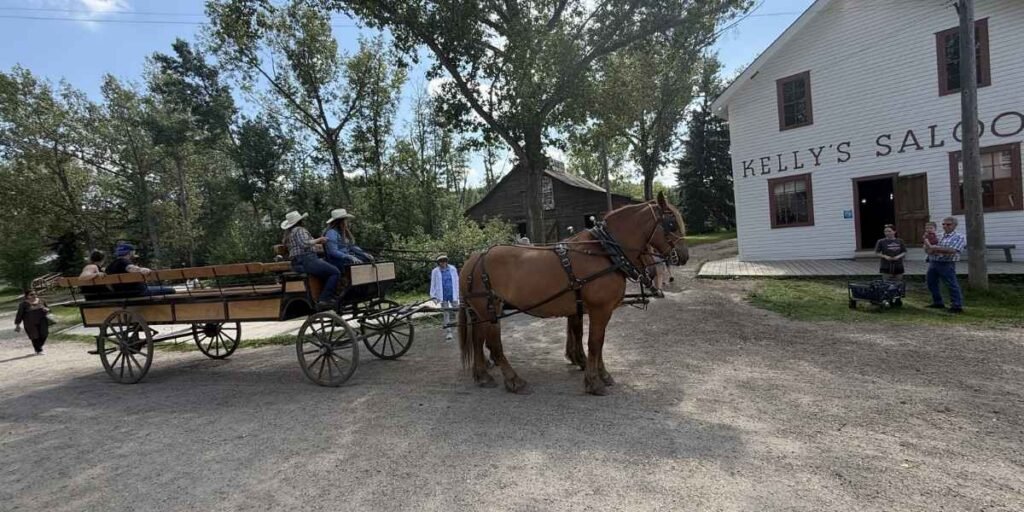
Edmonton as a small settlement finding its feet after the fort era, and the most rural of the three streets. Along it are Kelly's Saloon, Lauder's Bakery, Ottewell Farm and its animals, and McDougall's General Store, which sells pioneer goods and ride tickets. The horse-drawn wagon runs here.
1905 Street
By 1905, Alberta was a province, and Edmonton was growing fast. This street shows that, with larger buildings and a busier main-street feel. The Masonic Hall operates as a food hall, a practical lunch stop halfway through the park. The change from 1885 to 1905 is the clearest jump here.
1920 Street
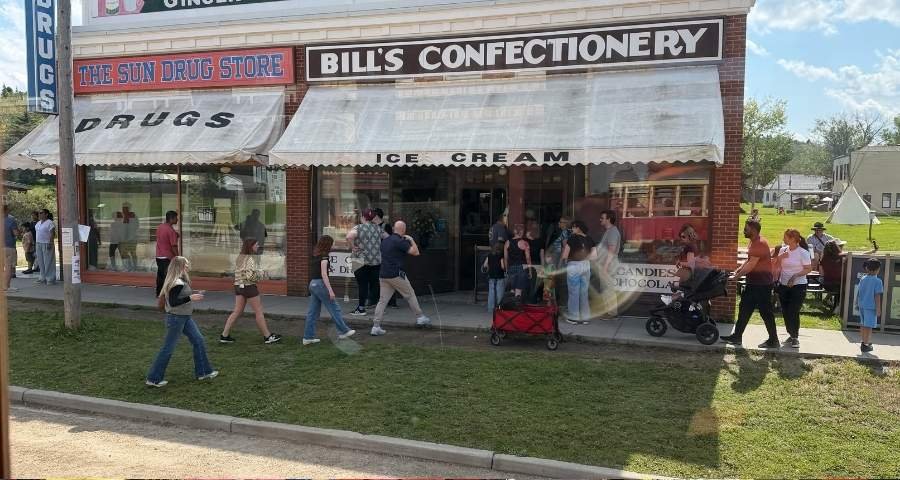
The largest and busiest street, closest to a recognizable modern city. It has the Capitol Theatre, Hotel Selkirk, Johnson's Cafe, Bill's Confectionery, and Tom Thumb Mini Golf. Families spend the most time here, partly for the food and partly because there is more to do than walk.
The Midway and Exhibition
The fairground area. Admission covers unlimited rides and games, and it is the part of the ticket I rate highest.
Kids and teenagers will push for this section, and it works as a reward for getting through the streets first. Fair warning: the games are addicting, and you will spend longer here than you plan. The Treasure Trove candy store is here too.
Train and Streetcar Rides
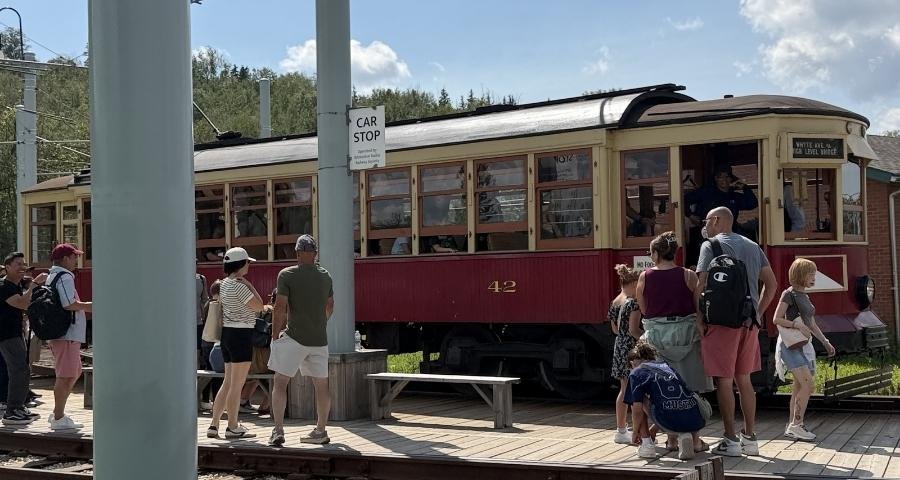
Two different experiences, both worth doing. The 1919 Baldwin steam train runs on about four kilometres of track from the front entry station to a platform at the back near the 1846 Fort. The streetcar line is roughly one kilometre, with stops on 1905 and 1920 Streets, running along the streets rather than around.
Both are included and work as transport. The streetcar takes no strollers, walkers, or wheelchairs; the steam train is wheelchair-equipped.
Wagon, Pony, and Carriage Rides
The horse-drawn wagon at Kelly's Saloon on 1885 Street. This is the wagon starting point and last stop.
The one thing not covered by your ticket, and it caught me out. Pony rides for children 10 and under and horse-drawn wagon rides both cost $8 per person; children 2 and under are free on the wagon. The wagon runs along 1885 Street past Ottewell Farm. Buy tickets online or at McDougall's General Store.
The midway costs nothing extra, so it is easy to assume the wagon does too. I would still pay it: arriving there with tired legs, sitting down behind a pair of horses was worth $8.
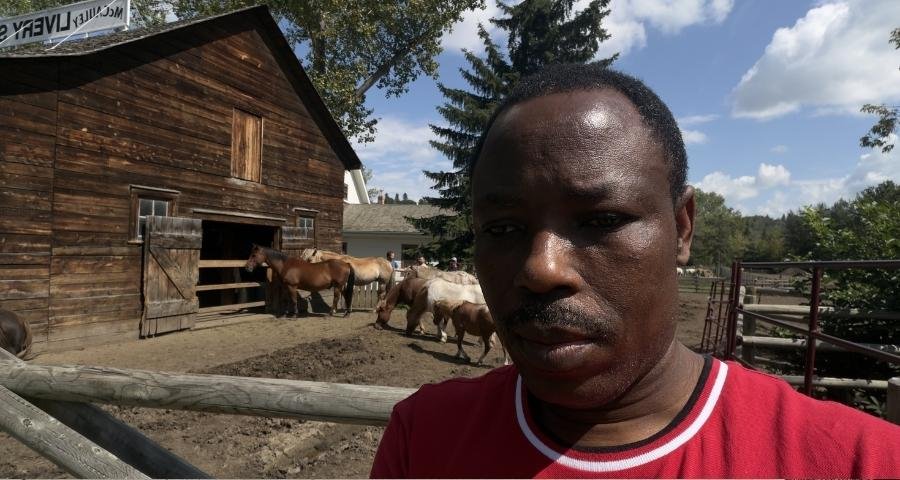
A private vis-à-vis carriage ride, about 20 minutes, covers a wider part of the park on selected dates. The park also keeps horses, ponies, donkeys, goats, pigs, sheep, chickens, and turkeys, and asks you not to feed them.
One safety note from my visit: I went to rub a horse from behind and was corrected straight away. Approach from the front and rub the forehead. Standing behind a horse puts you where it can kick.
Capitol Theatre and Events
The Capitol Theatre runs programming through the season. There is also an escape game, weekend brunch at Johnson's Cafe, and summer stays at Hotel Selkirk. Check the calendar before booking.
Food and Shops
Food is spread across the site:
Front entry: café and gift shop
1885 Street: Kelly's Saloon, Lauder's Bakery, McDougall's General Store
Johnson's Cafe in Hotel Selkirk is the only sit-down option. The I.A.M Collective and the Indigenous Market sell hand-crafted Indigenous goods.
What I Liked About Fort Edmonton Park
The strongest thing here is the structure. Moving from 1846 to 1920 gives the visit a shape a normal museum cannot match. You feel the city changing under your feet.
I also liked that most extras are included. Unlimited midway rides and games, the train, and the streetcars are covered by admission. The horse-drawn wagon is the exception.
Variety is the other strength: an indoor exhibit, four historical areas, a fairground, mini golf, farm animals, live theatre, and places to eat. Having three different ways to ride around it matters more than it sounds, because it lets you keep going once the walking catches up with you. The river-valley setting helps, too, since the city noise mostly disappears.
Is Fort Edmonton Park Worth Visiting?
Yes, for most people, as long as you give it enough time and go in the summer.
You will probably enjoy it if you are:
A family with kids roughly 4 to 12, who get the most from the interpreters, animals, and rides
Someone interested in Edmonton or Western Canadian history
A visitor with a couple of days in the city, working through an Edmonton itinerary
A local who last went on a school trip
You may want to skip it if:
You have only a couple of hours, or you are out with toddlers. The Edmonton Valley Zoo is an easier day at that age
Mobility is a concern. The site is large, only partly accessible, and several historic buildings are hard or impossible to enter with a wheelchair
You are visiting in fall or winter and expect the full park. Only the Indigenous Peoples Experience stays open then
One more honest note: the price is not small for a family, and rain would take a lot away from the day.
How Long Do You Need at Fort Edmonton Park?
The park's own advice is at least four hours, and that is fair.
2 to 3 hours. The Indigenous Peoples Experience, the train, and one or two streets. You will skip most buildings.
Half a day, 4 hours. All four historical areas at a decent pace, the train, a streetcar, and a meal.
Most of a day, 5 to 7 hours. What I would recommend: time to go inside buildings, talk to interpreters, eat properly, and let kids loose on the Midway.
Best Time to Visit Fort Edmonton Park
Season matters here more than at almost any other Edmonton attraction.
Summer is when the full park operates: 10:00 AM to 5:00 PM, Wednesday through Sunday plus holiday Mondays, closed Mondays and Tuesdays. Last admission is an hour before closing. Watch the tail end of the season: in 2026 the Wednesday-to-Sunday schedule runs to early September, then the final stretch is Saturdays and Sundays only, September 12 to 20.
Fall and winter are limited. The general park closes, and select exhibits such as the Indigenous Peoples Experience stay open on reduced schedules. Ticketed events still run through the off-season, including winter wagon rides, Indigenous storytelling, and seasonal evening events, but do not arrive in November expecting to walk 1905 Street.
Aim for a weekday in July or August, or one of those September weekends once crowds thin. If you are planning around Alberta as a whole, the same months work. Arrive close to opening, since the main lot fills by afternoon.
Fort Edmonton Park Tickets and Admission
Buy online in advance. The gate sells tickets too, with cash, debit, Visa, or Mastercard, but capacity can limit that on busy days.
The rates posted at the gate for 2026, with 10% off all summer. GST is added on top.
Ticket
Posted
With 10% off
Adult
$31.00
about $27.90
Child
$24.75
about $22.28
Senior
$24.75
about $22.28
Family pass (2 adults, up to 4 children)
$112.00
about $100.80
Children 2 and under are free but still need a ticket. The family pass only beats separate tickets once you have three or more children.
Admission includes unlimited midway rides and games, the train, and the streetcars. Pony and wagon rides are $8 per person on top.
It is not a cheap day out, so if the budget is tight, check out the free things to do in Edmonton article. Prices change between seasons, so check the official site. Tickets are non-refundable but can usually be exchanged for another date, Leisure Access Passes are accepted in summer, free admission is extended to Indigenous Peoples, and group discounts exist. A membership pays for itself in two or three visits.
How to Get to Fort Edmonton Park
The park is at 7000 143 Street NW, Edmonton, down in the river valley on the south side.
Driving. Take Fox Drive to Fort Edmonton Park Road and follow it in. Parking is free, but the main lot fills by afternoon. An overflow lot sits near the administration building.
Public transit. No regular bus drops you at the gate. Get to the South Campus/Fort Edmonton Park Transit Centre by LRT or bus, then book an On Demand Transit trip. Check fares on the City of Edmonton site.
Cycling. The park connects to the river valley trail system, and it is too far to walk from anywhere.
Tips for Visiting Fort Edmonton Park
Check the calendar first. The park is closed Mondays and Tuesdays, and the season is shorter than people assume.
Arrive within the first hour of opening. Easier parking, quieter streets, more attention from interpreters.
Wear shoes you can walk in all day. You will cover several kilometres on gravel, boardwalk, and grass.
Take the steam train down to the fort first. We walked instead and paid for it. Riding down and walking back saves your legs for the streets.
Save the Midway for the end. The historical streets are harder to face after the games.
Dress for changing weather. A hat, sunscreen, and a layer for wind or rain all earn their place.
Download the park app. Buildings occasionally close for maintenance, and the app shows what is open.
Plan your food stop around the map. Sit-down dining is on 1920 Street and the food hall on 1905 Street, so eating at the wrong moment means walking back.
Talk to the interpreters. A direct question is the difference between looking at old buildings and learning something.
Budget $8 each for the wagon ride, and bring a stroller for small kids. The wagon doubles as a sit-down break near the far end of the park. Stroller rentals are not available, and strollers are not allowed on the streetcar.
Fort Edmonton Park vs. Other Edmonton Attractions
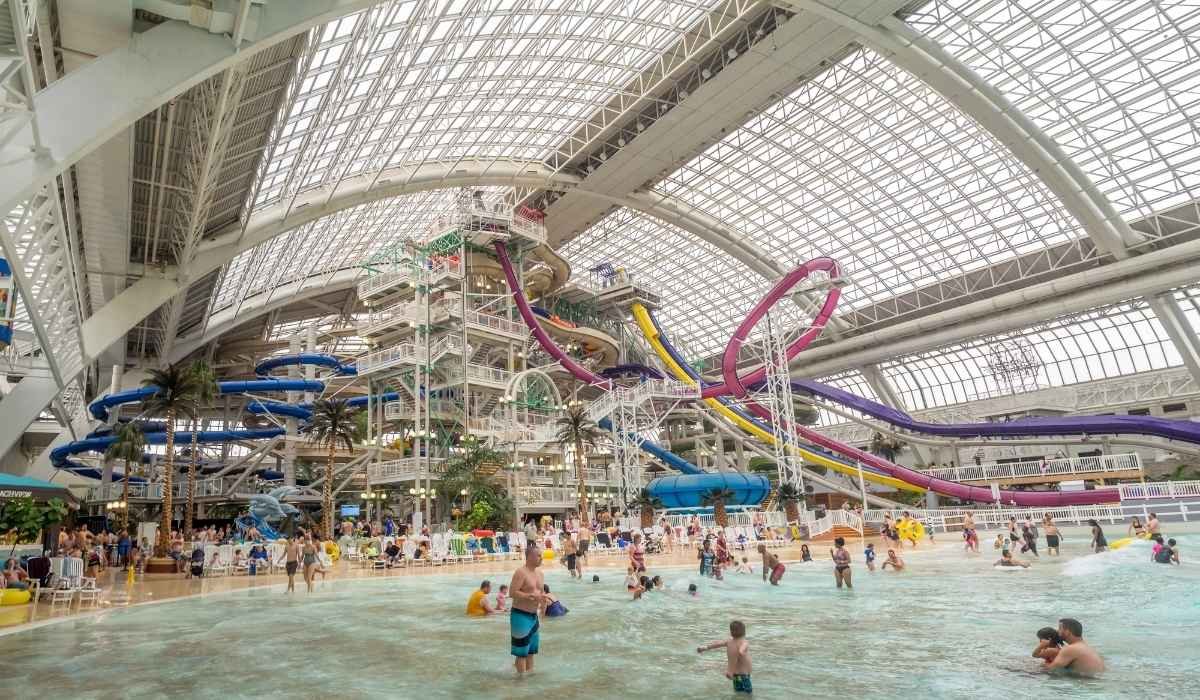
The Royal Alberta Museum gives you the province's story indoors in a couple of hours, in any weather. Muttart Conservatory is a focused, ninety-minute visit. West Edmonton Mall is an all-weather day of shopping and rides with no historical angle at all.
Of the main attractions in Edmonton, this is the only one where the draw is a place rather than a collection: you are not looking at Edmonton's history, you are inside a version of it. It also depends far more on the season, which is the main thing to weigh when you pick a date.
Frequently Asked Questions
Is Fort Edmonton Park worth visiting?
Yes, if you go in summer and give it at least four hours. First-timers and lifelong Edmontonians both get something out of it.
How long should I spend at Fort Edmonton Park?
Four hours is the practical minimum; five to seven is better, especially with kids.
What can you do at Fort Edmonton Park?
Explore four historical areas and the Indigenous Peoples Experience, ride a steam train and streetcars, go on midway rides and games, play mini golf, see farm animals, eat at period restaurants, and shop.
Are wagon rides included in the admission?
No, they are $8 per person, as are pony rides. Midway rides and games, the steam train, and the streetcars are included.
Is Fort Edmonton Park good for families?
Very good. Children roughly 4 to 12 get the most out of it, and admission covers the rides and transport that would normally cost extra.
What is the difference between the train and the streetcar in Fort Edmonton Park?
The steam train loops around the park on its own track between the front entry and the 1846 Fort. The streetcar runs along 1905 and 1920 Streets. Both are included and show you different parts of the site.
Is Fort Edmonton Park indoors or outdoors?
Mostly outdoors. Many buildings are open to enter, and the Indigenous Peoples Experience is indoors, but the walking happens outside.
Can you visit Fort Edmonton Park in winter?
Only in a limited way. The general park closes and select exhibits stay open on reduced schedules. Ticketed seasonal events do run.
Where is Fort Edmonton Park located?
At 7000 143 Street NW, in Edmonton's river valley on the south side, reached from Fox Drive.
Final Verdict
Fort Edmonton Park earns the time it asks for. A plan, comfortable shoes, and a free afternoon make the difference between a decent day and a good one. Pace yourself, and use the rides.
I would recommend it most to families with school-age kids, to anyone curious about how Edmonton grew from a trading post into a city, and to visitors who have done the obvious stops. I would not squeeze it into a spare couple of hours, and I would check the forecast first.
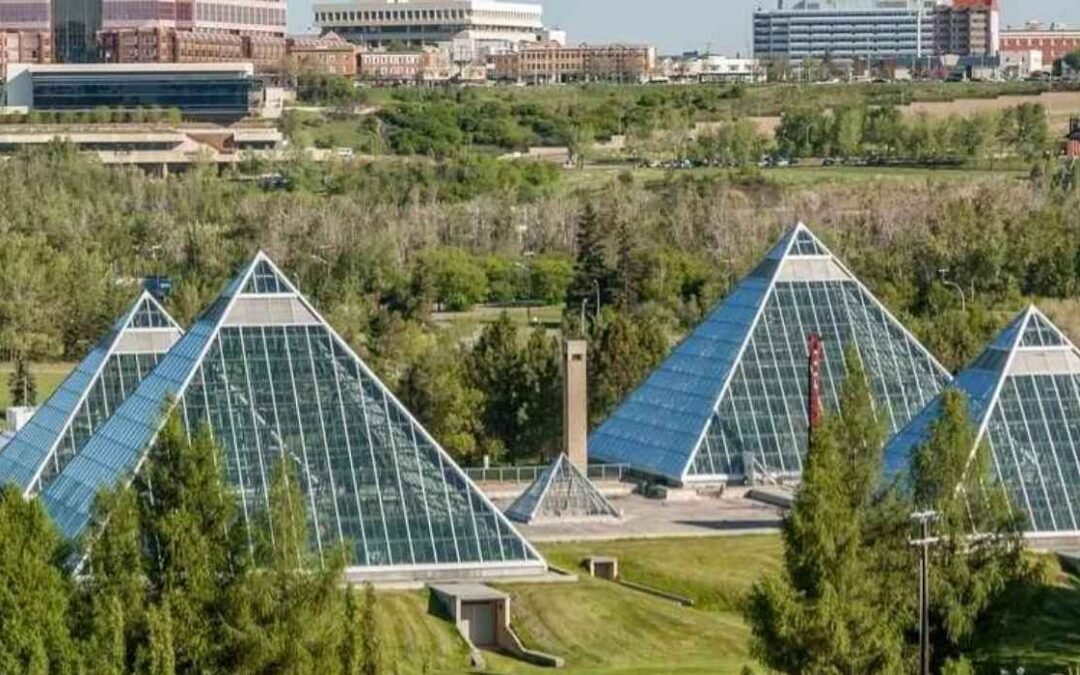
Ask an Edmontonian to name the buildings that define their city, and the four glass pyramids in the river valley come up almost every time. The Muttart Conservatory has been part of Edmonton's skyline for decades, and it remains one of the city's most rewarding places to spend a couple of hours.
Even after living in Edmonton for years, walking into the Muttart Conservatory still feels like stepping into something new. You step out of a prairie winter or a windy spring day, and within a few minutes you are standing under palm leaves in air so warm and humid that it can fog your glasses.
That contrast is the whole magic of the place. It is one of the best indoor attractions Edmonton has, and it earns a spot on any Edmonton itinerary, summer or winter.
This guide covers what each pyramid is like, how to get there, tickets, accessibility, photography, food nearby, and the practical tips that make a visit go smoothly.
About this guide: During my visit to Muttart Conservatory, I spent about two hours exploring all four pyramids without feeling rushed. Every photo in this guide was taken during my visit. What follows combines that first-hand experience with practical advice to help you plan your own trip.
Quick Facts
Location: 9626 96A Street, Edmonton, in the North Saskatchewan River Valley
The 4 glass pyramids: Tropical, Temperate, Arid, and a rotating Feature pyramid
Open every day of the year except December 25
On-site parking: On-site.
Typical visit: 1 to 2 hours
What is Muttart Conservatory?
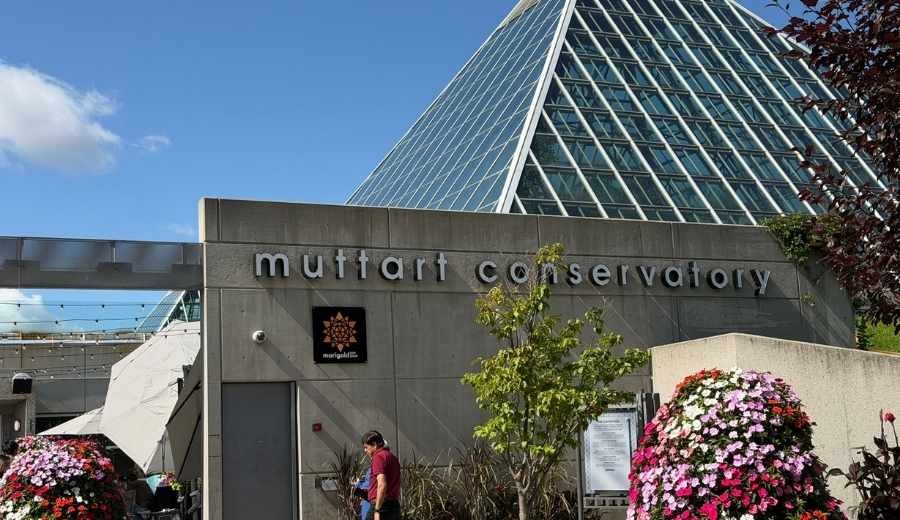
The Muttart Conservatory is Edmonton's botanical garden, housed inside four glass pyramids on the south bank of the North Saskatchewan River.
Three pyramids each recreate a different climate zone, and the fourth changes its entire display several times a year. Together they hold hundreds of plant species, cared for year-round by City of Edmonton horticulture staff.
History
The Muttart Conservatory opened in 1976 and was named after the Muttart Foundation, which helped fund its construction. After a major renovation between 2018 and 2021, it reopened with improved accessibility, a new restaurant, and refreshed displays while preserving its four iconic glass pyramids. Today, it's one of Edmonton's best-known landmarks, with generations of locals returning for everything from family outings to wedding and graduation photos.
Architecture
Designed by renowned Edmonton architect Peter Hemingway, the conservatory features four separate glass pyramids, each with its own climate-controlled environment. This innovative design allows visitors to experience tropical, temperate, arid, and seasonal displays in one visit, while the illuminated pyramids have become one of Edmonton's most recognizable sights, especially after dark.
The four glass pyramids
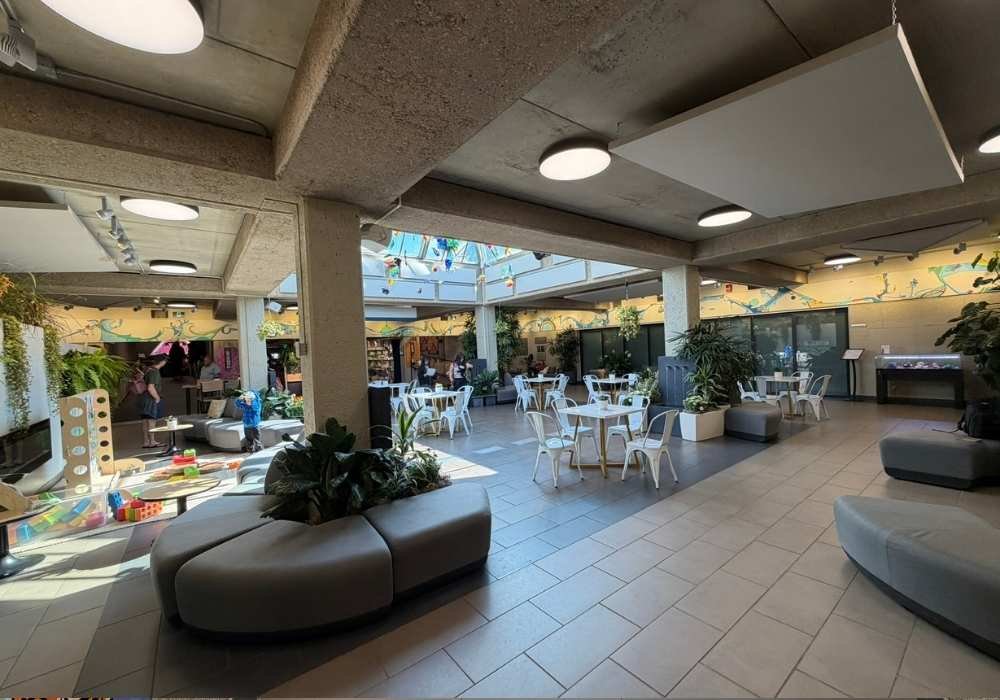
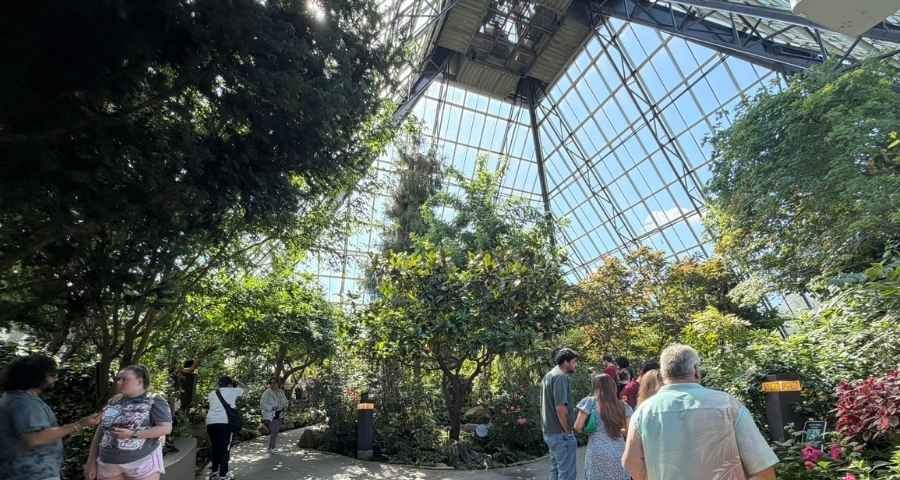
Two large pyramids and two smaller ones sit around a central indoor courtyard, with a fifth, much smaller pyramid above it as a skylight. Each display pyramid has its own temperature, humidity, and lighting, so walking between them feels like crossing continents in ten steps.
Why it's unique in Canada
Plenty of Canadian cities have conservatories. None look like this. The pyramid architecture, the river valley setting, and the rotating Feature pyramid make the Muttart one of a kind, and it is one of the few botanical attractions in Canada that is genuinely better in winter, when the contrast with the cold outside is strongest.
Where is Muttart Conservatory?
The Muttart sits at 9626 96A Street, directly across the river from downtown Edmonton, in Cloverdale, a quiet river valley neighbourhood beside Gallagher Park, home of the Edmonton Folk Music Festival every August.
Driving
From downtown, it is about a five-minute drive across the river; from West Edmonton Mall or the south side, plan for 15 to 25 minutes. Once you are in the river valley, the pyramids are impossible to miss.
Transit
The Valley Line LRT has its own Muttart stop, a short walk from the entrance, and two bus stops serve the area. If you are staying downtown without a car, the LRT is the simplest option.
Parking
Parking is available on site, and the lot is conveniently located right beside the conservatory. During my visit, visitors were required to register their vehicle's licence plate inside the building to receive complimentary parking, so don't forget to do this before you start exploring.
The lot can fill up on weekend afternoons and during popular Feature Pyramid shows, so arriving earlier in the day is a good idea.
Walking and cycling
The Muttart connects directly to Edmonton's river valley trail system. In summer, walking or biking from downtown across the Low Level Bridge is a genuinely nice trip. For directions, search "Muttart Conservatory" on Google Maps.
Getting There
Details
Address
9626 96A Street, Edmonton, AB
Neighbourhood
Cloverdale, in the river valley
Driving from downtown
About 5 minutes
LRT
Valley Line, Muttart stop
Parking
On-site parking is available
Walking
Connected to river valley trails
The Four Pyramids
The pyramids are the reason you come. Here is what to expect in each one.
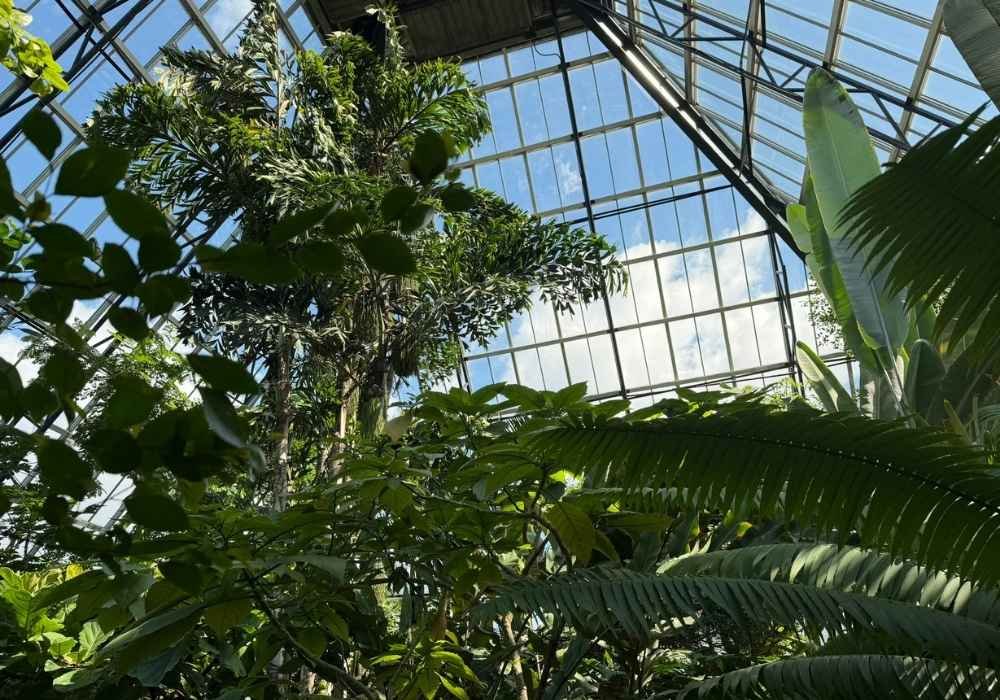
Tropical Pyramid
Click on an image to expand.
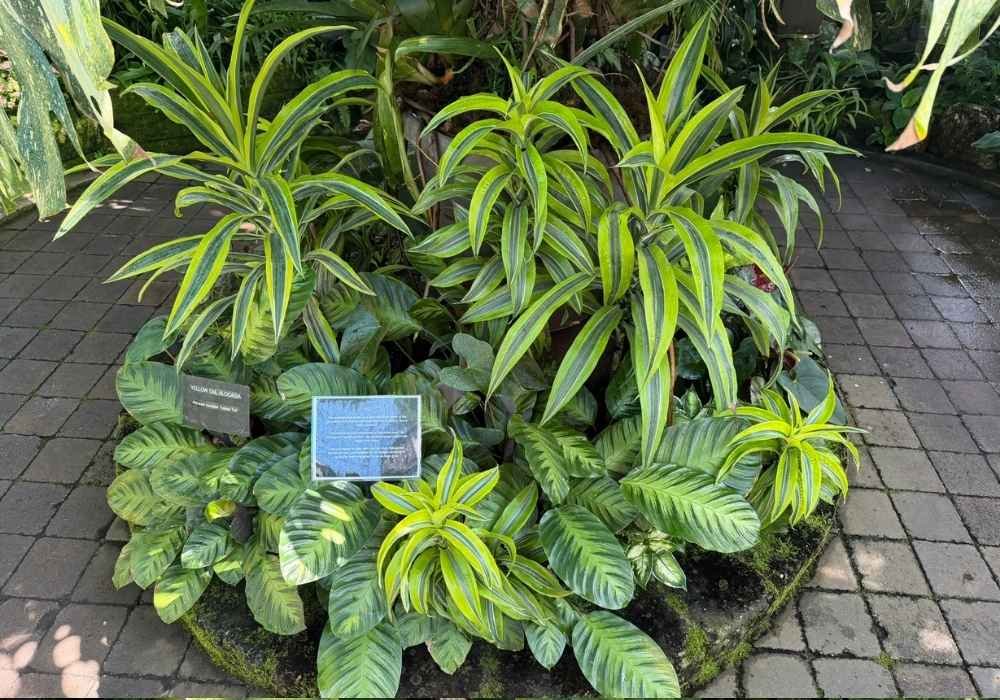
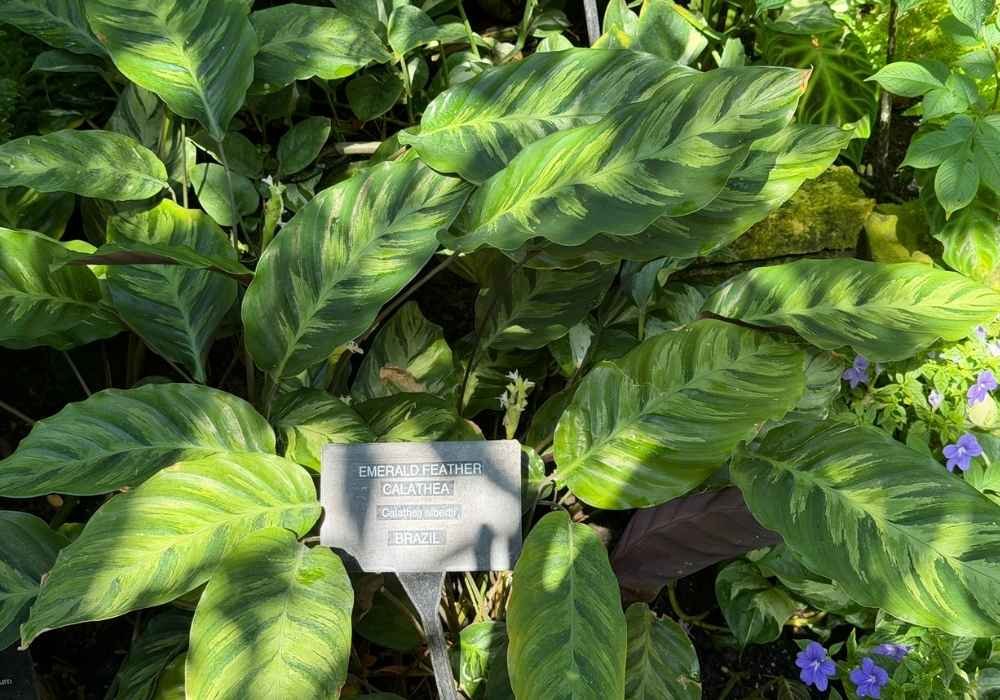
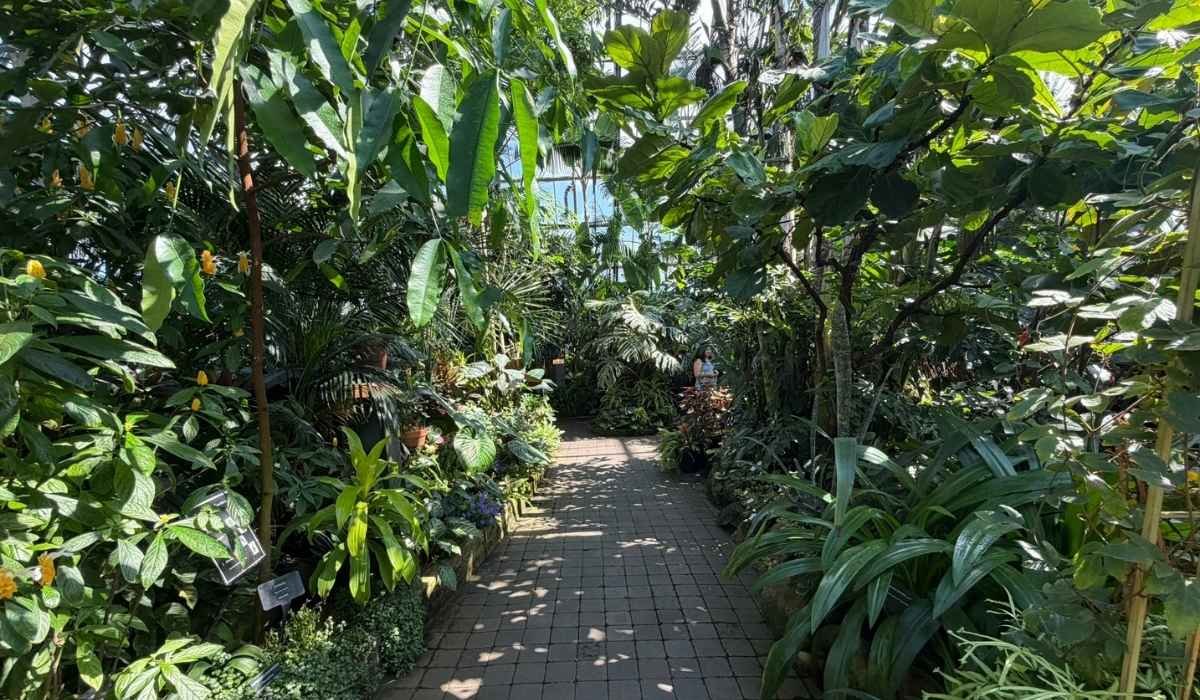
This is the big one, and it was my favourite. Walking in felt like stepping into another country: warm, heavy, humid air, winding paths, and greenery thick enough to make you forget you are still in Edmonton. It smells green in there, like soil and leaves and growing things, and it fogs camera lenses and glasses instantly.
Inside are palms, banana plants, orchids, and plants you normally only see in produce aisles, including a papaya tree that sometimes carries real fruit. A waterfall anchors the space, and the sound of moving water follows you around the path.
The tropical pyramid is at its best in January and February. Standing in jungle humidity while snow slides down the glass above you is a strange and wonderful experience, and the single best argument for visiting in winter.
Photography here is rewarding but tricky: give your lens a few minutes to warm up, or everything will be fog. Who will enjoy it: everyone, especially anyone stuck in an Edmonton winter.
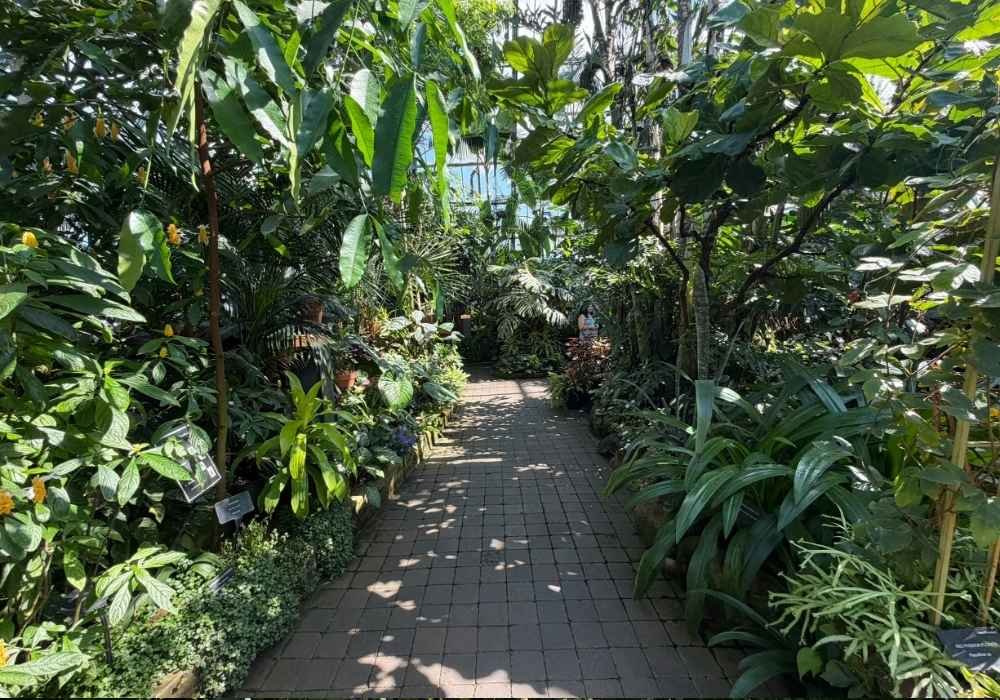
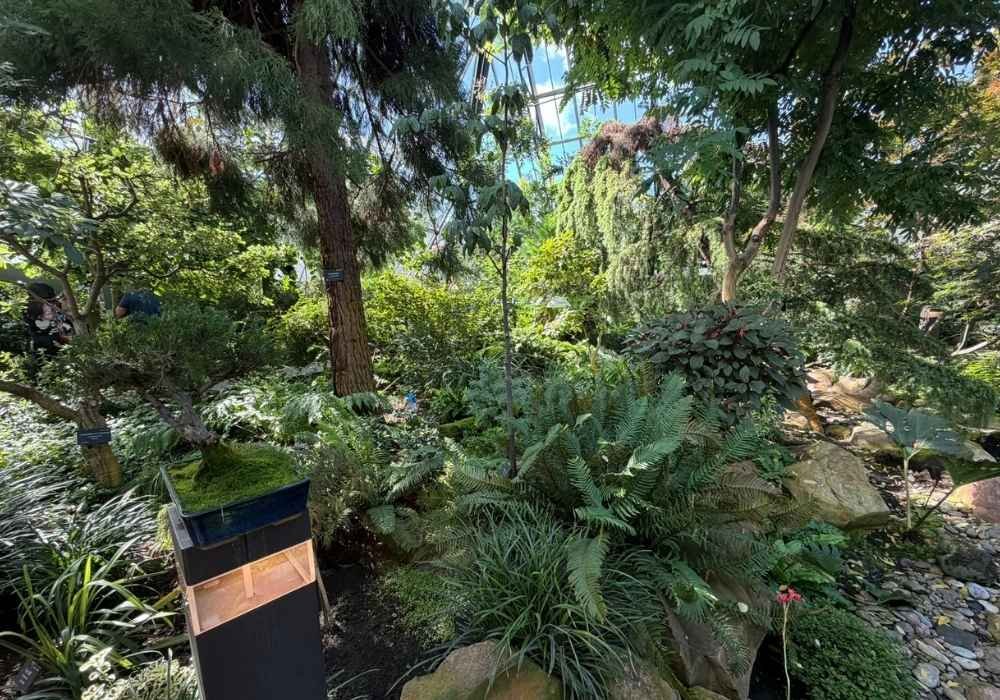
Temperate Pyramid
Click on an image to expand.
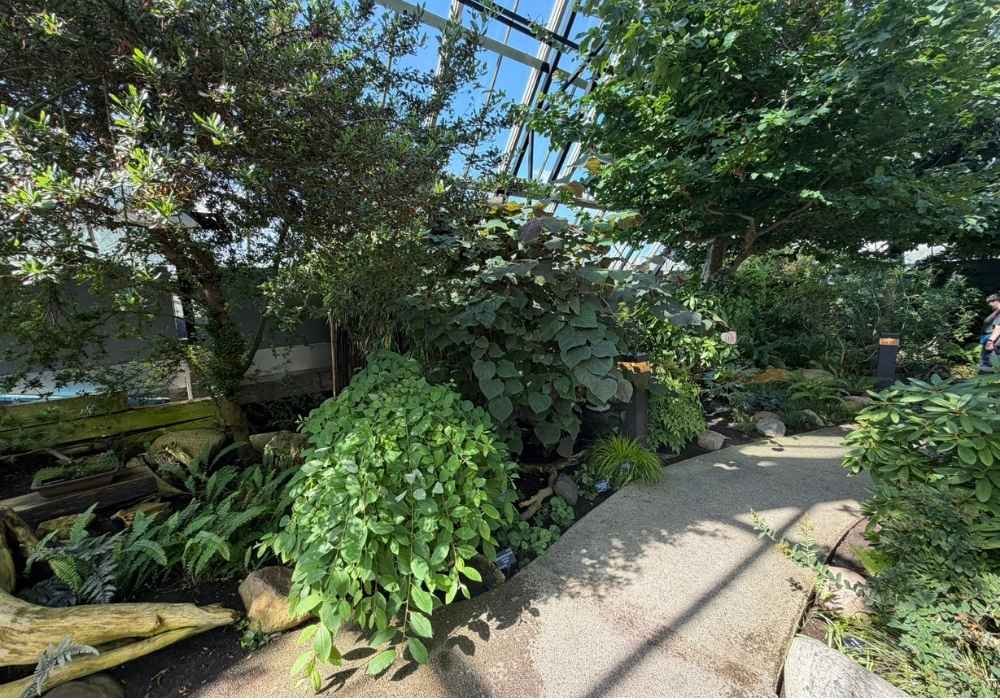
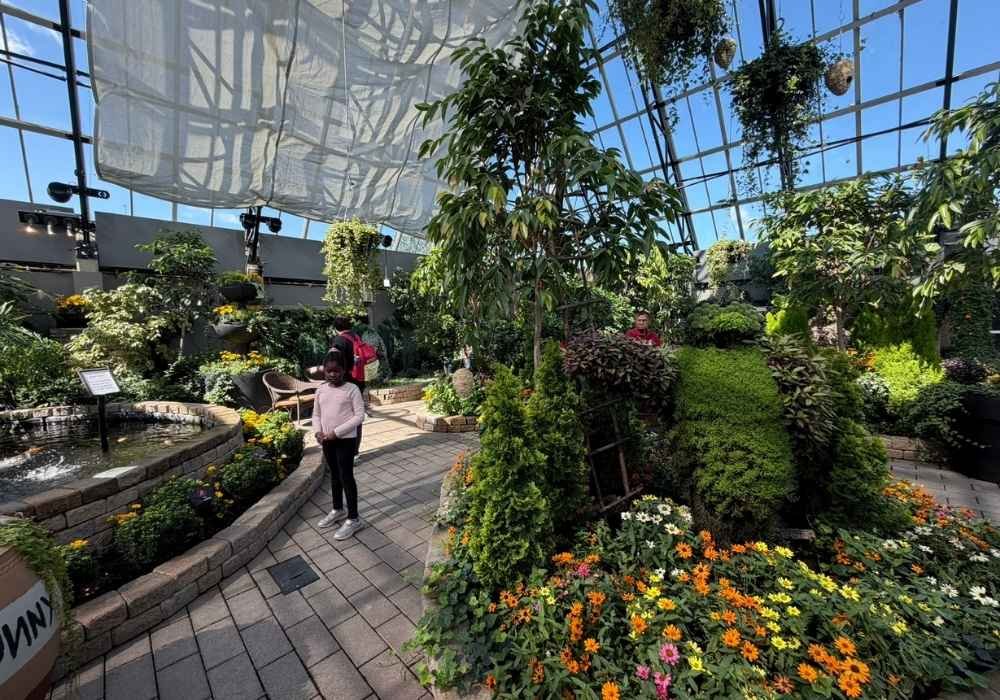
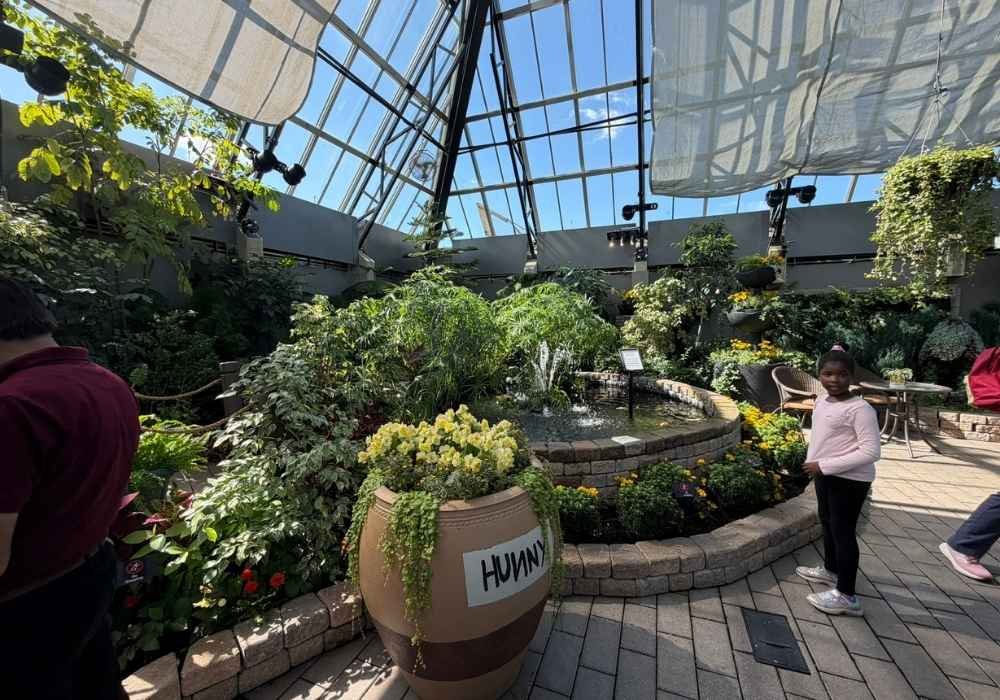
The temperate pyramid feels the most familiar to Canadians, holding plants from climates like ours and slightly milder ones across Australia, Asia, and North America. The air is comfortable, neither hot nor humid, a nice place to slow down after the tropical pyramid.
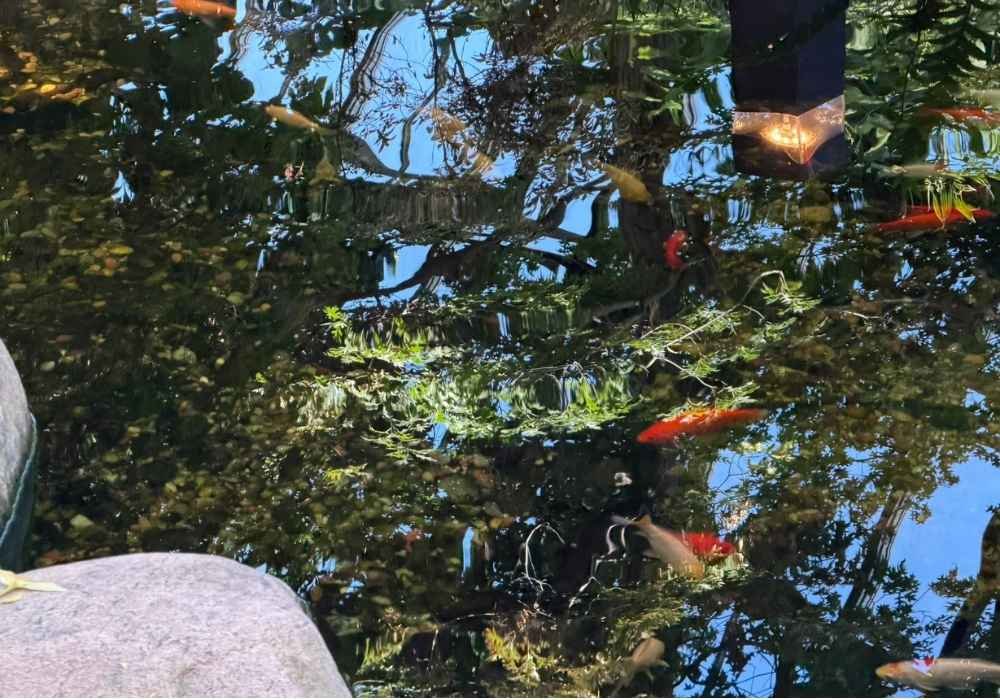
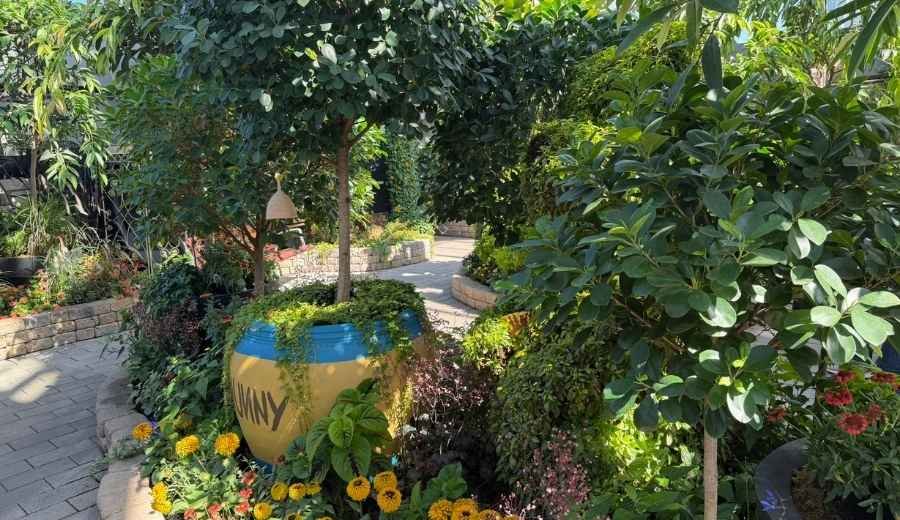
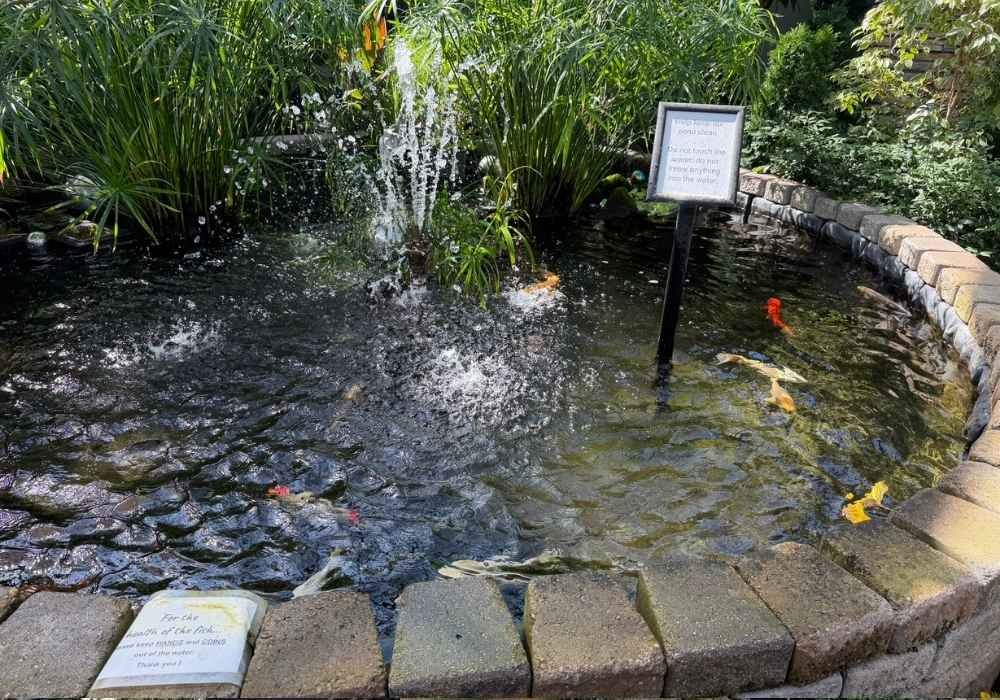
It also has a lovely pond, which became one of our favourite spots. Watching the colourful koi swim beneath the reflections of the glass overhead was surprisingly relaxing, and it is exactly the kind of thing you miss if you rush through.
This pyramid changes with the seasons more than the others. Spring brings blossoms, autumn brings colour changes, and the gardeners rotate displays through the year. Repeat visitors often say this is the pyramid that rewards coming back.
It is also the calmest of the four. There are benches throughout the conservatory, and this is the pyramid where you will most want to use one, with a few quiet minutes among the trees. Who will enjoy it: garden lovers, seniors, and anyone who wants a peaceful corner.
Arid Biomes Pyramid
Click on an image to expand.
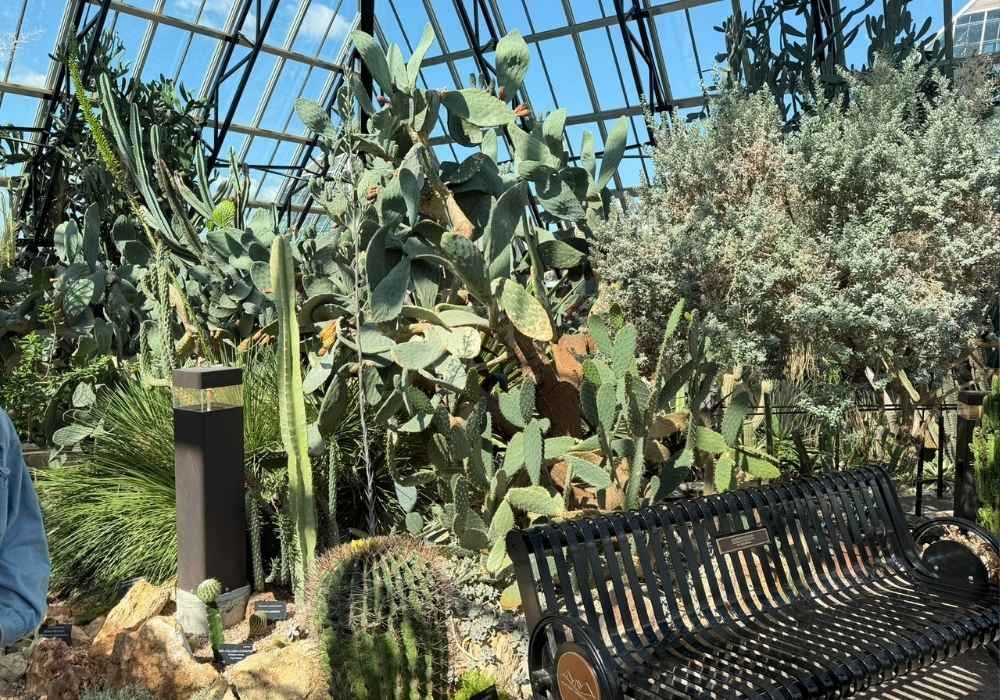
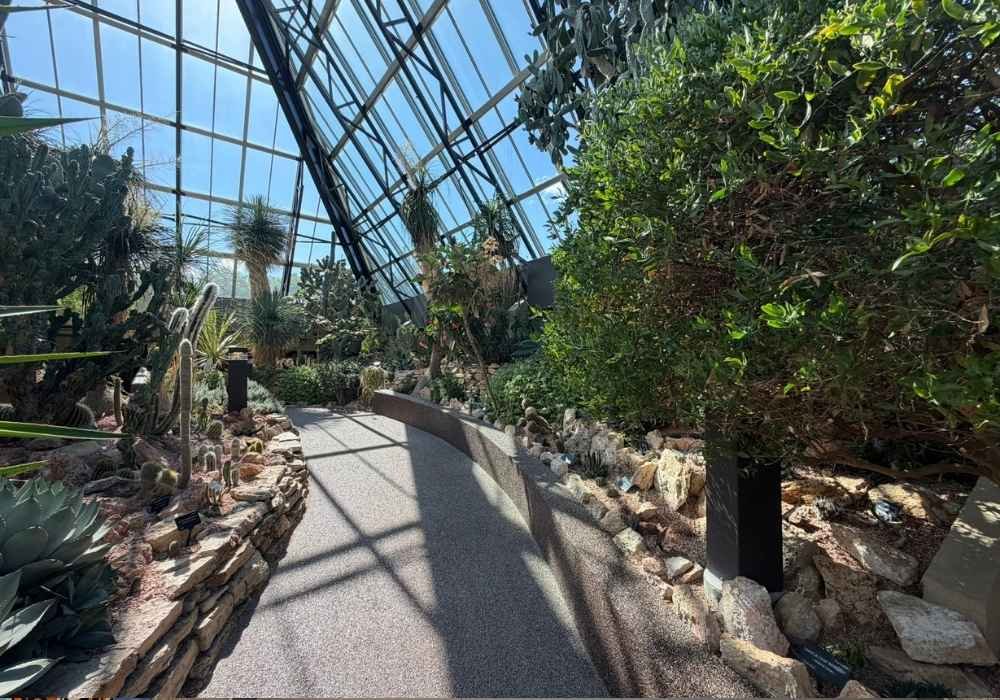
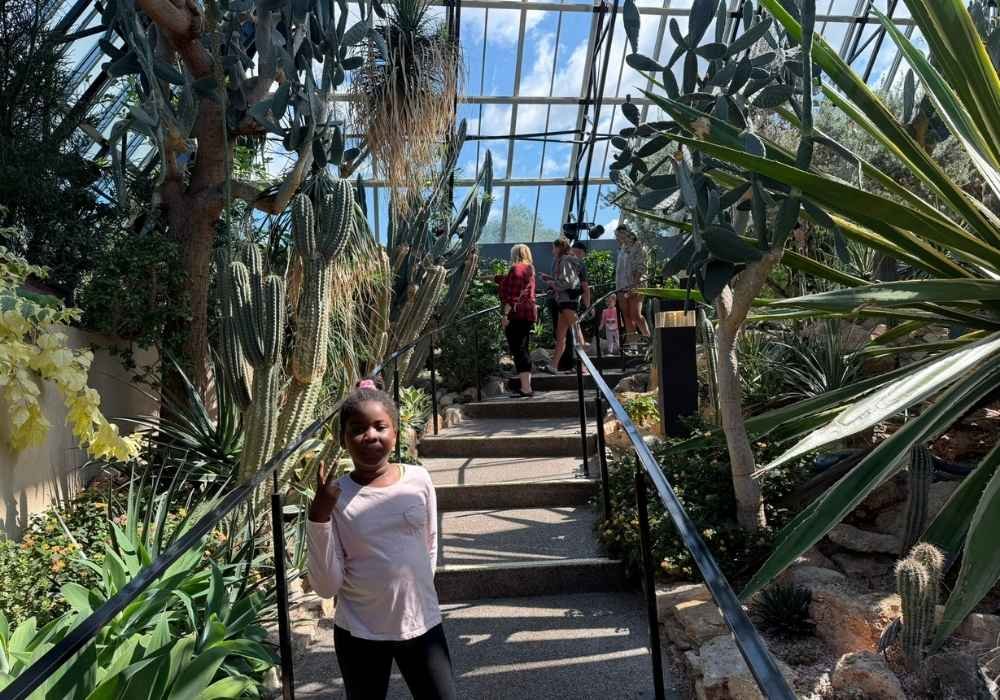
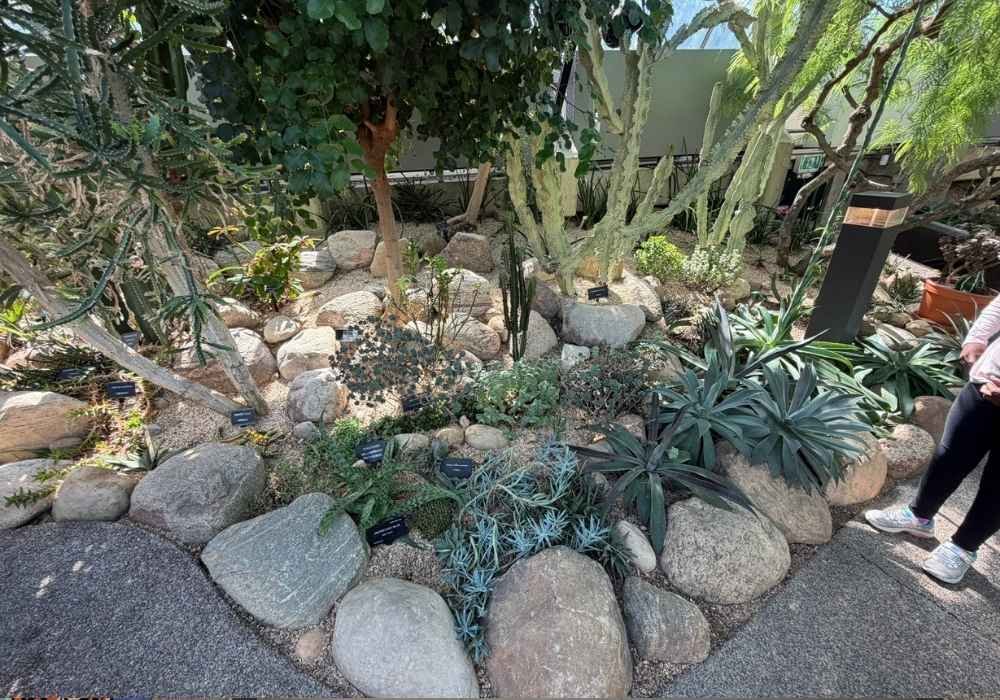
The arid pyramid flips the script: dry air, warm light, and an entire landscape of cacti, succulents, and desert plants from Africa, the Americas, and Australia. Some of the cacti are enormous, far bigger than anything you can grow on a windowsill, and the shapes and textures are fantastic to look at up close.
The light in this pyramid is beautiful, especially on sunny afternoons when shadows from the glass panels fall across the sand and stone. It tends to photograph better than you expect.
One practical note: the arid pyramid has some steps and uneven sections, so it is the least accessible of the four. There is still plenty to see from the main path. Who will enjoy it: photographers, kids who think cacti are cool (most kids), and anyone curious about desert plants.
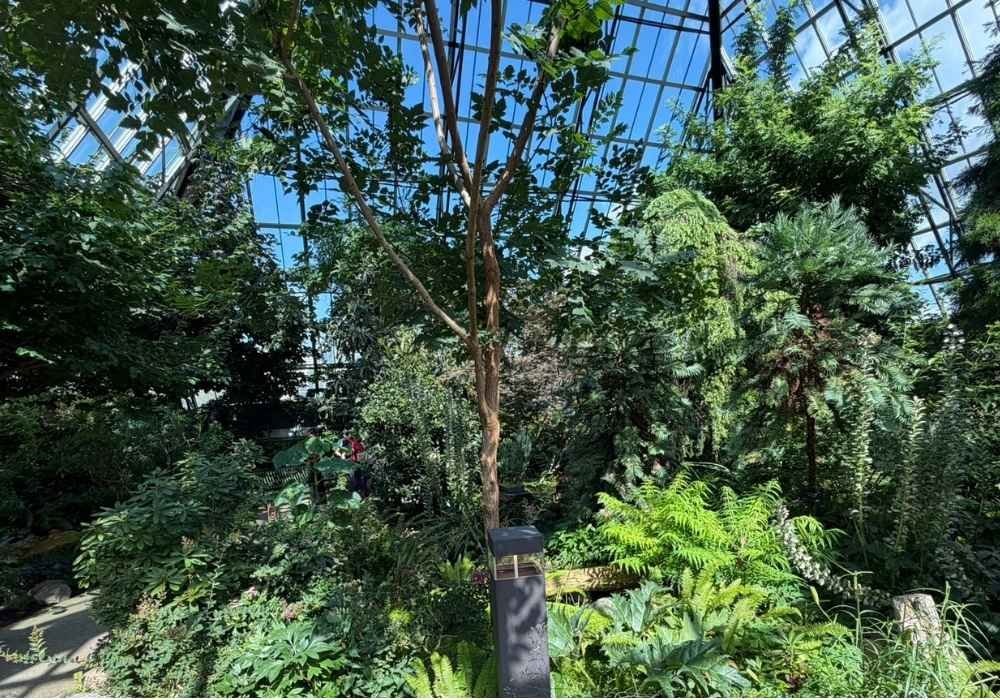
Feature Pyramid
Click on an image to expand.
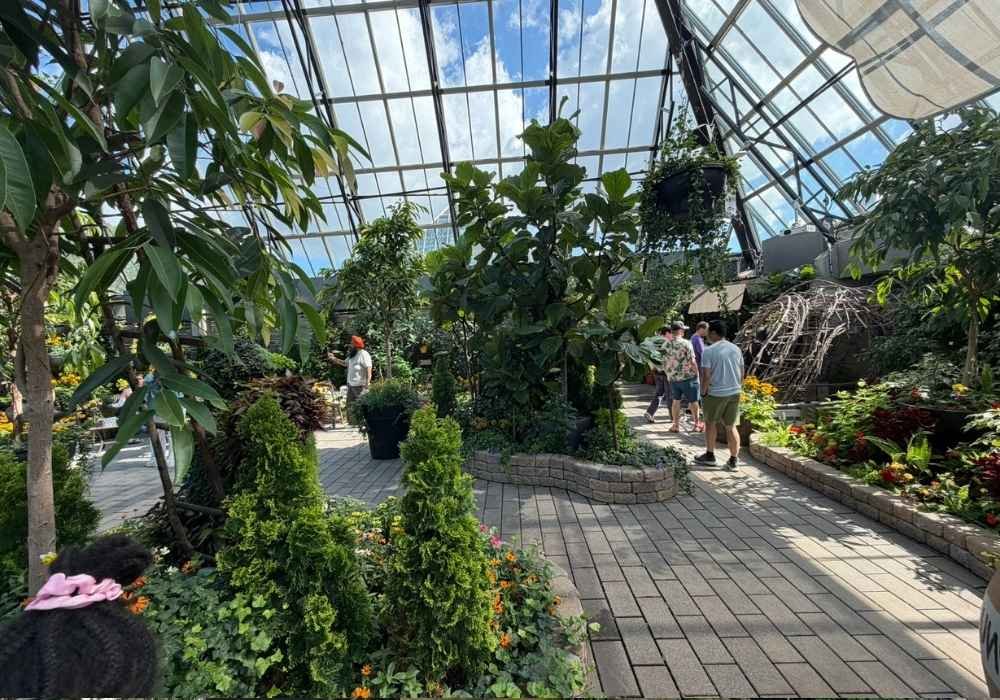
The feature pyramid is the wild card. Its entire display changes several times a year, built around a theme or season. Past shows have covered everything from prehistoric plants to harvest scenes and holiday displays.
During my visit, the Feature Pyramid had a themed seasonal display that completely transformed the space. One of the things I like most about the Muttart is that this pyramid changes throughout the year, giving returning visitors a different experience each time.
The feature pyramid is the reason locals buy annual memberships and come back every couple of months. Check the official website to see what is on before you go.
Did You Know? A fifth, smaller pyramid sits above the central courtyard. It works as a skylight, flooding the space between the four display pyramids with natural light.
What Surprised Me Most
What surprised me most wasn't the plants—it was how peaceful the Muttart Conservatory felt. Even with other visitors around, everyone seemed to slow down and enjoy the surroundings. Each pyramid had its own personality, making every transition feel like a new adventure rather than another greenhouse.
I also didn't expect to take so many photos. The changing light through the glass, colourful plant life, koi pond, and unique architecture kept giving me new scenes to capture. My daughter especially enjoyed the fish, flowers, and different environments, and before we knew it, two hours had flown by.
The Muttart offers more than beautiful gardens. Thoughtful amenities like Café Bloom, the gift shop, and seasonal Feature Pyramid displays make it easy to spend a relaxed afternoon here.
Best Time to Visit
The honest answer: there is no bad time, but some times are clearly better.
By season, winter is the sleeper pick. The tropical pyramid feels like a vacation when it is minus twenty outside, and the pyramids look beautiful in snow. Spring and fall bring the best temperate pyramid displays. Summer works too, paired with river valley walks, but July in Edmonton has a lot of competition.
By weekday, Monday through Thursday mornings are the quietest. Weekends are busiest, especially Saturday and Sunday afternoons and any weekend during a popular feature show.
Morning versus afternoon: mornings win for quiet and for photography without crowds. Afternoons win for light in the arid pyramid.
Rainy days are perfect. The Muttart is one of the best attractions in Edmonton, and a grey, wet day outside makes the pyramids feel even more like a refuge.
One more thing: Wednesday evenings are adults-only at the Muttart, which locals use for date nights. If you are planning an evening visit with kids, pick a different night and check current evening hours on the official website first.
When
Crowd Level
Best For
Weekday mornings
Low
Quiet visits, photography
Weekday afternoons
Low to medium
Flexible visits
Weekend mornings
Medium
Families beating the rush
Weekend afternoons
High
Expect crowds during feature shows
Winter days
Varies
The tropical-pyramid-in-a-blizzard experience
Wednesday evenings
Low
Adults-only visits and date nights
How Long Does It Take?
Visitor Type
Recommended Time
Best For
Quick Visit
45–60 minutes
Seeing all four pyramids at a relaxed pace.
Most Visitors
1.5–2 hours
Exploring every pyramid, reading displays, and taking photos.
Photography Enthusiasts
2–3 hours
Waiting for good lighting, letting lenses adjust to humidity, and capturing different angles.
Families
2+ hours
Exploring at a child's pace, visiting the Feature Pyramid, and stopping at Café Bloom or the gift shop.
Local tip: The Muttart Conservatory isn't a full-day attraction. Pair it with the Royal Alberta Museum, the Edmonton River Valley, or the Alberta Legislature Grounds to create a memorable half-day or full-day Edmonton itinerary.
Tickets
You can purchase tickets online or inside the facility. Ticket prices are reasonable, roughly in line with a museum visit, and kids under two are free. Family rates are available, and the feature pyramid shows are included with general admission.
Prices change from time to time, so check the official City of Edmonton Muttart Conservatory page for current rates rather than trusting numbers in any article. You can buy tickets online with a timed entry or at the door. Walk-ups are welcome, but booking online is smart on weekends and during popular shows.
If you live in the Edmonton area, look at the annual membership. It pays for itself in a few visits, and the rotating feature pyramid gives members a different experience each time. Combo discounts exist with other city attractions, so ask if you already hold a zoo or attractions pass.
Budget Tip The LRT stops at the door and parking is free if you drive. So getting there costs little. Watch the city's website and social channels for occasional special admission days too.
Facility Hours
The Muttart is open year-round, every day except December 25. Doors open mid-morning, and on Wednesdays and Thursdays the conservatory stays open into the evening, which is when it is at its most atmospheric: the pyramids glow, and the crowds thin out. Wednesday evenings are reserved for adults only. Last admission is 30 minutes before closing.
Exact opening and closing times shift occasionally with seasons and events, so confirm current hours on the official City of Edmonton website before you go, especially for an evening visit.
Hours at a Glance
Details
Open
Every day of the year except December 25
Evenings
Extended hours on Wednesday and Thursday
Wednesday evenings
Adults only
Last admission
30 minutes before closing
Exact times
Check the official website before visiting
Accessibility
The Muttart Conservatory is one of Edmonton's more accessible attractions. The entrance, central courtyard, and the Tropical, Temperate, and Feature pyramids are wheelchair-friendly, with wide, mostly level paths throughout. Accessible washrooms are located near the lobby.
The Arid Pyramid is the only exception. It includes a few steps and uneven sections, so it is only partially accessible, although much of the display can still be viewed from the main path. Strollers can access the rest of the conservatory without difficulty, making it a good choice for families with young children.
Benches are available throughout the conservatory for anyone who wants to take a break, and the single-level layout makes it easy to move between the pyramids. If you have specific accessibility questions, call 311.
If you have specific accessibility questions, call 311 in Edmonton or check the accessibility section of the official page before your visit.
Photography Tips
The Muttart is one of the most photogenic indoor spaces in Alberta, and it will punish you if you are not prepared for the humidity. I went in planning to take a handful of photos and left with far more than I expected. The sunlight through the glass creates light and shadow patterns all through the building, and it makes shooting here more enjoyable than most indoor attractions.
Best pyramid: tropical for lush, dense frames; arid for clean shapes, texture, and dramatic light.
Lens fog is the big enemy. Your gear comes in cold and hits warm, wet air. Let your camera or phone sit for five to ten minutes in the tropical pyramid before shooting, and keep a microfibre cloth in your pocket.
Best lighting: late morning to mid-afternoon on sunny days, when light through the glass panels creates strong shadow patterns, especially in the arid pyramid.
Camera settings: bump your ISO rather than using flash. Flash flattens the plants and bothers other visitors. A wide aperture helps isolate single blooms like orchids.
Phone photography: portrait mode on orchids and cacti works surprisingly well. Wipe your lens often; humidity smears build up fast.
Shoot up. The pyramid geometry overhead, with leaves against the glass grid, makes some of the best frames in the building.
Outside, the trails toward the river give you the pyramids-plus-skyline shot. Blue hour, when the pyramids glow from inside, is the money shot.
Be respectful: stay on paths, never move or touch plants for a photo, and give other visitors space. Tripods can be awkward on busy days; if a professional shoot is your goal, contact the Muttart about their photo policies first.
Photography Tip If winter photography is your thing, visit during or right after a snowfall. Snow sliding down the glass above the tropical canopy is a shot most people never think to look up for.
Tips Before You Visit
Dress in layers. You will move between a jungle, a desert, and a mild zone, and a heavy winter coat becomes a burden fast.
Use the coat hooks or carry a light bag so your hands are free.
Book online for weekend visits and popular feature shows; walk up on quiet weekdays.
Check what the feature pyramid is showing before you go. It changes several times a year and shapes the whole visit.
Go on a weekday morning if you want the place close to yourself.
Give your camera time to defog in the tropical pyramid before judging your shots.
Wear glasses? Expect them to fog on entry. It passes in a minute.
Start with the tropical pyramid and save the feature pyramid for last.
Build in time to just sit. The courtyard and temperate pyramid benches are half the experience.
Bring a water bottle; the tropical pyramid is genuinely warm.
Kids' energy burns fast in the humidity, so plan a snack stop at Cafe Bloom.
The gift shop sells live plants. In winter, ask them to wrap plants for the trip to the car, because tropical plants and minus twenty do not mix.
Pair your visit with a river valley walk in summer or the Royal Alberta Museum in winter.
Remember Wednesday evenings are adults-only, and confirm evening hours online before planning a night visit.
Visiting at Christmas time? The Muttart is open every day except December 25, and the holiday feature shows are popular, so book ahead.
Locals: price out a membership if you think you will come twice or more in a year.
Family Tip The Muttart runs drop-in programs for preschoolers on weekday mornings, and the feature shows are often built with kids in mind. Regular admission covers the programs, so a toddler morning here is one of the best-value activities in Edmonton.
Who Should Visit?
Families: yes, strongly. I visited with my daughter, and the mix of flowers, koi, and changing environments held her interest the whole way through. Wide paths and kid-focused feature shows help too. If you're travelling with children, don't miss my guide to Family Attractions in Edmonton for Kids.
Couples: yes. The Wednesday adults-only evenings exist for a reason, and Cafe Bloom's dinner events make it a proper date.
Photographers: yes, with the fog warnings above taken seriously.
Garden lovers: obviously. Plan extra time to read every label.
Tourists: yes. It is one of the few attractions that shows you something you cannot see in most other Canadian cities.
Locals: yes, especially with a membership, since the feature pyramid resets the experience a few times each year.
Kids: the tropical waterfall, giant cacti, and themed shows do the work for you.
Seniors: comfortable, mostly flat, plenty of seating, and quiet on weekday mornings.
Who might find it underwhelming: anyone expecting acres of outdoor gardens. The Muttart is compact and indoors, which is its strength in winter and its limit in summer.
Nearby Attractions
The Muttart sits in the middle of Edmonton's best sightseeing corridor, so if you are building a list of things to do in Edmonton, it pairs easily with several of them in a single day.
Café Bloom (on site): The most convenient option for coffee, snacks, lunch, and seasonal dinner events.
Little Brick (Riverdale): A charming café in a historic house, perfect for brunch or coffee after your visit.
Old Strathcona / Whyte Avenue: Just 5–10 minutes away, with everything from casual cafés to upscale restaurants.
Downtown Edmonton: A wide selection of restaurants, including the historic Hotel Macdonald for a special meal with river valley views.
Hours and menus can change, so check the restaurant's website before your visit, especially for Café Bloom's seasonal dinner events.
Frequently Asked Questions
How long do you need at the Muttart Conservatory?
Most people spend 1 to 2 hours. A quick walk-through takes 45 minutes; photographers and families should plan for two hours or more.
Is the Muttart Conservatory worth visiting?
Yes, especially in winter, when the tropical pyramid feels like a two-hour vacation. It is compact, so expect a rich 90 minutes rather than a full day.
Is the Muttart Conservatory open in winter?
Yes. It is open every day of the year except December 25, and winter is arguably the best season to visit.
How much does it cost?
Prices are similar to a museum admission, with discounts for kids, and children under two are free. Check the official City of Edmonton website for current rates, since they change periodically.
Do I need to book tickets in advance?
Not usually. Walk-ups are welcome. Booking a timed entry online is smart for weekends, holidays, and popular feature pyramid shows.
Is parking free at the Muttart Conservatory?
Yes, but the lot can fill up on weekend afternoons, and the LRT is a good alternative.
Can you get there by LRT?
Yes. The Valley Line LRT has a Muttart stop, a short walk from the entrance.
Is the Muttart Conservatory good for kids?
Very. Paths are stroller-friendly, feature shows are often kid-themed, and weekday preschool drop-in programs run in the mornings.
Is it wheelchair accessible?
Mostly, yes. The entrance, courtyard, and three of the four pyramids are accessible. The Arid pyramid has steps and is only partially accessible.
What are the four pyramids at the Muttart?
Tropical, Temperate, Arid, and the Feature pyramid, which changes its entire display several times a year.
Can you take photos inside Muttart Conservatory?
Yes, and it is a photographer's favourite. Expect lens fog in the tropical pyramid, skip the flash, and contact the Muttart first if you are planning a professional or wedding shoot.
Is there food at the Muttart Conservatory?
Yes. Cafe Bloom operates on site, serving lunch and hosting special dinner events in the colder months.
Are dogs allowed?
No, only service animals. Pets stay home for this one.
How old is the Muttart Conservatory?
It opened in 1976 and was fully renovated between 2018 and 2021.
Is the Muttart busy?
Weekday mornings are quiet. Weekend afternoons and popular feature shows draw crowds. Wednesday evenings are adults-only and generally calm.
Can you see the Muttart pyramids without paying?
From outside, yes. The nearby river valley trails offer free views, but the plants are all inside the paid area.
Final Verdict on Muttart Conservatory
The Muttart Conservatory may sound simple on paper—four glass pyramids filled with plants—but after exploring it, I left with a completely different impression.
From the warm, fragrant eucalyptus trees in the Tropical Pyramid to the cooler alpine displays and ever-changing seasonal exhibits, every pyramid offers a different perspective on the world's remarkable plant life. It's easy to see why the Muttart has become one of Edmonton's most recognizable landmarks.
I recommend visiting if you're travelling with children, enjoy photography, appreciate nature, or simply want a peaceful escape from the city's pace. It's especially rewarding during the colder months, when stepping from an Alberta winter into a lush tropical environment feels almost surreal. If you're hoping for a sprawling outdoor botanical garden, this may not be the right attraction, but if you enjoy discovering unique places at a relaxed pace, the Muttart Conservatory is well worth your time.
Alberta is one of those rare places where the scenery does not just look good in photos — it actually stops you in your tracks. I have lived in this province for years, and I still get that same jolt of awe every time I round a bend on the Icefields Parkway or watch the Northern Lights ripple over a quiet prairie sky.
This is my complete guide to the best places to visit in Alberta. I have organized it into five easy sections: mountain wonders, night sky wonders, waterfalls and canyons, unique landscapes, and hidden gems. For each place, I share what makes it special, the best time to visit, how to get there, and the honest tips I wish someone had told me before my first trip.
Whether you are planning a Canadian Rockies road trip, a weekend escape from Edmonton or Calgary, or a once-in-a-lifetime bucket-list adventure, this guide has you covered. Let's get started.
Quick Overview: Alberta's Wonders at a Glance
Before we dive into the details, here is a simple map of what you will find in this guide:
Mountain Wonders: Lake Louise, Moraine Lake, Peyto Lake, Maligne Lake, Athabasca Glacier, Johnston Canyon, and Takakkaw Falls.
Night Sky Wonders: Elk Island National Park, Jasper Dark Sky Preserve, and the Northern Lights across northern Alberta.
Waterfalls and Canyons: Athabasca Falls, Sunwapta Falls, Crescent Falls, and Maligne Canyon.
Unique Landscapes: The Hoodoos, Dinosaur Provincial Park, Writing-on-Stone Provincial Park, and Waterton Lakes National Park.
Hidden Gems: Abraham Lake, Mount Edith Cavell, Kananaskis Country, and Castle Provincial Park.
Most of these wonders are within a half-day drive of either Edmonton or Calgary, which makes Alberta one of the easiest places in the world to pack big scenery into a short trip.
Mountain Wonders of the Canadian Rockies
The Canadian Rockies are the headline act, and for good reason. The combination of glacier-fed lakes, towering peaks, and open mountain roads is hard to match anywhere on Earth. These are the spots I send every visitor to first.
1. Lake Louise – The Turquoise Jewel of the Rockies
Lake Louise is the picture that probably made you want to visit Alberta in the first place. It is a glacial lake with a colour so vivid and turquoise that first-time visitors often think the photos must be edited. They are not. The colour comes from rock flour — tiny particles of rock ground up by glaciers — that hangs in the water and reflects light.
The lake sits beneath Victoria Glacier, with the grand Fairmont Chateau Lake Louise right on its shore. You can rent a canoe in summer, walk the easy lakeshore trail, or hike up to the Lake Agnes Tea House for a warm drink and a stunning view back down to the water.
My tip: Arrive before 7 a.m. or after 5 p.m. The parking lot fills early and stays full all day in summer. Better yet, take the Parks Canada shuttle from the Lake Louise Park and Ride, because the area gets very busy. In winter, the lake freezes into a magical skating rink, and the Chateau builds an ice castle on the shore.
Best time to visit: June to September for that famous blue colour; December to March for winter skating and quiet beauty.
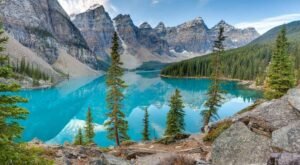
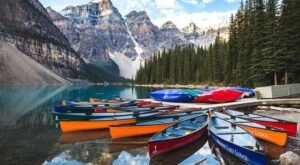
2. Moraine Lake – The Valley of the Ten Peaks
If I had to choose just one lake in all of Alberta, it might be Moraine. It is even more striking than Lake Louise to my eye, ringed by the jagged peaks of the Valley of the Ten Peaks. This is the view that once appeared on the Canadian twenty-dollar bill. Climb the short Rockpile Trail for the classic postcard angle.
Here is the most important thing to know for 2026: you cannot drive your own car to Moraine Lake. Parks Canada permanently closed the road to personal vehicles back in 2023 to protect the area and reduce traffic. Today the only ways in are the official Parks Canada shuttle, a licensed tour operator, public transit with the right pass, or by bicycle.
My tip: Book your shuttle reservation the moment they open, which is usually in mid-April for the summer season. The sunrise "Alpine Start" shuttles are the first to sell out, often within minutes. If you miss the first release, Parks Canada drops more seats two days before each departure date, so set an alarm and try again.
Best time to visit: Mid-June to early October, when the access road and shuttles are running. The road is closed in winter.
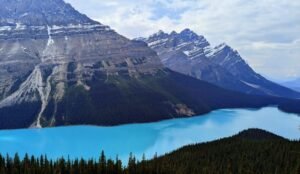
3. Peyto Lake – The Wolf-Shaped Wonder
Just off the Icefields Parkway, Peyto Lake delivers one of the most jaw-dropping lookouts in the Rockies. From the viewing platform, the lake stretches out below you in the shape of a wolf's head and glows an almost electric blue when the sun hits it. It is fed by the Peyto Glacier, which is what gives it that intense colour in summer.
The walk from the parking area to the upgraded viewing platform is short and mostly paved, so it is one of the easier "wow" moments you can have in the mountains. That accessibility makes it incredibly popular, so it can get crowded around midday.
My tip: Go in the morning. The lake colour is most vivid from late June through August, once the glacier melt is in full swing. Earlier in the season, the lake can still be partly frozen and grey.
Best time to visit: July and August for peak colour.
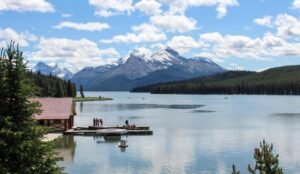
4. Maligne Lake – Home of Spirit Island
Deep in Jasper National Park, Maligne Lake is the largest natural lake in the Canadian Rockies and one of the most peaceful places I have ever paddled. Its real claim to fame is Spirit Island, a tiny, tree-covered islet that is one of the most photographed scenes in all of Canada. You cannot reach it by trail — the classic view is only accessible by boat.
The Maligne Lake boat cruise to Spirit Island is worth every penny. It is calm, scenic, and the guides share great stories about the area along the way. Good news for 2026: Maligne Lake, Maligne Canyon, and the road that connects them have all reopened following the 2024 Jasper wildfire.
My tip: Book a morning cruise when the water is calmest, and the reflections of the peaks are at their best. Bring a light jacket — even in summer, it is cool out on the water.
Best time to visit: Late June to September for boat cruises.
5. Athabasca Glacier – Walk on Ancient Ice
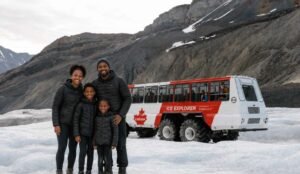
The Athabasca Glacier is one of the most accessible glaciers in North America, which means you can actually walk on a river of ice that has been there for thousands of years. It is one of six main "toes" of the massive Columbia Icefield, right along the Icefields Parkway between Lake Louise and Jasper.
You have two main options. You can take a guided Ice Explorer tour, which rolls you out onto the glacier in a giant all-terrain vehicle, or you can hike up to the toe of the glacier on your own. Standing on that blue ice, hearing the meltwater run beneath you, is humbling. It is also a real, visible reminder of climate change — the glacier has retreated dramatically over the last century, and markers along the trail show you just how far.
My tip: Never walk onto the glacier alone past the marked safety areas. Hidden crevasses are deadly. Stick to the signed paths or join a guided tour. Bring warm layers even in July; the wind off the ice is bitter.
Best time to visit: May to early October, when the Icefields Parkway and glacier tours are operating.
7. Johnston Canyon – Waterfalls and Catwalks
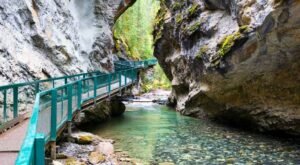
Johnston Canyon in Banff National Park is one of the most family-friendly hikes in the Rockies, and one of my favourites for a quick adventure. A series of steel catwalks bolted right into the canyon walls carries you over rushing water to the Lower Falls and the taller Upper Falls. The Lower Falls are an easy 15- to 20-minute walk from the parking lot.
In winter, the whole canyon transforms. The waterfalls freeze into towering columns of blue ice, and the trail becomes a magical, snowy walk that draws ice climbers from around the world.
My tip: Go early or late in the day to beat the crowds, because this is a busy spot. In winter, you absolutely need ice cleats or grippers — the trail gets very slippery starting partway up. If you have the energy, continue past the Upper Falls to the Inkpots, a set of beautiful turquoise spring-fed pools in an open meadow.
Best time to visit: Year-round. Summer for the green canyon and full waterfalls; winter for the frozen ice formations.
8. Takakkaw Falls – A Towering Add-On
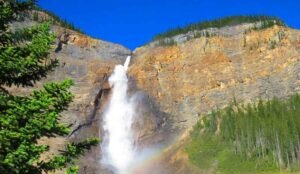
Takakkaw Falls is technically just over the border in Yoho National Park, British Columbia, but it is so easy to combine with an Alberta Rockies trip that I have to include it. At roughly 373 metres, it is one of the tallest waterfalls in Canada, and the sheer power of the water plunging off the cliff is incredible. The name comes from a Cree word meaning something close to "it is magnificent," and that sums it up.
The falls are a short walk from the parking area, so you get a huge payoff for very little effort.
My tip: The access road, Yoho Valley Road, is narrow with tight switchbacks and is only open in the warmer months, usually late June through early October. Check that it is open before you go, and be ready for the spray — you will get misted if you walk up close on a windy day.
Best time to visit: Late June to early October.
Northern Lights and Night Sky Wonders
Alberta is one of the best places in the world to look up. We sit under a wide, open sky, and large parts of the province are blissfully free of light pollution. On the right night, the Aurora Borealis dances overhead in green, purple, and pink. Here is where to chase the magic.
9. Elk Island National Park – Aurora Near Edmonton
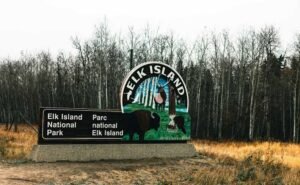
Elk Island is my go-to recommendation for anyone in Edmonton who wants to see the Northern Lights without a long drive. It sits only about 45 minutes east of the city and is a designated Dark Sky Preserve, which means the park works hard to keep artificial light to a minimum.
Beyond the night sky, Elk Island is home to herds of plains bison and wood bison, plus moose, deer, and tons of birds. You can easily spot bison from the road or on a short hike during the day, then stay for the stars after dark.
My tip: Check an aurora forecast app and look for a clear night with a high KP index. Head to an open area away from the parking lot lights, give your eyes 20 minutes to adjust, and be patient. Even on quieter nights, the star viewing here is spectacular.
Best time to visit: September through April for the best aurora chances, when nights are long and dark.
10. Jasper Dark Sky Preserve – A World-Class Night Sky
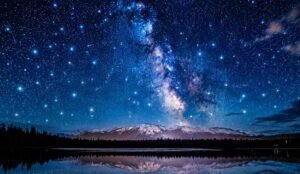
Jasper National Park is one of the largest accessible dark sky preserves on the planet, and it is a bucket-list destination for stargazers. With almost no light pollution across its huge wilderness, the night sky here is staggering. You can see the Milky Way stretch from horizon to horizon, spot distant planets, and, with luck, catch the Northern Lights reflecting off a mountain lake.
Every October, Jasper hosts a popular Dark Sky Festival with talks, telescopes, and events. It is a wonderful way to learn about the night sky from experts.
My tip: Some of the best viewing spots are around Pyramid Lake and Lake Annette, both of which have reopened after the wildfire. Bring a red-light headlamp so you do not ruin your night vision, dress warmer than you think you need to, and give yourself time for your eyes to adjust.
Best time to visit: Fall and winter for the darkest skies and the Dark Sky Festival in October.
11. Aurora Borealis Across Northern Alberta
You do not have to be in a national park to catch the Northern Lights in Alberta. Because the province sits at a high latitude, the aurora is regularly visible across northern Alberta during the winter months, especially in rural areas away from city glow. Towns like Fort McMurray and the wide-open spaces north of Edmonton are reliable aurora country.
The science is simple: solar particles hit our atmosphere and create those glowing curtains of light. The trick is being in the right place at the right time, under clear, dark skies.
My tip: Follow a space-weather or aurora forecast, drive away from town lights, and look north. The displays are strongest around the spring and fall equinoxes, but a strong solar storm can light up the sky any time from late August to April. Dress for the cold and bring a thermos of something hot — aurora hunting is a waiting game.
Best time to visit: Late August to April, on clear, moonless nights.
Waterfalls and Canyons
Alberta's rushing rivers have carved out some truly dramatic waterfalls and canyons. These spots are loud, powerful, and a refreshing change from the still mountain lakes.
12. Athabasca Falls – Power in a Narrow Gorge
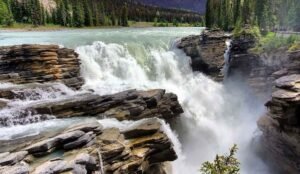
Athabasca Falls is not the tallest waterfall in Alberta, but it might be the most powerful-feeling. The Athabasca River squeezes through a narrow quartzite gorge here, and the sheer force of the water is incredible. You can feel the ground rumble. A network of easy, fenced walkways and viewpoints lets you see the falls from several angles without much effort.
It is a popular stop along the Icefields Parkway in Jasper National Park, and one that reopened to visitors after the wildfire.
My tip: This is a quick stop, perfect for stretching your legs on a long drive. Go early to grab parking and to beat the tour buses. The walkways can be misty and slippery, so wear shoes with grip and keep an eye on kids near the railings.
Best time to visit: May to October for the full flow from snowmelt.
13. Sunwapta Falls – A Hidden Power Spot
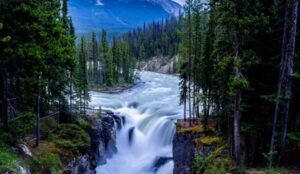
A little farther south along the Icefields Parkway, Sunwapta Falls is a spectacular two-tiered waterfall that does not get nearly as crowded as Athabasca. The upper falls drop dramatically around a small rocky island before the river plunges into a deep canyon. The name "Sunwapta" comes from a Stoney word meaning "turbulent water," which fits perfectly.
If you have time, the lower falls are a short hike downstream and are well worth the walk for the peace and quiet.
My tip: The flow is most dramatic in late spring and early summer when the snow is melting. Combine Sunwapta and Athabasca Falls in the same drive — they are close together and make a great pair.
Best time to visit: Late May to July for peak water flow.
14. Crescent Falls – A Foothills Surprise
Crescent Falls is a beautiful multi-tiered waterfall in the foothills near Nordegg, and it is one of those places that feels like a reward for going a little off the beaten path. The Bighorn River tumbles over two main drops surrounded by forest, with viewpoints from both above and below. It pairs perfectly with a visit to nearby Abraham Lake.
Because it is outside the busy national parks, you will often have far more space and quiet here than at the famous Rockies waterfalls.
My tip: The access road can be rough gravel, so a vehicle with decent clearance is helpful, and check conditions before you go. There is a viewpoint right near the parking area, plus a steeper trail down toward the base for the more adventurous.
Best time to visit: Summer and early fall, when the access roads are dry and clear.
15. Maligne Canyon – A Deep Limestone Slot
Back in Jasper, Maligne Canyon is one of the deepest accessible canyons in the Rockies, plunging more than 50 metres in places while being narrow enough to throw a stone across at the top. A series of bridges crosses back and forth over the gorge, letting you peer straight down into the rushing water below. It is dramatic, easy to walk, and has reopened after the wildfire.
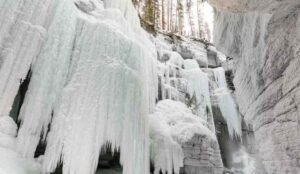
In winter, Maligne Canyon becomes something else entirely. The waterfalls freeze, and guided icewalk tours take you down onto the canyon floor itself, surrounded by walls of ice. It is one of the most unique winter experiences in Alberta.
My tip: Start at the upper bridges and walk down for the most dramatic views. For the winter icewalk, always go with a licensed guide and proper ice cleats — it is not a place to wander alone.
Best time to visit: Summer for the canyon walk; January and February for guided icewalks.
Unique Landscapes
The Rockies get all the attention, but some of Alberta's most surprising wonders are nowhere near a mountain. Head south and east, and you will find badlands, hoodoos, ancient rock art, and a place where the prairie crashes straight into the peaks.
16. The Hoodoos – Sculptures Made by Time
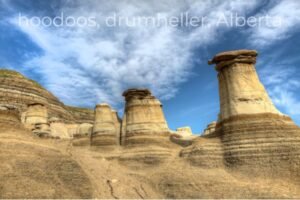
Hoodoos are tall, strange rock pillars topped with harder caprock, slowly sculpted by wind and water over millions of years. Alberta has some of the best examples in the world, especially in the badlands around Drumheller. Walking among them feels like stepping onto another planet — or back into the age of dinosaurs.
The most famous and accessible set is the Drumheller Hoodoos, where a boardwalk lets you wander right up to them. You will also find dramatic hoodoo formations near Banff.
My tip: Look but do not climb. Hoodoos are fragile and easily damaged, and climbing them speeds up their erosion. Visit in the soft light of early morning or late afternoon for the best photos and to avoid the midday heat, which can be intense in the badlands.
Best time to visit: Spring through fall. Summer days get very hot, so bring water and sun protection.
17. Dinosaur Provincial Park – A UNESCO Fossil Treasure
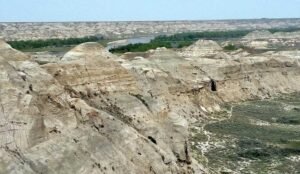
Dinosaur Provincial Park is a UNESCO World Heritage Site and one of the richest dinosaur fossil beds on Earth. More than 50 species of dinosaurs have been discovered in these striped, otherworldly badlands. Walking the trails here, surrounded by hoodoos and dry coulees, you really can imagine the prehistoric creatures that once roamed this exact ground.
The park offers guided hikes and fossil tours that take you into restricted areas you cannot visit on your own, often led by guides who know the bone beds inside out. The visitor centre and on-site interpretive programs are excellent.
My tip: Book a guided tour in advance, especially in summer — the best ones sell out. There is a campground if you want to stay overnight, and the stargazing here is fantastic. Bring more water than you think you need; the badlands are hot and shadeless.
Best time to visit: May through September for full programming and comfortable hiking.
18. Writing-on-Stone Provincial Park – Sacred Rock Art
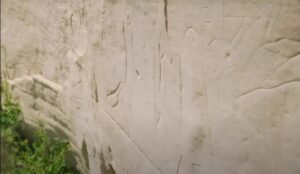
In the far south of Alberta, along the Milk River, Writing-on-Stone Provincial Park (also known by its Blackfoot name, Áísínai'pi) protects the largest concentration of Indigenous rock art on the North American plains. The sandstone cliffs here are carved and painted with petroglyphs and pictographs created by the Blackfoot people over thousands of years. It is a deeply sacred place, and also a UNESCO World Heritage Site.
The landscape itself is stunning, full of dramatic hoodoos and sweeping river valley views. Guided tours led by Indigenous interpreters share the stories and meaning behind the art, and I cannot recommend them enough.
My tip: Treat this as the sacred site it is. Stay on the marked trails, never touch the rock art, and consider joining a guided tour to truly understand its significance. The drive is long from the major cities, so plan to make a full day or an overnight of it.
Best time to visit: Late spring through early fall.
19. Waterton Lakes National Park – Where Prairie Meets Peaks
Waterton Lakes is one of Alberta's most underrated wonders. Here, the flat prairie grasslands run right up to the base of the Rocky Mountains with almost no foothills in between, creating a dramatic meeting of two very different worlds. It is quieter and more relaxed than Banff, with charming lakeside trails, abundant wildlife, and the iconic Prince of Wales Hotel perched on a hill above the lake.
Waterton joins with Glacier National Park in Montana to form the world's first International Peace Park. You can even take a boat cruise across the lake to the U.S. side.
My tip: Watch for wildlife — bears and deer are common, even near town. Take the short hike to Cameron Falls right in the townsite, and if you visit in fall, the larch trees turn brilliant gold. Some services wind down for the season in late autumn, so check ahead.
Best time to visit: June to September for full services; late September for golden larches.
Hidden Gems
These are the places I save for travellers who want something a little quieter or more unusual. They take a bit more effort to reach, but they reward you with smaller crowds and unforgettable scenery.
20. Abraham Lake – The Frozen Bubble Lake
Abraham Lake is famous worldwide for one surreal winter phenomenon: frozen methane bubbles trapped under crystal-clear ice. As gas rises from the lake bed and freezes in place, it forms stacks of white, frozen bubbles suspended in the ice like something out of a dream. Photographers travel from across the globe to capture it.
The lake itself is a striking turquoise in summer, set against open mountain views, and it sits about three hours from both Edmonton and Calgary. It is technically a man-made reservoir, but you would never guess it.
My tip: For the bubbles, visit in January or February once the ice is thick and clear, but before heavy snow covers it. Bring serious ice cleats — the wind sweeps the ice smooth, and it is extremely slippery. Dress for brutal cold and wind, and never go out onto ice you are unsure about.
Best time to visit: January and February for the bubbles; summer for the turquoise water.
21. Mount Edith Cavell – Alpine Drama in Jasper
Mount Edith Cavell is one of the most striking peaks in Jasper National Park, with the Angel Glacier draping down its face like a pair of outstretched wings. A trail leads up to the Cavell Pond, where chunks of glacier ice sometimes float in the meltwater, and continues into the gorgeous wildflower meadows of the Cavell Meadows above.
This is high-alpine scenery without a huge amount of effort, and it sees fewer crowds than the famous lakes.
My tip: The access road typically opens later than other areas, usually around mid-June once the snow clears, and closes in fall, so check conditions. It is a narrow, winding road. Go early in the day for parking and bring layers — it is cold up at the glacier even in summer.
Best time to visit: Mid-June to September, with July and August best for wildflowers.
22. Kananaskis Country – The Local's Mountain Escape
Kananaskis Country, or "K-Country" as locals call it, is a huge area of mountain parks and wild land just southeast of Banff. It offers much of the same jaw-dropping Rockies scenery — turquoise lakes, soaring peaks, alpine hikes — but with far fewer crowds than the national parks. This is where Calgarians go to escape on weekends.
Highlights include Upper and Lower Kananaskis Lakes, the stunning Rawson Lake hike, and miles of trails for every skill level. There is no shortage of wildlife either.
My tip: You need a Kananaskis Conservation Pass to stop in the area, so buy one online before you go. The trails here can be more rugged and less developed than in Banff, so come prepared, carry bear spray, and know your route.
Best time to visit: June to September for hiking; winter for skiing and snowshoeing.
23. Castle Provincial Park – Rugged and Wild
Tucked into the southwest corner of Alberta near the B.C. and Montana borders, Castle Provincial Park is rugged, remote, and wonderfully wild. It protects dramatic peaks, alpine meadows, and important wildlife habitat for grizzly bears, cougars, and more. If you want to feel like you have the mountains to yourself, this is the place.
It is one of Alberta's newer protected areas, so it is less developed and far less visited than the famous parks. That is exactly its charm.
My tip: Come prepared and self-sufficient, because services are limited out here. This is serious bear country, so carry bear spray, make noise on the trail, and store food properly. Check trail and road conditions before you set out, and let someone know your plans.
Best time to visit: July to September for the most reliable hiking conditions.
Best Time to Visit Alberta's Wonders
Alberta is a true four-season destination, and the "best" time really depends on what you want to see.
Summer (June to August) is peak season. The mountain roads, shuttles, and boat cruises are all running, the lakes are at their most vivid blue, and the days are long. The trade-off is crowds and the need to book shuttles and tours well in advance.
Fall (September to October) is my personal favourite. The crowds thin out, the golden larch trees light up the high country, and the night skies start getting darker for aurora season. Some seasonal services begin to close, so check ahead.
Winter (November to March) unlocks a whole different set of wonders: frozen waterfalls at Johnston Canyon and Maligne Canyon, the bubbles of Abraham Lake, skating on Lake Louise, and the strongest Northern Lights of the year. Just be ready for a serious cold and check road conditions.
Spring (April to May) is the quietest shoulder season. Lower-elevation spots like the badlands and Writing-on-Stone are great, while some high mountain roads and trails are still snowed in.
Practical Tips for Planning Your Alberta Trip
A few things I always tell first-time visitors before they go:
Get the right park passes. You need a Parks Canada Discovery Pass (or a daily pass) for the national parks like Banff and Jasper, and a separate Kananaskis Conservation Pass for K-Country. Provincial parks like Dinosaur and Writing-on-Stone may have their own fees. Buy them online in advance to save time.
Book Moraine Lake and Lake Louise shuttles early. Remember, you cannot drive your own car to Moraine Lake, and Lake Louise parking fills up fast. Reservations for the summer shuttle season usually open in mid-April and sell out quickly, especially the sunrise slots. Plan ahead or you may miss out entirely.
Know that Jasper is open and welcoming visitors. The 2024 wildfire was a hard chapter for the town, but Jasper has been recovering steadily, and major attractions — including the Columbia Icefield, Maligne Lake, and Maligne Canyon — are open. Some trails and campgrounds are still being restored, so check the official Parks Canada page for the latest closures before your trip. Visiting now genuinely helps the local community rebuild.
Respect wildlife and stay bear-aware. Alberta is home to grizzly and black bears, elk, moose, and bison. Keep your distance, never feed wildlife, carry bear spray on backcountry trails, and make noise as you hike. Give animals lots of space, especially with babies around.
Dress in layers and check the forecast. Mountain weather changes fast, and it can snow at high elevations even in summer. Bring layers, sturdy footwear, sun protection, and plenty of water everywhere you go.
Leave no trace. These places are breathtaking because people protect them. Pack out everything you bring in, stay on marked trails, and treat sacred sites like Writing-on-Stone with the respect they deserve.
Final Thoughts: Breathtaking Wonders in Alberta
Alberta is, quite simply, one of the most beautiful places on the planet. In a single trip, you can stand on a glacier, paddle a turquoise lake, walk through a dinosaur graveyard, watch the Northern Lights ripple overhead, and stare up at sandstone cliffs carved with ancient stories. I have been lucky enough to see most of these wonders in person, and they never get old.
My best advice is to slow down. Pick a region, give yourself time to actually sit with the views instead of rushing from one parking lot to the next, and let the landscape do its thing. Whether you start with the famous lakes or seek out a hidden gem like Castle Provincial Park, Alberta will reward you.
Now it is your turn. Pack your layers, book those shuttles, and go see it for yourself. You will understand why those of us who live here never stop feeling lucky.
Frequently Asked Questions
What is the most beautiful place in Alberta?
It is hard to pick just one, but Moraine Lake and Lake Louise are the most famous for good reason — their turquoise glacial water set against towering peaks is world-class. For something more unusual, Abraham Lake's frozen bubbles and Dinosaur Provincial Park's badlands are equally unforgettable in completely different ways.
Can you still drive to Moraine Lake?
No. Since 2023, Moraine Lake Road has been permanently closed to personal vehicles. You must take a Parks Canada shuttle, a licensed commercial tour, public transit with the right pass, or cycle in. The only exceptions are guests of Moraine Lake Lodge and visitors with a valid accessible parking placard.
Is Jasper National Park open after the 2024 wildfire?
Yes. Jasper is open and welcoming visitors in 2026. Major attractions like the Columbia Icefield, Maligne Lake, and Maligne Canyon have reopened, and most of the park's landscapes were untouched by the fire. A few trails and campgrounds remain closed for restoration, so always check the Parks Canada website for current updates before you go.
Where can I see the Northern Lights near Edmonton?
Elk Island National Park, about 45 minutes east of Edmonton, is a designated Dark Sky Preserve and one of the easiest places to catch the aurora. Head out on a clear, dark night with a high aurora forecast and look north.
How many days do I need to see Alberta's top wonders?
A focused Rockies trip covering Banff and Jasper takes about 5 to 7 days to do comfortably without rushing. To add the southern wonders like the badlands, Waterton, and Writing-on-Stone, plan for 10 days or more.
Do I need a car to explore Alberta?
For the most part, yes — many of these wonders are spread out, and a road trip is the classic way to see them. That said, you can reach Banff, Lake Louise, and Jasper by bus and shuttle if you prefer not to drive.
Edmonton is a city that rewards you for looking beyond the obvious. I've lived here for a couple of years now, and one of the questions I hear most from people visiting for the first time is, "Is there anything to do besides West Edmonton Mall?" The short answer is yes — quite a lot.
Edmonton has one of the largest urban park systems in North America, distinctive attractions like the Muttart Conservatory, major museums and galleries, historic sites, and neighbourhoods where you can spend an afternoon simply walking around and exploring. West Edmonton Mall is worth seeing, but it is only one part of what makes the city interesting.
In this guide, I've selected 21 of the best attractions in Edmonton based on what I think they actually offer visitors, rather than simply repeating the attractions that appear on every other list. Everything here is within Edmonton's city limits, so you won't find day trips or attractions that require leaving the city.
You'll find museums, historic sites, parks, cultural attractions, a heritage streetcar, entertainment districts, and a few places that first-time visitors often overlook.
If you're planning your first visit to Edmonton, this is a good place to start.
Quick Picks: The Best Edmonton Attractions at a Glance
West Edmonton Mall is the attraction Edmonton is best known for around the world, but calling it simply a shopping mall doesn't really capture the experience. Alongside hundreds of stores, the complex includes an indoor amusement park, a huge water park with slides and wave pools, a full-size skating rink, an aquarium, and a cinema, all under one roof.
The real appeal is how much you can do here without worrying about the weather. On a cold winter day, especially when temperatures drop well below freezing, families can easily spend most of the day exploring the mall and its attractions. If you're visiting with children, plan for at least half a day, and consider going on a weekday when it's generally easier to move around.
Fort Edmonton Park is Canada's largest living history museum, taking visitors through four periods of Edmonton's past: the 1846 fur trade fort, 1885 Street, 1905 Street, and 1920 Street. Costumed interpreters bring the buildings and streets to life, while a 1919 steam train and heritage streetcar offer another way to explore the park.
The Indigenous Peoples Experience adds an important perspective that goes beyond the traditional pioneer-village experience. The indoor exhibit was developed with Treaty 6 First Nations and Métis partners and helps provide a deeper understanding of the Indigenous histories and experiences connected to the region.
I visited in August 2026 and learned a useful lesson the hard way. I started walking from the entrance instead of taking the train to the far end first, and by the time I reached the 1846 Fort, my legs were done. My advice: take the train to the far end and work your way back. The horse-drawn wagon ride on 1885 Street also gave me a welcome break, although it is an additional cost. I also ended up spending more time than expected at the Midway games.
Fort Edmonton Park is primarily a summer attraction, while the Indigenous Peoples Experience remains available outside the main historical park season. For tickets, timing, and tips on what to see first, read our full Fort Edmonton Park visitor guide.
3. Muttart Conservatory
The Muttart Conservatory is one of Edmonton's most recognizable landmarks, with four glass pyramids rising from the river valley. Three pyramids maintain different climates—tropical, temperate, and arid—while the feature pyramid changes its display several times throughout the year. The building celebrated its 50th anniversary in 2026, making it both a botanical attraction and an important part of Edmonton's architectural identity.
I visited with my daughter, and we spent about two hours exploring all four pyramids at a toddler's pace. The Tropical Pyramid was my favourite, and the koi pond was the part we kept coming back to. Because the feature pyramid changes throughout the year, the Muttart is also one of those Edmonton attractions that can feel different on a return visit.
If you're visiting without children, Wednesday evenings offer an adults-only experience and can be a quieter way to explore the pyramids.
The Royal Alberta Museum is the largest museum in Western Canada and one of the best places in Edmonton to learn about the province's natural and human history. Located downtown, the museum's galleries cover everything from Ice Age animals and Alberta's wildlife to Indigenous cultures and the province's more recent history.
The Human History Hall is one of the museum's highlights, while the Bug Gallery, with its collection of live insects, is especially popular with children. There is enough to see here to fill several hours, so allow about two to three hours depending on how much time you want to spend exploring the exhibits.
Its downtown location makes the Royal Alberta Museum easy to combine with nearby attractions such as the Art Gallery of Alberta, Stanley A. Milner Library, and Churchill Square.
Edmonton's River Valley is one of the city's defining features, with roughly 7,400 hectares of connected parkland stretching along the North Saskatchewan River. More than 20 major parks and over 150 kilometres of trails give visitors plenty of ways to experience the city's natural side without leaving Edmonton.
You don't need a complicated plan to enjoy it. Walk down from the Hotel Macdonald, explore the trails around Mill Creek Ravine, cross the Walterdale Bridge for river and skyline views, or rent a bike and cover more ground. In winter, many of the same trails become popular spots for cross-country skiing and fat biking.
For families, the Edmonton Valley Zoo is another attraction in the river valley worth adding to your itinerary. If you're looking for a break from museums and downtown sightseeing, the River Valley is one of the easiest ways to experience Edmonton's outdoors.
A restored heritage streetcar that runs along old Canadian Pacific track from Whyte Avenue, through the only tunnel ever built on a CPR mainline in Alberta, and across the top deck of the High Level Bridge into downtown. It is the highest streetcar river crossing in the world.
This is the best introduction to Edmonton's geography that exists. In ten minutes you cross the river valley at height, see the skyline, the Legislature and the Walterdale Bridge, and understand how the city is laid out. It's run by volunteers from the Edmonton Radial Railway Society, and it operates a seasonal schedule from mid-May into October.
A return ticket lets you get off, spend time on the other side, and ride back later in the day — which makes it a genuinely useful way to connect Old Strathcona with downtown, not just a novelty.
7. Old Strathcona and Whyte Avenue
Old Strathcona and Whyte Avenue are among the best places in Edmonton to experience the city's local character. The historic district grew when Strathcona was a separate town, and many of the buildings along Whyte Avenue still reflect its early 20th-century roots.
Today, the area is known for its independent shops, bookstores, record stores, vintage clothing, restaurants, cafés, and bars. It is also home to the Edmonton International Fringe Theatre Festival, when the neighbourhood comes alive with performances, street activity, and visitors from around the city.
If you have only one evening to explore Edmonton and want somewhere with plenty of activity, Old Strathcona is a great place to spend it. You can browse the shops, grab dinner, explore the surrounding streets, and experience one of Edmonton's most distinctive neighbourhoods.
The Art Gallery of Alberta is one of Edmonton's most distinctive buildings, with a sweeping stainless-steel exterior that curves around a glass-and-concrete structure beside Churchill Square. Even if you're mainly exploring downtown, the building itself is worth seeing.
Inside, the gallery features rotating exhibitions showcasing Alberta and Canadian artists, Indigenous art, and works from around the world. Its focus on Western Canadian art also gives visitors a chance to see artists and collections that may be less familiar elsewhere in Canada.
The gallery is a good choice for art lovers and anyone looking to add some culture to an Edmonton itinerary. Its downtown location also makes it easy to combine with nearby attractions such as the Royal Alberta Museum, Stanley A. Milner Library, the Winspear Centre, and Churchill Square.
The collection focuses on western Canadian art, so it shows you things you won't have seen in Toronto or Vancouver. It's closed early in the week, so check the schedule, and admission is free for under-18s.
9. Edmonton Valley Zoo
A compact, walkable zoo in the river valley, home to around 350 animals. The Nature's Wild Backyard expansion has modernized a good portion of it, with viewing designed to put you at eye level with the animals rather than looking down into pits.
It works best for families with younger children; the scale is manageable in two or three hours, and there's a train, a carousel and an urban farm section. It's smaller than the Calgary Zoo, and worth setting expectations accordingly.
The zoo's resident Asian elephant, Lucy, is a long-running source of public debate in Edmonton, with advocacy groups arguing for years that she should be relocated and the zoo maintaining she isn't well enough to travel. It's worth knowing about before you go.
10. Alberta Legislature Building and Grounds
Edmonton's finest building, finished in 1913 in Beaux-Arts style, sits on 57 acres of formal grounds above the river valley. Free guided tours run through the interior — marble columns, the rotunda, the legislative chamber — and registration is required.
The grounds are as much of the appeal as the building. In summer the wading pools and fountains fill with families; in winter the trees are lit, and there's an outdoor rink. The adjoining Visitor Centre houses the Pehonan Theatre, which screens a short immersive film on Alberta's history on a 360-degree screen, and the Democracy Discovery Centre.
It's free, it's central, and it's one of the best-value hours in the city. See our list of free things to do in Edmonton for more in this vein.
11. William Hawrelak Park
William Hawrelak Park is one of Edmonton's best-known river valley parks, offering a large green space for relaxing, walking, picnicking, and enjoying outdoor events. The park surrounds a lake and features walking paths, open lawns, a nature-inspired playground, and the Heritage Amphitheatre.
The park is used throughout the year. In warmer months, it's a popular place for picnics, festivals, and leisurely walks, while winter brings opportunities for skating and enjoying the river valley landscape.
If you're looking for a peaceful outdoor escape without leaving Edmonton, Hawrelak Park is an easy choice. Its location in the river valley also makes it a good starting point for exploring some of the city's extensive trail system and nearby parks.
12. Ice District and Rogers Place
Rogers Place is home to the Edmonton Oilers and one of the city's biggest entertainment venues. The surrounding Ice District has transformed downtown Edmonton with modern towers, restaurants, hotels, public spaces, and places to gather before and after events.
Hockey is the biggest draw, especially when the Oilers are playing at home, but Rogers Place hosts major concerts, sporting events, and other performances throughout the year. The surrounding plaza also comes alive with outdoor events and seasonal activities.
Even without a ticket, the Ice District is worth exploring when you're downtown. On a game or event night, the energy around Rogers Place gives you a taste of Edmonton's strong sports and entertainment culture.
13. Stanley A. Milner Library
The main branch of the Edmonton Public Library, reopened in 2020 after a full redesign that turned a dated concrete block into an angular, glass-and-metal landmark on Churchill Square.
It's on this list because it isn't really a library in the traditional sense — there's a recording studio, a makerspace with 3D printers, a games area, a substantial Indigenous art collection throughout the building, and upper-floor views across downtown. It's free, it's warm, and it's an excellent place to spend an hour on a cold afternoon.
14. TELUS World of Science, Edmonton
One of Edmonton's best family attractions, TELUS World of Science combines hands-on exhibits, live science demonstrations, an IMAX theatre, and the Zeidler Dome planetarium. It is a particularly good choice for families because visitors can learn through interactive exhibits rather than simply reading displays.
Located in Coronation Park in west-central Edmonton, the science centre is also home to the RASC Observatory, where visitors can explore the night sky and learn more about astronomy.
Give yourself at least a few hours to explore the exhibits and allow extra time if you want to see an IMAX film or planetarium show. It is also a useful option when the weather is cold or rainy, and you want an indoor attraction that can fill much of the day.
15. Neon Sign Museum
An open-air gallery of restored vintage neon signs mounted along an exterior wall on 104 Street downtown — signs rescued from Edmonton businesses going back to the 1930s. It's free, it's always open, and it takes fifteen minutes.
Go after dark. The signs are lit, and the effect on a winter evening is genuinely worth the detour. It sits in the middle of 104 Street, which is one of downtown's better blocks for eating and drinking, so it slots easily into an evening.
16. Citadel Theatre
One of Canada's largest regional theatre companies, in a glass complex downtown that includes several performance spaces and an indoor tropical garden and waterfall you can walk through without a ticket.
The programming runs from classic drama to contemporary Canadian work and a large annual Christmas production. If you're visiting between autumn and spring and want an evening that isn't a restaurant, check what's on. It's a short walk from Churchill Square, the Art Gallery and the Winspear.
17. 100 Street Funicular and Louise McKinney Riverfront Park
The 100 Street Funicular is a glass-walled inclined elevator that connects downtown Edmonton with the river valley below. Located just below the Hotel Macdonald, the free funicular takes less than a minute to descend and is convenient for visitors with strollers, bikes, or anyone who doesn't want to tackle the steep climb back up.
At the bottom, a promenade and lookout provide beautiful views of the North Saskatchewan River and the High Level Bridge. From there, you can continue into Louise McKinney Riverfront Park and connect with Edmonton's extensive river valley trail network.
The funicular is more than just a convenient way into the river valley — it's also a quick way to experience one of Edmonton's best viewpoints. If the funicular is temporarily out of service, the nearby staircase provides an alternative route.
18. Francis Winspear Centre for Music
Home of the Edmonton Symphony Orchestra and one of the better-sounding concert halls in Canada. The room seats around 1,900 and was designed around acoustics first, which is unusual for a hall of that size.
It hosts far more than classical: jazz, film-score nights, touring acts and choral performances all appear on the schedule. Even a modestly priced seat sounds good here, which isn't true of most venues.
Housed in Hangar 14 at the former Blatchford Field, the Alberta Aviation Museum combines Edmonton's aviation history with a collection of historic aircraft. The hangar itself is part of the story, with its distinctive wooden structure reflecting Edmonton's important role in Canada's aviation history.
Inside, you'll find more than 30 aircraft, including a de Havilland Mosquito, along with a restoration area where volunteers work on aircraft in view of visitors. There is also a flight simulator for those who want a more hands-on experience.
The museum offers a look at Edmonton's connection to aviation, transportation, and Canada's North. It is also one of the city's less obvious attractions, making it a worthwhile stop if you've already seen the major downtown sights. Allow about two hours to explore the museum at a comfortable pace.
20. Old Strathcona Farmers' Market
Housed in a former bus barn just off Whyte Avenue, this is the city's longest-running farmers' market and one of the few places where you'll see Edmonton being ordinary rather than performing for visitors.
Producers from across central Alberta bring meat, cheese, bread, preserves and produce, alongside prepared food you can eat on the spot. Green onion cakes, a dish Edmonton has effectively adopted as its own, are usually somewhere in the building. It runs on Saturdays year-round, so plan around it if your trip includes a weekend.
21. Sir Winston Churchill Square and Edmonton City Hall
Edmonton's civic centre, and the anchor for most of downtown's cultural buildings — the Art Gallery, the Winspear, the Citadel and the Milner Library all face onto it.
City Hall itself is worth stepping inside for the glass pyramid roof and the pipe organ. Outside, the square is the venue for most of Edmonton's summer festivals, and in winter the reflecting pool becomes a public skating rink with skate rentals available. It's where the city gathers, which makes it a useful place to start a downtown walk.
How to Choose the Best Edmonton Attractions for Your Trip
First-time visitors. Fort Edmonton Park, the High Level Bridge Streetcar, the Alberta Legislature and Old Strathcona. Between them you get the history, the geography and the street life.
Families with children. West Edmonton Mall, Fort Edmonton Park and the Edmonton Valley Zoo. Our guide to family attractions in Edmonton for kids goes further.
Couples. The Muttart Conservatory on a Wednesday evening, dinner on 104 Street, a show at the Citadel or the Winspear, and a walk through Old Strathcona.
History lovers. Fort Edmonton Park, the Royal Alberta Museum, the Alberta Legislature and the Alberta Aviation Museum.
Art and culture. The Art Gallery of Alberta, the Winspear, the Citadel and the Milner Library, all within a few blocks of Churchill Square.
Outdoor lovers. The river valley, William Hawrelak Park and the funicular down to Louise McKinney Riverfront Park.
Limited time. Fort Edmonton Park in the morning, the streetcar across the bridge, Old Strathcona in the evening.
Rainy or very cold weather. The Muttart Conservatory, the Royal Alberta Museum, the Milner Library and West Edmonton Mall. See also the best indoor playgrounds in Edmonton if you're travelling with young children.
How to See the Best of Edmonton in 1, 2, or 3 Days
You don't need a week to experience Edmonton's highlights. With a little planning, you can see some of the city's best attractions without spending your trip sitting in traffic. The key is to group attractions by area and give yourself enough time to actually enjoy each place.
🌆 One Day in Edmonton: History, Old Strathcona & Downtown
Morning → Fort Edmonton Park
Start your day at Fort Edmonton Park when it opens and give yourself the morning to explore the historic streets, fort, and exhibits. Don't rush this one; there's a lot to see.
Afternoon → Old Strathcona
Head to Old Strathcona and Whyte Avenue for lunch and a little exploring. Browse the independent shops, grab a coffee, or simply enjoy the neighbourhood's historic streets.
Late afternoon → High Level Bridge Streetcar
Take the High Level Bridge Streetcar across the river toward downtown. The ride gives you one of the best introductions to Edmonton's river valley and skyline.
Evening → Downtown
Finish your day with dinner around 104 Street, then take an evening walk to see the Neon Sign Museum when the signs are lit.
One day gives you a taste of Edmonton's history, neighbourhoods, river valley and downtown — without spending the day driving from one side of the city to the other.
🌆🌆 Two Days in Edmonton: Add Museums, Culture & the River Valley
If you have two days, slow the pace down and spend your second day exploring Edmonton's downtown attractions.
Day 1: Follow the itinerary above — Fort Edmonton Park, Old Strathcona, the High Level Bridge Streetcar, and downtown in the evening.
Day 2 → Downtown & River Valley
Start your morning at the Royal Alberta Museum, where you can explore Alberta's natural and human history.
After lunch around Churchill Square, spend the afternoon at the Art Gallery of Alberta and Stanley A. Milner Library.
From there, make your way toward the Alberta Legislature before taking the 100 Street Funicular down into the river valley. Take some time to enjoy the views and walk along the riverfront.
For the evening, check what's playing at the Citadel Theatre or Winspear Centre and finish your day with a show.
Two days gives you a much better feel for Edmonton, from its history and museums to its neighbourhoods, architecture and river valley.
🌆🌆🌆 Three Days in Edmonton: Explore Beyond Downtown
With a third day, you can slow down even more and explore some of Edmonton's other major attractions.
Day 1: Fort Edmonton Park → Old Strathcona → High Level Bridge Streetcar → Downtown
Day 2: Royal Alberta Museum → Art Gallery of Alberta → Alberta Legislature → River Valley
Day 3 → Choose Your Adventure
For families, make West Edmonton Mall the main event. Between the amusement park, water park, skating rink, aquarium and other attractions, you can easily spend most of the day there.
For a quieter day, visit the Edmonton Valley Zoo in the morning, explore the Muttart Conservatory in the afternoon, and finish with some time at William Hawrelak Park.
If aviation and history interest you, swap the zoo for the Alberta Aviation Museum.
Visiting on a Saturday?
Make time for the Old Strathcona Farmers' Market in the morning. It's an easy addition to an Old Strathcona itinerary and a great place to pick up something to eat before exploring the neighbourhood.
A little planning goes a long way
The biggest mistake you can make in Edmonton is trying to see everything in one day. The city is spread out, but its attractions naturally fall into clusters. Group nearby attractions together, leave room for an unplanned coffee or walk, and you'll enjoy Edmonton much more than if you're simply checking places off a list.
PLAN YOUR EDMONTON TRIP
Make the Most of Your Edmonton Visit
Ready to explore Edmonton? Find a place to stay, discover things to do,
and plan the details of your trip before you arrive.
*Some links on this page are affiliate links. If you make a purchase or booking
through one of these links, we may earn a small commission at no extra cost to you.
Edmonton Attractions Map
Edmonton spreads out more than visitors expect, and the difference between a good day and a frustrating one usually comes down to grouping attractions by area rather than by interest. The map below plots every attraction in this guide so you can see which ones cluster together, which require a drive, and how the river valley sits between the two halves of the city.
Edmonton Attractions FAQ
What are the best attractions in Edmonton?
Fort Edmonton Park, West Edmonton Mall, the Muttart Conservatory, the Royal Alberta Museum, the Alberta Legislature and Old Strathcona cover the strongest six. Add the river valley, which underlies most of them.
What is Edmonton's most famous attraction?
West Edmonton Mall, by a wide margin internationally. Within Alberta, Fort Edmonton Park and the Muttart pyramids are just as recognizable.
What should I see in Edmonton for the first time?
Fort Edmonton Park for the history, the High Level Bridge Streetcar for the geography, and Old Strathcona for the atmosphere. That trio gives you the shape of the city in a single day.
How many days do you need to explore Edmonton?
Two days cover the essentials comfortably. Three lets you add the west end and the river valley without rushing. A single day works if you stay on one side of the river.
What are the best Edmonton attractions for families?
West Edmonton Mall, Fort Edmonton Park, Edmonton Valley Zoo, and TELUS World of Science.
What can you do in Edmonton when it rains?
The Muttart Conservatory, the Royal Alberta Museum, the Art Gallery of Alberta, the Milner Library and West Edmonton Mall are all indoors and all worth a couple of hours.
Final Thoughts
If you take one thing from this list, make it this: pick attractions by area, not by ranking. Edmonton rewards visitors who spend a full morning downtown or a full afternoon in the river valley far more than it rewards visitors who drive back and forth across the city ticking off a list.
Start with Fort Edmonton Park and the streetcar. Add the Muttart if the weather turns. Leave an evening for Whyte Avenue. Everything else on this page is a bonus.
If you're looking for an exciting adventure, Galaxyland at West Edmonton Mall is the place to be. As the world’s largest indoor amusement park, it’s filled with things to do that will keep everyone entertained, no matter their age. For younger visitors, rides like the Carousel and Dragon Wagon provide gentle thrills, while those seeking more excitement can hop on the Galaxy Orbiter. For the truly brave, there’s the exhilarating Space Shot, a free-fall ride that offers a rush of adrenaline.
With over 25 rides and attractions, Galaxyland has something for everyone. You can challenge your friends at bumper cars, take on interactive experiences, or enjoy family-friendly activities. It’s the perfect spot for a fun day out, whether you're visiting with family, friends, or even solo. From beginners to thrill-seekers, Galaxyland will give you an unforgettable memory.
In this post, I will show you some exciting things to Do in Galaxyland at West Edmonton Mall. I will tell you the type of rides, and the height requirement in inches for each ride.
GalaxylandBeginner Rides
1.Carousel: A Classic for Younger Visitors
The CarouselGalaxylandride is perfect for younger visitors or anyone looking for a gentle ride. It’s a beginner-level attraction, where you sit on beautifully decorated seats that move up and down as the ride travels in a circular motion. It's a fun and relaxing way to enjoy the park. For children under 42 inches, a paid adult chaperone is required, but there are no other restrictions. It’s a great option for families with small kids to enjoy a safe, fun experience together!
2.Dragon Wagon: A Mini Coaster for Kids
The Dragon Wagon is a fun, beginner-friendly ride that’s perfect for kids. This mini roller coaster offers plenty of excitement as it moves around an oval track, climbing and dropping gently over small hills. It’s a great way for young riders to experience the thrills of a coaster at a comfortable speed. Riders must be between 36" and 56" tall, and those between 36" and 41" need to ride with another person in the accepted height range.
3.Flight to Equestria: Fantasy-Themed Fun
In Flight to Equestria, you’ll soar into a magical adventure. This beginner-friendly ride is a slow-moving Ferris wheel that resembles a balloon race, making it perfect for younger kids or those who enjoy gentler rides. There’s no minimum height to ride, but anyone under 41 inches will need a paid chaperone who is over 56 inches tall. It’s a fun, relaxing way to enjoy the sights and sounds of the park while being part of a whimsical world!
4.SORRY! Sliders Bumper Cars: Fun for Everyone
If you're looking for a bit of friendly competition, the SORRY! Sliders Bumper Cars are a great choice. This beginner ride is perfect for younger kids who want to enjoy some safe, lighthearted action. You get to zip around and bump into your friends in these fun, easy-to-control cars. To ride, kids must be between 38" and 53" tall. It’s an exciting way to add some laughter and thrills to your day at Galaxyland!
5.Dizzy Doh-Dohs: Spin Your Way to Fun
At Galaxyland, the Dizzy Doh-Dohs offers a playful twist on classic fun! This beginner ride lets you and your friends spin around in colorful tea cups, while the whole ride moves in a circle. It's a great way to enjoy some light-hearted excitement that’s perfect for both kids and adults. For smaller riders under 36 inches, a paid adult chaperone is required. Get ready to twirl, laugh, and make memories on this delightful, dizzying ride!
6.Micro Machines Aero: Fly High in Fun
Kids can become pilots on the Micro Machines Aero ride! This beginner-friendly attraction lets two riders hop into mini airplanes, where they soar up and down while rotating around a circular track. It’s a thrilling yet gentle way for young adventurers to experience the excitement of flight. Perfect for children between 36" and 55" tall, this ride offers a fun and safe way to enjoy a taste of the skies!
7.Micro Machines Motojump: Miniature Dirt Bike Fun
For young thrill-seekers, the Micro Machines Motojump at Galaxyland offers an exciting ride on mini dirt bikes and ATVs. Kids can race around a circular track, complete with a small jump for an added burst of excitement! This beginner-level ride is perfect for kids who want to feel like real off-road racers. To hop on, riders must be between 35" and 55" tall. It’s the perfect way for children to experience a bit of adventurous fun in a safe environment!
8.Galaxy Kids Playpark: Fun for the Little Ones
The Galaxy Kids Playpark at Galaxyland is a perfect spot for younger kids to burn off some energy. This multi-level play area features bridges, slides, climbing obstacles, and ball pools, offering hours of fun for kids aged 12 and under. It’s a safe and engaging space for little adventurers. Keep in mind that it’s a socks-only environment, and if you forget yours, you can purchase a pair for $3. With exciting new changes happening, the Playpark is undergoing a Hasbro conversion at the time of writing, so plan your visit accordingly!
9.Galactic Rodeo: A Space Cowboy Adventure
The Galactic Rodeo lets kids become space cowboys and cowgirls as they ride intergalactic beasts in a fun, space-themed arena. It’s a great beginner-level ride designed to spark imagination and adventure. Kids must be 38 inches or taller to ride, and those between 38" and 43" will need a paid adult chaperone. It’s a unique way for young adventurers to enjoy a little space-themed fun while safely exploring the world of Galaxyland!
10.Rainbow Bounce: Mini Thrills for the Little Ones
The Rainbow Bounce offers younger visitors a chance to experience the fun of a drop ride, just like the big kids! This beginner-friendly ride steadily climbs upward before dropping in short, exciting bursts. It’s a scaled-down version of the Space Shot, perfect for families with little ones. Riders under 42 inches will need a paid adult chaperone to join in the fun. It’s a great way to introduce young adventurers to a bit of excitement in a safe, family-friendly setting!
11.Monopoly Railroad: All Aboard for Family Fun
The Monopoly Railroad is a beginner ride that’s perfect for young kids and families. Hop on board this fun train ride inspired by the classic Monopoly game and enjoy a gentle, scenic journey around the track. It’s a great way for little ones to experience the excitement of riding a train in a safe and friendly environment. Riders under 40 inches will need a paid adult chaperone who’s over 56 inches tall. It’s the perfect choice for a calm and enjoyable adventure!
Galaxyland Intermediate Rides
12.Cootie Coaster: Family-Friendly Thrills
The Cootie Coaster is a fantastic ride for families looking for a bit more excitement. This intermediate coaster reaches heights of 34 feet and speeds through thrilling twists and turns. It’s a great step up from the Dragon Wagon, offering more adventure for those not quite ready for the Galaxy Orbiter. A paid adult chaperone is required for riders between 43” and 47”, while those 48 inches and taller can ride solo. Don’t forget—you can capture your fun with action photos available for purchase!
13.Swing of the Century: A Fun, Airy Ride
The Swing of the Century at Galaxyland is a perfect mix of fun and relaxation. This intermediate ride lifts you into the air as your seat swings outward and spins in a circular motion. It's a great way to enjoy a gentle breeze while experiencing the thrill of soaring through the air. Riders must be 43 inches or taller to enjoy the ride, with those between 43” and 47” requiring a paid adult chaperone. For riders 48 inches and taller, you can swing solo!
14.GI Joe Laser Mission: Test Your Skills
Step into action with the GI Joe Laser Mission, where you’ll dodge and weave through lasers in a high-stakes mission. Your goal? To navigate the zone, avoid the Cobra Commander's lasers, and hit the targets. This intermediate-level attraction is perfect for anyone ready for a challenge. It’s all about quick reflexes and strategy as you work your way through the mission. With no height restrictions, this exciting adventure is open to everyone ready to prove their skills!
15.Quirks in the Works: Fast-Paced Target Fun
Get ready for action with Quirks in the Works! This intermediate-level ride lets you join the battle to defeat alien "Quirks" by hitting as many targets as possible. As you ride through the attraction, flashing lights and loud sounds create a thrilling atmosphere, keeping you on your toes. Test your reflexes and compete for a high score before you exit. Riders must be 43 inches or taller to join this exciting, fast-paced target-shooting adventure!
16.Cosmic Spinner: Twisting and Turning Fun
The Cosmic Spinner is an exciting, intermediate ride that lifts riders up and down while spinning them in circles. Each car moves independently, so you’ll get a unique experience every time! This thrilling attraction is perfect for those looking for a bit more excitement in their day. Riders must be between 52" and 75" tall to enjoy the twists and turns of this Hasbro-themed ride. It’s a great way to add some dizzying fun to your visit!
17.GI Joe Ninja Training: Conquer the Ropes Course
The GI Joe Ninja Training ropes course is an exciting, intermediate-level adventure that challenges you to navigate obstacles while suspended high above the ground. With three levels to explore, you’ll test your balance and agility as you make your way through the course. It’s perfect for thrill-seekers looking to push their limits! Riders must be 43 inches or taller, with those between 43” and 47” requiring a paid adult chaperone.
18.Super Simon: A Race Against Time
In Super Simon, players test their speed and reflexes by pressing as many lights as they can, as quickly as possible. The faster you press, the higher your score! This interactive game is all about quick reactions and sharp focus, making it perfect for anyone looking for a fun challenge. There are no height restrictions, so everyone can join in the fun and compete for the best score.
19.Flying Galleon: Sail Through the Skies
Climb aboard the Flying Galleon for a thrilling adventure on the high seas! This Spanish-themed ride rocks back and forth like a ship navigating rough waters, picking up speed with every swing until you’re nearly vertical! The ride creates an exciting "U" pattern that will have you feeling like you're soaring through the air. Perfect for riders seeking a bit more excitement, you must be at least 38 inches tall to enjoy this fun, intermediate-level experience.
GalaxylandAdvanced Rides
20.Galaxy Orbiter: A Thrilling Roller Coaster Adventure
The Galaxy Orbiter is the ultimate thrill ride! This advanced roller coaster sends you spinning through 1,500 feet of track at high speeds, delivering up to 3.3 Gs of excitement. With its twisting turns and fast drops, you’ll get an exhilarating view of the entire park. Riders between 43” and 47” need a paid adult chaperone, while those 48 inches and taller can ride solo.
21.Space Shot: Free-Fall Adrenaline Ride
Get ready for a heart-pounding adventure on Space Shot, the world’s tallest indoor tower ride. This advanced attraction blasts you off the ground at 55 km/h, rocketing you 120 feet into the air! After the thrilling ascent, experience an adrenaline-pumping free fall that’s sure to get your heart racing. If you’re a thrill-seeker, this is a must-ride. You must be at least 52 inches tall to enjoy this exciting attraction.
22. Havoc: Intense Spinning Adventure
If you’re ready for a wild ride, Havoc is the perfect choice. This intense attraction takes you up to 45 feet in the air, spinning and flipping you at speeds of up to 27 km/h. It’s a rush like nothing you’ve experienced before! To hop on, you need to be between 52" and 77" tall and under 220 pounds. I absolutely recommend it if you're craving a fast, heart-pounding adventure that will leave you breathless!
23.Trouble Twist: A Ride You Control
On the Trouble Twist, you get to control your own adventure! This advanced ride lets you decide how intense your ride will be as you twist and flip along a wave-shaped track. The more you twist, the wilder the experience becomes. It’s perfect for thrill-seekers who want to personalize their ride. To join the fun, you need to be at least 48 inches tall.
24.Hungry Hungry Hippos Feeding Frenzy: Bumper Car Fun
The Hungry Hungry Hippos Feeding Frenzy is perfect if you’re in the mood for some lighthearted competition! This advanced ride lets you and a friend hop into double-seated bumper cars and drive around freely, bumping into other vehicles in a fun, action-packed game. It’s all about strategy and quick moves as you try to out-bump your fellow riders. To join the frenzy, you must be at least 50 inches tall.
Other Attractions
25.GI Joe Climb and Conquer: Reach New Heights
The GI Joe Climb and Conquer is an exciting indoor climbing wall with three different routes to challenge climbers of all skill levels. For those who want to push their limits, there’s an extreme route that offers extra difficulty. Safety is key—participants must fit securely in a harness and may be weighed to ensure safety. You need to be at least 36 inches tall to participate. The wall is open on Fridays, weekends, and holidays.
26.NewPlay Arcade Games: Fun for All Ages
Galaxyland'sNewPlay Arcade offers over 100 games, from timeless classics to the latest releases. No more worrying about tokens or paper tickets—everything is loaded onto an arcade card! Simply swipe your card to play and collect points. When you're ready, redeem your points for cool prizes at the Redemption Prize Centre.
Galaxyland Tickets
At Galaxyland, rides operate on a points system. Beginner rides cost 1 point, intermediate rides cost 2 points, and advanced rides are 3 points each. Each point costs $6, so you can plan your day based on the rides you want to experience. There are also options for unlimited ride passes available online, which can be a great value if you’re planning to spend the whole day at the park. Check the official Galaxyland ticket page for more details.
Galaxyland Points
You can earn and redeem Galaxyland Points through various activities, such as arcade games and prize redemptions. When you load your points onto an arcade card, it becomes your pass for gameplay throughout the arcade. Points collected from wins in the arcade can also be used to claim prizes at the Redemption Prize Centre. It's a simple and fun system that lets you enjoy your time at Galaxyland without worrying about tokens or tickets, adding convenience to your day of fun!
Galaxyland Operating Hours
Galaxyland at West Edmonton Mall operates on the following schedule:
Monday to Thursday: 12:00 PM to 5:00 PM
Friday: 12:00 PM to 7:00 PM
Saturday: 11:00 AM to 7:00 PM
Sunday: 11:00 AM to 6:00 PM
Make sure that you check the Galaxyland website for any changes or special hours during holidays or events, as they may affect the regular schedule. It's always a good idea to plan your visit ahead of time to make the most of your day!
Final Thoughts: Galaxyland at West Edmonton Mall
Galaxyland Rides at West Edmonton Mall offers a truly unforgettable experience with a variety of rides and attractions that cater to all ages. From beginner rides like the Carousel to thrilling coasters such as the Galaxy Orbiter, there’s something for everyone. The arcade games and interactive challenges like the GI Joe Ninja Training make the day even more fun.
While we’ve covered many attractions, there are still numerous children’s rides that didn’t make the list, ensuring even more opportunities for kids to explore and have fun. Galaxyland is the ultimate destination for an exciting family adventure!
FAQs on Galaxyland
Why is the Galaxyland roller coaster closed?
The iconic Mindbender roller coaster, once the world’s largest indoor triple-loop roller coaster, was permanently closed in January 2023. The closure is part of a redevelopment effort as Galaxyland transitions into a Hasbro-themed park. The area previously occupied by the Mindbender is being transformed to make way for new attractions.
How many rides does Galaxyland have?
Galaxyland features 27 rides and attractions, catering to all ages and thrill levels, from beginner to advanced rides.
How old do you have to be to go to Galaxyland alone?
There is no specific age restriction for visiting Galaxyland alone, but ride participation often requires meeting height and safety requirements. For younger children, adult supervision may be necessary based on individual ride restrictions.
What is Galaxyland's new name?
Galaxyland has been rebranded as Galaxyland Powered by Hasbro, incorporating themes and attractions based on popular Hasbro brands.
Are all Galaxyland rides open?
While many rides are open, not all are available at all times due to maintenance or redevelopment. For instance, the Mindbender roller coaster has been permanently closed, and some attractions are under renovation as part of the Hasbro transformation.
West Edmonton Mall is North America’s largest shopping and entertainment destination, and it’s truly a place you need to see to believe. It offers so much more than just shopping. With its wide range of attractions, there’s something for every visitor here. Families can enjoy fun activities together, thrill-seekers will love the adventure-packed rides, and even casual visitors will find a lot to explore.
What makes West Edmonton Mall so iconic is the way it blends world-class entertainment with everyday fun. You can spend a full day here and still not see everything. Trust me, I have been visiting the West Edmonton Mall for years, but I won’t say I have explored every corner of the mall.
Located in Edmonton, Alberta, it’s one of those must-visit spots that leave you with unforgettable memories. Whether you're into water parks, amusement rides, or unique dining and entertainment experiences, the mall has it all, making it a top attraction in Canada. In this post, I will show you the top West Edmonton Mall Attractions that you and your children can enjoy.
Best West Edmonton Mall Attractions
1.World Waterpark
West Edmonton Mall’s World Waterpark is one of the biggest indoor waterparks in the world, and it's a place packed with excitement. The moment you walk in, you’re greeted by a warm, tropical atmosphere, which feels like an escape from everyday life. The waterpark offers a huge range of attractions. For thrill-seekers, there are multiple water slides that will get your adrenaline pumping, while the giant wave pool is perfect for splashing around or just floating on the waves.
One of the great features of World Waterpark is the variety. It’s not just for kids; there are slides and areas for all ages, making it a top choice for families. If you’re looking for a more relaxing day, you can rent a private cabana where you can take a break and enjoy some downtime between the rides. Plus, there are often special events hosted at the waterpark, adding something extra to your visit. It’s an ideal destination for anyone wanting a fun-filled day.
2.Galaxyland Powered by Hasbro
Galaxyland is the world’s largest indoor amusement park. It’s packed with thrilling rides and roller coasters that will get your heart racing, making it perfect for adrenaline junkies. But it’s not just for thrill-seekers—there are plenty of family-friendly attractions too, so everyone can have fun. Though, the roller coaster has been closed, there are still many rides that makes the place worthy to visit.
What makes Galaxyland special are the Hasbro-themed areas and rides. From Transformers to My Little Pony, there’s something for all ages to enjoy. With rides suited for both kids and adults, it’s easy to spend hours exploring and having a blast. Galaxyland is a must-visit for families and adventure lovers alike, offering excitement and entertainment for everyone who walks through its doors.
3. The Ship
The Ship at West Edmonton Mall is a replica of Christopher Columbus’s famous ship, the Santa Maria. It’s a beautiful, life-sized model that takes you back in time to the days of exploration. You can walk around and explore the ship, making it a great spot for history buffs or anyone curious about old sailing vessels.
It’s also an ideal place for taking photos. The detailed craftsmanship and historical vibe make it a perfect backdrop for memorable pictures. Whether you’re just passing by or taking the time to explore, The Ship is a fun and unique attraction that adds a touch of history to your mall experience.
4. Ed's Bowling
Ed's Bowling at West Edmonton Mall is the perfect spot for family fun. It’s not just about bowling—there’s a lot more to enjoy. The lanes are modern and sleek, but the whole place has a cool retro vibe that makes it feel like a classic bowling alley.
Along with bowling, Ed’s offers an awesome arcade where you can play all kinds of games. It’s a great place to spend time with friends or family, no matter your age. Whether you're rolling strikes or playing arcade games, Ed’s Bowling is the ultimate spot for entertainment and a good time.
5. Alien Outbreak Escape Room
The Alien Outbreak Escape Room is a thrilling experience with a cool sci-fi twist. You and your group are tasked with escaping an alien invasion, solving puzzles, and figuring out clues before time runs out. The challenge level is high, so it’s perfect for people who love a good brain teaser.
This escape room is great for groups of friends, families, or anyone who enjoys sci-fi adventures. You’ll feel like you’re part of an exciting space mission, working together to save the day. If you enjoy challenges and immersive experiences, Alien Outbreak Escape Room is a must-try!
6. Ed's Karaoke
Ed’s Karaoke at WEM is the perfect spot for groups who want to have a blast and sing their hearts out. You can rent private rooms where you and your friends can belt out your favourite songs without any pressure. There’s a huge selection of songs to choose from, so you’ll always find something you love.
It’s a great place for birthdays, celebrations, or just a fun night out. Ed’s Karaoke even offers group packages, making it easy to plan a great time. If you’re looking for a fun, memorable experience, Ed’s Karaoke is the place to go!
7. Marine Life
The Marine Life exhibit at West Edmonton Mall is a fantastic place to explore the wonders of the ocean without leaving the city. It’s full of interactive experiences that let you get up close to amazing sea creatures. You’ll see colourful fish swimming in large tanks, and even get a chance to watch the playful penguins.
This exhibit is great for kids and adults, especially if you’re curious about marine animals. There are also educational opportunities where kids can learn about ocean life and conservation. Marine Life is a fun, hands-on experience that’s perfect for families looking to learn and explore together!
8. Sea Lions' Rock
Sea Lions' Rock is a must-see for animal lovers. Here, you can watch amazing sea lion performances that are fun for all ages. The sea lions show off their skills with jumps, tricks, and playful acts that will make you smile. The performances happen throughout the day, so it’s easy to catch a show during your visit.
There are also chances for visitors to interact with the sea lions, making it a memorable experience. If you love animals and want to see something exciting, Sea Lions' Rock is definitely a highlight of the mall!
9. Professor WEM’s Adventure Golf
Professor WEM’s Adventure Golf is a fun and exciting mini-golf course at West Edmonton Mall. The course is full of unique themes and designs, making every hole feel like a new adventure. It’s not just your regular mini-golf—it has cool decorations and creative setups that make the game even more enjoyable.
The atmosphere is great for families, and it’s perfect for all ages. Everyone will have a blast whether you’re playing with friends or bringing the kids. The fun, laid-back vibe makes it easy to relax and enjoy a round of mini-golf in one of the mall’s coolest attractions!
10. Crystal Labyrinth Mirror Maze
The Crystal Labyrinth Mirror Maze at West Edmonton Mall is a visually stunning experience that will challenge your sense of direction. As you walk through the maze, mirrors create the illusion of endless paths, making it tricky and fun to find your way out. The reflections and lights make the whole experience feel magical.
This maze is perfect for groups of friends or families who love a challenge. It can be a bit difficult, but that’s part of the fun! If you enjoy puzzles and want a unique adventure, the Crystal Labyrinth Mirror Maze is a great way to spend your time at the mall.
11. Dragon's Tale Blacklight Mini Golf
Dragon's Tale Blacklight Mini Golf is a one-of-a-kind glow-in-the-dark experience. The entire course is lit up with bright neon colours that glow under blacklights, creating a magical and exciting atmosphere. Each hole has a fun, dragon-themed design that adds to the adventure.
This mini-golf course is perfect for all ages, making it a great choice for families, friends, or anyone looking for a unique twist on a classic game. The vibrant colours and cool visuals make it a fun and unforgettable experience that will leave everyone smiling.
12. Surfside Pickleball
Surfside Pickleball is becoming one of the fastest-growing sports, and West Edmonton Mall has its own courts at Surfside Pickleball. This fun game is a mix of tennis, badminton, and ping-pong, and it’s easy to pick up for all ages. It’s great for families, friends, or anyone who wants to try something new.
At the mall, you can rent a court and start playing right away. If you’re new to the game, don’t worry—there are lots of people playing, and it’s easy to join in. Surfside Pickleball is perfect for anyone looking for a fun and active way to spend their day!
13. Ice Palace
The Ice Palace in this mall is an NHL-sized rink right in the heart of the mall. It’s a great spot for anyone who loves ice sports or just wants to go for a fun skate. The rink hosts public skating sessions so that you can glide across the ice at your own pace.
If you’re into ice hockey or figure skating, the Ice Palace also offers opportunities to practice and join events. It’s perfect for all ages and skill levels, making it a fun activity for families, friends, or anyone looking to enjoy some time on the ice.
14. Drive
Drive at West Edmonton Mall offers an exciting go-karting experience for adrenaline seekers. The track is fast and fun, giving you the thrill of racing with your friends or family. You’ll get to zoom around sharp turns and straightaways, reaching impressive speeds that make you feel like a real race car driver.
This go-karting experience is perfect for anyone who loves action and competition. The high-speed track is designed to challenge your driving skills, and it’s a great way to add some excitement to your day at the mall. If you enjoy the rush of speed, Drive is the place to be!
15. Birds of Paradise
Birds of Paradise at the mall features a fleet of five majestic paddle boat swans. This attraction offers a peaceful and fun way to explore the water inside the mall. It’s perfect for a romantic date night or a family outing, providing a relaxing experience while you paddle around in beautifully designed swan boats.
This new attraction is quickly becoming one of Edmonton’s best experiences, offering something unique for all visitors. Whether you’re looking for a quiet moment or some family fun, Birds of Paradise is a must-try activity at the mall.
16. The Rec Room
The Rec Room takes fun to a whole new level, with a massive 54,000 square feet packed with games, food, and entertainment—all under one roof! It’s the perfect place to let loose, be playful, and try something new. Whether you’re in the mood for a virtual reality adventure, arcade games, or live entertainment, The Rec Room has it all.
Their Canadian-inspired cuisine is a must-try, whether you’re grabbing a quick bite or sitting down for a full meal. It’s also a great spot to catch up with friends over a pint or even host an event. If you're looking for an unforgettable time, The Rec Room is the ultimate gathering place for food, fun, and entertainment!
Entertainment options at WEM
1. Starlight Casino
Starlight Casino at West Edmonton Mall is a top spot for adult entertainment and gaming. With its upscale vibe, it offers a classy and exciting atmosphere for visitors looking to try their luck. Inside, you’ll find a wide variety of games, from slot machines to poker and blackjack tables, catering to all types of players.
After some gaming, head over to one of the dining areas for a meal, and it won’t disappoint. The food and drinks here are top-notch, which will make it a perfect way to end your evening.
2. The Comic Strip
Rick Bronson’s The Comic Strip is a must-visit for comedy lovers at West Edmonton Mall. This Edmonton comedy club is known for hosting top stand-up comedians and fresh new talent. Every time you visit, you can expect a night filled with laughter and fun.
The Comic Strip has regular performances by famous comedians, and the atmosphere is always upbeat and welcoming. It’s the perfect spot to grab a drink, sit back, and enjoy some of the best stand-up comedy around. If you’re in the mood for a good laugh, The Comic Strip is the place to be!
3. Jubilations Dinner Theatre
Jubilations Dinner Theatre offers an amazing interactive experience where dinner and entertainment come together. You’ll get to enjoy a delicious gourmet meal while watching a live, on-stage performance. The shows are always fun and lively, with rotating themes to keep things fresh, so there’s always something new to see.
The whole experience feels personal, with actors often interacting with the audience, making it more than just a regular night out. If you’re looking for a place where you can feast on great food and laugh along to a fun performance, Jubilations Dinner Theatre is the perfect spot!
4. Scotiabank Theatre
The Scotiabank Theatre is the perfect place for movie lovers. With its huge IMAX screen, you get an incredible viewing experience that makes you feel like you’re right in the action. The theatre also offers luxury seating, so you can sit back and relax in comfort while enjoying the latest films.
You can catch an action-packed blockbuster or a family-friendly flick, and Scotiabank Theatre provides the ultimate movie experience. It’s a great spot for film lovers who want top-quality sound, pictures, and comfort all in one place.
5. Wild West Shooting Centre
Wild West Shooting Centre is 8,000 square feet of air-conditioned fun, offering an unforgettable experience for anyone looking to try their hand at shooting. Specializing in first-time shooters, the friendly staff ensures you feel comfortable and safe in a controlled environment. They have a large selection of handguns to choose from, so you can experience the thrill of shooting, even if it’s your first time.
It’s perfect for individuals or groups, with group rates available. Just keep in mind that access to the facility is only from the exterior of West Edmonton Mall. If you’re looking for a unique and exciting adventure, Wild West Shooting Centre is a must-visit!
6. Build-A-Bear Workshop
Build-A-Bear Workshop is a fun-filled store where you get to create your very own stuffed animal. You can choose from over 25 different animals, priced between $12 and $27, and bring your new best friend to life by stuffing it yourself. The coolest part? You get to make a wish and give your furry friend a heart before dressing it up in one of over 250 outfits and accessories.
After that, you can name your creation and even print a personalized birth certificate or storybook. You’ll leave hand-in-paw with your new friend in a special carrying case. It’s a “pawsitively” fun experience for the whole family!
Multi PlayPass: Choose Your Way to Play
With the Multi PlayPass at West Edmonton Mall, you get to choose your way to play across a variety of awesome attractions! Enjoy unlimited access to Galaxyland, Ice Palace, World, Sea Life Caverns, Ed’s Bowling, World Waterpark, The Ship, Dragon’s Tale, Crystal Labyrinth Mirror Maze, and Professor WEM’s Adventure Golf. Plus, you can catch Sea Lions Rock on weekends at 2 PM on a first-come, first-served basis.
The pass also gives you extra perks, like 10% off when you buy food and alcoholic-free drinks at Ed’s Bowling, and World Waterpark, as well as 25% off the Skyflyer Zipline. Please note that some attractions like DRIVE, Alien Outbreak Escape Room, and Birds of Paradise are not included in the pass.
There are three season pass options to choose from, offering year-round fun. The 7-Day Pass gives you unlimited access for one week, with prices starting at $300 for individuals and $900 for a family of up to four. The 3-Month Pass gives you three months of fun for $400 per individual or $1200 for a family. If you’re in it for the long haul, the 12-month pass (One-Year Pass) offers the best value at $650 for individuals or $1950 for a family of four.
Other attractions in WEM
Aside from the attractions and entertainment listed above, there are many other fun activities in West Edmonton Mall for adults and children that I did not make the list. For example, Monkey Jump Trampoline Park is on the lower level of the mall close to the elevator, this is mainly for children, and trust me, they will love to bounce on the trampoline. Another exciting and interesting activity is the Dream Riders which is close to the Urban Planet Store at the lower level. These are animal-shaped rides that fit one or two people, and you can ride them around certain sections of the mall for 10 minutes.
The Gondolas in Banff are one of the most exciting ways to see Banff National Park from above. As I ride the gondola to the top of Sulphur Mountain, it feels like I'm moving right into the sky and scary for me at the same time! This journey is not just about getting to the top; it's about enjoying every moment of the ride, where I see trees, mountains, and wildlife like nowhere else.
Visiting this attraction is important because it's more than just a fun ride. It lets us connect with nature in a deep and meaningful way. From the top, the view is spectacular. You can see all of Banff National Park in 360 degrees, This national park is a UNESCO World Heritage site. This park also draws over four million visitors each year, and the gondola is a favourite attraction in Banff for many. It's a place where you can see the beauty of the Canadian Rockies unfold before you.
What is the Banff Gondola?
The Banff Gondola is an incredible aerial ride that carries you up to Sulphur Mountain, offering an unparalleled view of Banff National Park. Stepping into the gondola, I was excited for a journey that combines thrill with serenity. The ride smoothly climbs to an altitude of 2,281 meters (about 7,486 feet) over eight minutes. From the gondola, the changing landscape unfolds spectacularly below—with sprawling forests and towering mountains.
Designed for comfort, the gondola can comfortably seat four people, making it ideal for a family or a group of friends. Its engineering ensures a safe and smooth experience in any weather, allowing you to enjoy the breathtaking scenery worry-free. Each ascent and descent presents a new angle of the vast wilderness and the rugged peaks of the Canadian Rockies, making it a memorable part of visiting Banff.
The Gondola Ride experience
The Banff Gondola ride is a thrilling journey that begins as soon as you step into one of the comfortable, glass-enclosed cabins. The ride lasts about 8 minutes, during which you're treated to unparalleled views of the Bow Valley, the town of Banff, and the surrounding mountains.
On a clear day, you can see for miles, with the iconic Mount Rundle and Cascade Mountain dominating the landscape. The ride is smooth, but will still be fearful for someone who is afraid of heights like me. In the middle of the journey, the gondola sometimes stopped, I guess to let you enjoy the breathtaking scenery and to take a picture. As I said, if you’re afraid of heights, it is scary.
As you ascend, the sheer beauty of the landscape becomes more apparent. The gondola glides silently over a dense forest of pine trees, offering glimpses of wildlife below. Keep your eyes peeled for mountain goats, elk, and even the occasional grizzly bear. The higher you go, the more expansive the views become, culminating in a stunning panorama that showcases the rugged beauty of the Canadian Rockies.
Banff Gondola Images
Nearby Fun Things to Do
After your gondola ride, explore the Cave and Basin National Historic Site, located just a short drive away. This site is where Banff’s story as a national park began, and it offers fascinating exhibits on the area’s natural and cultural history. Another nearby attraction is the Banff Upper Hot Springs, where you can soak in naturally heated mineral waters while enjoying the mountain views.
For a complete mountain adventure, consider combining your gondola ride with a hike on one of the nearby trails, such as the Tunnel Mountain Trail. This moderate hike offers stunning views of the Bow Valley and the town of Banff, making it a perfect way to cap off your day in the mountains. Alternatively, head into the town of Banff and explore its charming shops, galleries, and museums.
If you want to know about other activities in Banff, read about the best things to do there.
The Gondola Summit Experience
Once you reach the summit of Sulphur Mountain, you will find a world of discovery. The summit complex features several viewing platforms, each offering a different perspective on the surrounding landscape. From the expansive valley below to the jagged peaks of the Rockies, every angle is a photographer’s dream. The main observation deck is particularly popular, providing a 360-degree view that is nothing short of spectacular.
One of the highlights of the summit is the Sulphur Mountain Boardwalk, a 1-kilometer (0.6-mile) trail that leads to the Sanson’s Peak Meteorological Station. This historic site, named after Norman Sanson who manned the station for nearly 30 years, offers even more incredible views and a sense of history. The boardwalk is well-maintained and accessible, making it an easy walk for visitors of all fitness levels.
For those interested in learning more about the area’s geology, wildlife, and Indigenous history, the interpretive center at the summit is a must-visit. It features interactive exhibits and knowledgeable guides who can answer any questions you may have. The center also offers a short film that provides an overview of Banff National Park and its unique ecosystem.
How to Get to the Banff Gondola
Getting to the Banff Gondola is quite straightforward and adds to the excitement of your visit to Banff National Park. Here’s how you can do it:
By Car: Driving to the Banff Gondola is simple if you have access to a car. It's located just a few minutes from the town of Banff, on Mountain Avenue. The drive offers scenic views of the mountains, making the journey a memorable part of your visit. There's parking available at the site, but it can fill up quickly during peak times, so consider arriving early.
By Public Transit: If you prefer not to drive, Banff offers excellent public transit options. You can take the Roam Public Transit, which provides routes connecting the town with the gondola. Route 1 takes you directly to the Banff Gondola, and buses run frequently, especially during the tourist season. It’s a convenient and eco-friendly way to travel.
By Shuttle: Another convenient option is the Banff Gondola shuttle service. This free shuttle runs from several locations in Banff, including major hotels and landmarks. The shuttle service is reliable, and schedules are usually aligned with the gondola’s operating hours, making it easy to plan your visit.
Walking or Biking: If you're up for a bit more adventure, consider walking or biking to the Banff Gondola via the Banff Legacy Trail. It’s a longer trek but very rewarding with stunning views along the way. The trail is well-maintained and signs along the route make it easy to navigate.
Banff Gondola Contact
Address: 100 Mountain Ave, Banff, AB T1L 1B2
Phone: +1 866-756-1904
Sky Bistro and Northern Lights Café
Dining at the summit of Sulphur Mountain is an experience in itself. The Sky Bistro, located within the summit complex is one of the best restaurants in Banff, it offers a dining experience like no other, with floor-to-ceiling windows that provide breathtaking views of the Rockies. The menu features a range of Canadian-inspired dishes, using locally sourced ingredients to create a culinary journey that complements the stunning surroundings.
Imagine enjoying a glass of wine or a craft beer while gazing out at the endless mountain vistas—it’s an experience that’s hard to beat. If you prefer something lighter, the Northern Lights Café offers a selection of sandwiches, salads, and pastries, as well as hot beverages to warm you up on a chilly day.
Dining at the top of Sulphur Mountain is not just about the food—it’s about the experience. The combination of great cuisine, incredible views, and the serene mountain atmosphere creates a memorable dining experience that you’ll cherish long after your visit.
Special Events and Seasonal Activities
Though I like to visit Banff in the summer, the Banff Gondola is a year-round attraction with something unique for every season. In the winter months, the summit transforms into a winter wonderland, with snow-covered peaks and crisp mountain air. The gondola ride during this time offers a completely different experience, as you glide over a snowy landscape that looks unique and amazing.
The summit complex hosts a variety of special events throughout the year, including the Northern Lights and stargazing nights, where you can learn about the constellations and enjoy unobstructed views of the night sky. During the holiday season, the complex is decorated with festive lights, and you can even visit Santa Claus at the summit!
In the summer, the focus shifts to outdoor activities such as guided hikes, wildlife viewing, and photography workshops. The Banff Gondola is also a great starting point for more challenging hikes, such as the trek to the summit of Mount Bourgeau, which offers even more spectacular views of the Rockies.
Tips for Visiting the Banff Gondola
To ensure you have a wonderful experience at the Banff Gondola, here are some practical tips based on my own visits:
Best Time to Visit: From personal experience, visiting early in the morning or late in the afternoon provides the best lighting for photography and generally smaller crowds. During my visit in early August, I found that an early start allowed for a serene and uncrowded ride, and also offered that soft, magical morning light that photographers will love. If you're visiting during the busy season from July to September, I strongly recommend booking your tickets online in advance. This saves you from the long lines because the lines can be very long and uncomfortable, especially if you have children with you.
What to Wear: The temperature difference between the base and the top of the Sulphur Mountain can be different, because the top there can sometimes be chilling. Even on a warm summer day, so bring a jacket, as the summit was quite breezy and cool. Comfortable walking shoes are essential, especially if you intend to explore the boardwalk or take on some of the hiking trails. The terrain isn't overly challenging, but good footwear makes the experience much more enjoyable.
Banff Gondola Tickets: Purchasing tickets is straightforward—either online or at the base station. On my last visit, I opted for a combination ticket that included entry to other local attractions, such as the Banff Gondola, Lake Minnewanka, Jonson Lake & Banff Bus Tour. This not only saved money but also enriched the day with diverse experiences. Checking for these deals online can add considerable value to your trip. But I strongly recommend booking your tickets online in advance. This saves you from the long lines because the lines can be very long and uncomfortable, especially if you have children with you.
Accessibility: Accessibility is well-handled at the Banff Gondola. There are ramps and elevators both at the base and the summit, making it accessible for everyone.
Conclusionon gondolas in Banff
The Banff Gondola is more than just a ride to the top of Sulphur Mountain—it’s an experience that immerses you in the natural beauty of the Canadian Rockies. From the exhilarating gondola ride to the summit’s panoramic views, from dining at Sky Bistro to exploring the boardwalk, every moment is designed to leave you in awe. Whether you visit in summer to enjoy the lush green landscapes or in winter to experience a snowy wonderland, the Banff Gondola offers something for everyone.
Beyond the gondola itself, the surrounding area is rich with opportunities for adventure, relaxation, and cultural exploration. From hiking and wildlife viewing to soaking in hot springs and discovering the history of Banff National Park, there’s no shortage of activities to fill your day. A visit to the Banff Gondola is not just a highlight of any trip to Banff—it’s a gateway to discovering the best that this incredible region has to offer.
FAQs
How long is the Banff Gondola ride?
The Banff Gondola ride takes approximately eight minutes to reach the summit of Sulphur Mountain.
What is Banff Gondola known for?
The Banff Gondola is renowned for its stunning panoramic views of the Canadian Rockies and Banff National Park, providing a unique perspective from the summit of Sulphur Mountain.
Is Lake Louise gondola the same as Banff Gondola?
No, the Lake Louise Gondola and the Banff Gondola are different. The Lake Louise Gondola is located at Lake Louise Ski Resort, offering views of the lake and surrounding mountains, whereas the Banff Gondola specifically ascends Sulphur Mountain in Banff.
Is it worth going to Banff Gondola?
Yes, it is worth going to the Banff Gondola for its breathtaking views, access to hiking trails, and educational exhibits at the summit, making it a comprehensive mountain experience.
Do I need to book Banff Gondola in advance?
Yes, it's advisable to book Banff Gondola tickets in advance, especially during peak tourist seasons (July to September), to avoid long waits and ensure availability.
How many people can fit in a gondola in Banff?
Each gondola cabin in Banff can comfortably accommodate up to four people.
Can you see bears from Banff Gondola?
While it is possible to spot wildlife, including bears, from the Banff Gondola, such sightings are not guaranteed and depend on various factors like the time of year and the animals' natural movements.
What is the difference between Banff Gondola and Jasper SkyTram?
The main difference is their location and the views they offer: the Banff Gondola provides views over Banff National Park from Sulphur Mountain, while the Jasper SkyTram ascends Whistlers Mountain in Jasper National Park, offering vistas of the surrounding area including the town of Jasper.
Used only with old Urchin versions of Google Analytics and not with GA.js. Was used to distinguish between new sessions and visits at the end of a session.
End of session (browser)
__utmz
Contains information about the traffic source or campaign that directed user to the website. The cookie is set when the GA.js javascript is loaded and updated when data is sent to the Google Anaytics server
6 months after last activity
__utmv
Contains custom information set by the web developer via the _setCustomVar method in Google Analytics. This cookie is updated every time new data is sent to the Google Analytics server.
2 years after last activity
__utmx
Used to determine whether a user is included in an A / B or Multivariate test.
18 months
_ga
ID used to identify users
2 years
_gali
Used by Google Analytics to determine which links on a page are being clicked
30 seconds
_ga_
ID used to identify users
2 years
_gid
ID used to identify users for 24 hours after last activity
24 hours
_gat
Used to monitor number of Google Analytics server requests when using Google Tag Manager
1 minute
_gac_
Contains information related to marketing campaigns of the user. These are shared with Google AdWords / Google Ads when the Google Ads and Google Analytics accounts are linked together.
90 days
__utma
ID used to identify users and sessions
2 years after last activity
__utmt
Used to monitor number of Google Analytics server requests
10 minutes
__utmb
Used to distinguish new sessions and visits. This cookie is set when the GA.js javascript library is loaded and there is no existing __utmb cookie. The cookie is updated every time data is sent to the Google Analytics server.