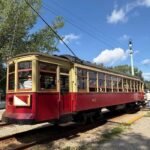
If you're looking for one of the best family attractions in Edmonton, the Edmonton Valley Zoo deserves a spot on your itinerary. Located in the beautiful North Saskatchewan River Valley, this compact but engaging zoo is home to more than 250 animals representing species from around the world.
From playful red pandas and majestic snow leopards to seals, lemurs, and Arctic wolves, the zoo combines wildlife encounters with conservation and education.
I've been many times with my kids, with family visiting from out of town, and sometimes just for an afternoon walking through the exhibits. The zoo is small enough that you can see everything in a few hours.
But I do want to be upfront about two things I've learned over the years, because they'll save you a wasted trip if you don't know.
First: the Edmonton Valley Zoo closes earlier than many people expect. The zoo closes at 5 PM daily, and the last admission is one hour before closing time. This means if you're planning an afternoon visit, you have less time than you might assume; arriving too late in the afternoon isn't ideal.
Second: the zoo occasionally books private events that can prevent regular public access. This has caught me off-guard before — showing up on what I thought was a normal Saturday, only to find the zoo closed or partially unavailable due to a corporate event or private booking. Always check the official City of Edmonton website before you go. It takes 30 seconds and can save you a real headache.
In this guide, I'll cover everything you need to know before visiting, including ticket prices, opening hours, the best animals to see, accessibility, nearby attractions, and practical tips to help you make the most of your day.
About Edmonton Valley Zoo
The Edmonton Valley Zoo has welcomed visitors since July 1, 1959. Originally as a replacement for the older Borden Park Zoo. It's owned and operated by the City of Edmonton and has been accredited by Canada's Accredited Zoos and Aquariums (CAZA).
Located in Edmonton's scenic river valley, it focuses on wildlife conservation, education, and animal care rather than being one of Canada's largest zoos. It remains accredited by Canada's Accredited Zoos and Aquariums (CAZA), reflecting its commitment to professional animal care and conservation standards.
Although it's smaller than major metropolitan zoos, its compact design allows visitors to spend more time enjoying the animals rather than walking long distances.
The zoo is home to over 250 exotic and native animals across 100+ species. It's genuinely committed to conservation, actively supporting the Makira Conservation Fund (protecting Madagascar's Makira forest and its lemur population) and various other endangered species programs.
In 2019, the zoo opened the first phase of Nature's Wild Backyard, an immersive exhibit for the zoo's red pandas that shows what a modern, animal-first zoo experience should look like.
Where Is the Edmonton Valley Zoo?
The Edmonton Valley Zoo is located at 13315 Buena Vista Road in Sir Wilfrid Laurier Park, in the beautiful North Saskatchewan River Valley on Edmonton's west side.
The zoo is easily reached from anywhere in Edmonton:
Parking is free and available in a large lot right outside the entrance. During busy summer weekends, the lot can fill up — arrive earlier in the day to avoid parking hassles.
For visitors without a car, Edmonton Transit Service (ETS) buses connect to the zoo area. Check the current ETS route options to find the best bus from your starting point.
Animals at Edmonton Valley Zoo
One of the biggest reasons to visit is the variety of animals from different habitats around the world. The zoo is home to more than 250 animals across many species.
Mammals
Snow Leopard
Red Panda
Arctic Wolf
Canada Lynx
Amur Tiger
Ring-tailed Lemur
Mongoose Lemur
Black-and-white Ruffed Lemur
River Otter
Harbour Seal
Northern Fur Seal
Reindeer
Bactrian Camel
Sichuan Takin
Birds
Snowy Owl
Peregrine Falcon
Eurasian Eagle Owl
Burrowing Owl
Reptiles & Amphibians
Inside the Saito Centre, visitors can see reptiles, amphibians, frogs, and other smaller species in climate-controlled habitats.
Must-See Exhibits
Nature's Wild Backyard
A favourite for families, featuring immersive habitats, the Urban Farm, and the popular red panda exhibit.
Urban Farm
Children can interact with:
Goats
Rabbits
Chickens
Sheep
Ponies
Juliana pigs
Makira Outpost
This Madagascar-themed exhibit showcases several lemur species while highlighting rainforest conservation efforts.
Arctic Shores
Watch harbour seals and northern fur seals glide through underwater viewing areas, offering one of the zoo's most engaging experiences.
Carnivore Alley
See impressive predators including:
Snow leopards
Amur tigers
Arctic wolves
Canada lynx
Red foxes
Servals
Birds of Prey
Learn about rescued raptors that cannot be released into the wild and play an important role in educational programs.
Sensory accommodations through its partnership with KultureCity, including sensory bags and trained staff to assist guests with sensory needs.
When Is the Best Time to Visit the Edmonton Valley Zoo?
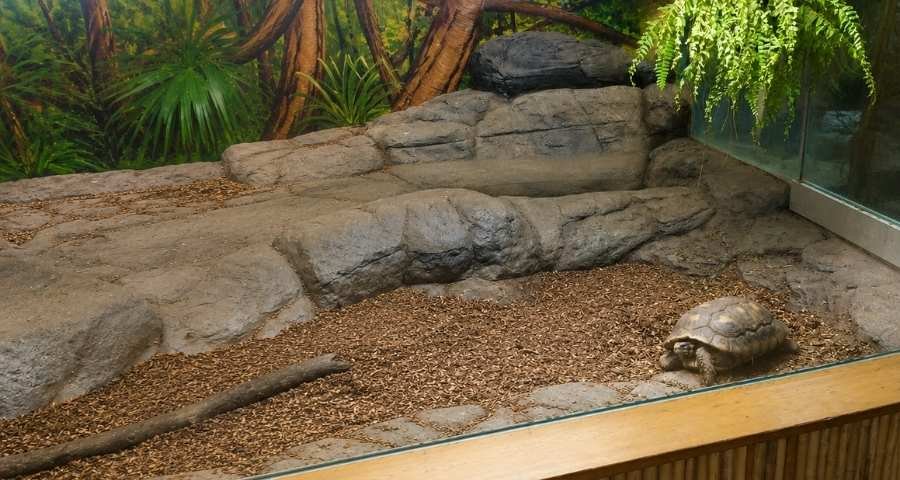
The Tortoise at Edmonton Valley Zoo
Hours change dramatically by season, so this matters more than you might think.
Peak Summer Season (May 9 – September 7, 2026)
2026 Summer Hours:
Open daily
10 AM to 5 PM
Last admission is 4 PM (one hour before closing)
Summer is the best time to visit — animals are more active, all exhibits are running, weather is warm, and events like conservation talks and special animal presentations are held regularly. The animals are also often most active right when the gates open at 10 AM or during the final hour before closing.
Fall and Spring Shoulder Seasons
Operating days may be reduced during shoulder seasons, but the zoo maintains its 10 AM to 5 PM hours when open. Check the current zoo website to confirm operating days.
Winter Season (January to March)
2026 Winter Hours (January 5 – March 27, 2026):
Open Thursday through Sunday only (10 AM to 5 PM)
Closed Monday through Wednesday
This is one of the biggest surprises for winter visitors. If you're planning a mid-week winter visit, the zoo may be closed. Plan accordingly.
Year-Round Notes
The zoo is open 364 days a year — closed only on Christmas Day
Hours change seasonally, so always check the current website before your visit
The zoo hosts once-a-year free admission days — check the schedule if you want to plan around this.
advertisement
Edmonton Valley Zoo Admission (2026 Rates)
Admission is affordable, one of the best-value zoo experiences in Canada.
Approximate 2026 rates (confirm current pricing on the official website):
Child (Ages 2–12): around $10.50
Youth (Ages 13–17): around $13.50
Adult (Ages 18–64): around $16.95
Senior (Ages 65+): around $13.75
Tot (0–23 months): Free
Annual Membership: Available with unlimited admission for one year
Money-Saving Tips
Annual Membership: If you plan to visit more than 2–3 times per year, an annual pass pays for itself quickly. Members also get:
Free admission during regular hours for a year
Discounts at participating zoos across Canada and the US (Greater Vancouver Zoo, Calgary Zoo, and others)
10% off at the Zootique gift shop (in-store only)
Access to members-only events and opportunities
2-for-1 Alberta Deal: In some years, the zoo offers a promotion where Alberta residents can purchase admission and get free entry to the nearby Muttart Conservatory (Edmonton's famous glass pyramids). Check the official website for current promotional deals.
Once-a-Year Free Admission Day — Watch for the annual free admission day. It gets busy, but it's a great way to visit.
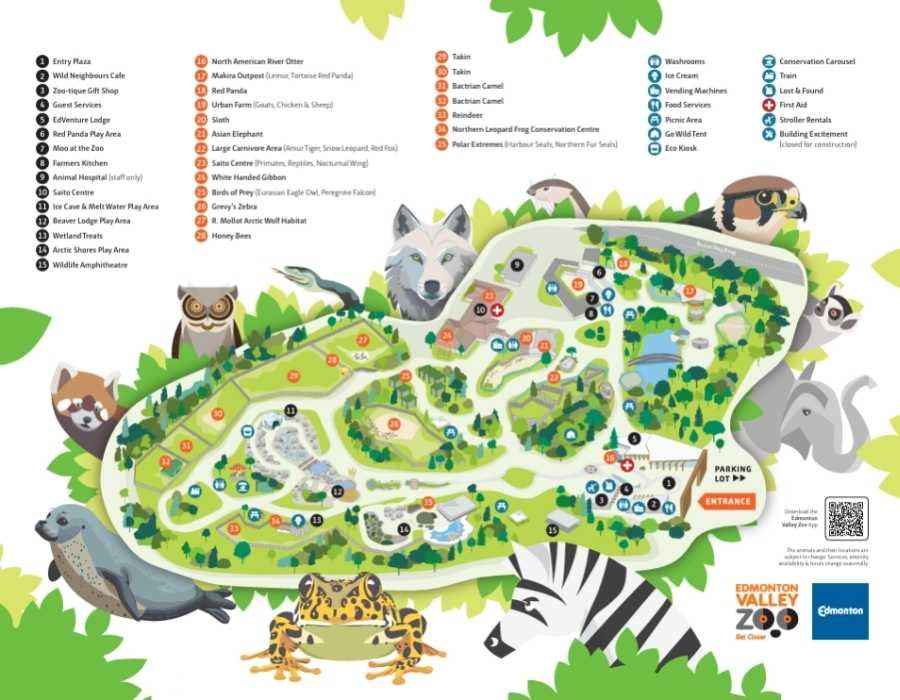
Edmonton Valley Zoo Map
Edmonton Valley Zoo map
Edmonton Zoo Special Activities and Events
The zoo hosts several ongoing activities during regular operating hours.
Daily Animal Talks and Feeding Times
Zoo staff give daily animal talks where you can meet and learn about specific species. Times are posted on the zoo's official app and information boards near the entrance.
The Zoo App
Download the official Edmonton Valley Zoo app for real-time updates on:
Animal talks and feeding times
Which animals are most active
Special events happening that day
Zoo maps
The app is your best friend if you want to time your visit to see specific animals at their most active.
Conservation Talks
The zoo hosts conservation talks on the first Thursday of every month during regular hours. General admission includes access.
Farmers Market (Summer Only)
Every Tuesday during summer, the Edmonton Valley Zoo Farmers Market runs from noon to 6 PM in the new entry plaza. Admission to the market is free — you don't need zoo admission to visit.
Sensory-Inclusive Site
The zoo is a designated sensory-inclusive site. If crowds or noise are overwhelming for you or a family member, you can borrow sensory bags at guest services. Bags include:
Noise-cancelling headphones
Fidget tools
Other sensory accommodations
Conservation Carousel
A charming ride designed with 100% of proceeds going to conservation programs supported by the zoo. Each carousel animal represents an endangered species that lives at the zoo, making it a fun and educational experience for kids.
Requirements: Riders must be under 50 inches (127 cm) in height
Cost: Free (donations for conservation accepted)
Miniature Train
A small train that circles part of the zoo grounds — a fun way to give kids a break from walking and see the zoo from a different angle.
Cost: Free with admission
Location: Near the camel exhibit
Hours: Daily, 10 AM–5 PM
Edmonton Zoo Dining Options
The Edmonton Valley Zoo offers casual dining options where you can enjoy snacks, beverages, and family-friendly meals during your visit. You'll typically find favourites such as burgers, sandwiches, fries, ice cream, coffee, and kid-friendly options.
If you prefer, you can bring your own lunch and enjoy it in one of the zoo's picnic areas. After your visit, you'll also find a variety of cafés and restaurants just a short drive away in Laurier Heights, Whyte Avenue, and downtown Edmonton.
Parking at Edmonton Valley Zoo
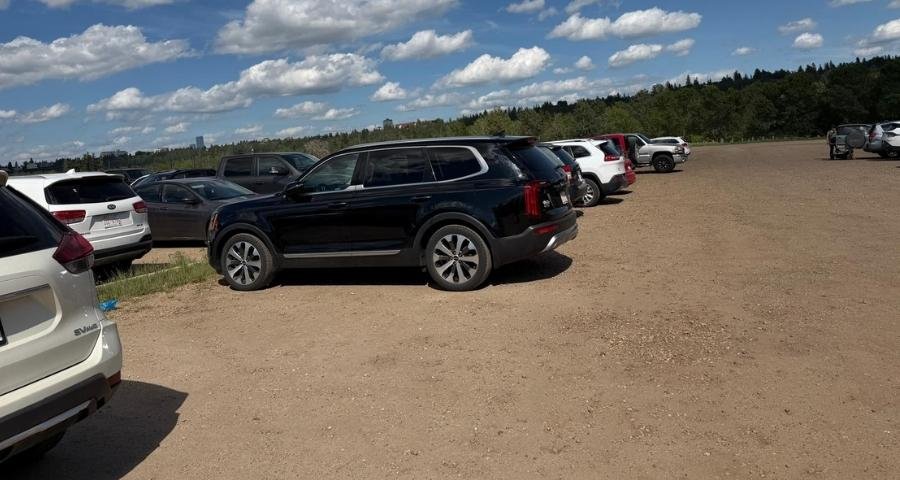
Edmonton Zoo Parking is free and big
A dedicated parking lot is located just outside the Edmonton Valley Zoo entrance, with accessible parking spaces available for visitors with valid permits. Parking fees may apply, so it's a good idea to check the latest information before you visit.
During weekends, holidays, and the busy summer season, the parking lot can fill up quickly. Arriving early or taking Edmonton Transit Service (ETS) are great ways to avoid parking delays.
Practical Tips for Your Visit
A few honest tips from years of visits.
Arrive between 10:30 AM and noon for the best experience. Animals are most active early. The zoo closes at 5 PM daily, and last admission is 1 hour before closing.
Check the website before you go. Private events, special closures, and seasonal hour changes can affect your visit.
Reserve timed entry online. During busy periods, reserving your entry time online guarantees your slot and speeds up entry.
Download the zoo app. It has real-time information about animal talks, feeding times, and special events.
Wear comfortable walking shoes. The zoo is spread out over a fairly large area, and you'll be walking a lot.
Bring water and snacks. The zoo has food options but bringing your own is more affordable and convenient for kids.
Dress in layers. Summer days in Edmonton can vary. Winter visits require warm gear.
Bring a stroller for young kids. The zoo is stroller-friendly, and small children get tired fast.
Plan for at least 2–3 hours. Rushing through the zoo takes away from the experience. Longer visits let you enjoy multiple animal talks and take breaks.
Support conservation efforts. The Zootique gift shop, carousel donations, and admission fees all support zoo conservation programs.
Attractions Near Edmonton Valley Zoo
Since you're already in the River Valley, here are some other places to combine with your zoo visit.
Sir Wilfrid Laurier Park: The park surrounding the zoo has walking trails, picnic areas, and playgrounds. Great for extending your day outdoors.
Fort Edmonton Park: (about 10 minutes' drive) — Canada's largest living history museum, featuring recreated streets from different eras of Edmonton's history.
Whitemud Amusement Park: (about 15 minutes' drive) — A family-friendly amusement park with rides, mini golf, and go-karts.
Kinsmen Park and the John Janzen Nature Centre: Nature trails, a beach on the North Saskatchewan River, and interactive nature exhibits.
Downtown Edmonton and the Alberta Legislature: (about 15 minutes' drive) — For visitors wanting to combine the zoo with more urban Edmonton attractions.
Who Is the Edmonton Valley Zoo Best For?
Families with young children: Absolutely. The petting zoo, carousel, miniature train, and manageable size make it perfect for families with kids ages 2 to 12.
Adults on a nature outing: Yes. The River Valley setting, thoughtful exhibits, and educational programming appeal to adults too.
Photography enthusiasts: The zoo offers beautiful photo opportunities, especially of the snow leopards, red pandas, and the tigers.
Nature and conservation lovers: The zoo's focus on conservation and educational programming will resonate.
Visitors expecting a mega-zoo like San Diego or Toronto: Manage your expectations. The Edmonton Valley Zoo is smaller than the Calgary Zoo; the Calgary Zoo has more exhibits, more animal species, larger habitats, and more attractions overall. The Edmonton Valley Zoo is more of a "half-day experience" than an "all-day adventure." Some exhibits are older. If you're comparing the two, Calgary Zoo has more scale, while Edmonton Valley Zoo has a quieter, more intimate feel and a stronger river valley setting.
Final Thoughts: Edmonton Valley Zoo — Small, But Worth the Visit
After many visits to the Edmonton Valley Zoo, my honest verdict is that this is one of the best-value zoo experiences in Canada — as long as you know what to expect.
It's not the biggest zoo in Canada. It's not the flashiest. But it's genuinely well-designed, focused on conservation, and beautifully situated in Edmonton's River Valley. The snow leopards and red pandas alone are worth the visit, and the setting itself is peaceful and green.
Just do yourself a favour and check the website before you go. Note the 5 PM closing time and 4 PM last admission. Book your entry online if possible. Bring your kids on a Saturday morning before the crowds pick up. And plan to spend a slow morning or afternoon here — not a rushed hour.
Frequently Asked Questions
Where is the Edmonton Valley Zoo located?
The Edmonton Valley Zoo is located at 13315 Buena Vista Road in Sir Wilfrid Laurier Park, in Edmonton's West End River Valley. From downtown Edmonton, it's about a 15-minute drive.
How much does it cost to go to the Edmonton Zoo?
Admission is affordable: approximately $16.95 for adults, $13.75 for youth and seniors, $10.50 for children (2–12), and free for tots under 24 months. Annual memberships offer unlimited admission for a year and are great value for locals. Check the official website for current pricing.
What time does the Edmonton Valley Zoo close?
The Edmonton Valley Zoo closes at 5 PM daily. Last admission is one hour before closing time (4 PM). Always check the current hours on the official City of Edmonton website before your visit — hours are consistent year-round, but the operating days can change seasonally.
Is the Edmonton Valley Zoo open in winter?
Yes, but with reduced operating days. During the winter season (typically January through late March), the zoo is open Thursday through Sunday, 10 AM to 5 PM, and closed Monday through Wednesday. Always confirm current operating days before a winter visit.
Should I book Edmonton Valley Zoo tickets online?
Yes, booking timed entry online through the City of Edmonton's Move Learn Play platform is highly recommended. It guarantees your entry slot, speeds up entrance, and lets you reserve up to two weeks in advance. Online purchases must be made before the zoo's operational hours for that day.
Is Lucy still at the Edmonton Valley Zoo?
Yes, as of 2026, Lucy the Asian elephant is still living at the Edmonton Valley Zoo. Lucy was orphaned in Sri Lanka and brought to the zoo on May 19, 1977, at approximately two years old. She celebrated her 50th birthday on July 1, 2025.
How many animals are in the Edmonton Valley Zoo?
The Edmonton Valley Zoo is home to over 250 exotic and native animals from more than 100 different species. Notable residents include snow leopards, Amur (Siberian) tigers, Arctic wolves, red pandas, ring-tailed lemurs, red-fronted lemurs, North American river otters, Asian elephant Lucy, farm animals in the petting zoo, birds of prey, and many more. It's an accredited zoo (CAZA-accredited) with active conservation programs supporting endangered species around the world.
Is the Edmonton Valley Zoo family-friendly?
Very. With a petting zoo, conservation carousel, miniature train, sensory-inclusive amenities, and a manageable size perfect for young children, it's one of the most family-friendly attractions in Edmonton.
Is there free parking at the Edmonton Valley Zoo?
Edmonton Zoo's parking is free; it is a large lot right outside the entrance. On busy summer weekends, arrive earlier in the day to avoid parking hassles.
How long should you spend at the Edmonton Valley Zoo?
Plan for 2 to 3 hours for a complete visit. Rushing through takes away from the experience. If you want to include lunch, animal talks, and time on the carousel and train, allow up to 4 hours.
Is the Edmonton Valley Zoo smaller than the Calgary Zoo?
The Edmonton Valley Zoo is noticeably smaller than the Calgary Zoo. Calgary Zoo has more animal exhibits, more species, larger habitats, and a bigger overall footprint. Edmonton Valley Zoo is more compact and better suited to a half-day visit than a full day. However, Edmonton Valley Zoo has a quieter atmosphere, a beautiful river valley setting, and lower admission prices, making it a great local option for families with young kids. If you're a visitor to Alberta and can only pick one, Calgary Zoo has more overall variety, but Edmontonians and visitors already in Edmonton will find the Valley Zoo well worth the trip.
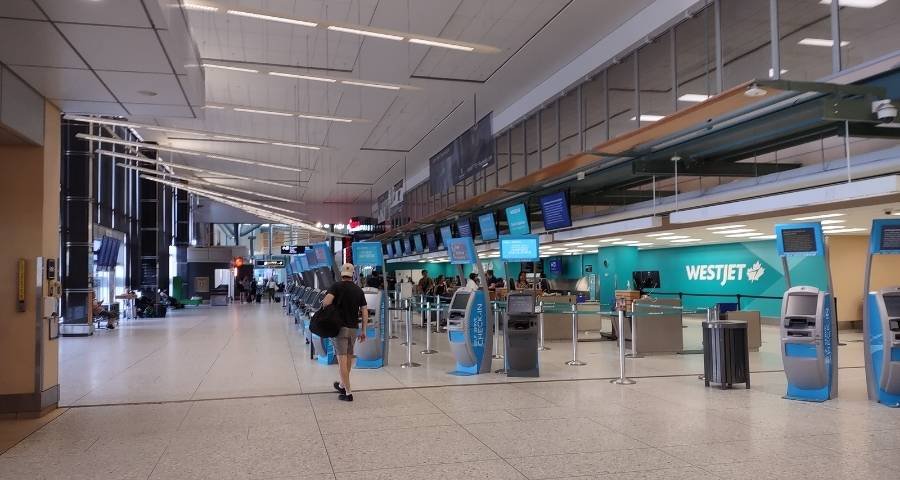
If you're flying into Alberta, there's a strong chance you're landing at YYC: Calgary International Airport.
It's Alberta's biggest airport, the fourth-busiest airport in Canada, and the main gateway to the Canadian Rockies, the Calgary Stampede, the badlands of southern Alberta, and dozens of smaller destinations across the province. With over 19 million passengers passing through annually, YYC is also the main hub for WestJet and a focus city for Air Canada.
For first-time visitors and seasoned travellers, the airport can feel a little overwhelming on first arrival. Two terminals, six concourses, multiple parking options, dozens of airlines, and a sprawling 5,140-acre footprint, it's a lot to navigate. The good news is that once you know the layout and the basics, YYC is one of the easier major airports in Canada to use.
This guide walks you through everything you need to know, where the airport is, how to get there, which airlines fly from YYC, where they fly to, parking, transportation, hotels, lounges, and the honest tips that will make your trip smoother. Let's get into it.
YYC is about 17 km northeast of downtown Calgary, in the northeast quadrant of the city. The official address is 2000 Airport Road NE, Calgary, Alberta.
The airport is approximately 18 minutes by car from downtown Calgary in good traffic. From the major Calgary highways:
Trans-Canada Highway (Highway 1): About 20–25 minutes
Deerfoot Trail (Highway 2): Direct connection to the airport, about 15 minutes from downtown
From Banff: About 1 hour 30 minutes (135 km west on Highway 1)
The airport covers 20.82 square kilometres and has three runways, including two parallel north-south runways and one intersecting runway.
A Quick Look at YYC's Story
Calgary's airport history dates back to the late 1930s, when the original airfield was constructed. The current facility has been continuously expanded since then to keep pace with the city's growth.
A major milestone came in 2016 with the opening of the new International Terminal, expanding the airport's capacity for international and U.S. transborder flights. This expansion doubled YYC's international capacity and added the now-iconic glass-walled terminal that's the first sight for many international arrivals.
YYC has become particularly important as WestJet's main hub, with the Calgary-based airline operating its largest concentration of flights from here. The airport has also weathered some notable moments in aviation history — including diverting 13 international flights during the September 11, 2001 attacks as part of Operation Yellow Ribbon, when international air traffic was grounded across North America.
How to Get to Calgary International Airport
Several transportation options connect YYC to downtown Calgary and the wider region.
Driving Yourself
The most popular option. From downtown Calgary, take Deerfoot Trail (Highway 2) north to the airport exit. The drive is about 18 minutes in good traffic, up to 30 minutes during rush hour.
Taxis
Available at the arrivals level of both terminals. A trip from YYC to downtown Calgary typically costs $40–$45. Taxis are reliable and operate 24/7.
Rideshare (Uber and Lyft)
Both Uber and Lyft operate at YYC. Pickup locations are clearly marked on the arrivals level. Rates are typically similar to or slightly cheaper than taxis, depending on demand and time of day.
Public Transit
Calgary Transit runs buses to and from YYC:
Route 300 BRT (Airport/City Centre) — the express route directly to downtown Calgary. Recent fare reductions mean a ride costs just $3.60 (with free transfers up to 90 minutes), making it one of the most affordable airport-to-downtown options in any major Canadian city.
Route 100 — connects YYC to the Saddletowne LRT Station and North Pointe Bus Terminal, providing transfers to the wider Calgary CTrain network.
Bus stops are located at the arrivals level of both terminals.
Airport Shuttles
Multiple shuttle companies run regular service between YYC and destinations across Alberta:
Calgary International Airport has two main passenger terminals connected by a walkway and shuttle system. Understanding the layout makes everything easier.
Domestic Terminal
The older terminal was originally opened in 1977. This is where flights to and from other Canadian cities depart and arrive. The Domestic Terminal has three concourses (A, B, C) and handles all domestic operations.
First floor: Arrivals
Second floor: Departures, gates, check-in desks
Mezzanine level: Restaurants and airline offices
International Terminal
The newer terminal, opened in 2016. This handles all U.S.-bound flights (Concourse E) and international flights to all other countries (Concourse D). The terminal features the airport's iconic glass design.
First floor: Arrivals
Second floor: International departures (Concourse D)
Third floor: U.S. transborder departures (Concourse E)
Concourse Quick Reference
Concourse A — WestJet flights mainly
Concourse B — Mixed domestic carriers
Concourse C — Mostly Air Canada
Concourse D — International departures (non-U.S.)
Concourse E — U.S. transborder flights (with U.S. pre-clearance)
Getting Between Terminals
The terminals are connected airside, meaning you can walk from a domestic gate to an international gate without going back through security — except for U.S.-bound flights, which require pre-clearance at Concourse E.
The YYC Link Passenger Shuttle runs between Concourses A, C, and D/E in a continuous loop. It operates from approximately 6 AM to 1 AM and is free for ticketed passengers.
For tight connections, factor in 30 to 45 minutes to navigate between concourses.
Airlines and Destinations From YYC
YYC is one of Canada's best-connected airports, served by approximately 15 major airlines flying to over 30 domestic destinations and around 50 international destinations across the U.S., Latin America, Europe, and Asia.
Major Canadian Airlines at YYC
WestJet — YYC is WestJet's main hub. The airline offers the largest selection of flights from Calgary, including direct service across Canada and to multiple international destinations.
Air Canada — One of the major carriers at YYC, offering flights to domestic Canadian destinations and select international routes through their Star Alliance network.
Flair Airlines — Budget carrier with growing service from YYC to various Canadian cities and select U.S. destinations.
Porter Airlines — Growing presence at YYC with flights to eastern Canada.
WestJet Encore — WestJet's regional carrier serving smaller Canadian cities.
International Airlines Serving YYC
Air Canada (international routes)
British Airways — direct service to London Heathrow
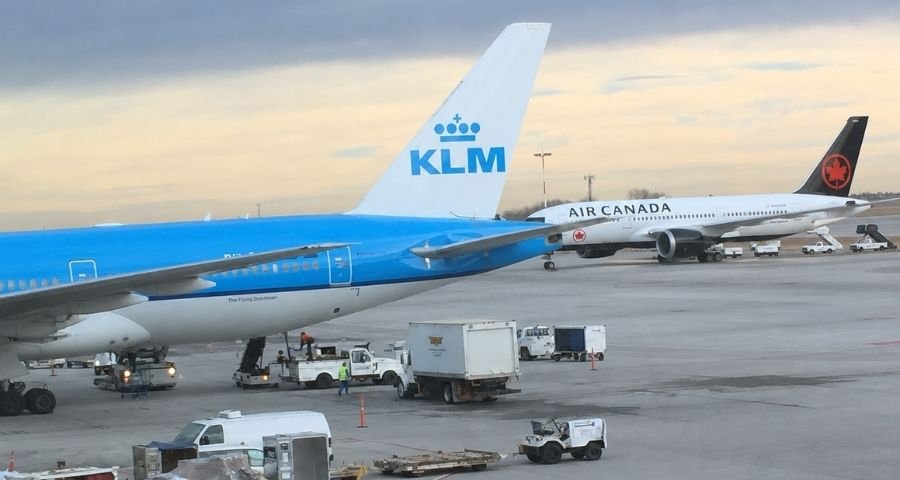
KLM Royal Dutch Airlines — direct service to Amsterdam
Lufthansa — direct service to Frankfurt
Air France — direct service to Paris (seasonal)
WestJet (international routes)
United Airlines, American Airlines, Delta Air Lines — major U.S. routes
Air Transat — primarily leisure and seasonal routes
Sunwing and WestJet Vacations — seasonal sun destinations
Destinations You Can Fly Direct From YYC
YYC offers direct flights to:
Across Canada — including Toronto, Vancouver, Montreal, Edmonton, Winnipeg, Halifax, and most major Canadian cities
Across the United States — major hubs like Los Angeles, San Francisco, Las Vegas, Denver, Chicago, Minneapolis, Seattle, Dallas, Phoenix, Houston, and more
Europe — direct flights to London, Amsterdam, Frankfurt, Paris (seasonal), and select other European cities
Mexico and the Caribbean — many sun destinations, including Cancun, Puerto Vallarta, and the Dominican Republic
Asia — direct flights to Tokyo and other major Asian destinations (routes vary)
Latin America — select destinations including Mexico City
Important note: Specific routes, schedules, and seasonal service change regularly. For current flight information, always check the official YYC website at yyc.com or the individual airline's website before booking.
Parking at Calgary International Airport
YYC has several parking options at different price points. Rates change periodically — confirm current pricing on yyc.com before your trip.
Parking Options
Economy Parking — the cheapest long-term option, located further from the terminals with shuttle service. Best for stays of multiple days.
Daily Parking — mid-tier option, closer to the terminals.
Short-term Parking — for pickups, drop-offs, and very short stays.
Premium Parking and Valet — fastest in-and-out options at premium prices.
Approximate Parking Rates (Subject to Change)
Economy Lot: approximately $14–$18 per day
Daily Parking: approximately $24–$30 per day
Short-term (under 1 hour): approximately $4–$8
Valet: approximately $45+ per day
Parking Tips
Book ahead online. YYC offers online parking reservations, often at discounted rates.
Check yyc.com for current rates. Prices update periodically.
Look for off-airport options. Private parking lots around the airport (Park 'N Fly, etc.) offer shuttle service and sometimes lower rates.
For long trips, consider rideshare or shuttles. Multi-day parking can quickly add up.
Lounges at YYC
Several lounges operate at Calgary International Airport.
Domestic Terminal Lounges
WestJet Elevation Lounge — WestJet's flagship lounge (the only one in Canada). Located at Concourse B. Accessible to WestJet and Delta elite members, business class passengers, and Priority Pass and DragonPass members (with restrictions). Open daily 5 AM to 10:30 PM.
Air Canada Maple Leaf Lounge — Located near Gate 50 at Concourse C. Open daily 4:30 AM to 12:30 AM. Accessible airside from the International Terminal as well.
International Terminal Lounges
Plaza Premium Lounge — At Concourse D for international departures.
Aspire Lounge — A popular open-to-all option in Concourse D, accessible with various lounge memberships and to any travellers willing to pay.
U.S. Transborder Lounge — At Concourse E for U.S.-bound passengers (after pre-clearance).
Most lounges have showers, Wi-Fi, food and beverages, and quiet workspaces.
Hotels at and Near YYC
YYC offers two in-terminal hotels plus dozens of nearby hotels with shuttle service.
In-Terminal Hotels
Calgary Airport Marriott In-Terminal Hotel — Located in the International Terminal, directly accessible from baggage claim. Features include 24/7 fitness centre, an indoor pool, and Yakima Social Kitchen + Bar.
Delta Hotels by Marriott Calgary Airport In-Terminal — Located near the Domestic Terminal, accessible via skyway. Features include soundproof windows, an indoor pool, a fitness centre, and two on-site restaurants.
Both are ideal for early morning flights, late arrivals, or layovers where you don't want to leave the airport.
Nearby Hotels with Shuttle Service
Many hotels are located within 5 to 15 minutes of YYC and offer free airport shuttles, including:
Hilton Garden Inn Calgary Airport
Coast Plaza Hotel & Conference Centre
Holiday Inn & Suites Calgary Airport
Comfort Inn & Suites Calgary Airport
Carriage House Hotel and Conference Centre
Sandman Hotel Calgary West
Best Western Plus Airport
Wingate by Wyndham Calgary Airport
These are typically cheaper than in-terminal hotels and work well for travellers with morning flights or visitors stopping in Calgary briefly.
Restaurants and Shopping at YYC
YYC offers plenty of dining and shopping options throughout both terminals.
Restaurants Inside the Airport
You'll find a mix of fast-casual, Canadian chains, and sit-down restaurants. Notable options include:
Stir Crazy — Asian fusion
Open Wood Pizza Co. — wood-fired pizzas
Earl's Kitchen + Bar — popular Canadian chain
Brewsters Brewing Company — local Alberta brewery
Tim Hortons — multiple locations (the Canadian classic)
Starbucks — multiple locations
Sushi Bistro, A&W, Subway, and various other quick-service chains
Newsstands and grab-and-go markets
Shopping
The airport features Canadian and international retail, including:
Hudson's Bay Company duty-free — Canadian icons, souvenirs, premium liquor
Taylor & Colt — haircuts and hot shaves in the Domestic Terminal
Self-serve massage chairs are scattered throughout for a small fee
Luggage storage and lockers on the arrivals level (boarding pass and photo ID required)
Safe Bag packing service for protective wrapping of luggage, strollers, or bicycles
Currency exchange and ATMs in both terminals
Charging stations throughout
Tips for Flying Out of YYC
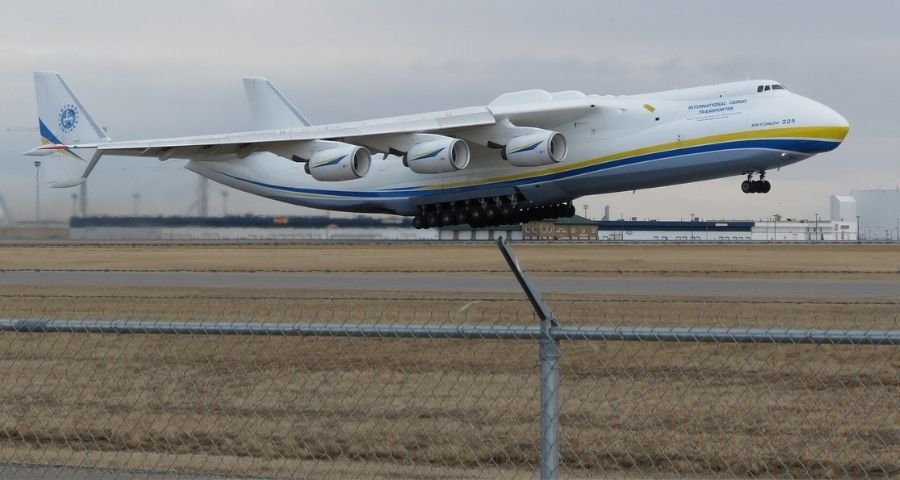
Antonov AN-225 plane taking off at YYC
Arrive earlier than you think. For domestic flights, give yourself 2 hours minimum. For international flights, 3 hours minimum. For U.S. transborder flights, 3 hours minimum because of pre-clearance.
Use YYC Express for security. YYC Express is a free service that lets you schedule your security screening time in advance, putting you at the front of the line on arrival. Available through the YYC website.
Pre-clear for U.S. flights at YYC. Flights to the U.S. require pre-clearance through U.S. Customs and Border Protection at Concourse E before you board. Allow extra time.
WestJet flyers — head to Concourse A early. Security lines for WestJet can get long during peak hours. Local tip from frequent flyers.
Tight connections? Use YYC Link. The free shuttle between concourses saves significant walking time.
Download the YYC app. The official app offers real-time flight updates, terminal maps, parking reservations, and security wait times.
Fly out at off-peak times if you can. Mid-morning weekday flights typically have shorter security lines than early mornings or evenings.
Have your passport ready for international. For international flights, have your passport, boarding pass, and any required documentation organized before reaching security.
Tips for Arriving at YYC
A few tips for travellers landing at Calgary.
Have transportation pre-arranged if possible. Especially if you're heading directly to Banff, the Rockies, or other destinations outside Calgary — book your rental car, shuttle, or rideshare in advance.
Tourist information is available at arrivals. Visit the Travel Alberta information kiosk near baggage claim for maps, brochures, and current visitor information.
Free Wi-Fi is available throughout the airport. No password required.
Currency exchange is available if you've arrived without Canadian dollars. ATMs are typically cheaper than exchange kiosks.
SIM cards for international visitors are available at retail outlets in the airport.
Customs and immigration: All international arrivals must clear Canadian immigration and customs before exiting. Have your passport, declaration card, and any required documentation ready.
YYC at a Glance
Feature
Details
Code (IATA / ICAO)
YYC / CYYC
Location
Northeast Calgary, 17 km from downtown
Address
2000 Airport Road NE, Calgary, AB
Phone
1-877-254-7427
Website
yyc.com
Annual passengers
Over 19 million
Runways
3
Terminals
2 (Domestic + International)
Concourses
5 (A, B, C, D, E)
Main carriers
WestJet (hub), Air Canada (focus city)
Domestic destinations
30+
International destinations
50+
Time zone
Mountain Time (UTC-7 / UTC-6 DST)
Final Thoughts: YYC Is One of Canada's Most Manageable Major Airports
After all the flights through YYC over the years, the one thing I'd say to first-time visitors is this — don't stress about the airport itself. Calgary International is one of the more navigable major airports in Canada. The terminals are well-marked, the concourses are connected, the staff are friendly, and most processes (security, customs, baggage) move efficiently.
If you're flying into Calgary for a Canadian Rockies trip, take a moment to enjoy the airport before heading out. The international terminal especially, is genuinely beautiful, and the mountains are visible from many of the gates on clear days — a hint of the spectacular scenery waiting for you just 1.5 hours west.
For more guides on visiting Calgary, the Canadian Rockies, and the rest of Alberta, keep exploring AlbertaTourist.com. We're here to help you make the most of every trip to the province.
Frequently Asked Questions
Where is Calgary International Airport?
YYC is located at 2000 Airport Road NE, approximately 17 km northeast of downtown Calgary. From downtown, it's about an 18-minute drive via Deerfoot Trail (Highway 2).
What does YYC stand for?
YYC is the IATA airport code for Calgary International Airport. There's no specific meaning behind the letters. Canadian airport codes traditionally start with "Y" as a holdover from early aviation conventions. The airport has embraced the code and uses "YYC" as its primary branding.
How long does it take to drive to Banff from Calgary Airport?
About 1 hour 30 minutes (135 km west on Highway 1).
Can you fly direct from Calgary to Europe?
Yes, YYC offers direct flights to multiple European destinations, including London (British Airways), Amsterdam (KLM), Frankfurt (Lufthansa), Paris (Air France, seasonal), and other cities. WestJet and Air Canada also operate select European routes. Specific destinations and seasonal service change — check the official YYC website for current schedules.
How much does parking cost at YYC?
Approximate rates: Economy parking $14–$18/day, Daily parking $24–$30/day, Short-term $4–$8/hour, Valet $45+/day. Rates change periodically. Please confirm current pricing on yyc.com. Booking online ahead of time can save money.
Is there a shuttle between YYC and downtown Calgary?
Yes, Calgary Transit Route 300 BRT runs directly between YYC and downtown Calgary, with rides costing just $3.60 with free transfers up to 90 minutes. Taxis, Uber, Lyft, and hotel shuttles are also available.
Are there hotels at Calgary International Airport?
Yes, two in-terminal hotels: the Calgary Airport Marriott In-Terminal Hotel (in the International Terminal) and the Delta Hotels by Marriott Calgary Airport In-Terminal (near the Domestic Terminal). Both are accessible without leaving the airport. Many additional hotels nearby offer shuttle service.
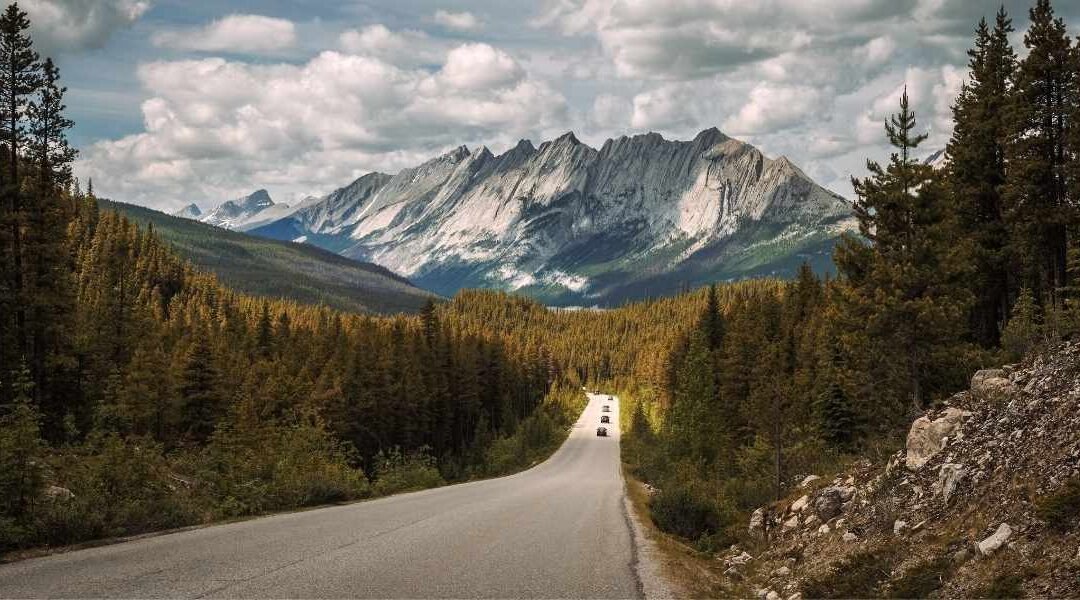
If you only have time for one short hike on the Icefields Parkway, make it Mistaya Canyon. I say that as someone who's driven the Icefields Parkway many times. There are bigger lakes, more dramatic glaciers, and more famous photo spots along the way — but none of them give you so much beauty for so little effort. The walk from the parking lot to the bridge takes about 10 minutes. The canyon itself is loud, dramatic, and genuinely surprising. And it's almost always less crowded than the other major Icefields Parkway stops.
If you're driving between Banff and Jasper, this is one of the easiest "must-stop" detours you can make. Here's everything you need to know — where it is, how to get there, what to expect on the trail, when to visit, and the safety details most guides skip.
What Is Mistaya Canyon?
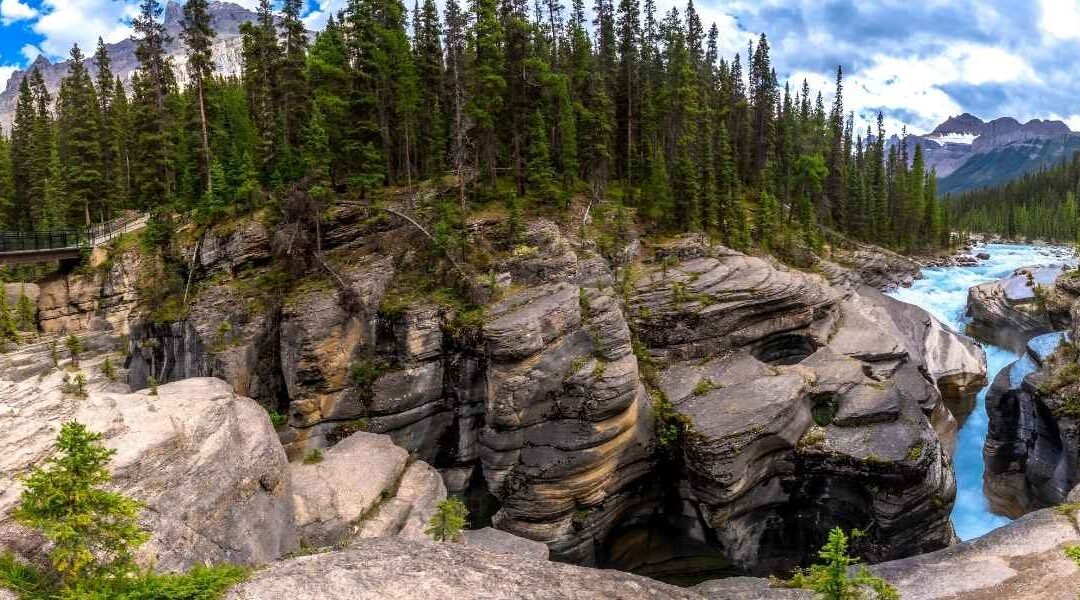
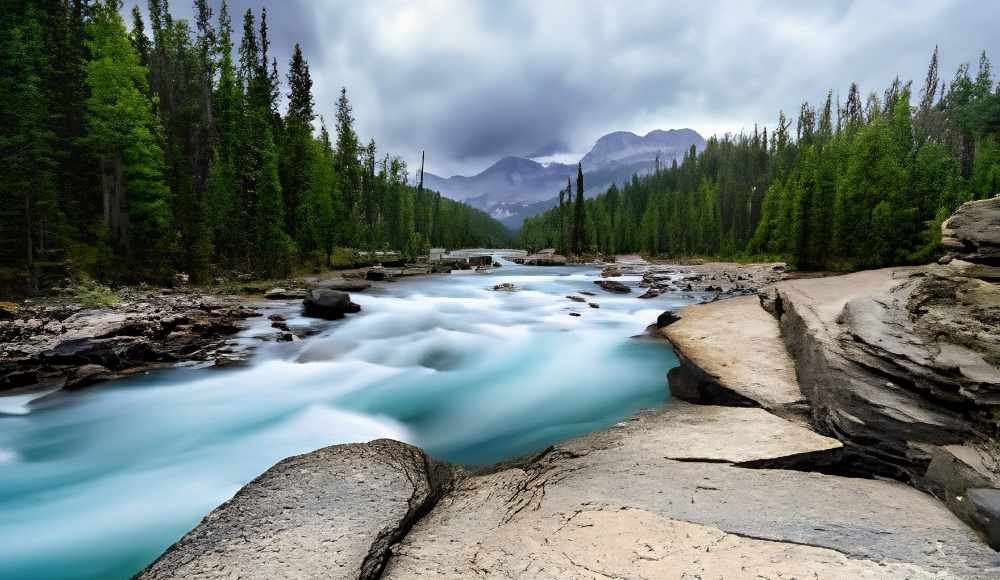
Mistaya Canyon is a narrow, deep slot canyon carved into limestone by the Mistaya River. The river starts at Peyto Lake, about 30 km to the south, then rushes north through this gorge before joining the North Saskatchewan River at Saskatchewan River Crossing.
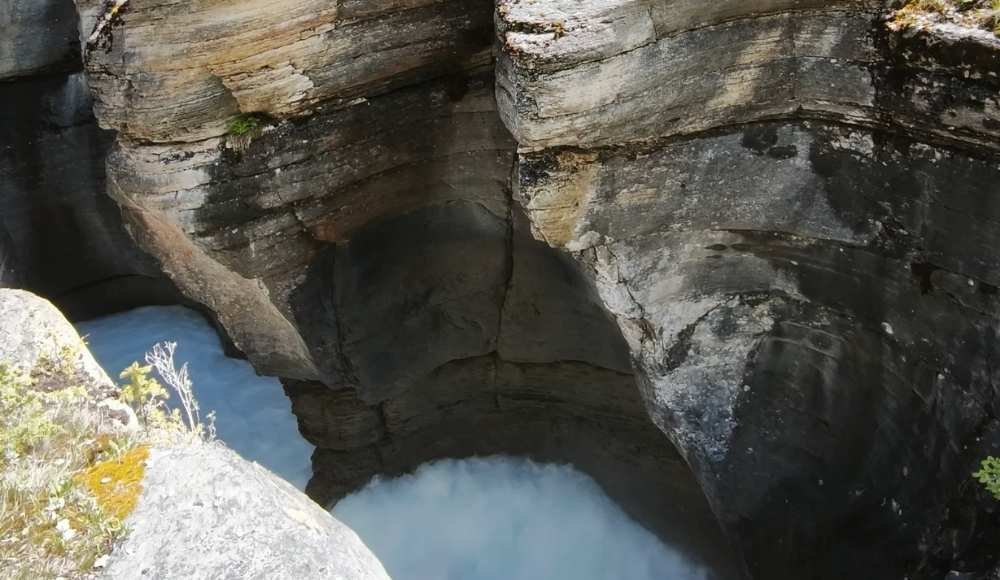
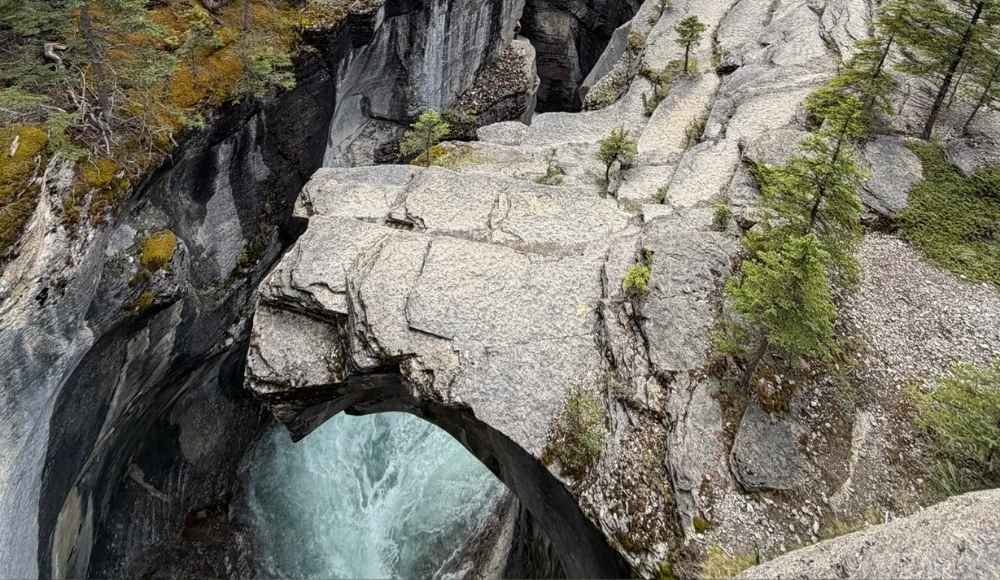
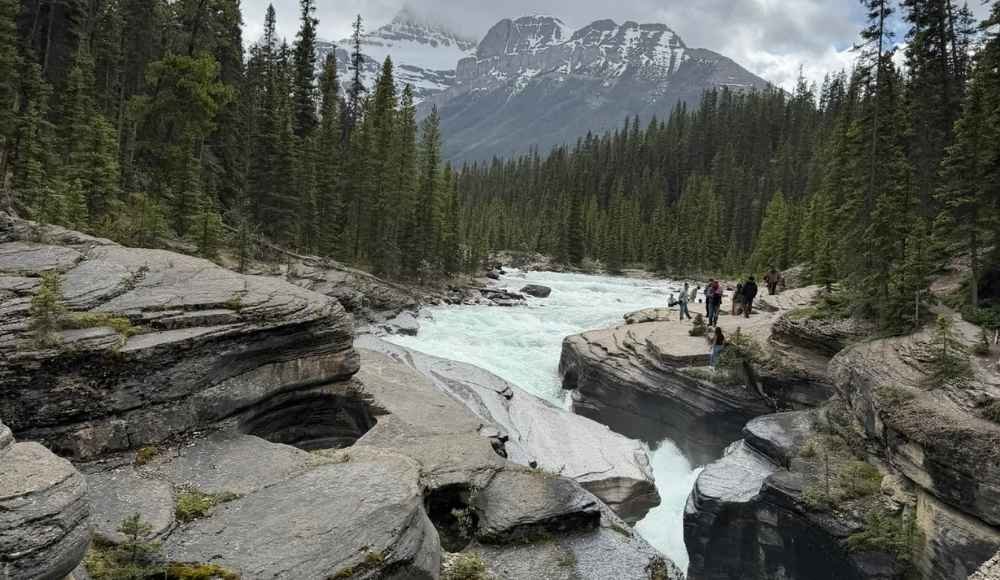
Over thousands of years, the swirling water has eroded the limestone into smooth, curving walls and round potholes. The result is a sculpted canyon that looks almost man-made. You're standing on a bridge above it, listening to the river roar 20 metres below, and the whole thing feels weirdly intimate for somewhere this loud.
The name "Mistaya" comes from the Cree word for "grizzly bear."
Where Is Mistaya Canyon?
Mistaya Canyon is located along the Icefields Parkway (Highway 93 North) in northern Banff National Park, in Alberta, Canada. The exact location:
About 6 km south of Saskatchewan River Crossing
About 71 km north of the Lake Louise junction with the Trans-Canada Highway
Roughly the halfway point between Banff and Jasper if you're driving the full Icefields Parkway
The parking lot is on the west side of Highway 93 North.
How to Get There
From Banff: Head north on Highway 1 to the Lake Louise area, then take the exit for the Icefields Parkway (Highway 93 North). Continue north for about 71 km. The parking lot is on your left. Total drive: about 1 hour 45 minutes without stops.
From Lake Louise: Head north on Highway 93 (the Icefields Parkway) for about 71 km. The Mistaya Canyon parking lot is on your left. Total drive: about 1 hour without stops.
From Jasper: Head south on Highway 93 for about 158 km. Mistaya Canyon will be on your right, just past Saskatchewan River Crossing. Total drive: about 2 hours without stops.
From Calgary: About 3.5 hours total — drive west on Highway 1 to Lake Louise, then north on Highway 93 to Mistaya Canyon.
There's no public transit on the Icefields Parkway. You'll need a car or a guided tour.
The Mistaya Canyon Hike: What to Expect
Here's the honest breakdown of the trail.
Trail Stats
Distance: 0.5 km one way to the bridge (about 1 km return)
Optional longer loop: 1.8 km with 70 metres of elevation gain
Time to bridge: 10 minutes down, slightly longer back up
Total time at the canyon: 30 minutes to 1 hour
Difficulty: Easy to moderate (short but steep return)
Elevation: About 85 metres of elevation loss going down, same amount coming back
What the Trail Is Like
From the parking lot, you'll follow a wide gravel path through pine forest. The trail is well-marked, flat-ish, and easy to follow. After about 5 to 10 minutes of walking downhill, you'll reach a wooden bridge that crosses directly over Mistaya Canyon.
The bridge is the main viewpoint — and it's a good one. Looking down, you'll see the river thundering through the polished limestone walls. The depth is dramatic. The noise of the water is loud enough that you have to raise your voice to talk over it.
After the bridge, you have a few options:
Most people turn back here and head back to the car.
Cross the bridge and follow a small path down to the rocks beside the river. From here, you can see the canyon from below and get a different angle.
Continue the longer 1.8 km loop that takes you a little further into the forest before returning. Adds about 30 minutes.
What Most Visitors Get Wrong
The return walk back up to the parking lot is the hardest part. It's a short but steep uphill — nothing dangerous, but if you've been sitting in a car all day, you'll feel it. Take your time.
The other thing to know: the rocks beside the canyon are slippery and dangerous. There are no fences. Stay back from the edge, keep kids close, and resist the temptation to peer over for a better photo. Several people have died at Mistaya Canyon by getting too close.
The Icefields Parkway is open year-round, but Mistaya Canyon is best in different seasons for different reasons.
Summer (June to September) — Best Overall
Peak season. The trail is dry, the parking lot is open, and the river is at its most dramatic from early summer snowmelt. Expect more visitors, but rarely the overwhelming crowds you see at Lake Louise or Moraine Lake.
My honest tip: Visit before 10 AM or after 6 PM if you want quiet photos. Mid-day in July and August can get busy.
Fall (Late September to Mid-October) — Quietest
The crowds drop dramatically. The light turns golden in the afternoons. Some of the surrounding forests turn yellow. Trail conditions are usually dry until the first heavy snowfall.
Winter (November to April) — Magical but Risky
The trail is still accessible, and the frozen canyon is genuinely stunning. But it's also dangerous. The rocks are covered in ice. The trail down is steep. Microspikes are essential. Do not go past the bridge in winter conditions — the rocks beside the canyon are deadly when frozen.
Spring (Late April to May) — Skip If You Can
Early spring is the worst time to visit. Snowmelt makes the trail muddy and slippery. The canyon rocks are wet and dangerous. Wait until June if you can.
Parking at Mistaya Canyon
The Mistaya Canyon parking lot is a small dirt-and-gravel area on the west side of Highway 93 North. It holds maybe 20 to 25 vehicles, and the entrance comes up quickly as you drive — keep an eye on your odometer.
Parking Tips
Arrive early or late. The lot fills by late morning in peak summer.
Don't park on the highway. Parking along the Icefields Parkway is illegal and dangerous.
If the lot is full, continue north 6 km to Saskatchewan River Crossing, use the washrooms there, and come back later when traffic clears.
The lot is accessible year-round, but check Alberta 511 for road conditions in winter.
What You Need to Know Before You Go
A few practical things that will save you trouble.
You Need a Parks Canada Pass
To stop anywhere along the Icefields Parkway — including Mistaya Canyon — you need a valid Parks Canada Discovery Pass or a daily pass. Day passes run about $11 per adult in 2026. Buy online ahead of time to skip the gate line.
Facilities
At the parking lot: Vault toilets only. No drinking water.
Nearest washrooms with running water: Saskatchewan River Crossing, about 6 km north.
Nearest gas station and food: Saskatchewan River Crossing. Note that gas here is significantly more expensive than in Banff or Jasper. Fill up before you head out.
What to Bring
Sturdy closed-toe shoes with a good grip, the trail can be slippery
Water and snacks (none available at the trailhead)
A camera with a wide lens for the canyon and a zoom for the surrounding peaks
Bear spray if you plan to walk beyond the bridge (you're in bear country)
Microspikes in winter or early spring
A jacket — even in summer, the canyon mist makes it cool
Sun protection in summer
Safety Warnings
This is the part most guides don't take seriously enough. Mistaya Canyon has killed people.
Stay back from the edges. The rocks are slippery, and the canyon walls drop straight down. A fall would almost certainly be fatal.
Keep children close. Hold their hands or keep them well back from any unfenced areas.
The river is not safe for swimming or wading. The current is extremely strong.
Don't try to peer into the canyon anywhere except from the bridge. The bridge is a safe viewing point. Everywhere else, you risk a slip on wet limestone.
Always check for trail closures at the Parks Canada bulletin page before you go.
Mistaya Canyon vs Johnston Canyon vs Maligne Canyon
If you're trying to choose between the famous Banff and Jasper canyons, here's an honest comparison:
Feature
Mistaya Canyon
Johnston Canyon
Maligne Canyon
Location
Icefields Parkway
Bow Valley Parkway
Jasper National Park
Trail length
0.5 km one way
1.2-2.8 km one way
2-4 km loop
Difficulty
Easy
Easy
Easy
Crowds
Low
Very high
Moderate to high
Highlight
Slot canyon over bridge
Multiple waterfalls
Six bridges over a deep gorge
Best for
Quick stop, photographers
Families, waterfall lovers
Half-day hike, ice walks
Drive from Banff townsite
1 hr 45 min
25 minutes
4 hours
The short version: Mistaya is the easiest. Johnston is the most popular. Maligne is the most dramatic. If you're already on the Icefields Parkway, all three are worth visiting on different days.
Other Things to See Near Mistaya Canyon
Mistaya Canyon is a short stop, but you can chain together several other stunning Icefields Parkway destinations in the same trip. From south to north:
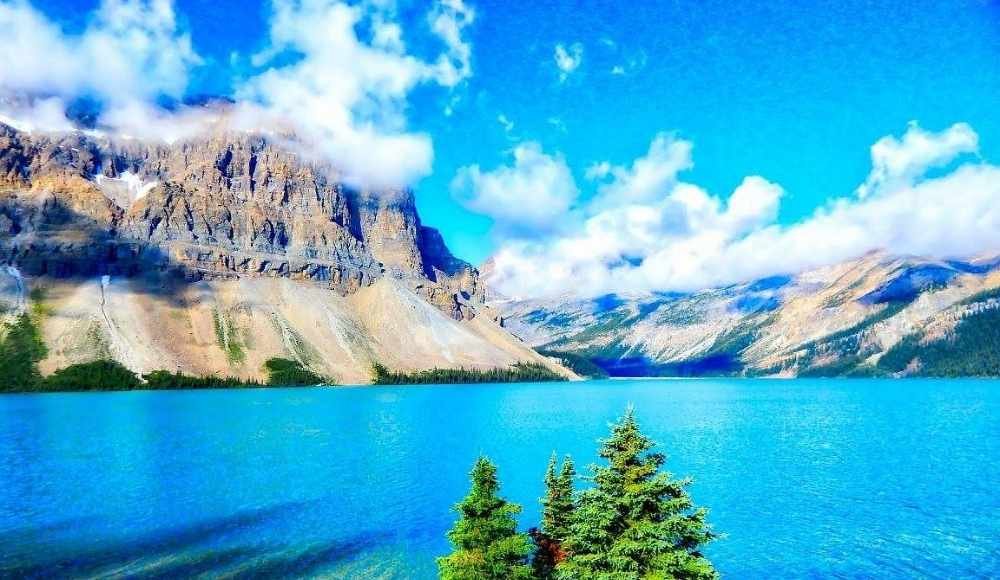
Bow Lake and Num-Ti-Jah Lodge (about 30 km south) — a turquoise glacier-fed lake with a historic red-roofed lodge
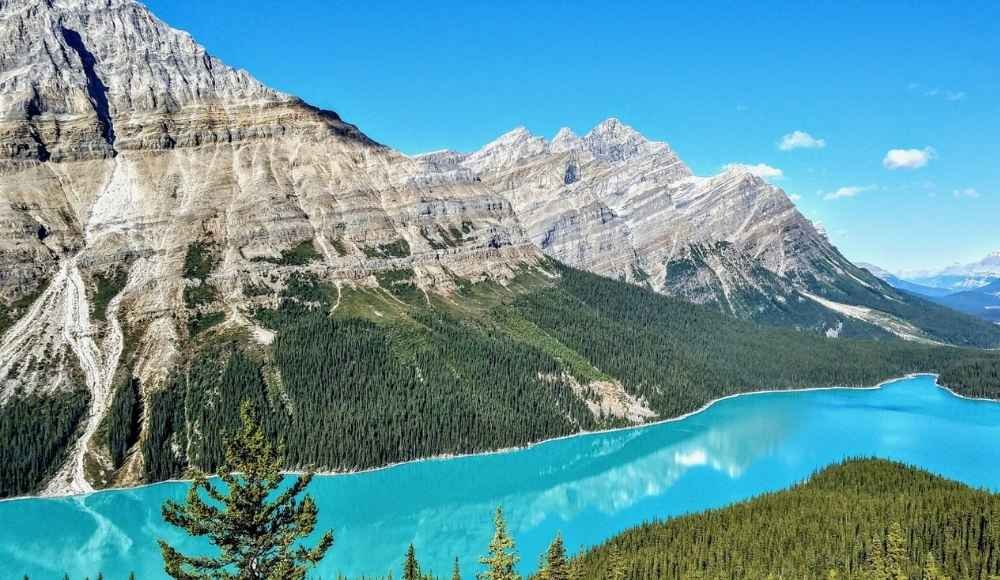
Peyto Lake Viewpoint (about 35 km south) — Alberta's most photographed lake, shaped like a wolf's head from above
Mistaya Lake (north of the canyon) — long, narrow lake with mountain reflections
Saskatchewan River Crossing (about 6 km north) — gas, food, washrooms, and the only commercial stop on the parkway
Howse River Trail (starts at the same parking lot) — a longer 4.5 km hike for adventurous travellers
Sarbach Lookout (also from the same parking lot) — a tough 5.2 km hike with 590 metres of climbing, but spectacular views
If you have a full day, you could comfortably visit Bow Lake, Peyto Lake, Mistaya Canyon, and Saskatchewan River Crossing all in one trip.
A Suggested Half-Day Itinerary Including Mistaya Canyon
If you want to make Mistaya Canyon part of a half-day Icefields Parkway loop from Lake Louise, here's a route that works.
8:30 AM: Leave Lake Louise heading north on Highway 93.
9:00 AM: Stop at Bow Lake for photos and a short walk along the shore.
10:00 AM: Continue to Peyto Lake Viewpoint. Walk the 1.5 km uphill path to the famous lookout.
11:30 AM: Drive to Mistaya Canyon. Park, walk the short trail, and take your photos.
12:30 PM: Lunch at Saskatchewan River Crossing (it's overpriced but convenient).
1:30 PM: Drive back to Lake Louise, stopping at any other viewpoints that catch your eye.
You'll be back at your hotel by 3 or 4 PM with a full day of memorable stops behind you.
Final Thoughts: Don't Skip Mistaya Canyon
Of all the stops on the Icefields Parkway, Mistaya Canyon gives you the most beauty for the least effort. The walk is short. The canyon is dramatic. The crowds are smaller than at the famous lakes. And it's one of the few spots where you can stand inches above a raging river without paying for a guided tour or working up a sweat.
If you're driving between Banff and Jasper, plan for at least a 30-minute stop here. Park your car, walk the short trail, take your photos from the bridge, and listen to the roar of the river. Then get back on the road and keep going. You'll be glad you didn't skip it.
For more guides on the Canadian Rockies — including the famous lakes, easy hikes, and full driving routes — keep exploring AlbertaTourist.com. We're here to help you discover the parts of Alberta most travellers never get to.
Frequently Asked Questions
How long is the Mistaya Canyon hike?
The trail to the bridge is about 0.5 km one way (so 1 km return). The full loop is about 1.8 km with 70 metres of elevation gain. Most visitors spend 30 minutes to 1 hour total.
Is Mistaya Canyon worth visiting?
Yes, absolutely. It's one of the easiest and most rewarding stops on the entire Icefields Parkway. The short trail, dramatic canyon, and relatively low crowds make it a must-do for anyone driving between Banff and Jasper.
How do you pronounce Mistaya?
Mistaya is pronounced "miss-TAY-uh" (with the emphasis on the second syllable). The name comes from the Cree word for "grizzly bear."
Is Mistaya Canyon family-friendly?
Yes, but with strong safety supervision. The trail is short and easy enough for kids, but the canyon edges are unfenced and dangerous. Keep small children close and hold their hands near any drop-offs.
Can you visit Mistaya Canyon in winter?
You can, but be cautious. The trail down to the bridge is accessible but icy — bring microspikes. Do not go past the bridge in winter; the rocks beside the canyon are deadly when frozen. The frozen canyon itself is genuinely beautiful, though.
Do you need a permit to visit Mistaya Canyon?
You need a valid Parks Canada Discovery Pass or daily pass (about $11 per adult in 2026) to enter Banff National Park, which includes Mistaya Canyon.
How far is Mistaya Canyon from Banff?
Mistaya Canyon is approximately 130 km north of the Banff townsite, or about 1 hour and 45 minutes by car along the Icefields Parkway.
Is there cell service at Mistaya Canyon?
Cell service is spotty along most of the Icefields Parkway and mostly unreliable at Mistaya Canyon. Download offline maps and tell someone where you're going before you head out.
What's better, Mistaya Canyon or Johnston Canyon?
Both are great, but for different reasons. Mistaya Canyon is shorter, quieter, and on the Icefields Parkway. Johnston Canyon is closer to the Banff townsite, has multiple waterfalls, but gets very crowded in summer. If you're already driving the Icefields Parkway, don't skip Mistaya.
For most travellers flying into northern Alberta, the journey begins at Edmonton International Airport (YEG).
I live in Edmonton, and I fly out of YEG often. So, I know how easy it is to navigate this airport. The single terminal layout means you can walk from one end to the other in under 10 minutes. The signage is clear. The security lines move efficiently. And whether you're heading out for a quick weekend in Vancouver or a multi-week international trip, the whole process feels less stressful than at larger Canadian airports.
YEG is Canada's fifth-busiest airport, handling close to 8 million passengers annually. It's the main gateway to Edmonton, the oil sands region, northern Alberta, and Jasper National Park. It's also notable for being the largest airport in Canada by land area and Canada's most northerly 24-hour international airport.
This guide walks you through everything you need to know about Edmonton International Airport, where it is, how to get there, the airlines and destinations, all the parking options (including Park 'N Fly), and the practical tips that actually matter for local travellers and visitors alike.
Where Is Edmonton International Airport?
YEG is about 30 km south of downtown Edmonton, near the town of Leduc. The official address is 1000 Airport Road, Edmonton, AB.
The drive from downtown Edmonton takes about 30 to 45 minutes, depending on traffic. From other major destinations:
From downtown Edmonton: 30–45 minutes (about 30 km north)
From Calgary: 2 hours 30 minutes north on Highway 2
The airport is conveniently located right off the Queen Elizabeth II Highway (Highway 2) — the main highway linking Edmonton and Calgary — making it easy to access from any direction.
Despite its name, YEG is technically in Leduc County, just outside Edmonton's city limits. The airport is also unique in being Canada's most northerly 24-hour international airport and the busiest in northern Alberta.
A Quick Look at YEG's Story
Edmonton International Airport opened in 1960, replacing the older Blatchford Field (later known as the Edmonton City Centre Airport), which had served as the city's commercial hub since the 1920s. The City Centre Airport was eventually closed in 2013, leaving YEG as the city's only major commercial airport.
Since opening, YEG has grown into one of Canada's busiest airports — currently the fifth-busiest in the country, handling close to 8 million passengers annually. The airport also serves a unique role in Canada as the closest major airport to the oil sands region, making it a regional gateway for the energy industry.
YEG is also notable for being the largest airport in Canada by land area — covering an enormous footprint that includes the terminal, runways, cargo facilities, and the surrounding "Airport City" — a development of hotels, restaurants, and businesses operated by the Edmonton Regional Airports Authority.
How to Get to Edmonton International Airport
Several transportation options connect YEG to Edmonton and the wider region.
Driving Yourself
The most popular option for locals (and the one I use most). From downtown Edmonton, take Calgary Trail (Highway 2) south to the airport exit. The drive is a straightforward four-lane divided highway the whole way.
Public Transit — Route 747
Edmonton Transit Service (ETS) runs the Route 747 bus, which connects YEG directly to the Century Park LRT station in south Edmonton. From Century Park, you can transfer to the LRT (light rail) to reach downtown and other parts of the city.
The Route 747 fare is currently $5 each way (subject to change). The bus runs frequently, has dedicated luggage space, and is one of the most affordable airport transit options in Canada.
Taxi
Taxis are available at the arrivals level. A trip from YEG to downtown Edmonton typically costs $60–$70.
Rideshare (Uber and Lyft)
Both Uber and Lyft operate at YEG. Pickup zones are clearly marked. Rates vary by demand but are typically similar to or slightly cheaper than taxis.
Airport Shuttles
Several shuttle companies operate between YEG and various Alberta destinations:
Sundog Tours — for travellers heading to Jasper National Park
Various hotel shuttles — many hotels around the airport and in Edmonton offer free service
Private charter shuttles — for groups
Car Rentals
Major rental companies operate at YEG, including:
Enterprise
Hertz
Avis
Budget
National
Alamo
Dollar
Thrifty
Rental car counters are located in the main terminal arrivals area, with vehicle pickup at the on-site rental car facility.
✈️ Plan Your Alberta Adventure
Flying into Edmonton International Airport? Book everything you need for your Alberta trip in one place. Compare flights, hotels, vacation packages, and rental cars to find the best deals and save time planning your journey.
✈️ Compare Flights |
🏨 Find Great Hotels |
🚗 Rent a Car |
🎒 Book Vacation Packages
Compare prices from trusted travel providers and book your Alberta adventure with confidence.
Driving Times to Major Destinations From YEG
Destination
Distance
Drive Time
Downtown Edmonton
30 km
30–45 minutes
West Edmonton Mall
32 km
30 minutes
Beaumont
18 km
20 minutes
Leduc
7 km
10 minutes
Sherwood Park
40 km
35–40 minutes
St. Albert
45 km
45 minutes
Camrose
90 km
1 hour
Red Deer
140 km
1 hr 15 min
Jasper
365 km
4 hr
Calgary
290 km
2 hr 30 min
Banff
410 km
4 hr 10 min
Grande Prairie
460 km
5 hr
The Terminal Layout at YEG
YEG has one single, integrated terminal spread across two levels, which makes navigation significantly easier than at airports with multiple terminals like Calgary.
Terminal Layout
Level 1: Arrivals — Includes Canada Border Services, baggage carousels, ground transportation pickup, and exit doors.
Level 2: Departures — Includes airline check-in counters, security checkpoints, U.S. preclearance facility, and all gates.
The terminal has 26 boarding gates split between Concourse A (gates used mainly by Air Canada, WestJet, and United) and Concourse B (gates used by Flair, Delta, and other airlines).
Key Terminal Features
Single terminal, no shuttle buses between buildings — you can walk from one end to the other in under 10 minutes
U.S. Preclearance facility — clear U.S. customs at YEG before boarding U.S. flights
Compact layout — easy to navigate even for first-time visitors
Free unlimited Wi-Fi throughout the terminal — no registration required
Living Wall — YEG's famous green wall installation, one of the unique design features
Airlines and Destinations From YEG
YEG is served by about 12 major airlines offering flights to over 50 destinations across Canada, the U.S., Mexico, the Caribbean, and Europe.
Major Airlines at YEG
Canadian carriers:
WestJet — YEG is a focus city for WestJet, with extensive domestic and U.S. routes
Air Canada — major presence with domestic and international flights
Flair Airlines — YEG is a major base for Flair, with low-cost flights across North America
Air North — flights to Whitehorse and northern destinations
Canadian North — flights to Inuvik and other Arctic destinations
Central Mountain Air — regional flights in northern Alberta
International carriers:
KLM Royal Dutch Airlines — direct flights to Amsterdam
Condor — seasonal direct flights to Frankfurt
United Airlines — flights to U.S. hubs like Denver, Houston, San Francisco
Alaska Airlines — flights to Seattle
Delta Air Lines — flights to U.S. hubs like Minneapolis, Salt Lake City, Atlanta
Destinations You Can Fly Direct From YEG
Across Canada:
Vancouver, Toronto, Calgary, Winnipeg, Montreal, Halifax, Kelowna, Victoria, Saskatoon, Regina, Ottawa, and many regional Canadian cities
Across the United States:
Major hubs including Seattle, Denver, San Francisco, Las Vegas, Phoenix, Los Angeles, Minneapolis, Salt Lake City, Atlanta, Chicago, Houston
Europe:
Amsterdam (KLM, year-round)
Frankfurt (Condor, seasonal)
Mexico, the Caribbean, and Central America:
Many seasonal sun destinations, including Cancun, Puerto Vallarta, Mazatlan, and the Dominican Republic
WestJet operates many of these routes
Northern Canada:
Whitehorse (Air North), Yellowknife (Canadian North), Inuvik, and other Arctic destinations — YEG is one of the few major airports with regular northern service
Most popular routes from YEG: Vancouver, Toronto, Calgary, Kelowna, and Winnipeg.
Important: Specific routes, schedules, and airlines change regularly. Always check flyyeg.com or your airline's website for current flight information before booking.
Parking at Edmonton International Airport
This is one of the most important sections for local travellers. YEG has several parking options, and choosing the right one can save you significant money on multi-day trips.
YEG Parking Options
1. Value Park (Long-Term Park 'N Fly)
The best value parking option and the one I use almost every time I fly. Value Park is located close to the airport with a free 24-hour shuttle service to the terminal. It's well-lit, paved, patrolled, and wheelchair accessible.
Approximate daily rate: $11–$15
Approximate weekly rate: $55–$75
Includes: Free vehicle plug-ins (essential in winter), free battery boosts, free coat check at the Valet Office
Shuttle frequency: Every 10–15 minutes, 24/7
The shuttle drops you off right at the terminal departures level, and pickup on the return is just as easy — call the dedicated shuttle number or use the YEG app, and the shuttle comes to your parking area within minutes.
Honest tip from many trips:Take a photo of your row number and parking spot before you leave the car. The lot is large and rows look identical. I've had to wander looking for my vehicle once because I forgot — never again.
2. Parkade
A four-level covered parking structure directly across from the terminal, connected by covered walkways. The best option if you want to be close to the terminal and protected from the weather (which matters in Edmonton winters).
Approximate daily rate: $20–$25 per day
Weekly rates available
Includes: Covered parking, easy walking access to the terminal
The Parkade is split into:
Level P1: Hourly parking (for pickups and short stays)
Levels P2–P4: Daily and weekly parking
3. Priority Valet
The premium option for frequent flyers or anyone running late. Pull up to the curbside valet stalls, hand over your keys, and walk straight into the terminal. Your vehicle is parked in a reserved covered area in the Parkade.
Approximate daily rate: $30+
Includes: Curbside drop-off, covered patrolled parking, and vehicle waiting at curbside on your return
Extra services: Car wash, oil change, vehicle servicing, and detailing available while you're away (additional fees)
4. Off-Site Parking (Park 'N Fly Alternatives)
Several third-party off-airport parking companies operate near YEG with shuttle service to the terminal. Companies like JetSet Parking (the official YEG off-terminal parking partner), Parkobility, and others can offer rates as low as $7–$10 per day with weekly rates from $49.
These are popular for travellers on longer trips where saving even a few dollars per day adds up over a week or two. The trade-off is a slightly longer shuttle ride to the terminal.
5. Cell Phone Waiting Area (Park & Wait)
A free area for people picking up arriving passengers. You can wait here until your traveler texts that they've landed, then drive to the curbside pickup area. Saves you the cost of paying for short-term parking while waiting.
6. Executive Park Membership
For very frequent flyers, Executive Park is a membership program that gives you unlimited Parkade access with VIP entry on Level P3 and dedicated express exit lanes. Worth considering if you fly 20+ times per year.
How to Save Money on YEG Parking
A few honest tips:
Book online ahead. Online reservations often get discount rates and guarantee a spot.
Use Value Park for trips over 2 days. The shuttle is reliable, and the savings vs. the Parkade are significant.
Use the Parkade for trips under 2 days. The convenience is worth the extra cost for short stays.
Consider off-site lots for trips over a week. Companies like jetSet Parking can save you $50+ on a week-long trip.
Sign up for the YEG app. Some discount codes and rewards programs offer parking savings.
For me, Value Park is the sweet spot 90% of the time — affordable, reliable, and the shuttle has never failed me, even at 4 AM in –30°C weather.
Lounges at YEG
YEG has several airport lounges for visitors who want to relax before their flight.
Plaza Premium Lounge (near Gate 51) — Open to most visitors willing to pay. Accessible with various lounge memberships (Priority Pass, DragonPass, certain credit cards). Showers, food and beverages, Wi-Fi.
Plaza Premium Lounge (Domestic) — Second Plaza Premium location for domestic departures.
Air Canada Maple Leaf Lounge — For Air Canada elite members and business/first class travellers. Star Alliance Gold members can also access.
Renaissance Edmonton Airport Hotel Lounge — Accessible from the terminal via the connected hotel.
Hotels at and Near YEG
YEG has two on-site hotels plus several nearby options.
On-Site Hotels
Renaissance Edmonton Airport Hotel — The most convenient option, connected to the terminal by a covered walkway so you never need a shuttle. Marriott Bonvoy property. Great for early morning flights, late arrivals, or layovers.
Fairfield Inn & Suites by Marriott Edmonton Airport — Located on the airport grounds with a free shuttle. Slightly cheaper than the Renaissance but still very convenient.
These typically have free 24/7 shuttle service to the airport, making them popular for travellers wanting cheaper accommodations than the on-site hotels.
Restaurants and Shopping at YEG
YEG has a solid mix of dining and shopping options throughout the terminal.
Restaurants and Cafes
Tim Hortons — multiple locations (the Canadian classic)
Starbucks — multiple locations
The Local Kitchen — popular for Canadian cuisine
Burger King
Quesada Burritos & Tacos
Booster Juice
The Lazy Owl — beer and pub fare
Stacked Pickle Pizza & Patio
Various other fast-casual and grab-and-go options
Shopping
Hudson's Bay duty-free — international departures
Roots, Canadiana shops — Canadian brands and souvenirs
Indigenous arts and crafts shops featuring local and regional artists
Services and Amenities at YEG
A few extra services worth knowing about.
Family-Friendly Features
Family washrooms throughout the terminal
Children's play areas for layovers
Stroller-friendly access throughout
Family priority lanes at some security points
Private nursing rooms and adult change facilities
Accessibility
Wheelchair assistance (request through your airline when booking)
Barrier-free washrooms throughout
Lowered counters at information and retail areas
Hearing loop systems
Designated accessible parking in all lots closest to the terminal
Service animals permitted site-wide
Pet relief areas for service animals and travelling pets
Other Notable Amenities
Free Wi-Fi throughout the terminal — no registration required
The Living Wall — YEG's famous green wall installation
Art installations and mosaic murals throughout the terminal showcase Alberta culture
Currency exchange at the international departures area
ATMs throughout the terminal
Charging stations at most seating areas
Free electric vehicle plug-ins in many parking lots — essential in winter
Free coat check for parking customers at the Valet Office
Free Edmonton Journal newspaper for parking customers
Tips for Flying Out of YEG
Some honest tips from someone who flies out regularly.
Arrival times:
Domestic flights: Arrive at least 90 minutes to 2 hours before departure
U.S. transborder flights: Arrive at least 2.5 to 3 hours before departure (U.S. preclearance is mandatory)
International flights: Arrive at least 3 hours before departure
Use YEG Express to skip the security line. YEG Express is a free service that lets you book a time slot for security screening (domestic and international, but not U.S. flights). You arrive at your scheduled time and skip the regular line.
Take advantage of the Quick Connect service. If you're connecting from a Canadian flight to a U.S. flight at YEG, the Quick Connect service lets you clear U.S. Customs without reclaiming and rechecking your baggage. Follow the signs in the main terminal.
Winter travel tip: Plug in your car if you're using Value Park or the Parkade. Free vehicle plug-ins are available, so that on those -30°C winter days, your car will start when you return.
Book parking online. Especially for long trips, booking parking online ahead of time saves money and guarantees a spot.
Don't pay for parking when picking someone up. Use the free Cell Phone Waiting Area until your passenger texts that they've landed.
Download the YEG app. It includes real-time flight info, parking availability, terminal maps, and security wait times.
Tips for Arriving at YEG
For visitors landing at YEG. Have transportation pre-arranged. Especially for visitors heading to Banff, Jasper, or other Alberta destinations — book your rental car, shuttle, or rideshare ahead of time. Sundog Tours runs scheduled shuttles to Jasper. For Banff, you'll need to drive or transfer through Calgary.
Tourist information is available at the arrivals level near baggage claim. Pick up maps and current visitor information.
Free Wi-Fi is available throughout the airport — no password required.
Currency exchange is available if you've arrived without Canadian dollars. ATMs typically offer better rates.
SIM cards for international visitors are available at retail outlets in the airport.
Shopping Near Edmonton International Airport
If you have some extra time before your flight or after you arrive, you'll find several great shopping options within a short drive of Edmonton International Airport (YEG). From outlet stores to everyday essentials, there's something for every type of traveller.
Premium Outlet Collection Edmonton International Airport
Located just five minutes from the airport, the Premium Outlet Collection Edmonton International Airportis the area's top shopping destination. With more than 100 stores, it's a great place to browse for clothing, footwear, accessories, beauty products, and home goods before or after your flight.
Popular brands include Nike, Adidas, Coach, Michael Kors, Columbia, Levi's, Under Armour, and many more. You'll also find several restaurants, cafés, and snack options, making it an easy place to spend a few hours during a long layover.
Best for: Designer brands, outlet shopping, gifts, and family shopping.
Airport Shops
If you're staying inside the terminal, Edmonton International Airport offers a selection of retail stores where you can pick up travel essentials, books, snacks, souvenirs, electronics, and last-minute gifts. Duty-free shopping is also available for eligible international travellers after passing through security.
Nearby Shopping in Leduc
Just 10 minutes from the airport, the city of Leduc offers several shopping plazas with grocery stores, pharmacies, sporting goods, and other everyday retailers. This is a convenient option if you need to stock up on road trip supplies or replace forgotten travel items.
Shopping in South Edmonton
If you have a longer stopover or access to a rental car, South Edmonton is about 20 to 25 minutes away and features some of the city's largest shopping centres. Here you'll find hundreds of stores, major department retailers, restaurants, and entertainment options.
YEG at a Glance
Feature
Details
Code (IATA / ICAO)
YEG / CYEG
Location
30 km south of downtown Edmonton, near Leduc
Address
1000 Airport Road, Edmonton, AB
Phone
1-800-268-7134
Website
flyyeg.com
Annual passengers
Nearly 8 million
Runways
2 (both over 10,200 feet long)
Terminals
1 (single integrated terminal)
Gates
26
Main airlines
WestJet (focus city), Flair (hub), Air Canada
Domestic destinations
30+
International destinations
20+
Time zone
Mountain Time (UTC-7 / UTC-6 DST)
Unique features
Living Wall, U.S. Preclearance, 24-hour operation
Final Thoughts: YEG Is One of Canada's Most User-Friendly Airports
For local Edmontonians, YEG is a daily part of life. The Park 'N Fly options make it genuinely easy to take spontaneous trips. The single terminal layout means you can walk from one end to the other in under 10 minutes. The staff are friendly. The transit connections work. And the airport just keeps getting better — with new routes, improved facilities, and continued investment in the visitor experience.
For visitors arriving in Edmonton, YEG offers an efficient and welcoming first impression. The compact, easy-to-navigate terminal, free Wi-Fi, and easy ground transportation make it one of the most stress-free airport experiences in Canada.
Whether you're flying out for the weekend as I do or arriving for a longer Alberta vacation, YEG handles it well. For more travel guides, road trip ideas, and honest local advice from across Alberta, keep exploring AlbertaTourist.com. We're here to help you make the most of every trip.
Frequently Asked Questions
Where is Edmonton International Airport located?
YEG is located at 1000 Airport Road, near Leduc, approximately 30 km south of downtown Edmonton. The drive from downtown takes about 30 to 45 minutes via Highway 2 (Calgary Trail). The airport is just outside Edmonton's city limits, in Leduc County.
What does YEG stand for?
YEG is the IATA airport code for Edmonton International Airport. Canadian airport codes traditionally start with "Y" as a holdover from early aviation conventions. The airport has embraced the code and uses "YEG" as its primary branding.
What is the best parking option at YEG?
For most local travellers, Value Park (the long-term Park 'N Fly lot) is the best balance of price and convenience. Daily rates are around $11–$15, the shuttle to the terminal runs 24/7, and you get free vehicle plug-ins (essential for winter). For very short trips, the Parkade is more convenient but costs more.
How much does parking cost at Edmonton International Airport?
Approximate rates: Value Park $11–$15/day, Parkade $20–$25/day, Priority Valet $30+/day. Off-site lots like JetSet Parking start around $7–$10/day. Rates change periodically; confirm current pricing on flyyeg.com.
How long does it take to drive from downtown Edmonton to YEG?
About 30 to 45 minutes, depending on traffic and weather. The route is straightforward: take Calgary Trail (Highway 2) south. During winter weather or rush hour, allow extra time.
Which airlines fly from Edmonton International Airport?
About 12 major airlines, including WestJet, Air Canada, Flair Airlines, United Airlines, Alaska Airlines, Delta Air Lines, KLM, Condor, Air North, Canadian North, and Central Mountain Air. The most popular routes are to Vancouver, Toronto, Calgary, Kelowna, and Winnipeg.
Can you fly direct from Edmonton to Europe?
Yes, KLM offers year-round direct flights to Amsterdam, and Condor offers seasonal direct flights to Frankfurt. From Amsterdam or Frankfurt, you can easily connect to most European cities.
Is there public transit to Edmonton International Airport?
Yes, Edmonton Transit Service (ETS) Route 747 runs between YEG and the Century Park LRT Station in south Edmonton. Fare is $5 each way. From Century Park, you can transfer to the LRT system to reach downtown and other parts of Edmonton.
Are there hotels at YEG?
Yes, two on-site hotels: the Renaissance Edmonton Airport Hotel (connected to the terminal via covered walkway) and the Fairfield Inn & Suites by Marriott Edmonton Airport (on airport grounds with free shuttle). Both are Marriott properties. Several other nearby hotels offer free shuttle service.
Can I clear U.S. customs at YEG?
Yes, YEG has a U.S. Customs and Border Protection Preclearance facility. You clear U.S. customs in Edmonton before boarding, then arrive at U.S. airports as a domestic passenger. This is why U.S. flights require an extra 30+ minutes of arrival time.
Can I wait to pick someone up at YEG without paying for parking?
YEG has a park & wait area near the airport where you can wait until your passenger texts that they've landed. Once they're ready, drive to the curbside pickup area.
Is there free Wi-Fi at YEG?
Yes, YEG offers free unlimited Wi-Fi throughout the terminal.
The Icefields Parkway is one of those drives that ruins other drives for you. After you've done it once, regular highways feel like something is missing. The 232 km stretch of Highway 93 North between Lake Louise and Jasper is consistently ranked among the most scenic drives in the world — and once you're on it, you understand exactly why. Glaciers spill down from the peaks. Lakes the colour of unmixed paint sit beside the road. Waterfalls thunder off cliffs. And every 15 minutes, another view appears that makes you slow the car down without thinking about it.
But here's the thing most people don't realize until they're already driving it: there are way too many stops to do in a single day. If you try to see everything, you'll spend more time in parking lots than at the actual viewpoints. The smart approach is to pick the best 10 stops, plan your day around them, and let the rest be a bonus.
This guide is based on the research I've done, the routes I've driven, and what I've learned from other Albertans about which stops actually deliver — and which ones look better on paper than in real life. I've listed them in driving order from Lake Louise heading north to Jasper, with honest notes about each one..
A Few Things to Know Before You Drive the Icefields Parkway
Before you start, here are the practical things that will save you a lot of frustration.
Fill up before you go. There's only one gas station on the entire 232 km route, at Saskatchewan River Crossing, about halfway through. Prices there are notoriously expensive. Fill up in Lake Louise or Jasper before you start driving.
Cell service is unreliable. Most of the parkway has no signal. Download offline maps before you leave.
You need a Parks Canada pass. A Discovery Pass or a daily pass is required to stop anywhere along the parkway. Bonus for 2026: Parks Canada has made admission free from June 19 to September 7, 2026, as part of the Canada Strong Pass program.
Allow a full day. The drive takes 3 to 3.5 hours non-stop, but realistically, you need 8 to 10 hours to enjoy the major stops without rushing. Better yet, stay overnight near the Columbia Icefield and split the drive over two days.
Best time to drive: Summer (mid-June to early September) when all viewpoints, trails, and facilities are open. Winter driving is possible but conditions change fast, and the road can close during snowstorms.
Start early. Parking lots at popular stops like Peyto Lake and Bow Lake fill up by 9 or 10 AM in summer. Leaving at sunrise makes a huge difference.
The 10 Best Icefields Parkway stops
1. Bow Lake and the Crowfoot Glacier Viewpoint
Distance from Lake Louise: 35 km (about 30 minutes)
Bow Lake is one of the largest lakes in Banff National Park and one of the most photographed stops along the parkway. The water is a striking turquoise blue, fed by glacial melt from the Wapta Icefield and the Bow Glacier above. From the parking lot, you can walk right down to the shoreline in about 2 minutes.
Just a few kilometres before Bow Lake, you'll pass the Crowfoot Glacier Viewpoint, a roadside pullout with a clear view of the glacier that's shaped like a crow's foot (or used to be, before climate change melted one of the toes). It's worth a 5-minute stop for photos.
The historic Num-Ti-Jah Lodge at the north end of Bow Lake is one of the most photogenic mountain lodges in the Rockies, with a bright red roof, white walls, and sitting right on the lake. Even if you're not staying, drive over for the view.
Important 2026 update: Due to a major rockfall in summer 2025 near Bow Glacier Falls, the Bow Glacier Falls trail is closed until at least the end of 2026. The lake itself remains open and accessible.
Honest tip: Arrive before 9 AM. The parking lot fills quickly in summer.
2. Peyto Lake and Bow Summit
Distance from Lake Louise: 40 km (about 35 minutes)
Time needed: 45 minutes to 1.5 hours
Difficulty: Easy — 1.5 km uphill paved walk to the lookout
This is the postcard view of the Icefields Parkway. Peyto Lake sits in a valley below Bow Summit, the highest point on the parkway at 2,088 metres. From above, the lake is shaped like a wolf's head, and its colour is somewhere between teal and electric blue.
The lake itself isn't visible from the parking lot — you have to walk a paved uphill trail for about 15 minutes to reach the main lookout. The trail was rebuilt with a wider, more accessible viewing platform a few years ago, which has helped manage the crowds.
Honest tip: Mid-day in July and August, the upper viewpoint is genuinely packed. If you can, visit at sunrise or after 6 PM for fewer people. The colour is most vivid in late June through August when glacial silt is at its peak.
3. Mistaya Canyon
Mistaya Canyon
Distance from Lake Louise: 71 km (about 1 hour)
Time needed: 30 minutes to 1 hour
Difficulty: Easy — 0.5 km walk to the bridge
If you only have time for one short hike on the parkway, make it Mistaya Canyon. The walk from the parking lot to the bridge takes about 10 minutes through a pine forest. Once you're there, you'll be standing directly above a dramatic slot canyon carved by the Mistaya River.
The water roars 20 metres below you. The limestone walls curve and twist into smooth shapes. Most visitors spend 30 minutes here, then continue north.
Honest tip: Mistaya Canyon has unfenced edges, and the rocks are slippery. Stay back from the canyon rim; several people have died here. View from the bridge only is advised.
Distance from Lake Louise: 77 km (about 1 hour 10 minutes)
Time needed: 30 minutes for a quick break, up to 1 hour for a meal
Saskatchewan River Crossing is the only commercial stop on the entire parkway. There's a gas station, a small cafe and restaurant, washrooms with running water, a convenience store, and souvenir shop. It's not pretty, but it's essential, especially if you didn't fill up before you left.
The crossing itself is historically and geographically interesting: this is where three rivers meet (the North Saskatchewan, the Howse, and the Mistaya), and it sits below dramatic mountain views. There's a viewpoint just across the highway worth a quick photo stop.
Honest tip: Gas here is significantly more expensive than in Banff, Lake Louise, or Jasper. Fill up your vehicle before you start the parkway if you can. The cafe food is functional, but not memorable, so pack your own lunch if possible.
5. The Weeping Wall
Distance from Lake Louise: 110 km (about 1 hour 30 minutes)
Time needed: 5 to 10 minutes (roadside viewpoint)
Difficulty: No hiking — you stay in your car
A few kilometres past Saskatchewan River Crossing, you'll see a massive cliff on your right with multiple waterfalls cascading down its face. This is the Weeping Wall, a stretch of dark limestone where water seeps out of the rock and falls as a curtain of streams.
In summer, the water flows in dozens of thin streams. In winter, the whole wall freezes into a sheet of blue ice, and it becomes one of the most popular ice climbing destinations in Alberta.
The biggest waterfall in the formation is called "Teardrop."
Honest tip: This is a quick roadside stop; 5 to 10 minutes is plenty. Pull off at the marked viewpoint on the left side of the highway (when driving north). Don't try to stop on the shoulder.
6. The Big Bend and the Big Hill
Distance from Lake Louise: 115 km (about 1 hour 40 minutes)
Time needed: 10 to 15 minutes
Difficulty: Roadside views
Right after the Weeping Wall, the parkway climbs dramatically up to the Sunwapta Pass. The road bends sharply in a switchback called the Big Bend, and the section of steep highway leading up to it is known as the Big Hill.
At the top, there's a pullout with a stunning view back south down the valley you just drove through. It's one of the most underrated photo stops on the parkway because most travellers just blow past it on the climb. Stop at the top, look back, and take the photo.
Honest tip: The Big Bend is also a great spot to see mountain goats on the cliffs. Bring binoculars and scan the rock faces.
7. Parker Ridge Trail
Distance from Lake Louise: 117 km (about 1 hour 45 minutes)
Time needed: 2 to 3 hours for the hike
Difficulty: Moderate — 5.2 km return with 270 metres of elevation gain
If you have time for one real hike on the parkway, Parker Ridge is the one. The trail switchbacks up an alpine ridge and tops out with a sweeping view of the Saskatchewan Glacier, one of the largest valley glaciers in the Rockies, stretching out below you.
The hike is short but steep, and the trail is mostly above tree line, so the views start almost immediately. In summer, the ridge is covered in wildflowers. In late September, the surrounding larches turn golden.
Honest tip: It can be windy and cold at the top even on warm days. Bring a windproof jacket, hat, and gloves regardless of the season. The trail is usually accessible from July through September.
8. Columbia Icefield and the Athabasca Glacier
Distance from Lake Louise: 132 km (about 2 hours)
Time needed: 1 to 3 hours
Difficulty: Easy walking; tours range from easy to moderate
The Columbia Icefield is the largest icefield south of the Arctic Circle, covering 325 square kilometres. From the Icefield Centre visitor complex, you can see the Athabasca Glacier flowing down the mountain toward you.
You have three options here:
Walk to the toe of the glacier for free. From the second parking lot (the further one along the access road), it's a 15-minute uphill walk to a viewing area near the glacier's edge. Markers along the trail show how far the glacier has receded over the past century. Genuinely sobering.
Take the Ice Explorer bus tour ($130+ per person). The buses drive directly onto the glacier and let you walk on the ice. Popular and well-reviewed, but pricey.
Visit the Glacier Skywalk ($45+ per person). A glass-floored walkway extending out over a cliff. Polarizing — some love it, others find it touristy. Skip if the budget is tight.
Honest tip: The Icefield Centre area gets chaotic and crowded by mid-morning. Arrive before 10 AM if possible. And don't skip the free walk to the glacier toe just because you've already paid for a tour; it's worth seeing both ways.
9. Tangle Creek Falls
Distance from Lake Louise: 165 km (about 2 hours 30 minutes)
Time needed: 10 to 15 minutes
Difficulty: Roadside viewpoint
Tangle Creek Falls is one of the most photogenic small waterfalls on the parkway — and one of the easiest stops to make. The waterfall is right beside the highway. You pull off at the marked viewpoint, walk a few steps, and you're looking at a multi-tiered cascade tumbling down moss-covered rocks.
The waterfall has multiple drops and creates beautiful misty conditions in late afternoon light. It's a favourite of photographers because you can capture the whole thing in one frame.
Honest tip: Tangle Falls is on the east side of the highway, but the parking lot is on the west side — meaning it's easier to access when you're driving south (Jasper to Lake Louise). If you're going north, you'll need to be careful crossing the highway.
10. Athabasca Falls
Distance from Lake Louise: 200 km (about 3 hours)
Time needed: 30 minutes to 1 hour
Difficulty: Easy paved paths
The final major stop before Jasper. Athabasca Falls isn't the tallest waterfall in the Rockies, but it's arguably the most powerful. The Athabasca River squeezes through a narrow gorge, creating an explosion of water that you can hear before you can see it.
A network of paved walkways and viewpoints surrounds the falls, letting you see them from multiple angles. The mist alone is impressive — you can feel it on your face from the viewing platforms.
The falls also offer a great geology lesson: you can clearly see how the river has carved its way through layers of limestone, creating potholes and a long-abandoned channel that once held the river.
Honest tip: This is the most accessible major waterfall on the entire parkway. It's a great final stop before driving into Jasper. Plan 30 to 60 minutes here, then continue the last 30 km into town.
How to Pick the Best Stops for Your Itinerary
If you have time for all 10, do all 10. But if you're crunched for time, here's how I'd prioritize.
You only have time for 3 quick stops: Peyto Lake, Athabasca Glacier, and Athabasca Falls. These are the iconic three.
You have a half day (5 stops): Add Bow Lake and Mistaya Canyon to the three above.
You have a full day (8 to 10 stops): Do everything on this list, plus Saskatchewan River Crossing for lunch.
You want the easiest, most accessible stops: Bow Lake, Peyto Lake, Weeping Wall, Tangle Falls, Athabasca Falls. All have minimal walking and clear viewpoints.
You want the most adventurous day: Hike Parker Ridge in the morning, walk to the Athabasca Glacier toe in the afternoon. Combine with Bow Lake and Mistaya Canyon for shorter stops.
A Suggested Full-Day Icefields Parkway Itinerary
Here's a tested itinerary you can follow as a starting point.
7:00 AM: Leave Lake Louise. Fill up your gas tank before you go.
7:45 AM: Stop at Bow Lake. Walk down to the shore for photos.
8:30 AM: Drive to Peyto Lake. Walk up to the viewpoint.
10:00 AM: Stop at Mistaya Canyon. Short walk to the bridge.
11:00 AM: Quick stop at Saskatchewan River Crossing for gas, washrooms, and a snack.
12:00 PM: Pull off at The Weeping Wall for photos.
12:30 PM: Stop at the Big Bend viewpoint at the top of the hill.
1:00 PM:Parker Ridge trail for a 2.5-hour hike (skip if you'd rather take it slow).
4:00 PM:Columbia Icefield — walk to the glacier toe and visit the Icefield Centre.
5:30 PM: Quick stop at Tangle Falls.
6:30 PM:Athabasca Falls as your final stop before Jasper.
7:30 PM: Arrive in Jasper for dinner.
That's a full day. If you're not into hiking, skip Parker Ridge and use the extra hours to slow down at the other stops.
What to Pack for the Icefields Parkway
A few essentials for a day on the road:
Full tank of gas — fill up before you start
Water and snacks — there's only one place to buy food along the route
Layers and a waterproof jacket — mountain weather changes fast
Sturdy walking shoes — most viewpoints involve some walking
Sunglasses, sunscreen, lip balm
A camera with a wide-angle lens
Binoculars — wildlife sightings are common
Offline maps downloaded to your phone
Reusable water bottle — fill up at the Icefield Centre
In winter, also add: a warm jacket, gloves, a hat, snow boots with grip, microspikes for icy trails, and an ice scraper for your car.
Practical Tips for Driving the Icefields Parkway
A few last things that will make your drive smoother.
Wildlife is real. Black bears, grizzlies, bighorn sheep, mountain goats, elk, and moose all live along the parkway. Slow down at dawn and dusk. Never get out of your car for a "bear jam."
Don't park on the shoulder. Many of the most scenic stretches don't have official pullouts. Park only at marked viewpoints — RCMP do ticket illegal stopping.
Drive both directions if you can. The views look completely different heading south. If you have multiple days, drive the parkway in both directions.
Stay overnight near the Columbia Icefield. The Glacier View Lodge is the only major hotel along the parkway — pricey but unforgettable. Camping is also available at Mosquito Creek, Waterfowl Lakes, Rampart Creek, and Wilcox Creekcampgrounds.
Check for road closures before you go. The parkway sometimes closes due to snowstorms, avalanche control, or wildlife management. Check Alberta 511 or the Parks Canada website before you leave.
Build in buffer time. Every stop takes longer than you think. Plan for 30% more time than your schedule says.
Final Thoughts: The Best Stops on Icefields Parkway
After all my drives on this road, the thing that still surprises me is how the parkway keeps revealing new views. Every turn shows you something else. Every stop is genuinely worth getting out of the car for. And no photo ever fully captures what it actually feels like to be there.
If this is your first time driving the Icefields Parkway, take it slow. Don't try to see everything. Pick your stops, plan your day around them, and let the rest of the drive surprise you. Stop at Mistaya Canyon. Hike Parker Ridge if you have the legs for it. Walk to the toe of the Athabasca Glacier. Watch for wildlife. Pull over when a view feels right.
This is one of those drives that becomes a memory you carry forever. Make sure you give it the time it deserves.
For more guides on the Canadian Rockies — including detailed posts on Banff, Jasper, Lake Louise, and the full Edmonton-to-Jasper drive — keep exploring AlbertaTourist.com. We're here to help you discover the parts of Alberta most travellers never get to.
Frequently Asked Questions
How long is the Icefields Parkway?
The Icefields Parkway is 232 km long, running between Lake Louise in the south and Jasper in the north along Highway 93. Some sources cite longer distances (up to 288 km) because they include the drive from Banff townsite to Lake Louise as part of the full route.
How long does it take to drive the Icefields Parkway?
Without stops, the drive takes about 3 to 3.5 hours. With realistic stops at the major viewpoints, plan on 8 to 10 hours for a full day. Two days is ideal if you want to hike or really enjoy the views.
What is the best time of year to drive the Icefields Parkway?
Summer (mid-June to early September) is the easiest and most popular season. All viewpoints, trails, and facilities are open. Fall (late September to early October) offers golden larches and fewer crowds. Winter is possible but requires careful planning, since the road can close during snowstorms.
Are there gas stations on the Icefields Parkway?
There's only one gas station on the entire 232 km route, at Saskatchewan River Crossing, about halfway through. Prices are notoriously expensive. Always fill up in Banff, Lake Louise, or Jasper before you start.
Do you need a Parks Canada pass for the Icefields Parkway?
Yes, a valid Parks Canada Discovery Pass or daily pass is required to stop anywhere along the parkway. Important 2026 update: Parks Canada has made admission free from June 19 to September 7, 2026, as part of the Canada Strong Pass program.
What is the most beautiful stop on the Icefields Parkway?
This is the great parkway debate. Peyto Lake is the most famous, Bow Lake is the most peaceful, the Athabasca Glacier is the most humbling, and Mistaya Canyon is the most underrated. The honest answer is to see all four if you can.
Can you drive the Icefields Parkway in one day?
Yes, but it'll be a long, full day. The drive itself takes 3.5 hours, and the major stops add another 5 to 7 hours. Many travellers split it into two days with an overnight near the Columbia Icefield.
Is the Icefields Parkway open year-round?
The parkway is technically open year-round, but it can close temporarily in winter due to snowstorms, avalanches, or maintenance. Check Alberta 511 before you go in winter. Summer is the safest and easiest time to drive.
Is there cell service on the Icefields Parkway?
No, most of the parkway has no cell service. Download offline maps before you leave and tell someone your plans before you go.
How do I avoid crowds on the Icefields Parkway?
Start at sunrise, visit popular stops like Peyto Lake before 9 AM, drive in the off-shoulder seasons (late May or late September), and consider doing the drive on weekdays rather than weekends. The further north you go on the parkway, the quieter the stops typically are.
Most people who visit Alberta usually do the same trip. They fly into Calgary. They drive to Banff. They take a photo at Lake Louise. They take another at Moraine Lake. They head home.
And don't get me wrong — those places are world famous for a reason. But after years of travelling around this province, I've come to believe something a little controversial: the best parts of Alberta are not the famous ones.
The famous parts are crowded, expensive, and often photographed beyond recognition. The hidden parts? They're quiet. They're cheap. They're often more beautiful, and you can have entire viewpoints to yourself in the middle of summer.
I've spent more than a decade exploring this province. I've slept in tiny prairie towns where my hotel room cost less than a Banff coffee. I've stood beside lakes you've never heard of, in canyons that don't show up on Instagram, in badlands that look like Mars. I've watched the northern lights from a place that no tour bus has ever visited.
So if you want to see the real Alberta — the parts most tourists drive right past — this guide is for you. These are 15 hidden gems I keep coming back to. Some are easy day trips. Some require a long drive. All of them are worth it.
A Quick Note Before We Start
A few things to know before you head out to any of these places.
You'll need a car for almost all of them. Public transport in Alberta drops off fast outside Calgary, Edmonton, Banff, and a few other hubs. Rent a car if you don't have one.
Check road conditions. Many of these places are remote. In winter, some roads close or become dangerous. Always check Alberta 511 before you drive long distances.
Bring food and water. Some of these spots don't have a gas station or restaurant for an hour in any direction. Pack snacks. Fill up your tank.
Respect the land. Many of these places are quiet because few people know them. Help keep them that way. Pack out everything you bring in. Stay on marked trails. Don't geotag your photos at sensitive spots.
1. Writing-on-Stone Provincial Park
Down in the far southern corner of Alberta, near the Montana border, sits one of the most spiritually powerful places I've ever visited.
Writing-on-Stone, also called Áísínai'pi, is one of the best places to visit in Alberta. It is a UNESCO World Heritage Site protecting the largest collection of Indigenous rock art on the North American Plains. The Niitsitapi (Blackfoot) people have considered this land sacred for thousands of years, and you can feel it the moment you walk in. Sandstone cliffs rise up from a quiet river valley. Hoodoos stand like silent watchers. The petroglyphs and pictographs on the rocks tell stories older than anything in your history books.
I camped here on a quiet night in late summer. The stars came out, the coyotes started calling, and I genuinely felt like I'd stepped through a door into another time.
Where: About 100 km southeast of Lethbridge. My honest tip: Take the guided tour to the restricted petroglyph area. Most visitors miss it, but it's the highlight of the park.
2. Head-Smashed-In Buffalo Jump
About 90 minutes south of Calgary, hidden in the foothills near Fort Macleod, sits one of the most globally significant sites in Canada — and one that most international tourists somehow drive right past.
Head-Smashed-In Buffalo Jump is a UNESCO World Heritage Site that preserves 6,000 years of Indigenous bison-hunting tradition by the Niitsitapi (Blackfoot) people. For thousands of years, Blackfoot hunters would drive herds of bison off a sandstone cliff here, using a sophisticated system of stone cairns, runners, and decoys to guide the animals to their deaths. The site has been carefully preserved, and the interpretive centre built right into the cliff face is widely considered one of the best museums in Alberta.
What makes this site special isn't just the cliff itself — it's the depth of the story. You walk through five floors of exhibits that explain Blackfoot life, the spirituality behind the hunt, and how the practice ended only when European settlers arrived. By the time you step outside and look over the edge of the actual jump, you understand exactly what happened here and why it mattered.
The name comes from a Blackfoot story about a young man who wanted to watch the hunt from below the cliff. The falling bison crushed him — hence "head-smashed-in." Even the name carries weight.
Where: About 18 km west of Fort Macleod, or roughly 90 minutes south of Calgary. My honest tip: Plan at least 2 to 3 hours to do the interpretive centre justice. Pair it with a stop in nearby Lethbridge or Crowsnest Pass to make it a full day. The site is open year-round but reduced hours apply in winter.
2. Cypress Hills Provincial Park
Imagine driving across hundreds of kilometres of flat prairie, then suddenly cresting a ridge to find pine forests, lakes, and rolling hills that look more like Montana than Alberta.
That's Cypress Hills. Because of its elevation, it was never covered by glaciers during the ice age, which means the plants and animals here are completely different from those in the surrounding prairie. It's also a dark-sky preserve, so the stargazing is unreal.
I once watched a meteor shower from Cypress Hills with no light pollution in any direction. I've seen a lot of skies. That one is in my top three.
Where: Southeastern Alberta, about 3.5 hours from Calgary. My honest tip: Stay overnight. The day trip doesn't do it justice.
3. Dinosaur Provincial Park
Most people visit Drumheller and think they've seen Alberta's badlands. They haven't.
Dinosaur Provincial Park, about two hours east of Drumheller, is a separate UNESCO World Heritage Site and one of the richest dinosaur fossil beds on the planet. The landscape looks like another planet — eroded hoodoos, dry coulees, and bone fragments that you can actually spot lying on the ground.
The first time I visited, I joined a guided fossil hike with a park interpreter. Within 30 minutes, she'd shown us five real fossils embedded in the rock. Real, 75-million-year-old dinosaur bones. I'm not someone who gets emotional about science, but I had goosebumps.
Where: About 2.5 hours east of Calgary. My honest tip: Book a guided "fossil safari" tour. The rest of the park (about 70 percent) is closed to the public to protect the fossils, and the only way to see it is with a guide.
4. Mistaya Canyon
You'll drive right past this one if you're not paying attention.
Mistaya Canyon sits along the Icefields Parkway, between Lake Louise and the Columbia Icefield. It's a 10-minute walk from the parking lot to one of the most dramatic little canyons in the Rockies — twisting, water-carved limestone walls with the Mistaya River roaring through the bottom.
Almost every tour bus zooms past this stop. That's what makes it perfect. While Peyto Lake's parking lot is packed, you can have Mistaya Canyon almost to yourself, even in July.
Where:Icefields Parkway, about an hour north of Lake Louise. My honest tip: Visit in the late afternoon when the light hits the canyon walls just right.
5. Horseshoe Canyon
Horseshoe Canyon is a wide, jaw-dropping badlands view about 15 minutes outside Drumheller, on the way in from Calgary. Most people drive right past it on their way to the Royal Tyrrell Museum without realizing the parking lot is right there.
Pull over. Walk to the edge. You'll be looking down into a horseshoe-shaped canyon of striped rock that goes on for kilometres. There are unmarked trails that drop down into the canyon if you want to explore further.
Where: Highway 9, about 15 minutes west of Drumheller. My honest tip: Free to visit. No entry fee. Just pull off the highway.
6. Highwood Pass
If you've heard of the Icefields Parkway but never of Highwood Pass, you're missing the second-best mountain drive in Alberta.
Highwood Pass is the highest paved road in Canada, sitting at over 2,200 metres. It runs through Kananaskis Country, between Calgary and Banff, and the views are every bit as good as the famous parkway — without the tour buses. I've driven Highwood in late September during larch season and seen entire mountain valleys turning gold with just a handful of other cars on the road.
Where: Highway 40, in Kananaskis Country. My honest tip: The road closes from December 1 to June 15 every year for wildlife protection. Plan around this.
7. Red Rock Coulee
Red Rock Coulee, about 45 minutes south of Medicine Hat, is a quiet patch of badlands famous for its giant red concretions — perfectly round boulders, some up to 2.5 metres across, scattered across an arid valley like enormous marbles. Geologists are still arguing about exactly how they formed.
There's no visitor centre. No entrance gate. You just pull off a quiet road, walk up over a small ridge, and suddenly you're in this strange Martian landscape with nobody else in sight.
Where: About 45 minutes south of Medicine Hat. My honest tip: Watch for rattlesnakes in summer. Yes, really. Stay on the higher ground and wear closed shoes.
8. Bankhead Ghost Town
Just a 15-minute drive from downtown Banff, almost no one visits this place.
BankheadGhost Town was once a thriving coal-mining town with over 1,000 residents in the early 1900s. After the mine closed in 1922, the buildings were torn down, and the people moved away. What's left today is a haunting set of ruins — old foundations, mining equipment rusting in the grass, a small interpretive trail that walks you through the town's story.
Every time I take a visitor here, they're amazed. They've spent two days driving past it on their way to Lake Minnewanka without noticing.
Where: Lake Minnewanka Road, just outside the Banff townsite. My honest tip: Combine with a visit to nearby Lake Minnewanka. You can do both in half a day.
9. Lake Minnewanka (Yes, Really)
Speaking of Lake Minnewanka, most Banff visitors never make it here, even though it's the largest lake in Banff National Park.
It sits about 10 minutes from the town of Banff, but somehow it gets a fraction of the attention of Lake Louise or Moraine Lake. The drive in is beautiful. You'll often spot bighorn sheep on the cliffs. You can take a boat cruise, paddle a canoe, hike the lakeshore, or dive (yes, scuba dive) to a submerged ghost town under the water.
I've taken first-time visitors to Lake Minnewanka after they've spent two days fighting crowds at Lake Louise. They always look at me and ask the same question: "Why didn't anyone tell us about this?"
Where: Lake Minnewanka Road, just outside Banff. My honest tip: The boat cruise is great, but the easy lakeshore hike toward Stewart Canyon is free and almost as good.
10. Maligne Canyon (At Sunrise)
Maligne Canyon in Jasper isn't exactly a secret. But almost nobody visits it at the right time.
The canyon is one of the deepest in the Rockies — up to 50 metres deep — with waterfalls, twisting limestone walls, and a series of bridges that let you peer straight down into the rushing water below. During the day in summer, it's busy. But if you go at sunrise, you'll have the place to yourself, with mist rising off the water and the early light slanting into the canyon walls.
In winter, the canyon freezes solid and you can take guided icewalk tours down into the bottom of it. That's a top-five Alberta experience for me, no exaggeration.
Where: About 15 minutes from the town of Jasper. My honest tip: Skip the parking lot at the main First Bridge. Park at the Sixth Bridge and walk up — you'll see more, and it's quieter.
11. Pyramid Lake (Jasper)
Most people who visit Jasper rush out to Maligne Lake and Spirit Island. Pyramid Lake is a quiet little gem just five minutes north of the town of Jasper that hardly anyone bothers with.
The lake sits at the base of Pyramid Mountain, which often reflects perfectly on the water at sunset. There's a small wooden footbridge that connects the shore to a tiny island in the middle — one of the most peaceful walks in the Rockies. In winter, locals turn the lake into a giant outdoor skating rink.
I've watched the northern lights from Pyramid Lake on a freezing November night. Just me, my camera, and a sky going green overhead. I'll never forget it.
Where: A few minutes' drive from downtown Jasper. My honest tip: Go at golden hour. The reflection on the water is unreal.
12. Waterton Lakes National Park
Alberta's third national park gets less than 10 percent of Banff's visitors, and it's every bit as beautiful.
Waterton Lakes National Park sits in the far southwest corner of Alberta, where the prairies smash directly into the Rocky Mountains with no foothills in between. It's a UNESCO World Heritage Site shared with Glacier National Park in Montana. The town is tiny. The hikes are spectacular. The iconic Prince of Wales Hotel sits on a hill overlooking Upper Waterton Lake like something out of a movie.
The 2017 Kenow wildfire burned through parts of the park, and you'll still see scarred trees on some trails. But the recovery has been beautiful, and many locals say the wildflowers have come back stronger than ever.
Where: About 2.5 hours south of Calgary. My honest tip: Hike to Bear's Hump for one of the best viewpoints in Alberta. It's short (about 2.8 km return) but steep, and the view of the lake from the top is jaw-dropping.
13. Elk Island National Park
Twenty minutes east of Edmonton, almost nobody visits this place — and they should.
Elk Island is one of the only places in North America where you can see both plains bison and wood bison in their natural habitat. It's also one of the largest dark-sky preserves in the world, which means stargazing is incredible. The park is small, easy to drive around, and you have a real chance of seeing dozens of bison up close on a single visit.
The first time I drove the Bison Loop, I rounded a corner to find a massive male bison standing right next to my car. He looked at me with zero interest and kept eating grass. I sat there frozen for about a minute.
Where: 35 minutes east of Edmonton. My honest tip: Visit in the late afternoon or early evening, when bison are most active and the light is best for photos. Stay in your car if they're close.
14. Crowsnest Pass
In the southwestern corner of Alberta, near the BC border, there's a string of small towns tucked into a dramatic mountain pass that almost no tourists visit.
Crowsnest Pass is famous for the Frank Slide, the deadliest landslide in Canadian history. In 1903, a massive section of Turtle Mountain collapsed and buried part of the town of Frank. You can still see the boulder field today — it's surreal, sobering, and unforgettable. The interpretive centre tells the full story.
But there's more here than the slide. The whole area is full of mining history, hiking trails, sleepy small towns with great little restaurants, and mountain views that rival anything in Banff.
Where: About 2.5 hours south of Calgary, on Highway 3. My honest tip: Combine Crowsnest Pass with Waterton for an incredible 3-day southern Alberta road trip.
15. Athabasca Sand Dunes (Alberta's Mini Desert)
Most people don't realize Alberta has sand dunes — and not just small ones.
There are several dune areas across the province, but my favourites are the smaller, accessible dunes around Lake Athabasca in the far north. These are quiet, surreal places where you stand on real desert sand with boreal forest in the background. It feels like someone took a piece of the Sahara and dropped it in Canada by accident.
For a more accessible "almost-desert" experience, head to the Empress Sand Dunes in southeastern Alberta, where wind-blown sand has piled up into shifting hills near the Saskatchewan border. Either way, you're seeing a side of Alberta most people don't even know exists.
Where: Various spots in northern and southeastern Alberta. My honest tip: This one takes real planning and a long drive. Save it for when you've already done the easier hidden gems.
How to Plan a Hidden-Gems Road Trip
If you want to chain a few of these together, here are three solid hidden-gem road trip routes I've done myself.
Southern Alberta Loop (3-5 days): Calgary → Crowsnest Pass → Waterton Lakes → Writing-on-Stone → Cypress Hills → back to Calgary. Big skies, badlands, mountains, and Indigenous history. One of the best road trips I've ever done.
Badlands Trail (2-3 days): Calgary → Horseshoe Canyon → Drumheller → Dinosaur Provincial Park → Red Rock Coulee → back. Pure Mars-on-Earth scenery, and not a Rocky Mountain in sight.
Banff Beyond the Crowds (2 days): Stay in Banff, but skip the famous lakes for a couple of days. Visit Bankhead Ghost Town, Lake Minnewanka, Mistaya Canyon (further north on the Icefields Parkway), and any of the lesser-known hikes around town. You'll see a totally different side of the park.
Why "Hidden Gems" Are the Best Way to Experience Alberta
After all my trips around this province, the thing I've learned is this: Alberta's most famous places are great, but they're not where the magic happens.
The magic happens in a quiet badlands valley you've never heard of, where you're the only person for kilometres. It happens at a small lake at sunrise, where the only sound is your own breath. It happens in a tiny prairie town where the waitress at the diner remembers your name by the time you order coffee for the second time.
If you only have one trip to Alberta, sure — see Banff. See Lake Louise. Take the photos. But if you can squeeze in even one hidden gem from this list, you'll come home with a story that no tour bus visitor can tell.
Final Thoughts: Hidden gems in Alberta
Alberta's tourism industry pushes everyone toward the same handful of destinations — Banff townsite, Lake Louise, and Moraine Lake. There's a reason: these places are genuinely incredible. But after years of exploring the province, I can tell you the most memorable moments of my own trips have almost always come from the lesser-known spots on this list.
Driving into Crowsnest Pass and learning the Frank Slide story. Watching a bison cross the road inches from my car at Elk Island. Standing in front of Indigenous rock art at Writing-on-Stone, that's older than most of the world's written history. Sitting beside a still mountain lake at Pyramid in Jasper with absolutely no one else around. These are the moments that stay with you long after the famous photos fade.
If you have a week in Alberta, give yourself permission to plan at least one or two days off the tourist trail. Drive a quieter highway. Visit a park no one talks about. Pick a hidden gem from this list and build a half-day around it. You'll come away with a better sense of what Alberta actually is — and probably a few stories worth telling.
Frequently Asked Questions
What is the most underrated place in Alberta?
Hard to pick just one, but Waterton Lakes National Park consistently surprises first-time visitors. It's every bit as beautiful as Banff with a fraction of the crowds. Writing-on-Stone Provincial Park is a close second for its cultural significance and quiet beauty.
Are the hidden gems in Alberta hard to get to?
Some are. Places like Cypress Hills, Writing-on-Stone, and the Athabasca Sand Dunes require long drives. But others — like Bankhead Ghost Town, Lake Minnewanka, Mistaya Canyon, and Horseshoe Canyon — are quick day trips from Banff or Calgary.
Can I visit Alberta's hidden gems without a car?
Most of them, no. Public transport doesn't reach these places. You'll need a rental car or a guided tour. A few exceptions, like Bankhead Ghost Town, are within walking distance of major hubs if you're already there.
Are these hidden gems family-friendly?
Most of them, yes. Dinosaur Provincial Park, Elk Island (bison!), Bankhead Ghost Town, Horseshoe Canyon, and Lake Minnewanka are all great with kids. A few — like Red Rock Coulee with its rattlesnakes — require a bit more caution.
Some places exceed expectations, and the Valley of the Ten Peaks is one of them. The first time I stood at the Rockpile overlooking Moraine Lake, I was completely captivated. Before me stood ten rugged, snow-capped peaks rising above our cherished lake; these peaks are some of the most breathtaking landscapes I have ever seen. It is easy to understand why this iconic view once appeared on the back of Canada's twenty-dollar bill.
Having lived in Alberta for years, I have visited the Valley of the Ten Peaks in different seasons and experienced its changing moods firsthand. In this guide, I will share what you need to know before visiting, including the history of the valley and its famous peaks, how to access the area, the best hiking trails, when to visit, and practical tips to help you make the most of your trip.
Whether you are planning a Canadian Rockies road trip, exploring Banff National Park for the first time, or looking for an unforgettable day trip from Calgary, the Valley of the Ten Peaks deserves a place at the top of your itinerary. It is one of Alberta’s most iconic natural wonders and a destination that continues to impress visitors from around the world.
Quick Overview: The Valley of the Ten Peaks at a Glance
Before we dive deep, here is the short version:
What it is: A glacial valley in Banff National Park, cradling the famous Moraine Lake and framed by ten towering mountain peaks.
Where it is: About 15 minutes past Lake Louise, roughly a 2.5-hour drive west of Calgary.
Why it's famous: The "Twenty Dollar View" of turquoise Moraine Lake beneath the wall of ten summits.
How to get there: You cannot drive your own car here anymore. You must take a shuttle, a guided tour, transit, or cycle in.
Best time to visit: Mid-June to early October, with mid-to-late September being magical for golden larch trees.
Don't miss: The Rockpile viewpoint, a canoe paddle on the lake, and the Larch Valley hike.
Now let's get into the details that will actually make your visit unforgettable.
What Is the Valley of the Ten Peaks?
The Valley of the Ten Peaks is a stunning glacial valley in Banff National Park, in the heart of the Canadian Rockies. At its base sits Moraine Lake, a glacier-fed lake famous for its intense turquoise-blue water. Rising up behind the lake is a dramatic chain of ten mountain summits, part of the Bow Range, that gives the valley its name.
The lake's vivid colour is not artificial in any way. It comes from "rock flour" — incredibly fine particles of rock ground up by the glaciers above. These particles hang suspended in the meltwater and reflect sunlight in a way that produces that unreal blue-green glow. The colour is at its most vivid in summer, once the glaciers are melting and the lake fills up.
The whole scene is so iconic that it was once featured on the back of the Canadian twenty-dollar bill, earning it the nickname the "Twenty Dollar View." Standing there in person, you understand exactly why it was chosen.
The Story Behind the Ten Peaks
The valley gets its name from the ten summits that line its southern wall. The naming story is a fascinating piece of Rockies history — and an important one to tell respectfully.
In the 1890s, American explorer Samuel Allen visited the region and numbered the peaks one through ten using words from the Stoney Nakoda (Îyârhe Nakoda) language, the Indigenous people whose traditional homeland this valley sits within. The original numbered names ran roughly from Heejee (one) in the east to Wenkchemna (ten) in the west.
Over time, most of those original names were replaced with names honouring surveyors and mountaineers. Today, only three peaks still carry versions of their Stoney Nakoda names: Tonsa, Neptuak, and Wenkchemna. There is a growing and meaningful movement to restore the full set of original Nakoda names to honour the people who have known this valley for thousands of years. Moraine Lake itself is known in the Stoney Nakoda language as Wenkchemna, meaning "ten."
Numbered from east to west as you look out from Moraine Lake, here are the ten peaks and the meaning behind them:
Mount Fay (Wazi) — the tallest of the ten and the one with the Fay Glacier draped on its flank.
Mount Little (Nûm, meaning "two") — named for a Boston mountaineer.
Mount Bowlen (Yamnî, meaning "three") — named for a former Alberta lieutenant-governor.
Tonsa Peak (meaning "four") — one of the three peaks that kept its Nakoda name.
Mount Perren (Thaptâ, meaning "five") — named for a mountain guide.
Mount Allen (Sakpe, meaning "six") — named for the explorer who first numbered the peaks.
Mount Tuzo (Sagowî, meaning "seven") — named for an early female climber who summited it.
Deltaform Mountain (Sarhnora, meaning "eight") — recognizable by its sharp, angular shape.
Neptuak Mountain (meaning "nine") — another peak that kept its Nakoda name.
Wenkchemna Peak (meaning "ten") — the westernmost summit, an extension of the Mount Hungabee ridge.
Knowing these names and their origins genuinely changes how you see the valley. It stops being just a pretty wall of rock and becomes a place with deep cultural history.
Where Is the Valley of the Ten Peaks?
The Valley of the Ten Peaks and Moraine Lake are located in Banff National Park, Alberta, just a short distance from the more famous Lake Louise. From the village of Lake Louise, Moraine Lake Road branches off and winds about 12 kilometres up into the valley.
Here are rough driving distances to give you a sense of the trip:
From Lake Louise village: about 15 minutes (but you cannot drive the final road — more on that below).
From Banff town: about 1 hour.
From Calgary: about 2.5 hours.
From Canmore: about 1.5 hours.
The valley sits high in the mountains, so it is genuinely seasonal. The road up only opens once the snow clears, usually in late May or June, and closes again in mid-October.
How to Get to Moraine Lake
This is the single most important section of the whole guide, because the access rules have completely changed and catch a lot of travellers off guard.
You cannot drive your own vehicle to Moraine Lake. Since 2023, Parks Canada has permanently closed Moraine Lake Road to personal vehicles. This was done to reduce traffic, protect the sensitive environment, and end the chaos of people arriving before 3 a.m. just to fight for a parking spot. The closure is not temporary — it is the new normal.
So how do you actually get there? You have a few options:
1. The Parks Canada shuttle. This is the most affordable official option. You park at the Lake Louise Ski Resort Park and Ride, then catch a shuttle that takes you straight to Moraine Lake in about 25 minutes.Reservations are required, and they sell out fast. Bookings for the summer season typically open in mid-April, with Parks Canada releasing a large chunk of seats upfront and the rest on a rolling basis two days before each departure.
2. A licensed commercial tour or shuttle. Several private companies run shuttles and guided tours from Banff, Canmore, and Lake Louise. They cost more than the Parks Canada shuttle but offer more pickup options and guaranteed seats, including popular sunrise trips.
3. Public transit (Roam Transit). With the right reservable pass, you can reach the lakes via the regional transit system.
4. Cycle in. You are allowed to bike up Moraine Lake Road. It is about a 12-kilometre ride with a solid climb, so it is for confident cyclists, but it is a wonderful crowd-free option for the fit and adventurous.
The only exceptions to the driving ban are registered guests of Moraine Lake Lodge and visitors with a valid government-issued accessible parking placard.
My honest tip: Book your shuttle the moment reservations open in April, and set an alarm for it. The sunrise "Alpine Start" shuttles are the first to vanish, sometimes within minutes. If you miss the first release, try two days again before your date when more seats drop. If the stress of the booking system feels like too much, a guided tour takes all that hassle off your plate — it is what I recommend for first-time visitors and anyone on a tight schedule.
Best Things to Do in the Valley of the Ten Peaks
Once you have made it to the valley, here is how to make the most of it. You can easily fill anywhere from two hours to a full day here.
Climb the Rockpile Trail (The Classic View)
If you do only one thing, do this. The Rockpile Trail is a short, steep walk up a pile of glacial boulders right beside the lake. It takes most people about 15 to 20 minutes to climb, and at the top you are rewarded with the view — the full sweep of Moraine Lake with all ten peaks behind it. This is the exact "Twenty Dollar View" you have seen in photos.
My tip: Go up the Rockpile early in your visit before the crowds thicken. The morning light on the peaks is gorgeous, and the lake is often at its calmest and most reflective.
Paddle a Canoe on the Lake
Renting a canoe and gliding out onto that impossibly blue water is a bucket-list experience. Floating in the middle of the lake, surrounded by the towering peaks, is something you will never forget. Canoe rentals are available right at the lake in summer, though they are pricey and lines can be long.
My tip: Rent a canoe first thing in the morning if you can. The water is calmest, the reflections are best, and you beat both the wind and the crowds.
Walk the Lakeshore Trail
For an easy, relaxed option, the Moraine Lake Lakeshore Trail follows the edge of the water for a flat, gentle stroll. It is perfect for families, anyone short on time, or those who simply want to soak in the scenery without a climb. The views across the water to the peaks are beautiful the whole way.
Hike to Larch Valley and Sentinel Pass
This is the standout day hike, and one of the most beloved trails in all of Banff. Starting at Moraine Lake, the trail climbs through forest switchbacks before opening up into Larch Valley — a high meadow filled with larch trees and framed by the Ten Peaks. In late September, those larches turn brilliant gold, and the valley becomes one of the most spectacular fall-colour spots in the Rockies.
If you have the energy, push on past the Minnestimma Lakes and up the switchbacks to Sentinel Pass, one of the highest trail-accessible passes in the park, with views down into Paradise Valley on the far side.
Larch Valley round trip: roughly 9 km, about 3 to 4 hours.
Continuing to Sentinel Pass: roughly 11 to 12 km round trip, about 4 to 5.5 hours, rated difficult.
Important safety note: This is prime grizzly bear habitat. Parks Canada sometimes puts a mandatory group-access rule in place here, requiring a minimum group size (often four people) to hike. When that rule is active, hiking in a smaller group can earn you a fine — and more importantly, it puts you at real risk. Always check the trailhead sign and current bulletins, carry bear spray you know how to use, and make noise as you go.
Explore Nearby Trails
If Larch Valley is busy or closed, the valley has other gems. The trail to Consolation Lakes is a quieter forested walk, and the Eiffel Lake trail branches off the Larch Valley route to deliver stunning, less-crowded views straight down the Valley of the Ten Peaks.
Best Time to Visit the Valley of the Ten Peaks
The valley is highly seasonal, so timing matters more here than at most Alberta attractions.
Summer (mid-June to August) is peak season. The road and shuttles are running, the lake is at its most vivid turquoise, and all the canoe rentals and trails are open. The trade-off is crowds and the need to book your shuttle well ahead.
Early fall (September to early October) is my personal favourite, and the reason is the larches. For roughly two to three weeks in mid-to-late September, the larch trees in Larch Valley turn a glowing gold against the dark peaks. It is breathtaking — but it is also the busiest the hiking trails get, so book early.
Late spring (May to mid-June) can be hit or miss. The road may still be closed by snow early on, and the lake can be partly frozen and grey until the glacier melt fills it with colour, usually by mid-to-late June.
Winter (mid-October to May) means the road is closed and there is no public access to the lake itself. The valley sleeps under deep snow.
A quick note on the lake colour: do not be disappointed if you arrive in early June and the lake looks more grey than blue. The famous turquoise only fully arrives once the summer melt kicks in. For the most reliable colour, aim for July through September.
Book everything early. This cannot be said enough. Your shuttle reservation is the make-or-break detail of the whole trip. Lock it in the day bookings open.
Get your park pass. You need a valid Parks Canada pass (a Discovery Pass or a daily pass) to be in Banff National Park, on top of your shuttle ticket. Buy it online in advance to save time.
Dress in layers. The valley sits at a high elevation, and the weather changes fast. It can be sunny and warm at the lake and cold and windy up in Larch Valley, even in summer. Bring layers, a wind shell, and sturdy footwear.
Be bear-aware. This is serious grizzly country. Carry bear spray on the trails, keep it accessible, know how to use it, make noise, and respect any group-size rules posted at trailheads.
Start early. Early morning gives you the calmest water, the best reflections, the softest light for photos, and the smallest crowds. The first shuttles of the day are worth the early wake-up.
Bring water and snacks. There is limited food at the lake, and none on the trails. Pack what you need.
Respect the land. Stay on marked trails, pack out everything you bring in, do not stack rocks or disturb the shoreline, and remember this is a culturally significant place for the Stoney Nakoda people. Treat it with care.
Final Thoughts
The Valley of the Ten Peaks is, without exaggeration, one of the most beautiful places I have ever stood. That first view from the Rockpile — the turquoise water, the wall of ten summits, the crisp mountain air — is the kind of moment that stays with you for life. It is no wonder this scene was chosen to represent Canada on its currency.
My best advice is to plan ahead and slow down once you arrive. Book your shuttle the day reservations open, get there early, climb the Rockpile, and then give yourself time to just sit and take it in. Paddle the lake if you can, and if you are up for it, hike into Larch Valley to see the peaks from above.
This valley has welcomed travellers and held deep meaning for the Stoney Nakoda people for generations. Treat it with the respect it deserves, and it will reward you with a view you will never forget. Now go see it for yourself — and tell me it does not take your breath away.
Frequently Asked Questions:
How did the Valley of the Ten Peaks get its name?
The valley was named for the ten notable peaks that surround it. The ten peaks are: Mount Fay, Mount Little, Mount Bowlen, Tonsa Peak, Mount Perren, Mount Allen, Mount Tuzo, Deltaform Mountain, Neptuak Mountain, and Wenkchemna Peak.
Why is it called the Valley of the Ten Peaks?
It is named for the chain of ten mountain summits that rise above Moraine Lake. In the 1890s, explorer Samuel Allen numbered them one through ten using words from the Stoney Nakoda language. Three peaks — Tonsa, Neptuak, and Wenkchemna — still carry their original Nakoda names.
Can you drive to Moraine Lake and the Valley of the Ten Peaks?
No. Since 2023, Moraine Lake Road has been permanently closed to personal vehicles. You must take a Parks Canada shuttle, a licensed commercial tour, public transit with the right pass, or cycle in. The only exceptions are Moraine Lake Lodge guests and visitors with a valid accessible parking placard.
Which is nicer, Lake Louise or Lake Moraine?
Both are stunning, but many visitors consider Moraine Lake more beautiful because of its vivid blue water and dramatic mountain setting. Lake Louise is larger, easier to access, and offers more activities year-round. If you can, visit both; they each have their own unique charm.
What famous Lake is located in the Valley of the Ten Peaks?
The famous lake located in the Valley of the Ten Peaks is Moraine Lake. It is renowned for its brilliant turquoise water, stunning mountain backdrop, and one of the most photographed views in the Canadian Rockies.
When is the best time to see the Valley of the Ten Peaks?
July through September offers the most vivid turquoise lake colour. For the famous golden larch trees, aim for mid-to-late September. The road and shuttles only run from roughly mid-June to early October.
Is the Larch Valley hike hard?
The hike to Larch Valley is moderate, with a steady climb up forested switchbacks. Continuing to Sentinel Pass is rated difficult. Both start at Moraine Lake and pass through grizzly habitat, so bear safety is essential.
Is the Valley of the Ten Peaks the same as Moraine Lake?
They are part of the same place. Moraine Lake is the turquoise lake at the floor of the valley, and the Valley of the Ten Peaks is the wider glacial valley with the ten summits rising above it. People often use the names together.
Alberta is one of those rare places where the scenery does not just look good in photos — it actually stops you in your tracks. I have lived in this province for years, and I still get that same jolt of awe every time I round a bend on the Icefields Parkway or watch the Northern Lights ripple over a quiet prairie sky.
This is my complete guide to the best places to visit in Alberta. I have organized it into five easy sections: mountain wonders, night sky wonders, waterfalls and canyons, unique landscapes, and hidden gems. For each place, I share what makes it special, the best time to visit, how to get there, and the honest tips I wish someone had told me before my first trip.
Whether you are planning a Canadian Rockies road trip, a weekend escape from Edmonton or Calgary, or a once-in-a-lifetime bucket-list adventure, this guide has you covered. Let's get started.
Quick Overview: Alberta's Wonders at a Glance
Before we dive into the details, here is a simple map of what you will find in this guide:
Mountain Wonders: Lake Louise, Moraine Lake, Peyto Lake, Maligne Lake, Athabasca Glacier, Johnston Canyon, and Takakkaw Falls.
Night Sky Wonders: Elk Island National Park, Jasper Dark Sky Preserve, and the Northern Lights across northern Alberta.
Waterfalls and Canyons: Athabasca Falls, Sunwapta Falls, Crescent Falls, and Maligne Canyon.
Unique Landscapes: The Hoodoos, Dinosaur Provincial Park, Writing-on-Stone Provincial Park, and Waterton Lakes National Park.
Hidden Gems: Abraham Lake, Mount Edith Cavell, Kananaskis Country, and Castle Provincial Park.
Most of these wonders are within a half-day drive of either Edmonton or Calgary, which makes Alberta one of the easiest places in the world to pack big scenery into a short trip.
Mountain Wonders of the Canadian Rockies
The Canadian Rockies are the headline act, and for good reason. The combination of glacier-fed lakes, towering peaks, and open mountain roads is hard to match anywhere on Earth. These are the spots I send every visitor to first.
1. Lake Louise – The Turquoise Jewel of the Rockies
Lake Louise is the picture that probably made you want to visit Alberta in the first place. It is a glacial lake with a colour so vivid and turquoise that first-time visitors often think the photos must be edited. They are not. The colour comes from rock flour — tiny particles of rock ground up by glaciers — that hangs in the water and reflects light.
The lake sits beneath Victoria Glacier, with the grand Fairmont Chateau Lake Louise right on its shore. You can rent a canoe in summer, walk the easy lakeshore trail, or hike up to the Lake Agnes Tea House for a warm drink and a stunning view back down to the water.
My tip: Arrive before 7 a.m. or after 5 p.m. The parking lot fills early and stays full all day in summer. Better yet, take the Parks Canada shuttle from the Lake Louise Park and Ride, because the area gets very busy. In winter, the lake freezes into a magical skating rink, and the Chateau builds an ice castle on the shore.
Best time to visit: June to September for that famous blue colour; December to March for winter skating and quiet beauty.
2. Moraine Lake – The Valley of the Ten Peaks
If I had to choose just one lake in all of Alberta, it might be Moraine. It is even more striking than Lake Louise to my eye, ringed by the jagged peaks of the Valley of the Ten Peaks. This is the view that once appeared on the Canadian twenty-dollar bill. Climb the short Rockpile Trail for the classic postcard angle.
Here is the most important thing to know for 2026: you cannot drive your own car to Moraine Lake. Parks Canada permanently closed the road to personal vehicles back in 2023 to protect the area and reduce traffic. Today the only ways in are the official Parks Canada shuttle, a licensed tour operator, public transit with the right pass, or by bicycle.
My tip: Book your shuttle reservation the moment they open, which is usually in mid-April for the summer season. The sunrise "Alpine Start" shuttles are the first to sell out, often within minutes. If you miss the first release, Parks Canada drops more seats two days before each departure date, so set an alarm and try again.
Best time to visit: Mid-June to early October, when the access road and shuttles are running. The road is closed in winter.
3. Peyto Lake – The Wolf-Shaped Wonder
Just off the Icefields Parkway, Peyto Lake delivers one of the most jaw-dropping lookouts in the Rockies. From the viewing platform, the lake stretches out below you in the shape of a wolf's head and glows an almost electric blue when the sun hits it. It is fed by the Peyto Glacier, which is what gives it that intense colour in summer.
The walk from the parking area to the upgraded viewing platform is short and mostly paved, so it is one of the easier "wow" moments you can have in the mountains. That accessibility makes it incredibly popular, so it can get crowded around midday.
My tip: Go in the morning. The lake colour is most vivid from late June through August, once the glacier melt is in full swing. Earlier in the season, the lake can still be partly frozen and grey.
Best time to visit: July and August for peak colour.
4. Maligne Lake – Home of Spirit Island
Deep in Jasper National Park, Maligne Lake is the largest natural lake in the Canadian Rockies and one of the most peaceful places I have ever paddled. Its real claim to fame is Spirit Island, a tiny, tree-covered islet that is one of the most photographed scenes in all of Canada. You cannot reach it by trail — the classic view is only accessible by boat.
The Maligne Lake boat cruise to Spirit Island is worth every penny. It is calm, scenic, and the guides share great stories about the area along the way. Good news for 2026: Maligne Lake, Maligne Canyon, and the road that connects them have all reopened following the 2024 Jasper wildfire.
My tip: Book a morning cruise when the water is calmest, and the reflections of the peaks are at their best. Bring a light jacket — even in summer, it is cool out on the water.
Best time to visit: Late June to September for boat cruises.
5. Athabasca Glacier – Walk on Ancient Ice
The Athabasca Glacier is one of the most accessible glaciers in North America, which means you can actually walk on a river of ice that has been there for thousands of years. It is one of six main "toes" of the massive Columbia Icefield, right along the Icefields Parkway between Lake Louise and Jasper.
You have two main options. You can take a guided Ice Explorer tour, which rolls you out onto the glacier in a giant all-terrain vehicle, or you can hike up to the toe of the glacier on your own. Standing on that blue ice, hearing the meltwater run beneath you, is humbling. It is also a real, visible reminder of climate change — the glacier has retreated dramatically over the last century, and markers along the trail show you just how far.
My tip: Never walk onto the glacier alone past the marked safety areas. Hidden crevasses are deadly. Stick to the signed paths or join a guided tour. Bring warm layers even in July; the wind off the ice is bitter.
Best time to visit: May to early October, when the Icefields Parkway and glacier tours are operating.
7. Johnston Canyon – Waterfalls and Catwalks
Johnston Canyon in Banff National Park is one of the most family-friendly hikes in the Rockies, and one of my favourites for a quick adventure. A series of steel catwalks bolted right into the canyon walls carries you over rushing water to the Lower Falls and the taller Upper Falls. The Lower Falls are an easy 15- to 20-minute walk from the parking lot.
In winter, the whole canyon transforms. The waterfalls freeze into towering columns of blue ice, and the trail becomes a magical, snowy walk that draws ice climbers from around the world.
My tip: Go early or late in the day to beat the crowds, because this is a busy spot. In winter, you absolutely need ice cleats or grippers — the trail gets very slippery starting partway up. If you have the energy, continue past the Upper Falls to the Inkpots, a set of beautiful turquoise spring-fed pools in an open meadow.
Best time to visit: Year-round. Summer for the green canyon and full waterfalls; winter for the frozen ice formations.
8. Takakkaw Falls – A Towering Add-On
Takakkaw Falls is technically just over the border in Yoho National Park, British Columbia, but it is so easy to combine with an Alberta Rockies trip that I have to include it. At roughly 373 metres, it is one of the tallest waterfalls in Canada, and the sheer power of the water plunging off the cliff is incredible. The name comes from a Cree word meaning something close to "it is magnificent," and that sums it up.
The falls are a short walk from the parking area, so you get a huge payoff for very little effort.
My tip: The access road, Yoho Valley Road, is narrow with tight switchbacks and is only open in the warmer months, usually late June through early October. Check that it is open before you go, and be ready for the spray — you will get misted if you walk up close on a windy day.
Best time to visit: Late June to early October.
Northern Lights and Night Sky Wonders
Alberta is one of the best places in the world to look up. We sit under a wide, open sky, and large parts of the province are blissfully free of light pollution. On the right night, the Aurora Borealis dances overhead in green, purple, and pink. Here is where to chase the magic.
9. Elk Island National Park – Aurora Near Edmonton
Elk Island is my go-to recommendation for anyone in Edmonton who wants to see the Northern Lights without a long drive. It sits only about 45 minutes east of the city and is a designated Dark Sky Preserve, which means the park works hard to keep artificial light to a minimum.
Beyond the night sky, Elk Island is home to herds of plains bison and wood bison, plus moose, deer, and tons of birds. You can easily spot bison from the road or on a short hike during the day, then stay for the stars after dark.
My tip: Check an aurora forecast app and look for a clear night with a high KP index. Head to an open area away from the parking lot lights, give your eyes 20 minutes to adjust, and be patient. Even on quieter nights, the star viewing here is spectacular.
Best time to visit: September through April for the best aurora chances, when nights are long and dark.
10. Jasper Dark Sky Preserve – A World-Class Night Sky
Jasper National Park is one of the largest accessible dark sky preserves on the planet, and it is a bucket-list destination for stargazers. With almost no light pollution across its huge wilderness, the night sky here is staggering. You can see the Milky Way stretch from horizon to horizon, spot distant planets, and, with luck, catch the Northern Lights reflecting off a mountain lake.
Every October, Jasper hosts a popular Dark Sky Festival with talks, telescopes, and events. It is a wonderful way to learn about the night sky from experts.
My tip: Some of the best viewing spots are around Pyramid Lake and Lake Annette, both of which have reopened after the wildfire. Bring a red-light headlamp so you do not ruin your night vision, dress warmer than you think you need to, and give yourself time for your eyes to adjust.
Best time to visit: Fall and winter for the darkest skies and the Dark Sky Festival in October.
11. Aurora Borealis Across Northern Alberta
You do not have to be in a national park to catch the Northern Lights in Alberta. Because the province sits at a high latitude, the aurora is regularly visible across northern Alberta during the winter months, especially in rural areas away from city glow. Towns like Fort McMurray and the wide-open spaces north of Edmonton are reliable aurora country.
The science is simple: solar particles hit our atmosphere and create those glowing curtains of light. The trick is being in the right place at the right time, under clear, dark skies.
My tip: Follow a space-weather or aurora forecast, drive away from town lights, and look north. The displays are strongest around the spring and fall equinoxes, but a strong solar storm can light up the sky any time from late August to April. Dress for the cold and bring a thermos of something hot — aurora hunting is a waiting game.
Best time to visit: Late August to April, on clear, moonless nights.
Waterfalls and Canyons
Alberta's rushing rivers have carved out some truly dramatic waterfalls and canyons. These spots are loud, powerful, and a refreshing change from the still mountain lakes.
12. Athabasca Falls – Power in a Narrow Gorge
Athabasca Falls is not the tallest waterfall in Alberta, but it might be the most powerful-feeling. The Athabasca River squeezes through a narrow quartzite gorge here, and the sheer force of the water is incredible. You can feel the ground rumble. A network of easy, fenced walkways and viewpoints lets you see the falls from several angles without much effort.
It is a popular stop along the Icefields Parkway in Jasper National Park, and one that reopened to visitors after the wildfire.
My tip: This is a quick stop, perfect for stretching your legs on a long drive. Go early to grab parking and to beat the tour buses. The walkways can be misty and slippery, so wear shoes with grip and keep an eye on kids near the railings.
Best time to visit: May to October for the full flow from snowmelt.
13. Sunwapta Falls – A Hidden Power Spot
A little farther south along the Icefields Parkway, Sunwapta Falls is a spectacular two-tiered waterfall that does not get nearly as crowded as Athabasca. The upper falls drop dramatically around a small rocky island before the river plunges into a deep canyon. The name "Sunwapta" comes from a Stoney word meaning "turbulent water," which fits perfectly.
If you have time, the lower falls are a short hike downstream and are well worth the walk for the peace and quiet.
My tip: The flow is most dramatic in late spring and early summer when the snow is melting. Combine Sunwapta and Athabasca Falls in the same drive — they are close together and make a great pair.
Best time to visit: Late May to July for peak water flow.
14. Crescent Falls – A Foothills Surprise
Crescent Falls is a beautiful multi-tiered waterfall in the foothills near Nordegg, and it is one of those places that feels like a reward for going a little off the beaten path. The Bighorn River tumbles over two main drops surrounded by forest, with viewpoints from both above and below. It pairs perfectly with a visit to nearby Abraham Lake.
Because it is outside the busy national parks, you will often have far more space and quiet here than at the famous Rockies waterfalls.
My tip: The access road can be rough gravel, so a vehicle with decent clearance is helpful, and check conditions before you go. There is a viewpoint right near the parking area, plus a steeper trail down toward the base for the more adventurous.
Best time to visit: Summer and early fall, when the access roads are dry and clear.
15. Maligne Canyon – A Deep Limestone Slot
Back in Jasper, Maligne Canyon is one of the deepest accessible canyons in the Rockies, plunging more than 50 metres in places while being narrow enough to throw a stone across at the top. A series of bridges crosses back and forth over the gorge, letting you peer straight down into the rushing water below. It is dramatic, easy to walk, and has reopened after the wildfire.
In winter, Maligne Canyon becomes something else entirely. The waterfalls freeze, and guided icewalk tours take you down onto the canyon floor itself, surrounded by walls of ice. It is one of the most unique winter experiences in Alberta.
My tip: Start at the upper bridges and walk down for the most dramatic views. For the winter icewalk, always go with a licensed guide and proper ice cleats — it is not a place to wander alone.
Best time to visit: Summer for the canyon walk; January and February for guided icewalks.
Unique Landscapes
The Rockies get all the attention, but some of Alberta's most surprising wonders are nowhere near a mountain. Head south and east, and you will find badlands, hoodoos, ancient rock art, and a place where the prairie crashes straight into the peaks.
16. The Hoodoos – Sculptures Made by Time
Hoodoos are tall, strange rock pillars topped with harder caprock, slowly sculpted by wind and water over millions of years. Alberta has some of the best examples in the world, especially in the badlands around Drumheller. Walking among them feels like stepping onto another planet — or back into the age of dinosaurs.
The most famous and accessible set is the Drumheller Hoodoos, where a boardwalk lets you wander right up to them. You will also find dramatic hoodoo formations near Banff.
My tip: Look but do not climb. Hoodoos are fragile and easily damaged, and climbing them speeds up their erosion. Visit in the soft light of early morning or late afternoon for the best photos and to avoid the midday heat, which can be intense in the badlands.
Best time to visit: Spring through fall. Summer days get very hot, so bring water and sun protection.
17. Dinosaur Provincial Park – A UNESCO Fossil Treasure
Dinosaur Provincial Park is a UNESCO World Heritage Site and one of the richest dinosaur fossil beds on Earth. More than 50 species of dinosaurs have been discovered in these striped, otherworldly badlands. Walking the trails here, surrounded by hoodoos and dry coulees, you really can imagine the prehistoric creatures that once roamed this exact ground.
The park offers guided hikes and fossil tours that take you into restricted areas you cannot visit on your own, often led by guides who know the bone beds inside out. The visitor centre and on-site interpretive programs are excellent.
My tip: Book a guided tour in advance, especially in summer — the best ones sell out. There is a campground if you want to stay overnight, and the stargazing here is fantastic. Bring more water than you think you need; the badlands are hot and shadeless.
Best time to visit: May through September for full programming and comfortable hiking.
18. Writing-on-Stone Provincial Park – Sacred Rock Art
In the far south of Alberta, along the Milk River, Writing-on-Stone Provincial Park (also known by its Blackfoot name, Áísínai'pi) protects the largest concentration of Indigenous rock art on the North American plains. The sandstone cliffs here are carved and painted with petroglyphs and pictographs created by the Blackfoot people over thousands of years. It is a deeply sacred place, and also a UNESCO World Heritage Site.
The landscape itself is stunning, full of dramatic hoodoos and sweeping river valley views. Guided tours led by Indigenous interpreters share the stories and meaning behind the art, and I cannot recommend them enough.
My tip: Treat this as the sacred site it is. Stay on the marked trails, never touch the rock art, and consider joining a guided tour to truly understand its significance. The drive is long from the major cities, so plan to make a full day or an overnight of it.
Best time to visit: Late spring through early fall.
19. Waterton Lakes National Park – Where Prairie Meets Peaks
Waterton Lakes is one of Alberta's most underrated wonders. Here, the flat prairie grasslands run right up to the base of the Rocky Mountains with almost no foothills in between, creating a dramatic meeting of two very different worlds. It is quieter and more relaxed than Banff, with charming lakeside trails, abundant wildlife, and the iconic Prince of Wales Hotel perched on a hill above the lake.
Waterton joins with Glacier National Park in Montana to form the world's first International Peace Park. You can even take a boat cruise across the lake to the U.S. side.
My tip: Watch for wildlife — bears and deer are common, even near town. Take the short hike to Cameron Falls right in the townsite, and if you visit in fall, the larch trees turn brilliant gold. Some services wind down for the season in late autumn, so check ahead.
Best time to visit: June to September for full services; late September for golden larches.
Hidden Gems
These are the places I save for travellers who want something a little quieter or more unusual. They take a bit more effort to reach, but they reward you with smaller crowds and unforgettable scenery.
20. Abraham Lake – The Frozen Bubble Lake
Abraham Lake is famous worldwide for one surreal winter phenomenon: frozen methane bubbles trapped under crystal-clear ice. As gas rises from the lake bed and freezes in place, it forms stacks of white, frozen bubbles suspended in the ice like something out of a dream. Photographers travel from across the globe to capture it.
The lake itself is a striking turquoise in summer, set against open mountain views, and it sits about three hours from both Edmonton and Calgary. It is technically a man-made reservoir, but you would never guess it.
My tip: For the bubbles, visit in January or February once the ice is thick and clear, but before heavy snow covers it. Bring serious ice cleats — the wind sweeps the ice smooth, and it is extremely slippery. Dress for brutal cold and wind, and never go out onto ice you are unsure about.
Best time to visit: January and February for the bubbles; summer for the turquoise water.
21. Mount Edith Cavell – Alpine Drama in Jasper
Mount Edith Cavell is one of the most striking peaks in Jasper National Park, with the Angel Glacier draping down its face like a pair of outstretched wings. A trail leads up to the Cavell Pond, where chunks of glacier ice sometimes float in the meltwater, and continues into the gorgeous wildflower meadows of the Cavell Meadows above.
This is high-alpine scenery without a huge amount of effort, and it sees fewer crowds than the famous lakes.
My tip: The access road typically opens later than other areas, usually around mid-June once the snow clears, and closes in fall, so check conditions. It is a narrow, winding road. Go early in the day for parking and bring layers — it is cold up at the glacier even in summer.
Best time to visit: Mid-June to September, with July and August best for wildflowers.
22. Kananaskis Country – The Local's Mountain Escape
Kananaskis Country, or "K-Country" as locals call it, is a huge area of mountain parks and wild land just southeast of Banff. It offers much of the same jaw-dropping Rockies scenery — turquoise lakes, soaring peaks, alpine hikes — but with far fewer crowds than the national parks. This is where Calgarians go to escape on weekends.
Highlights include Upper and Lower Kananaskis Lakes, the stunning Rawson Lake hike, and miles of trails for every skill level. There is no shortage of wildlife either.
My tip: You need a Kananaskis Conservation Pass to stop in the area, so buy one online before you go. The trails here can be more rugged and less developed than in Banff, so come prepared, carry bear spray, and know your route.
Best time to visit: June to September for hiking; winter for skiing and snowshoeing.
23. Castle Provincial Park – Rugged and Wild
Tucked into the southwest corner of Alberta near the B.C. and Montana borders, Castle Provincial Park is rugged, remote, and wonderfully wild. It protects dramatic peaks, alpine meadows, and important wildlife habitat for grizzly bears, cougars, and more. If you want to feel like you have the mountains to yourself, this is the place.
It is one of Alberta's newer protected areas, so it is less developed and far less visited than the famous parks. That is exactly its charm.
My tip: Come prepared and self-sufficient, because services are limited out here. This is serious bear country, so carry bear spray, make noise on the trail, and store food properly. Check trail and road conditions before you set out, and let someone know your plans.
Best time to visit: July to September for the most reliable hiking conditions.
Best Time to Visit Alberta's Wonders
Alberta is a true four-season destination, and the "best" time really depends on what you want to see.
Summer (June to August) is peak season. The mountain roads, shuttles, and boat cruises are all running, the lakes are at their most vivid blue, and the days are long. The trade-off is crowds and the need to book shuttles and tours well in advance.
Fall (September to October) is my personal favourite. The crowds thin out, the golden larch trees light up the high country, and the night skies start getting darker for aurora season. Some seasonal services begin to close, so check ahead.
Winter (November to March) unlocks a whole different set of wonders: frozen waterfalls at Johnston Canyon and Maligne Canyon, the bubbles of Abraham Lake, skating on Lake Louise, and the strongest Northern Lights of the year. Just be ready for a serious cold and check road conditions.
Spring (April to May) is the quietest shoulder season. Lower-elevation spots like the badlands and Writing-on-Stone are great, while some high mountain roads and trails are still snowed in.
Practical Tips for Planning Your Alberta Trip
A few things I always tell first-time visitors before they go:
Get the right park passes. You need a Parks Canada Discovery Pass (or a daily pass) for the national parks like Banff and Jasper, and a separate Kananaskis Conservation Pass for K-Country. Provincial parks like Dinosaur and Writing-on-Stone may have their own fees. Buy them online in advance to save time.
Book Moraine Lake and Lake Louise shuttles early. Remember, you cannot drive your own car to Moraine Lake, and Lake Louise parking fills up fast. Reservations for the summer shuttle season usually open in mid-April and sell out quickly, especially the sunrise slots. Plan ahead or you may miss out entirely.
Know that Jasper is open and welcoming visitors. The 2024 wildfire was a hard chapter for the town, but Jasper has been recovering steadily, and major attractions — including the Columbia Icefield, Maligne Lake, and Maligne Canyon — are open. Some trails and campgrounds are still being restored, so check the official Parks Canada page for the latest closures before your trip. Visiting now genuinely helps the local community rebuild.
Respect wildlife and stay bear-aware. Alberta is home to grizzly and black bears, elk, moose, and bison. Keep your distance, never feed wildlife, carry bear spray on backcountry trails, and make noise as you hike. Give animals lots of space, especially with babies around.
Dress in layers and check the forecast. Mountain weather changes fast, and it can snow at high elevations even in summer. Bring layers, sturdy footwear, sun protection, and plenty of water everywhere you go.
Leave no trace. These places are breathtaking because people protect them. Pack out everything you bring in, stay on marked trails, and treat sacred sites like Writing-on-Stone with the respect they deserve.
Final Thoughts: Breathtaking Wonders in Alberta
Alberta is, quite simply, one of the most beautiful places on the planet. In a single trip, you can stand on a glacier, paddle a turquoise lake, walk through a dinosaur graveyard, watch the Northern Lights ripple overhead, and stare up at sandstone cliffs carved with ancient stories. I have been lucky enough to see most of these wonders in person, and they never get old.
My best advice is to slow down. Pick a region, give yourself time to actually sit with the views instead of rushing from one parking lot to the next, and let the landscape do its thing. Whether you start with the famous lakes or seek out a hidden gem like Castle Provincial Park, Alberta will reward you.
Now it is your turn. Pack your layers, book those shuttles, and go see it for yourself. You will understand why those of us who live here never stop feeling lucky.
Frequently Asked Questions
What is the most beautiful place in Alberta?
It is hard to pick just one, but Moraine Lake and Lake Louise are the most famous for good reason — their turquoise glacial water set against towering peaks is world-class. For something more unusual, Abraham Lake's frozen bubbles and Dinosaur Provincial Park's badlands are equally unforgettable in completely different ways.
Can you still drive to Moraine Lake?
No. Since 2023, Moraine Lake Road has been permanently closed to personal vehicles. You must take a Parks Canada shuttle, a licensed commercial tour, public transit with the right pass, or cycle in. The only exceptions are guests of Moraine Lake Lodge and visitors with a valid accessible parking placard.
Is Jasper National Park open after the 2024 wildfire?
Yes. Jasper is open and welcoming visitors in 2026. Major attractions like the Columbia Icefield, Maligne Lake, and Maligne Canyon have reopened, and most of the park's landscapes were untouched by the fire. A few trails and campgrounds remain closed for restoration, so always check the Parks Canada website for current updates before you go.
Where can I see the Northern Lights near Edmonton?
Elk Island National Park, about 45 minutes east of Edmonton, is a designated Dark Sky Preserve and one of the easiest places to catch the aurora. Head out on a clear, dark night with a high aurora forecast and look north.
How many days do I need to see Alberta's top wonders?
A focused Rockies trip covering Banff and Jasper takes about 5 to 7 days to do comfortably without rushing. To add the southern wonders like the badlands, Waterton, and Writing-on-Stone, plan for 10 days or more.
Do I need a car to explore Alberta?
For the most part, yes — many of these wonders are spread out, and a road trip is the classic way to see them. That said, you can reach Banff, Lake Louise, and Jasper by bus and shuttle if you prefer not to drive.
The kids loved Wabamun Lake Provincial Park. Sandy beach, shallow water, room to run around, the kind of full-on summer day that wears them out in the best way. The lake itself was busy but not overcrowded. People were swimming, picnicking on the grass, paddleboarding, and lounging in the sun. The water wasn't crystal-clear, but it was warm, swimmable, and clean enough that families had no problem letting their kids splash around for hours.
Wabamun Lake Provincial Park is one of the most popular day-trip destinations from Edmonton for a reason. It's less than an hour away, easy to access, family-friendly, and offers a real beach experience without driving to the mountains. This guide walks you through what to expect, where to swim, what amenities are on-site, and the honest tips that will make your visit smoother.
Where Is Wabamun Lake, and How Do You Get There?
Wabamun Lake is in central Alberta, about 70 km west of Edmonton along Highway 16 (the Yellowhead Highway). The lake itself is large — one of the bigger lakes in the Edmonton region, and the Wabamun Lake Provincial Park day-use and camping area is on the northeastern shore, near Moonlight Bay and the small village of Wabamun.
The name "Wabamun" comes from a Cree word meaning "mirror" or "looking glass" — a fitting name for a lake that's known for its calm, reflective surface on still mornings.
How to Get There
Driving from Edmonton: About 50 minutes to 1 hour west on Highway 16. Take exit 327, turn left onto Range Road 35, and follow signs to the park entrance. Locating the parking lot is a little confusing when you arrive, but you will eventually find it somewhere in the corner.
Driving from Edmonton International Airport (YEG): About 1 hour 15 minutes northwest, crossing through Edmonton's western suburbs.
Driving from Calgary: About 3 hours 45 minutes north — too long for a day trip, but doable as a weekend stop on a longer Alberta road trip.
There's no public transit to the park, so you'll need a vehicle to visit. Parking inside the park is plentiful, though it can fill up on hot summer weekends — arrive earlier if you can.
What You'll Find at Wabamun Lake Provincial Park
The park is set up perfectly for a day at the beach. Here's what's on-site:
A large sandy beach with a designated swimming area
A grassy area upshore for picnicking, games, and lounging
Two boat launches for small fishing boats, canoes, and kayaks
A scenic boardwalk running along part of the shoreline
A playground near the edge of the lake — my kids spent a solid 45 minutes on it
Two beach volleyball courts
A pier for fishing and walking
Change rooms, foot-wash showers, and outhouses
Drinking water taps and firepits in some areas
A baseball diamond and a sand volleyball court
A lifeguard loaner station (note: no actual lifeguards on duty — more on that below)
A Park Store, Beach Concession, and boat rentals in season
Trails for hiking and biking that connect the day-use area, the campgrounds, and the village of Wabamun
For a free day-use area (with a small day-use parking fee), the amenities are genuinely impressive.
Is the Water Clean at Wabamun Lake?
I'll be honest, since this is the question most people want answered before they go.
The water isn't crystal-clear like a mountain lake. It's a prairie lake — slightly tinted, with sediment that gets stirred up when it's busy. But here's the important part: it's manageable, and it's genuinely swimmable. Plenty of families were in the water with us, kids were diving in, adults were floating around, and nobody seemed bothered.
What you'll actually find:
Sandy bottom in the swimming area, deepening gradually — perfect for kids who want to wade
Warmer water than most Alberta lakes, especially in July and August
Generally clear in the swimming area in summer, according to Alberta Health Services monitoring
A few real things to know:
Alberta Health Services monitors the water quality at Wabamun Lake Provincial Park Beach throughout the swimming season. They test for bacteria like Enterococcus and for blue-green algae (cyanobacteria). Before any visit, it's smart to check the Alberta Parks website or the Swim Guide for current water-quality advisories. If there's a blue-green algae bloom, the beach may be temporarily not recommended for swimming.
Swimmer's itch is possible. This is a small irritation caused by parasites in some Alberta freshwater lakes. It's usually mild and clears up quickly, but it does happen. Towel off promptly after swimming to reduce the risk. Posted signs at the park will warn if it's an active concern.
There are no lifeguards on duty. The park has a life jacket loaner station, but no actual lifeguards. Swim within your ability, watch your kids closely, and consider grabbing a loaner life jacket for younger swimmers.
For most visitors on most summer days, the water is genuinely fine. As long as you check current advisories before you go, you should have no problem.
Top Things to Do at Wabamun Lake
Here's what kept us busy during our visit, plus other popular activities at the park.
1. Swimming at the Beach
The big draw. The sandy beach at Wabamun Lake Provincial Park is the biggest sandy beach you'll find on a major lake near Edmonton. The swimming area is shallow and deepens gradually, making it ideal for kids. On hot weekends, the beach gets busy but rarely feels overcrowded thanks to its size.
Bring beach toys, sunscreen, and a sun shelter if you have one — there's grass along the shoreline but limited natural shade right at the beach.
2. Picnicking on the Grass
The grassy area upshore from the beach is genuinely lovely for a picnic. We saw families with full setups — coolers, blankets, kids running around, dogs (on leash) sniffing along. Some sites have picnic tables, while many people just spread blankets on the lawn.
A few firepits are available if you want to grill, but bring your own grill grate or grill rack. The park sells firewood in season.
3. Boating, Kayaking, and Paddleboarding
The two boat launches handle small fishing boats, canoes, kayaks, and paddleboards. We saw paddleboarders enjoying the calm water close to shore, and a few small fishing boats further out. Boat rentals are sometimes available on-site in peak season through the park concession.
The lake is large enough for serious sailing and water skiing, but it's also calm enough near the shore for beginners.
4. Fishing
Wabamun Lake is a popular fishing destination, home to northern pike, walleye, yellow perch, lake whitefish, burbot, and white sucker. You can fish from the pier, from shore, or from a small boat. A valid Alberta sport fishing license is required, and current regulations are posted at the park.
5. Walking the Boardwalk and Trails
The park has a scenic boardwalk along part of the lakeshore and several trails that wind through the campgrounds and connect to the village of Wabamun. The walks are flat, family-friendly, and great for a relaxed loop after a swim. A favourite is the route from the beach along Moonlight Bay toward the village.
6. Birdwatching
Wabamun Lake is one of the best birdwatching spots in central Alberta. Because the nearby power plants keep parts of the lake open year-round, the area supports a remarkable mix of birds. Common sightings include:
Bald eagles
Loons
Western and red-necked grebes
Ospreys
Hooded mergansers
Mallards, gulls, terns, herons, kingfishers, and sandpipers
Bring binoculars if you're into birds. The boardwalk is one of the best vantage points.
7. Playground for Kids
Near the edge of the lake, the playground was a hit with my kids. It has swings, climbing structures, slides, and enough space that several families can use it at once without feeling crowded. Great for breaking up the swim-and-picnic rhythm.
8. Beach Volleyball
Two sand courts are open to the public for casual games. Bring a ball — there's no rental on-site as far as I could see.
9. Visiting the Village of Wabamun
If you want to extend your day, the village of Wabamun is just a few minutes from the park. It's a small lakeside community with a few cafés, a general store, and the famously quirky World's Largest Dragonfly statue — a great photo stop, especially with kids.
Camping at Wabamun Lake Provincial Park
If a day trip isn't enough, the park has two campgrounds with about 275 to 276 total sites, including both unserviced and powered RV sites. The campgrounds are heavily treed, which gives you privacy and shade — a real plus on hot summer days.
Key things to know about camping here:
Sites can be reserved up to 90 days in advance through the Alberta Parks website or by phone
There are three group camping areas and three group day-use rentable picnic shelters if you're planning a larger gathering
The Spruce and Willow campground loops don't have water taps — fill up at the potable water tap near the sani-dump station at the park entrance
Peak camping season runs from May through October
For families wanting an overnight beach experience near Edmonton without a long drive, Wabamun's campground is one of the best options in central Alberta. Book early for July and August weekends — these sites fill fast.
Honest Tips for Your Visit
Based on my day there, here are the practical tips that will make your visit better.
Get there early on hot weekends. The parking lot can fill by mid-morning on July and August Saturdays. Arriving by 10 AM gives you the pick of beach spots and easy parking.
Bring sun protection. The beach is open and sunny with limited natural shade. Sunscreen, hats, and a beach umbrella or pop-up shelter are smart.
Check water advisories before you go. Alberta Parks and the Swim Guide post current advisories. If there's a blue-green algae bloom warning, plan a different lake or activity.
Bring your own life jackets for kids. The loaner station is helpful, but supplies are limited, and sizes don't always fit. Bringing your own is more reliable.
Pack snacks and water. There's a concession in peak season, but lines can be long. Bringing a cooler is way easier with kids.
Watch the wind. Wabamun is a large lake, and winds can pick up quickly in the afternoon. Even calm mornings can turn choppy by 3 PM.
Towel off after swimming. This reduces the risk of swimmer's itch — a minor but real concern at some Alberta lakes.
Bring bug spray for the evening. Mosquitoes show up around sunset, especially near the wooded campground areas.
Respect the park. Pack out what you bring in. Stay on designated paths. Keep dogs on leash. The park is well-maintained by Alberta Parks, and visitor cooperation keeps it that way.
Best Time to Visit Wabamun Lake
Summer (June to August) is the obvious peak season. Long days, warm water, full park services, busy beach. Weekday visits are quieter than weekends.
Late spring (May) is beautiful, but the water is still cold for swimming. Great for picnics, walks, and birdwatching.
Fall (September to October) is genuinely lovely — fewer crowds, golden leaves, and crisp, peaceful days. The water is too cold for most swimmers, but the boardwalk and trails are spectacular.
Winter (November to March) is quiet but accessible for snowshoeing, cross-country skiing, and ice fishing. The park keeps some facilities open year-round.
For most visitors, July or August on a weekday morning is the sweet spot.
How Long Should You Plan for Wabamun Lake?
A half-day visit (3–4 hours) is enough for a swim, a quick picnic, and some playground time with the kids.
A full day (6+ hours) gives you time for swimming, picnicking, a walk along the boardwalk, lunch on the grass, and maybe a paddle on the lake.
A weekend visit with camping turns it into a real Alberta lake getaway — sunset over the water, campfires, and a slower pace.
For us, a full day was perfect. The kids had time to swim, dry off, play at the playground, eat a real meal on the grass, and swim again before we headed home. Everyone slept well that night.
Best Day Trips Near Wabamun Lake
If you're planning a fuller day or extending your trip, here are nearby spots worth combining with Wabamun.
Edmonton (50 minutes east) — All the city's attractions, restaurants, and shopping.
Pembina River Provincial Park (40 minutes west) — A river park popular for summer tube floats and easy hiking. Often combined with Wabamun for a full west-of-Edmonton day.
Spruce Grove (35 minutes east) — A growing community with good dining, breweries, and the popular TransAlta Tri Leisure Centre.
Edmonton International Airport area (1 hour 15 minutes southeast) — A practical stop for travellers connecting to flights.
Jasper National Park (3 hours west) — If you're already heading west on Highway 16, Wabamun is a great morning stop on the way to Jasper.
Final Thoughts: Wabamun Lake Guide
After spending the day there with my family, I can say Wabamun Lake genuinely lives up to its reputation as one of the best summer day-trip destinations near Edmonton.
The beach is large and sandy. The water is warm and swimmable, though not crystal-clear — and that's okay. The amenities are excellent for a provincial park. The kids loved it. The drive is short. And on a hot summer day, there's really nowhere else within an hour of Edmonton where you can get a true beach-day experience like this.
If you're looking for an easy escape from the city, pack the cooler, grab the swimsuits, and point the car west on Highway 16. Just check the water advisory before you go, and you'll have a great day.
For more first-timer guides, day trip ideas, and honest local advice from across the province, keep exploring AlbertaTourist.com. We're here to help you make the most of every trip in Alberta.
Frequently Asked Questions
Where is Wabamun Lake?
Wabamun Lake is located about 70 km west of Edmonton along Highway 16 (the Yellowhead Highway), near the village of Wabamun in central Alberta. Wabamun Lake Provincial Park sits on the northeastern shore of the lake.
Can you swim in Wabamun Lake?
Yes. The park has a designated swimming area with a sandy bottom that deepens gradually, making it suitable for kids and adults. The water is warm in July and August. Alberta Health Services monitors water quality, so it's smart to check for current advisories (especially for blue-green algae) before your visit. There are no lifeguards on duty.
Is Wabamun Lake good for kids?
Yes, the sandy beach, shallow swimming area, playground, picnic grass, and life jacket loaner station make it one of the most family-friendly lakes near Edmonton. The water gradually deepens so younger kids can wade safely close to shore.
How clean is Wabamun Lake?
The water isn't crystal-clear like a mountain lake — it's a prairie lake with some natural tinting. However, it's generally swimmable, and the swimming area is regularly monitored by Alberta Health Services for bacteria and blue-green algae. Always check the Alberta Parks website or Swim Guide for current advisories before your visit.
How far is Wabamun Lake from Edmonton?
Wabamun Lake is about 70 km west of Edmonton, approximately a 50-minute to 1-hour drive depending on traffic. From central Edmonton, take Highway 16 (the Yellowhead) west.
Are there lifeguards at Wabamun Lake?
No, there are no lifeguards on duty. The park has a life jacket loaner station, but visitors swim at their own risk. Watch your children closely and consider using a life jacket for younger or weaker swimmers.
Can you camp at Wabamun Lake?
Yes. Wabamun Lake Provincial Park has about 275 campsites across two campgrounds, including unserviced and powered sites. Reservations open 90 days in advance through Alberta Parks. Peak season runs May through October, and weekend sites fill quickly in summer.
What activities are available at Wabamun Lake?
Swimming, picnicking, fishing, kayaking, paddleboarding, sailing, boating, hiking, biking, birdwatching, playground time for kids, beach volleyball, and camping. The park's amenities support a wide range of summer activities for families and outdoor enthusiasts.
What does "Wabamun" mean?
"Wabamun" comes from a Cree word meaning "mirror" or "looking glass" — a fitting name for the lake's calm, reflective surface on still mornings.
Used only with old Urchin versions of Google Analytics and not with GA.js. Was used to distinguish between new sessions and visits at the end of a session.
End of session (browser)
__utmz
Contains information about the traffic source or campaign that directed user to the website. The cookie is set when the GA.js javascript is loaded and updated when data is sent to the Google Anaytics server
6 months after last activity
__utmv
Contains custom information set by the web developer via the _setCustomVar method in Google Analytics. This cookie is updated every time new data is sent to the Google Analytics server.
2 years after last activity
__utmx
Used to determine whether a user is included in an A / B or Multivariate test.
18 months
_ga
ID used to identify users
2 years
_gali
Used by Google Analytics to determine which links on a page are being clicked
30 seconds
_ga_
ID used to identify users
2 years
_gid
ID used to identify users for 24 hours after last activity
24 hours
_gat
Used to monitor number of Google Analytics server requests when using Google Tag Manager
1 minute
_gac_
Contains information related to marketing campaigns of the user. These are shared with Google AdWords / Google Ads when the Google Ads and Google Analytics accounts are linked together.
90 days
__utma
ID used to identify users and sessions
2 years after last activity
__utmt
Used to monitor number of Google Analytics server requests
10 minutes
__utmb
Used to distinguish new sessions and visits. This cookie is set when the GA.js javascript library is loaded and there is no existing __utmb cookie. The cookie is updated every time data is sent to the Google Analytics server.