The best parks in North Edmonton are Rundle Park, Hermitage Park, Northeast River Valley Park, Beaumaris Lake, and Castle Downs Park. Rundle is the one to pick if you want the most to do in one place. Hermitage is better for a quiet walk, fishing, or letting your dog run. Beaumaris Lake and Castle Downs Park are the easy wins in the northwest, especially with kids.
I've lived in North Edmonton for years, first in Griesbach and now closer to Castle Downs, and these are the green spaces I actually use. Rundle Park is my go-to. I'm there often. I've also spent time at Hermitage Park, and I used to walk the lakes in Griesbach when I lived there.
Most visitors to Edmonton head straight for Hawrelak Park or the downtown river valley. That's fine, but the north side has parks that are just as good and usually less crowded. If you're staying on this side of the city, or you're an Albertan looking for something new to do on a Saturday, this guide will help you pick the right one.
Large playground, spray park, skate park, outdoor rink
No
Griesbach lakes
North central (Griesbach)
Neighbourhood strolls
Four lakes, linked trails, military heritage features
No
What Counts as North Edmonton?
There's no official line, but most locals mean anything north of the Yellowhead Trail. For this guide, I've included the north-bank river valley parks in the northeast (Rundle and Hermitage) because that's how people on this side of the city think about them. For more on this side of the city, including where to eat, shop, and stay, see my ultimate guide to North Edmonton. If you want a broader look at how the city is laid out, start with my guide to Edmonton's main areas.
Looking for parks across the whole city, including Hawrelak and the central river valley? See my list of the best parks in Edmonton.
1. Rundle Park
Best for: Families, groups, active days out, and winter skating.
Address: 2909 113 Avenue NW
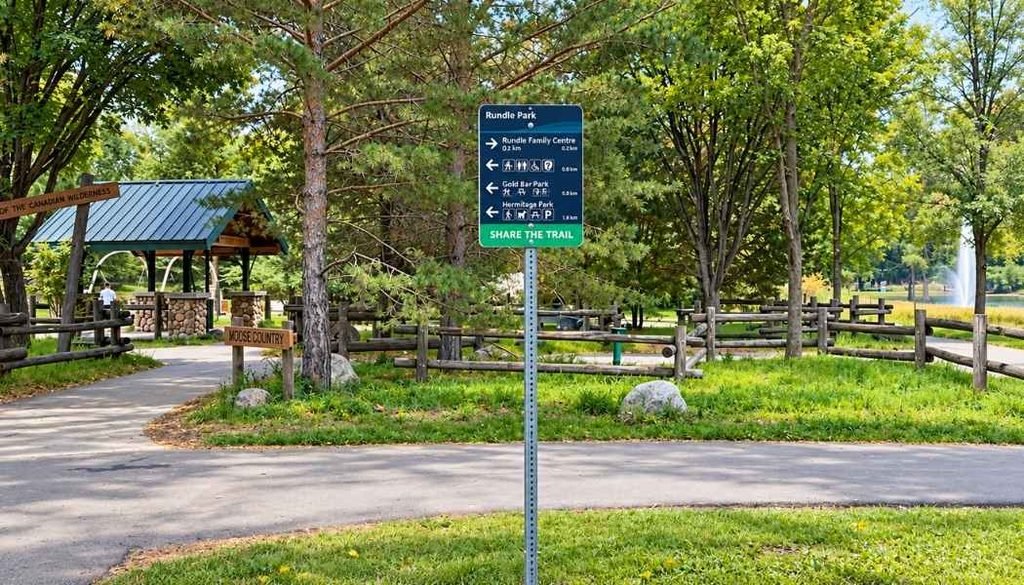
Rundle Park is the biggest all-rounder on the north side, and it's the park I visit most. It sits on the north bank of the North Saskatchewan River in the northeast, and it packs a lot into one place. You can easily spend a whole afternoon here without doing the same thing twice.
One surprising fact: parts of the park used to be the Town of Beverly's garbage dump before Beverly joined Edmonton in 1961. You'd never guess it today.
Things to do at Rundle Park in summer
Walk or bike the paved trails. The multi-use paths loop through open fields and past the man-made ponds. A footbridge crosses the river to Gold Bar Park, so you can turn a short walk into a longer river valley loop.
Rent a paddle boat. My Lakehouse runs summer rentals on the pond, including pedal boats, kayaks, and stand-up paddleboards. Personal watercraft aren't allowed on Rundle's pond, so if you want to bring your own canoe or kayak, go to Hermitage Park or Northeast River Valley Park instead.
Play disc golf. Rundle has an 18-hole disc golf course that's free to use. It's one of the busiest courses in the city and is home to local league play, so expect company on summer evenings.
Play a round of golf. The City-run Rundle Park Golf Course is an 18-hole, par-3-style short course. It's a good choice for beginners or anyone who wants a quick round without a full day on the course.
Use the sports facilities. There are ball diamonds, sports fields, beach volleyball courts, tennis courts, and playgrounds spread across the park.
Have a picnic. The City has bookable picnic sites with canopies, plus free drop-in tables on a first-come basis.
Things to do at Rundle Park in winter
Rundle is one of the best winter parks in Edmonton. The IceWay is a skating trail that winds through a treed area and links to other ice surfaces, including a shinny area for hockey. There are toboggan hills and cross-country ski trails too. The Rundle Family Centre has washrooms and a place to change into your skates, and skate rentals have been offered on winter weekends.
Good to know
Washrooms: Available at the ACT Aquatic and Recreation Centre and the Rundle Family Centre. Check hours before you go, as they don't stay open as long as the park itself.
Indoor backup: The ACT Aquatic and Recreation Centre is inside the park. If the weather turns, you can switch to a swim.
Getting in: Rundle is a big park, and the main roads in can be busy on sunny weekends. Arrive earlier in the day if you want an easy parking spot near the ponds.
Best for: Quiet nature walks, fishing, paddling, and dog owners.
Address: 2115 Hermitage Road NW
Hermitage Park is the calmer cousin of Rundle. It sits farther northeast along the river, close to Clareview, and it feels much more natural. There are fewer facilities, but that's the point. This is where I'd go if I wanted a slow walk and some fresh air rather than a busy family day.
Fishing at Hermitage Park
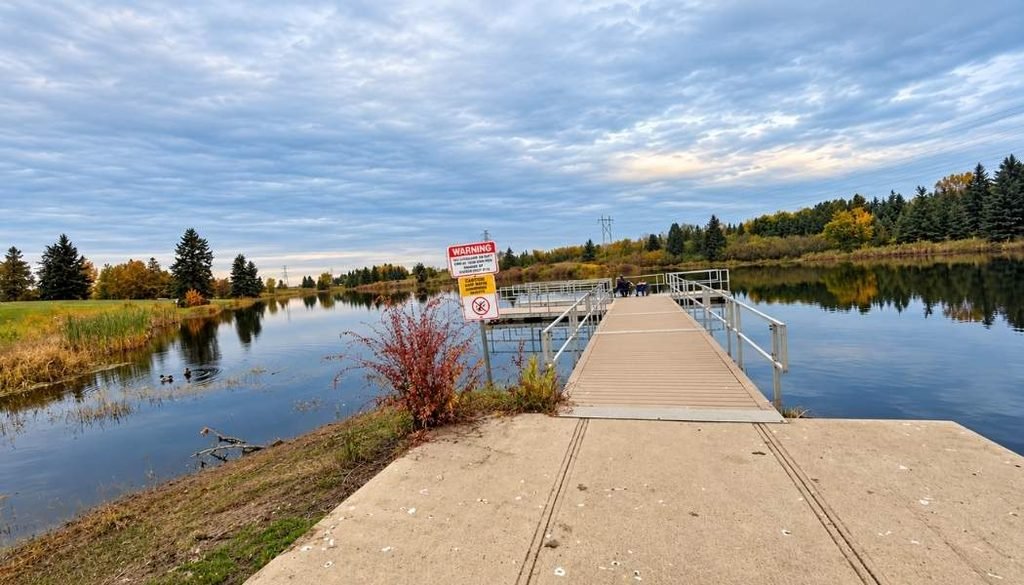
The park has two ponds. The City stocks a pond with rainbow trout and brown trout each year, and it's free for public use. A gravel path leads to an accessible dock, which makes it a good spot to teach kids to fish.
When I visited, I spent some time just watching people fish from the edge of the pond. It's a relaxed scene. Nobody is in a rush, and you don't need to fish yourself to enjoy it.
Paddling and trails
Personal non-motorized boats like canoes, kayaks, and paddleboards are allowed on the pond. Gas and electric motors are not. There's a small launch on the upper pond.
The trails are a mix of paved and gravel paths that run through trees and down along the North Saskatchewan River. The north end of the park has a large off-leash area, which is one of the best on the north side for dogs that need room to run. In winter, the open areas are used for cross-country skiing.
Good to know
Washrooms are basic. There are portable toilets around the park and washrooms on the side of the maintenance building. The portable toilets are not wheelchair accessible.
Watch for geese. The ponds attract a lot of Canada geese, so watch where you step and keep food packed away.
Bring water and a hat. Some of the trail sections are open with little shade.
Wildlife: Visitors often spot ducks, herons, and pelicans around the ponds and river.
3. Kennedale Ravine
Best for: Dog walks and a short escape from the city.
Location: Clareview area, with an access point near 40 Street and 130 Avenue NW
Kennedale Ravine is a narrow, treed ravine that runs toward the river and connects with Hermitage Park. It's an off-leash area, but it isn't fenced, so your dog needs solid recall. The first stretch is paved and open, and the lower part becomes packed gravel through the trees, with several small bridges over the creek.
It's a local spot rather than a destination park. There are no real facilities, so treat it as a walking route. If you want a longer outing, you can walk the ravine down to Hermitage and back. I'd recommend going during daylight hours and with a friend if you're new to the area, since parts of the ravine are quiet and out of sight from the road.
4. Northeast River Valley Park
Best for: Peaceful walks, paddling, and photos.
Address: 903 153 Avenue NE (near 17 Street NE, just east of Anthony Henday Drive)
Northeast River Valley Park is the newest major park in Edmonton's river valley system. The City took over the former ranch property and opened it to the public in 2023. At about 190 acres, it's larger than Hawrelak Park, but it gets a fraction of the visitors.
The park has a large lake with a hand launch for non-motorized boats, walking trails, picnic sites, a playground, and washrooms. Its two covered barn bridges are the main photo spot. There's also a large event centre that's rented out for weddings and other events. In winter, ski trails circle the park.
The trails here are mostly unpaved and fairly easy. It's very much a drive-to park. It's out at the far edge of the city, so plan on driving rather than walking or taking transit. Parking is free.
5. Beaumaris Lake
Best for: Exercise, easy loop walks, and birdwatching
Location: Behind the Castle Downs shopping area, near 153 Avenue and Castle Downs Road NW
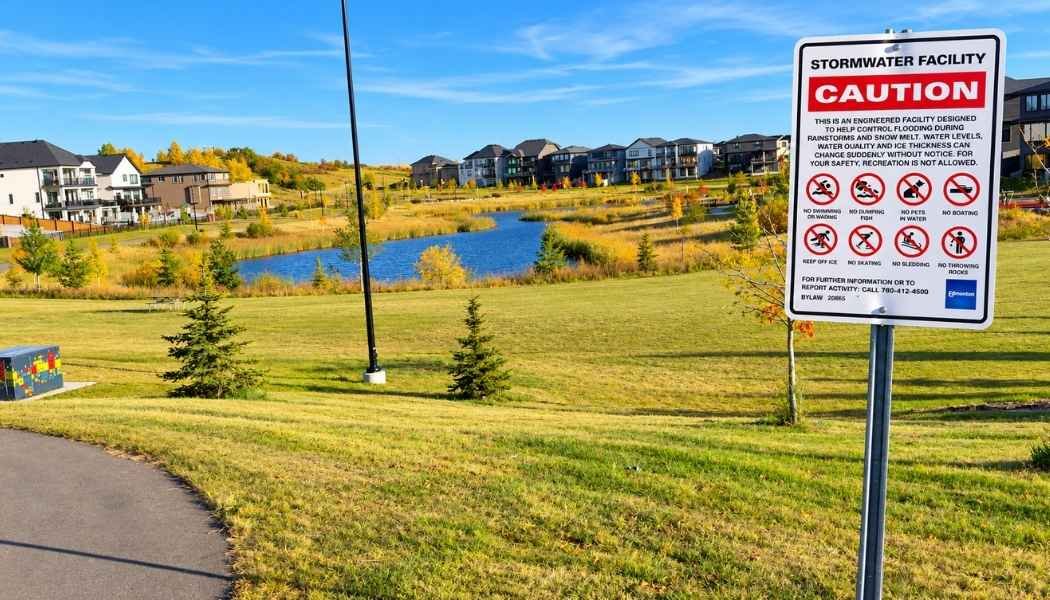
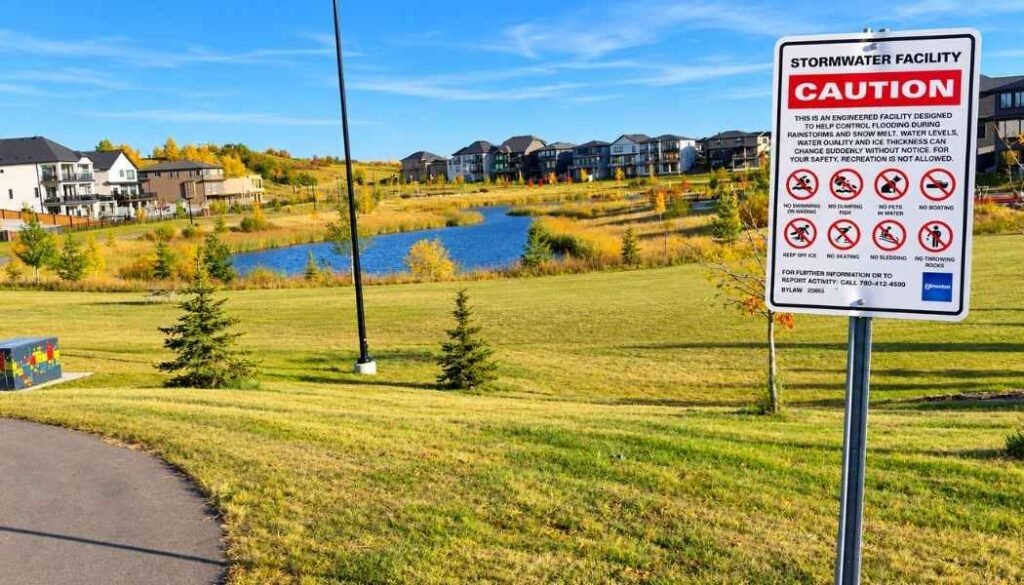
Beaumaris Lake is the park I'd send anyone to who wants a simple, pleasant walk in the northwest. It opened in 1979 as Edmonton's first stormwater lake, and it's still the oldest and largest one in the city. That might not sound exciting, but the lake looks great, especially on calm evenings.
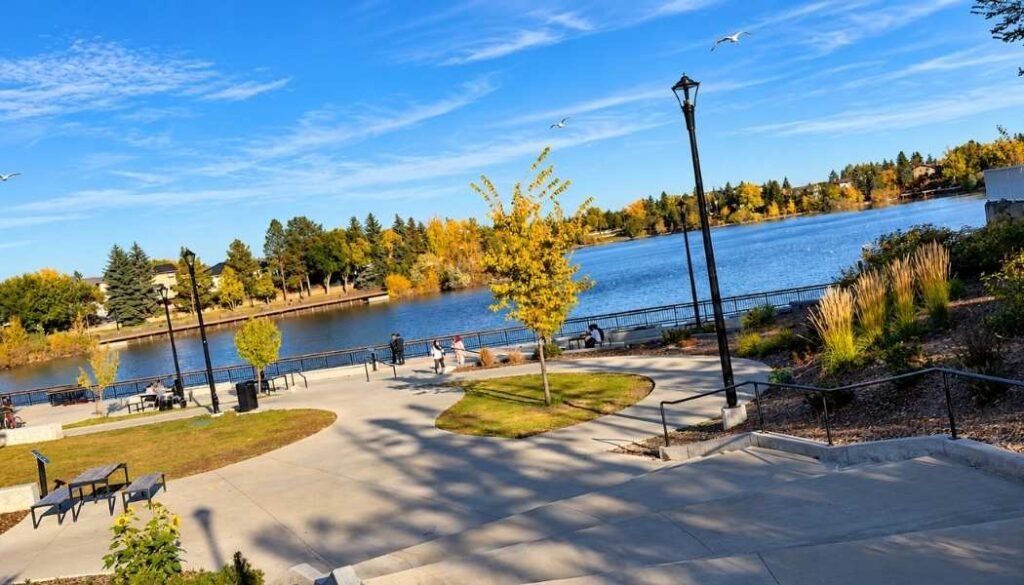
A paved loop of roughly 2.5 kilometres circles the lake. It's flat, wide, and good for walking, running, strollers, and casual cycling. It takes me about 30 minutes to walk the full loop, which makes it one of my favourite places to get some exercise on the north side. There's a promenade on the west side, viewing decks, and a peninsula shaped to look like a castle moat, which ties in with the Castle Downs theme. You'll see ducks, and pelicans show up in the warmer months.
The one thing I don't like is the goose poop. Beaumaris Lake has a lot of Canada geese, and the path can get messy, especially in summer. Watch where you step, and think twice before wearing your nicest white shoes.
Most people park near the Castle Downs library branch and the nearby shops, then walk down to the lake. Dogs are allowed but must stay on a leash.
6. Castle Downs Park
Best for: Families with young kids.
Address: 11520 153 Avenue NW
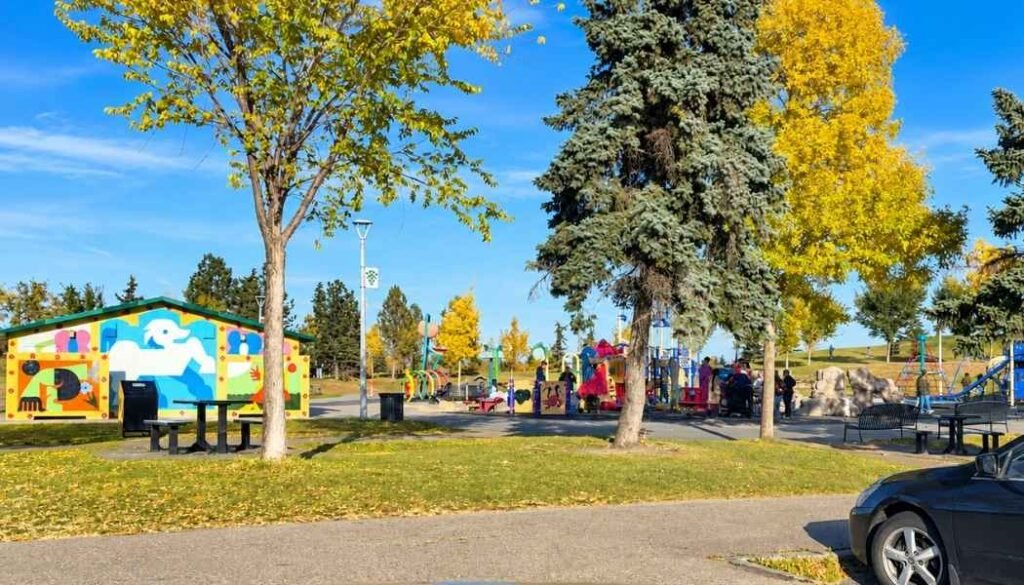
Castle Downs Park is one of the largest playground parks in Edmonton. It's a short walk from Beaumaris Lake, so it pairs well with a lake walk if you have kids who need to burn off energy.
The park has big kid and toddler play areas, a spray park, a skate park, sports fields, a baseball diamond, picnic sites, and a gazebo. In summer, the City runs Green Shack drop-in programs for kids here. In winter, there's an outdoor rink, and the hill beyond the playground is popular for sledding.
Washrooms are inside the Castle Downs Recreation Centre next door, which also has swimming and skating if you need an indoor option. There's a free parking lot.
7. Griesbach Lakes and Trails
Best for: Neighbourhood walks with a bit of history.
Location: Griesbach, around 97 Street and 137 Avenue NW
Griesbach is my old neighbourhood, so I'm a little biased here. It was built on the former Canadian Forces Base Edmonton, and a large share of the land was set aside for parks and water. The result is a community with four lakes (Patricia Lake, Roundel Lake, Maple Leaf Pond, and Bedford Basin) linked by more than 5 kilometres of walking trails.
Many of the features nod to the area's military past. The bridge over Patricia Lake is modelled on the Bailey bridges used in the Second World War, and Bedford Basin honours the Royal Canadian Navy. There's also a central park with a hill that's good for tobogganing in winter.
This isn't a park you'd drive across the city for. But if you're in the north end and want a pretty walk with something to look at, it's a nice change from the usual suburban loop.
Other North Side Green Spaces Worth Knowing
These are mostly neighbourhood parks, but they're useful if you live nearby or have a dog.
Klarvatten Park (Lake District): A quiet park with an unfenced off-leash area on a large grassy field. Good for a game of fetch without the crowds.
Lago Lindo (Lake District): An off-leash corridor with a paved path.
Capilano Park and Gold Bar Park: Technically just across the river from Rundle, but you can walk to them over the footbridge. Capilano has a large off-leash area.
The Best North Edmonton Park for You
If you want...
Go to
The most activities in one place
Rundle Park
A quiet walk in nature
Hermitage Park or Northeast River Valley Park
To let your dog run off-leash
Hermitage Park or Kennedale Ravine
To go fishing
Hermitage Park
To paddle your own canoe or kayak
Hermitage Park or Northeast River Valley Park
To rent a paddle boat
Rundle Park
An easy paved loop walk
Beaumaris Lake
A big playground and spray park
Castle Downs Park
Outdoor skating
Rundle Park IceWay or Castle Downs Park
A free round of disc golf
Rundle Park
When to Visit North Edmonton Parks
Summer (June to August) is the busiest season. Rentals at Rundle are running, spray parks are open, and the evenings stay light late. Bring bug spray. Mosquitoes can be bad near the ponds and in the river valley, especially after rain.
Fall (September and October) is my favourite time for the river valley parks. The trees along the trails at Hermitage and Rundle turn yellow, the bugs ease off, and the trails are quieter.
Winter (December to February) is when Rundle really stands out, with the IceWay, toboggan hills, and ski trails. Castle Downs Park also has an outdoor rink. Ice surfaces depend on the weather, so check the City of Edmonton's outdoor skating page for current conditions before you go. If you're planning a winter trip, pair a skate with one of the city's winter festivals.
Spring (April and May) can be muddy, and the ice on the ponds can be unsafe. It's a good time for birdwatching, though, as birds return to Beaumaris Lake and the Hermitage ponds.
Practical Tips for Visiting
Parking is free at the main park lots covered in this guide.
City parks have set opening hours. Check the City of Edmonton website for current park hours and any closures.
Dogs must be leashed everywhere except in signed off-leash areas, and you need to pick up after them.
Washrooms are limited at the quieter parks. Use facilities at recreation centres when you can.
Driving is the easiest option for Hermitage and Northeast River Valley Park. Rundle and the Castle Downs parks are easier to reach by transit. My guide to Edmonton Transit Service explains how buses, the LRT, and fares work.
Where to Stay Near North Edmonton Parks
If you're visiting from out of town and want to be close to Rundle, Hermitage, and Kennedale Ravine, the Clareview area is a practical base. I've stayed at the Holiday Inn Express & Suites Edmonton North in Clareview a few times when I wanted a break. I found it clean, reasonably priced, and well located for the northeast side of the city.
More to Do Nearby
Jurassic Forest near Gibbons is a short drive north of the city and makes a fun add-on for families with dinosaur fans. Read my Jurassic Forest visitor guide first. Bring bug spray.
Shopping and food: Londonderry Mall, Northgate Centre, and Manning Town Centre are all on the north side if you need supplies or a meal after your park visit. I compare them in my guide to the best shopping malls in North Edmonton. For a sit-down meal, see my picks for the best restaurants in Edmonton.
Northeast River Valley Park covers about 190 acres, which makes it one of the largest parks on the north side and bigger than Hawrelak Park. Rundle Park is the most developed, with the widest range of activities.
Are North Edmonton parks free?
Yes, entry to City of Edmonton parks is free. You'll pay for some extras, like paddle boat rentals, golf, and picnic site bookings at Rundle Park. Disc golf at Rundle and the outdoor skating surfaces are free to use.
Where can I take my dog off-leash in North Edmonton?
Hermitage Park has a large off-leash area at its north end. Kennedale Ravine and Klarvatten Park also have off-leash areas. None of these are fully fenced, so only let your dog off-leash if it comes back reliably.
Can you fish in North Edmonton?
Yes. Hermitage Park has a pond that the City stocks with rainbow and brown trout each year. Make sure you follow Alberta's fishing licence rules.
Which North Edmonton park is best for kids?
Castle Downs Park is the best pick for young children, with a large playground, spray park, and skate park. Rundle Park is better for older kids and families who want paddle boats, sports fields, and room to explore.
Where can I skate outdoors in North Edmonton?
Rundle Park has the IceWay skating trail plus other ice surfaces, and Castle Downs Park has an outdoor rink. Check the City of Edmonton's outdoor skating page for ice conditions before you go.
Final Thoughts on Parks in North Edmonton
If you only visit one park in North Edmonton, make it Rundle Park. It has the most variety in every season, and it's easy to fit around other plans. If you want peace and quiet instead, head to Hermitage Park or Northeast River Valley Park. And if you're in the northwest with kids, a walk around Beaumaris Lake followed by playtime at Castle Downs Park is hard to beat.
The north side doesn't get as much attention as the central river valley, but that's part of its appeal. You get the same trails, water, and open space with fewer people around.
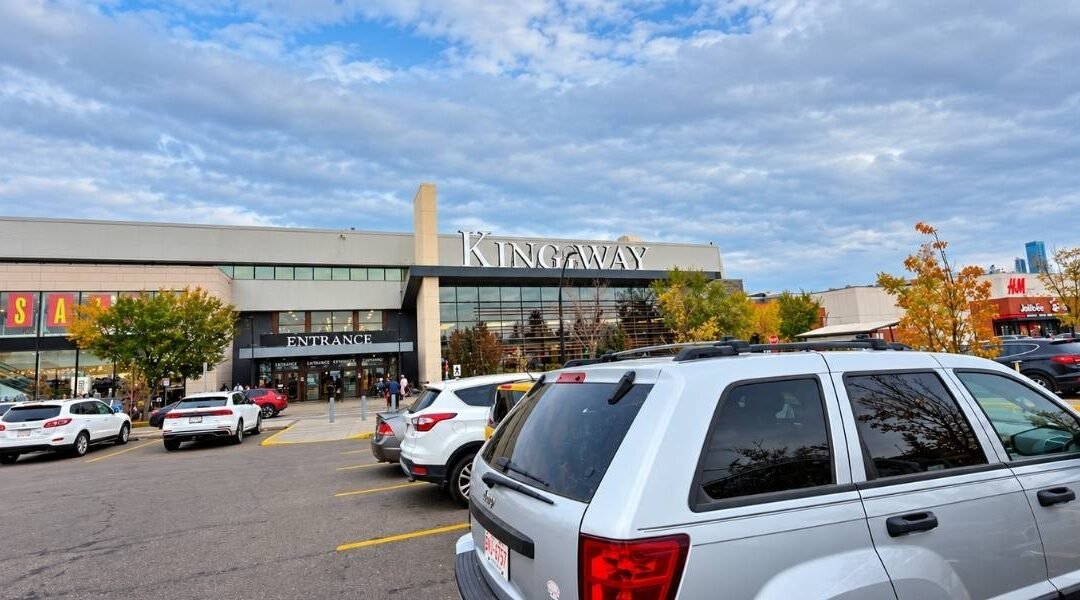
Planning a trip to Edmonton and looking for a place to shop, eat, or escape the weather for a few hours? Kingsway Mall Edmonton is a convenient shopping destination just north of downtown Edmonton. With more than 160 stores, restaurants, and services, it offers plenty of options for visitors and locals.
Unlike West Edmonton Mall, which can take most of a day to explore, Kingsway Mall is easier to fit into a shorter visit. You can shop, enjoy a meal, or pick up everyday essentials without spending the entire day indoors.
In this guide, I’ll cover the stores and restaurants at Kingsway Mall, along with parking, public transit, opening hours, accessibility, nearby hotels, and attractions.
Kingsway Mall at a Glance
Information
Details
Location
109 Street and Kingsway, Edmonton
Stores
More than 160
Parking
More than 3,700 stalls
LRT
Royal Alex and NAIT/Blatchford Market stations nearby
Accessible parking, elevators, washrooms, and DATS access
Mall hours, store listings, and services can change. Check the official Kingsway Mall website before your visit.
About Kingsway Mall
Kingsway Mall first opened on March 3, 1976, as Kingsway Garden Mall. It originally featured well-known department stores such as Sears and Zellers and expanded over the years as Edmonton grew.
The mall underwent major renovations during the 1980s, including the addition of a larger food court and more retail space. From 2007 to 2009, it received a $70-million redevelopment that refreshed its interior and updated its overall appearance. After the renovation, the shopping centre adopted its current name, Kingsway Mall.
Today, Kingsway Mall has more than 160 stores, restaurants, and services. Its location near downtown, NAIT, and the Royal Alexandra Hospital also makes it a convenient shopping stop for people in central Edmonton.
Is Kingsway Mall Worth Visiting?
Kingsway Mall is one of the best shopping malls in North Edmonton. So, it is worth considering if shopping is your main goal. It has a mix of fashion, beauty, sports, and everyday retailers, along with several places to eat.
Its central location is also useful for visitors staying downtown. You can spend a few hours shopping and dining, then visit nearby attractions without travelling across the city.
If you’re looking for a full day of entertainment, West Edmonton Mall offers a different experience, with attractions such as an indoor waterpark and amusement rides.
Where Is Kingsway Mall?
Kingsway Mall is located at 109 Street and Kingsway in Edmonton, Alberta, T5G 3A6.
The shopping centre is in north-central Edmonton, near 109 Street, Princess Elizabeth Avenue, and Kingsway. NAIT and the Royal Alexandra Hospital are also nearby.
Several downtown hotels are approximately 2 to 2.5 km from the mall, making it a relatively short trip by car or public transit.
Getting There by LRT and Bus
Kingsway Mall is near two LRT stations: Royal Alex and NAIT/Blatchford Market. Both provide access to the surrounding area, and several bus routes also serve the mall.
If you’re staying downtown and don’t have a car, public transit can be a practical way to reach Kingsway Mall. Check your route and the current transit schedule before leaving.
Driving to Kingsway Mall
Kingsway Mall is accessible from several major roads. If you’re coming from downtown, you can head north on 109 Street. Visitors from north Edmonton or the Yellowhead Trail area can approach using Kingsway and nearby roads.
Traffic can be heavier during rush hour, particularly around the hospital and NAIT. Allow extra travel time during busy periods.
Stores at Kingsway Mall
Kingsway Mall has more than 160 stores covering fashion, beauty, sports, home goods, footwear, and everyday shopping.
Here are some of the retailers you may find at the mall:
Category
Stores
Fashion
Aritzia, H&M, lululemon
Beauty
Sephora, GS Aveda
Sports
Sport Chek, JD Sports
Home
HomeSense
Books
Indigo
Everyday shopping
Walmart
Footwear
Browns
Store locations and availability can change. Check the mall’s store directory for the latest information before visiting.
Restaurants and Dining at Kingsway Mall
Kingsway Mall has more than 20 dining options, ranging from quick meals and coffee shops to food court favourites and sit-down restaurants. You can grab something between stores or take a longer break for lunch or dinner.
Here are a few options to consider.
Family-Friendly Dining
Families have several casual dining choices at Kingsway Mall. Boston Pizza serves pizza, pasta, and other familiar dishes, making it an option for a relaxed family meal.
The food court is another practical choice for families and groups. Everyone can select a different meal and meet at the same seating area.
Sit-Down Restaurants
If you prefer table service, Moxies offers appetizers, burgers, salads, and main courses. It’s an option for visitors who want to sit down and enjoy a meal away from the busy food court.
Boston Pizza also offers table service, with a menu that includes pizza and pasta.
Kingsway Mall Food Court
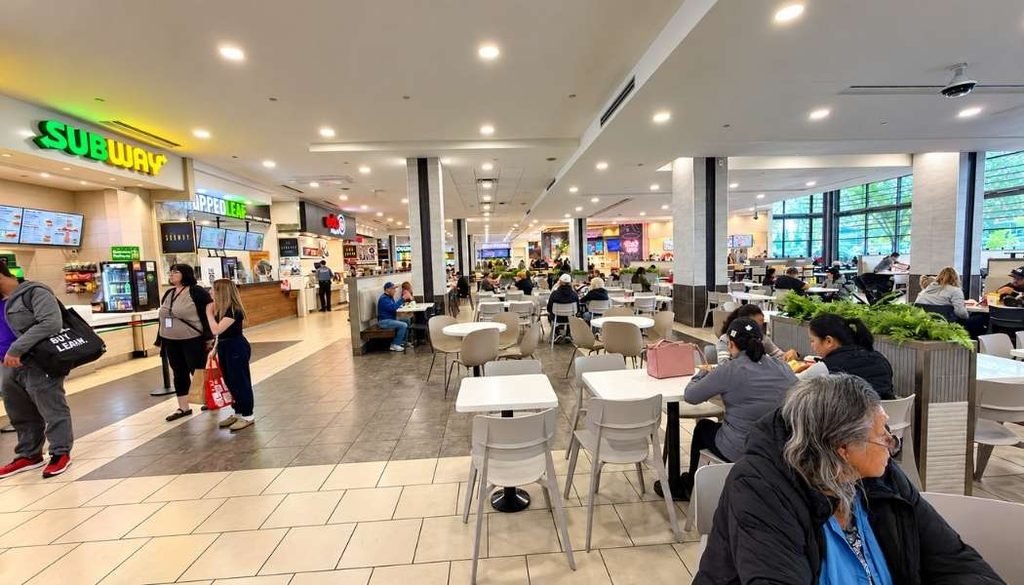
The food court is a convenient place to grab a quick meal during your shopping trip. Options include Asian-inspired dishes, Greek food, fried chicken, and other familiar favourites.
Restaurants listed in the draft include Edo Japan, Jimmy the Greek, KFC, and Bourbon Street Grill. Check the mall’s official dining directory for current options and opening hours before your visit.
Kingsway Mall Parking
Kingsway Mall offers free parking, with more than 3,700 spaces, including a two-level parking garage.
Parking is generally convenient, but the lots can become busy on weekends and during the Christmas shopping season. If you’re visiting at a peak time, arriving earlier may help you find a spot closer to an entrance.
During Edmonton’s winter months, parking near an entrance can also reduce the time you spend walking outdoors.
The parking lots are intended for mall visitors. Avoid leaving your vehicle there while attending events elsewhere in the city.
Kingsway Mall Hours
The mall’s regular hours are listed below.
Day
Hours
Monday to Friday
10 am–8 pm
Saturday
10 am–7 pm
Sunday
11 am–6 pm
The mall may operate on shorter hours during statutory holidays, such as Labour Day and Thanksgiving. Individual stores and restaurants may also have different schedules.
Check the official Kingsway Mall website for current hours before your visit, especially during holidays.
Accessibility
Kingsway Mall lists several accessibility features for visitors, including:
Accessible parking stalls near entrances in every parking lot
Elevators throughout the mall
Wheelchair-accessible stalls in washrooms
Companion and family washrooms
DATS pick-up and drop-off at Entrance 2
Security patrols the mall and parking areas. Visitors can also ask security staff for an escort to their vehicle. The security office is on the main level near Entrance 2.
If you need specific accessibility assistance, contact the mall before your visit to confirm the available services.
Where to Stay Near Kingsway Mall
Many visitors choose to stay downtown and travel to Kingsway Mall for shopping. If you prefer to stay closer to the mall, the following hotels are nearby.
Best Western Plus City Centre Inn: Located on 109 Street, approximately 0.2 km from the mall.
Chateau Louis Hotel & Conference Centre: Located on Kingsway, around 1 km from the mall.
Edmonton Inn and Conference Centre: Located on Kingsway, approximately 1.5 km away.
If you want to be close to downtown restaurants, nightlife, and Rogers Place, consider staying near the ICE District. Kingsway Mall is still accessible from downtown by car or public transit.
Confirm hotel locations and distances before booking.
Things to Do Near Kingsway Mall
Kingsway Mall is close to several Edmonton attractions. You can combine a shopping trip with a museum visit, a sporting event, or some sightseeing downtown.
Alberta Aviation Museum
The Alberta Aviation Museum is a short drive from Kingsway Mall. It features historic aircraft and exhibits about Canada’s aviation history. Allow around one to two hours for a visit.
Royal Alberta Museum
The Royal Alberta Museum features exhibits about Alberta’s natural history, Indigenous cultures, wildlife, and more. It’s an indoor attraction that can be a good addition to your itinerary on a cold or rainy day.
Rogers Place and ICE District
Rogers Place is home to the Edmonton Oilers and hosts hockey games, concerts, and other events. The surrounding ICE District has restaurants and public spaces, making it another area to explore downtown.
Downtown Edmonton
Downtown Edmonton has attractions, restaurants, cafés, and public spaces. You can visit Churchill Square, explore nearby sights, or stop for a meal. Read our Downtown Edmonton full guide.
Edmonton City Centre
Edmonton City Centre is another downtown shopping option. It is close to restaurants, hotels, and other attractions, so you can include it in a day of exploring central Edmonton.
Muttart Conservatory
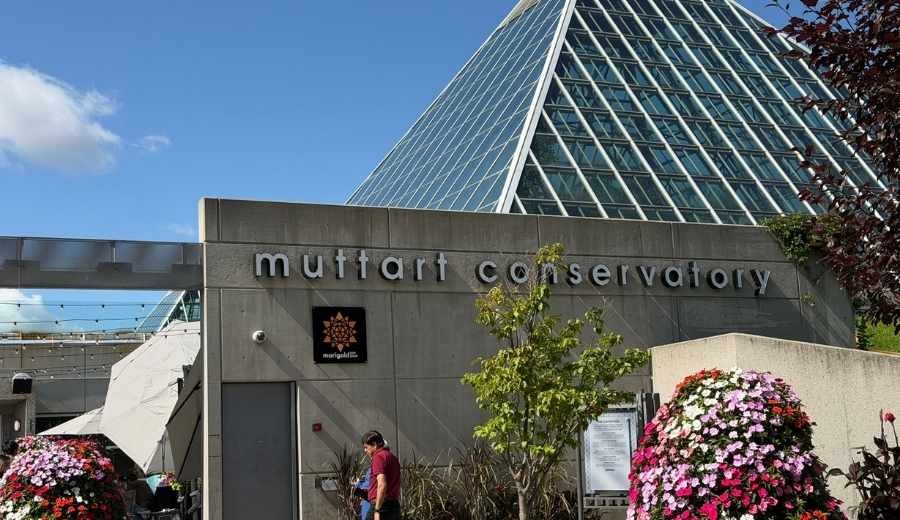
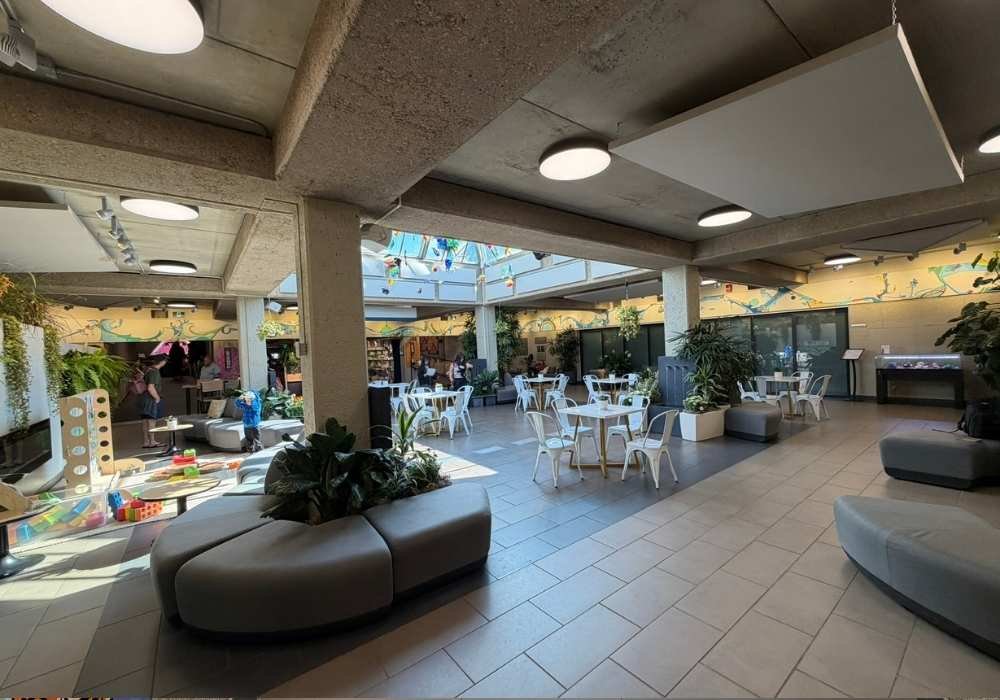
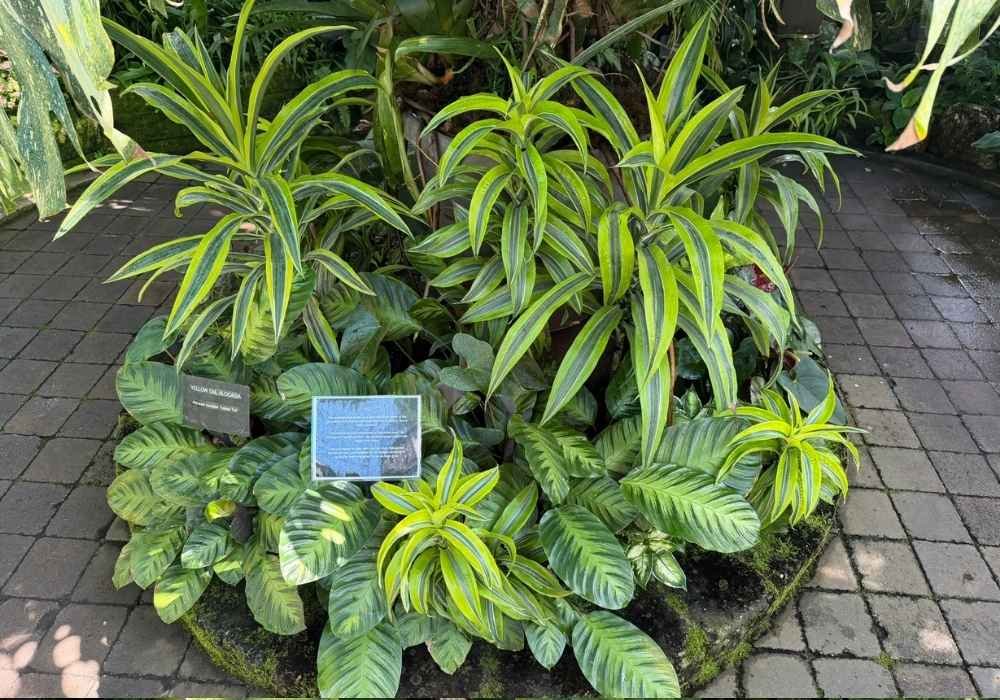
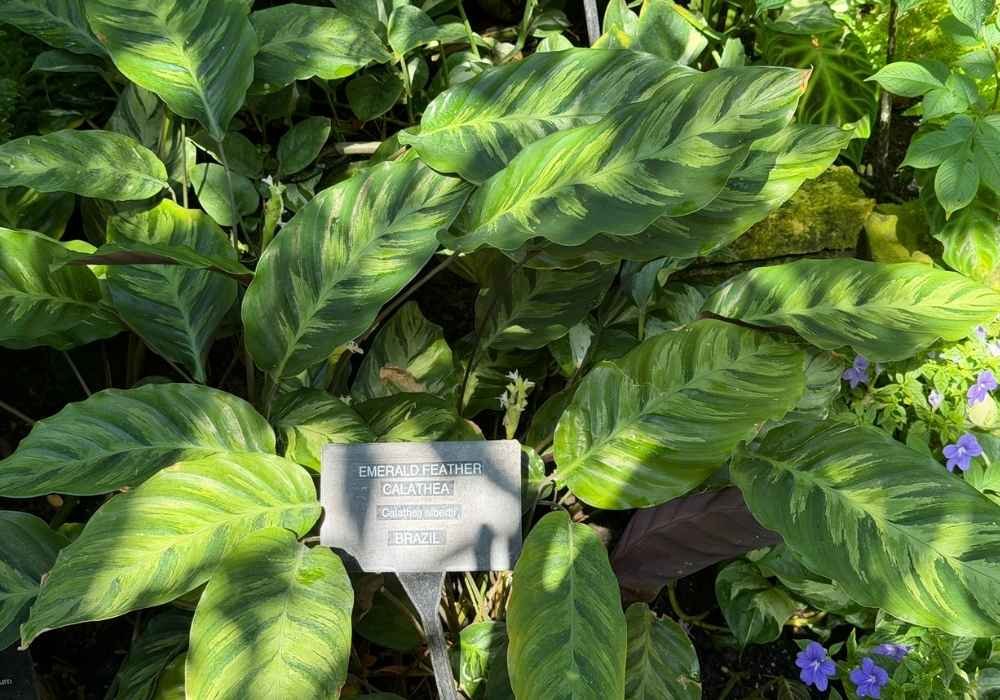
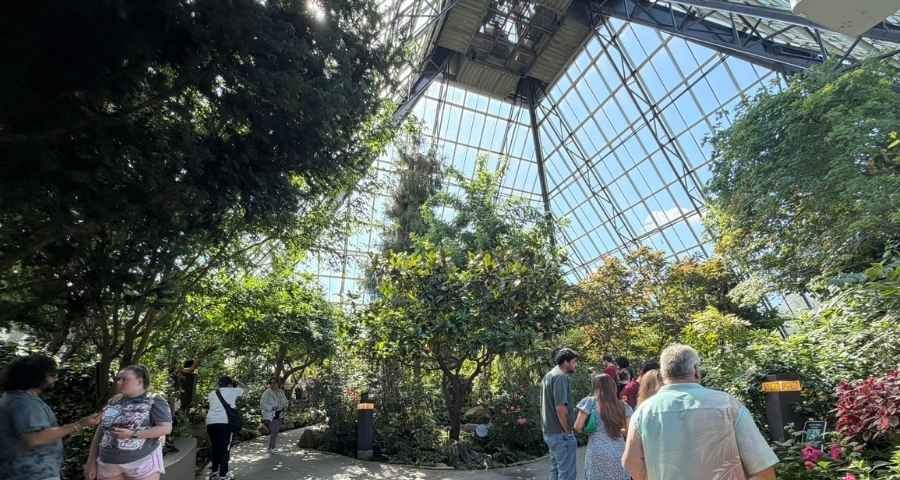
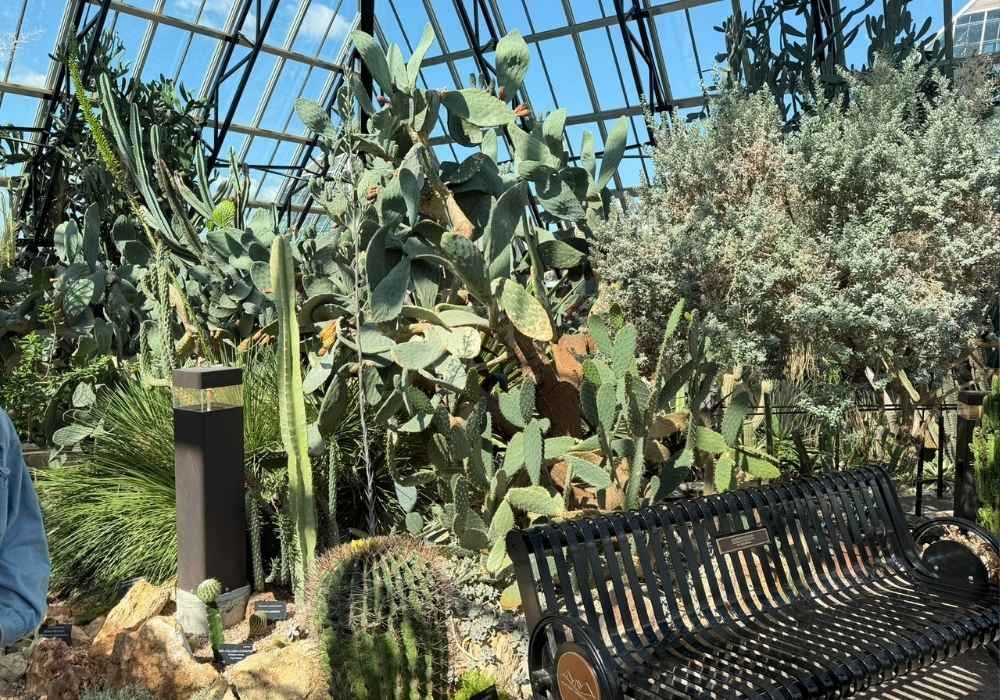
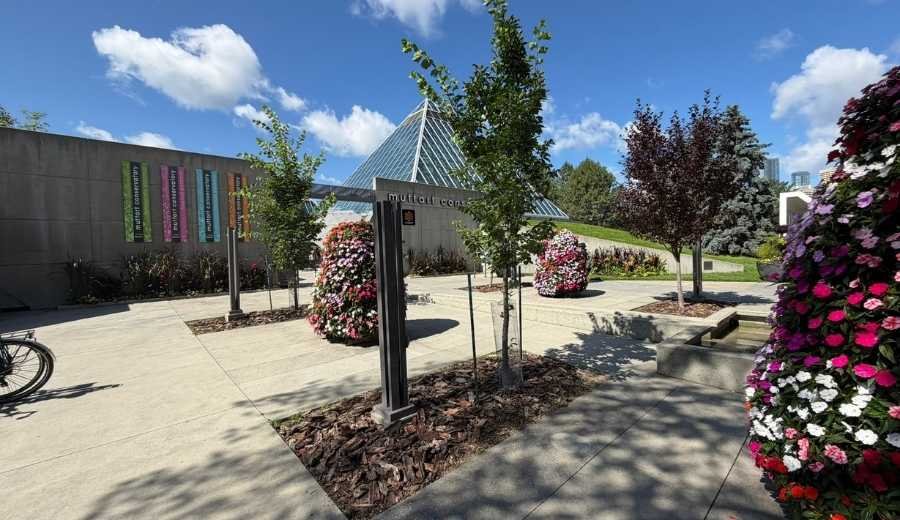
The Muttart Conservatory is known for its four glass pyramids, which house tropical plants, desert landscapes, and seasonal displays. It is farther from Kingsway Mall than the other attractions listed here, so allow extra travel time. Plan to spend around one to two hours exploring. Read more about Muttart Conservatory.
You can visit one nearby attraction after shopping or set aside a full day to explore more of Edmonton.
Who Is Kingsway Mall Best For?
Kingsway Mall is a practical option for visitors who want to shop and dine without spending an entire day at a shopping centre.
It may suit:
Visitors staying near downtown
Families looking for casual shopping and dining
Fashion and beauty shoppers
People who prefer indoor activities
Visitors using public transit
Travellers shopping for everyday essentials
Visitors planning to explore nearby attractions
If you’re looking for a full day of entertainment, West Edmonton Mall offers more attractions and activities. Kingsway Mall is better suited to a shorter shopping-focused visit.
Tips for Visiting Kingsway Mall
Visit on a weekday morning: The mall may be quieter than during busy weekend periods.
Consider public transit: Nearby LRT stations and bus routes provide access to the mall.
Check store hours: Individual retailers and restaurants may have different schedules, especially during holidays.
Allow a few hours: Give yourself enough time to shop, eat, and explore without rushing.
Frequently Asked Questions About Kingsway Mall
Is parking free at Kingsway Mall?
Yes. Kingsway Mall offers free parking, with more than 3,700 spaces, including a two-level parking garage. Parking can be busier on weekends and during the holiday shopping season.
What are Kingsway Mall’s opening and closing hours?
The mall generally opens at 10 am Monday to Saturday and 11 am on Sundays. It usually closes at 8 pm Monday to Friday, 7 pm on Saturdays, and 6 pm on Sundays. Holiday hours and individual store hours may differ.
How do I get to Kingsway Mall by LRT?
The Royal Alex and NAIT/Blatchford Market LRT stations are near Kingsway Mall. You can also reach the area by bus. Check the current transit schedule and walking route before travelling.
What stores are at Kingsway Mall?
Kingsway Mall has more than 160 stores, including fashion, beauty, sports, footwear, home, and everyday retailers. Stores listed in this guide include H&M, Sephora, lululemon, Sport Chek, and Walmart. Check the mall’s directory for the current store list.
Does Kingsway Mall have a food court?
Yes. Kingsway Mall has a food court with quick-service restaurants, as well as cafés and sit-down dining options. Restaurant listings and hours can change, so check the mall’s dining directory before visiting.
Is Kingsway Mall wheelchair accessible?
The mall lists accessible parking, elevators, and accessible washroom facilities. DATS pick-up and drop-off is available at Entrance 2. Contact the mall for details about your specific accessibility needs.
What attractions are near Kingsway Mall?
Nearby attractions include the Alberta Aviation Museum, Royal Alberta Museum, Rogers Place, and downtown Edmonton. The Muttart Conservatory is another option if you have extra time.
Final Thoughts: Kingsway Mall Edmonton
Kingsway Mall is a convenient Edmonton shopping destination with more than 160 stores, a food court, restaurants, and free parking. Its location near downtown also makes it easy to include in a day of exploring the city.
A few hours may be enough for shopping and a meal. If you plan to visit nearby attractions as well, allow more time and check opening hours before you go.
North Edmonton is not the part of the city people travel to for shopping. That title belongs to West Edmonton Mall, which sits on the west side of the city and works as an attraction in its own right. The shopping malls in North Edmonton were built for the people who live here.
That is not a problem if you are staying on the north side. You are rarely more than a few minutes from clothing stores, groceries, restaurants, pharmacies, sporting goods and everyday services.
Kingsway Mall is the one large traditional indoor mall in this part of the city. Londonderry Mall and Northgate Centre give you enclosed community shopping closer to the north end. Manning Town Centre, Skyview Power Centre and several other open-air centres cover big-box stores, chain restaurants and quick errands.
So where should you actually go shopping in North Edmonton? It depends on what you need.
North Edmonton Shopping at a Glance
Best traditional mall: Kingsway Mall
Best for northeast Edmonton: Londonderry Mall
Best for big-box shopping: Manning Town Centre
Best for everyday shopping: Northgate Centre
Best for Asian groceries: North Town Centre
Best for practical shopping in Clareview: Clareview Town Centre
Kingsway Mall: The Best Shopping Mall in North Edmonton
Address: 109 Street & Kingsway, Edmonton, AB T5G 3A6
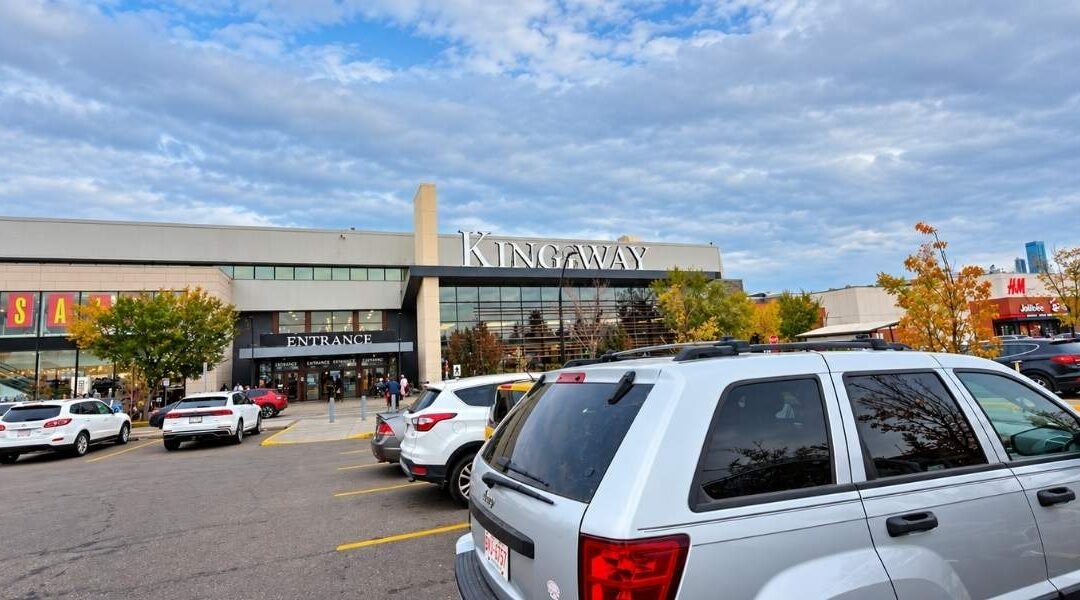
Kingsway Mall is at 109 Street and Kingsway Avenue, just north of downtown Edmonton. If you want a proper indoor mall rather than a row of big-box stores facing a parking lot, you can start here.
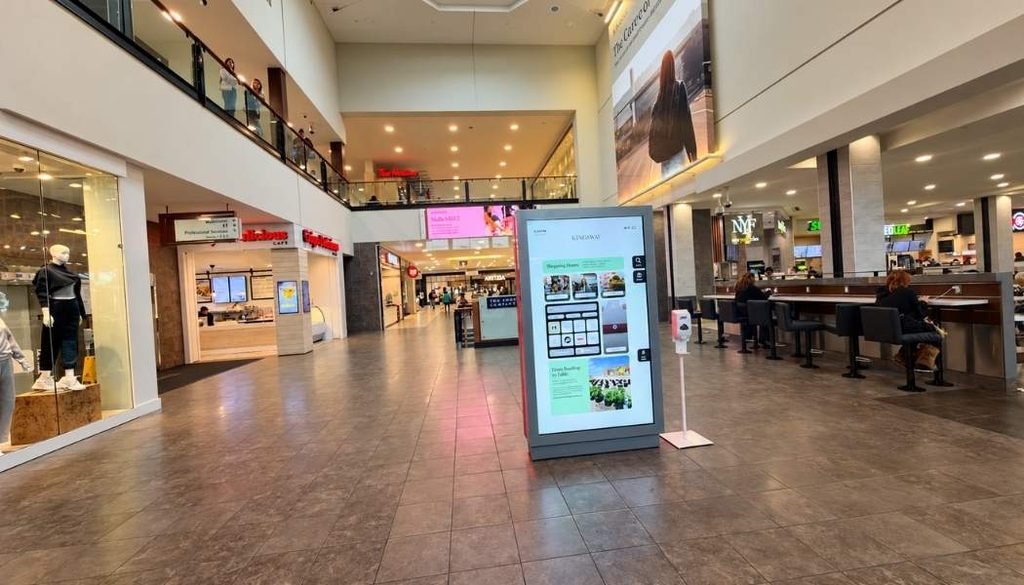
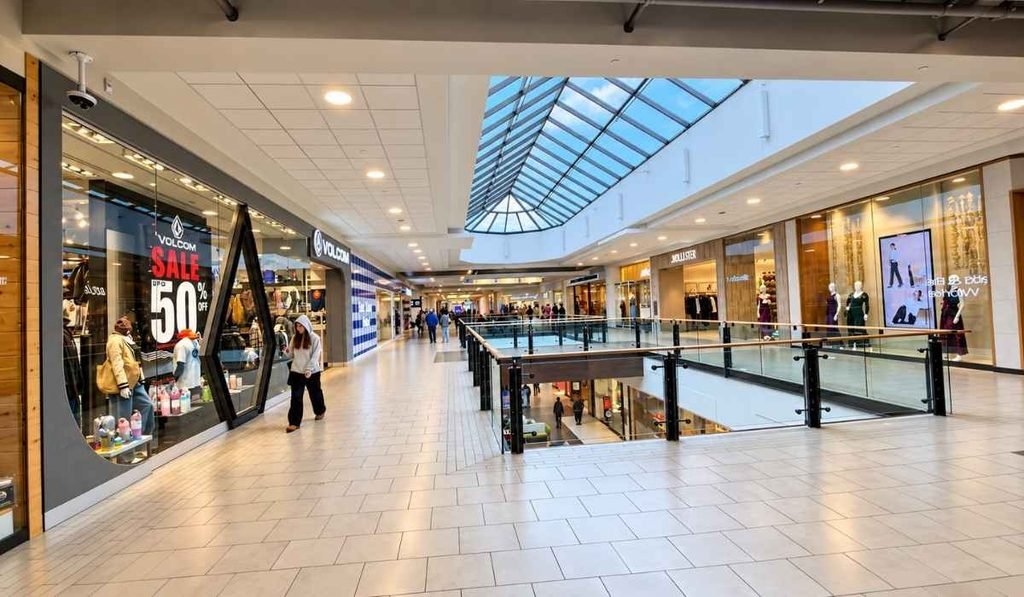
It is the second-largest mall in the city after the West Edmonton Mall, with more than 160 stores and services spread across two shopping levels and roughly 880,000 square feet. Kingsway is a practical shopping mall you can handle in an afternoon. West Edmonton Mall is a shopping and entertainment destination people plan a whole day around.
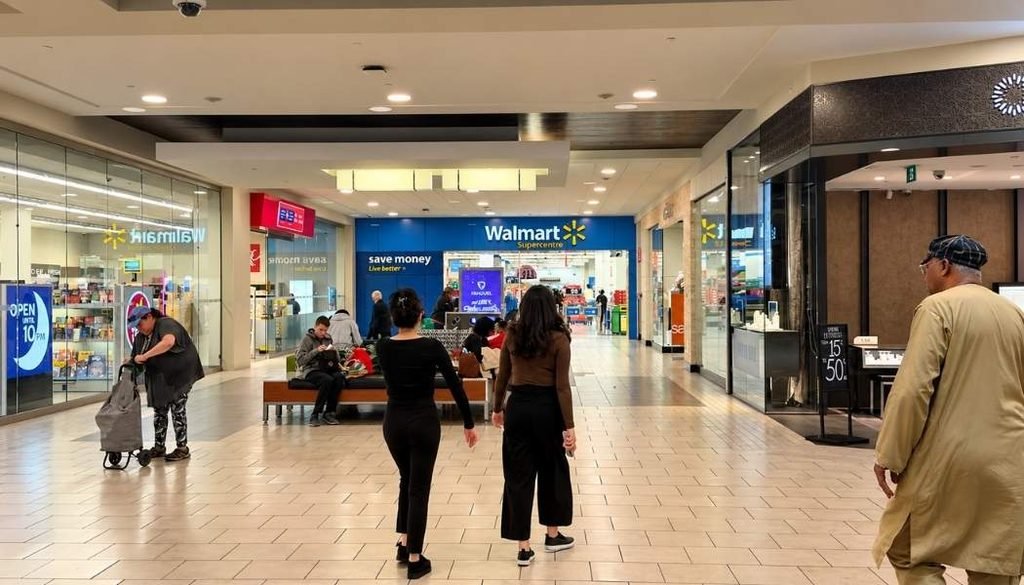
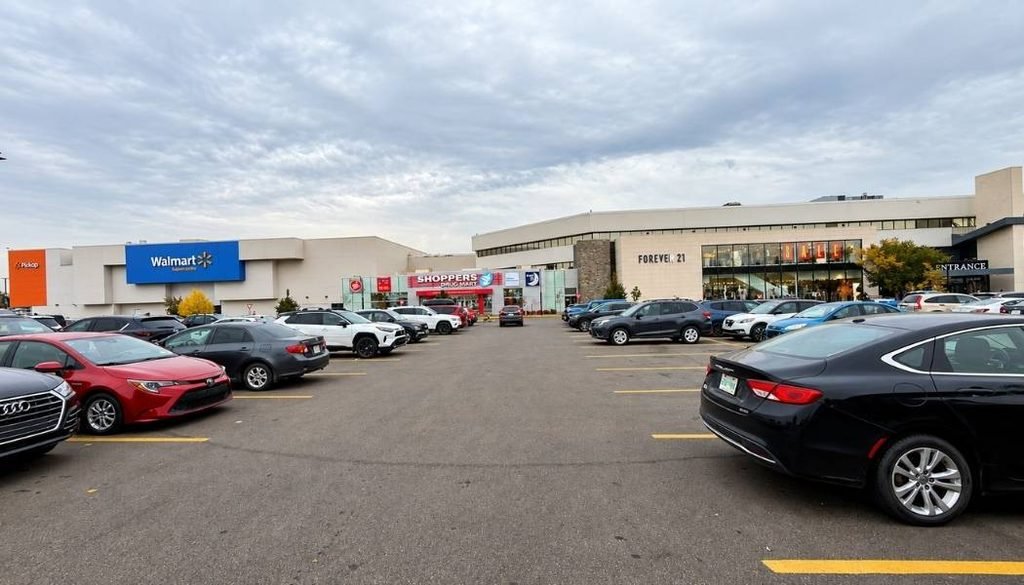
The mix of what you will find at the Kingsway Mall leans toward mainstream fashion, beauty, footwear, sporting goods and everyday needs. Current tenants include Walmart, HomeSense, Marshalls, Shoppers Drug Mart, Aritzia, Sephora, Lululemon and Browns Shoes, alongside H&M, Sport Chek and a modern food court.
One thing to keep in mind is that Hudson's Bay closed its Kingsway store in 2025. The former department store space remains noticeable inside the mall, but Kingsway Mall still offers a wide range of fashion, beauty, sporting goods and everyday shopping.
Londonderry Mall
Address: 1 Londonderry Mall NW, Edmonton, AB T5C 3C8
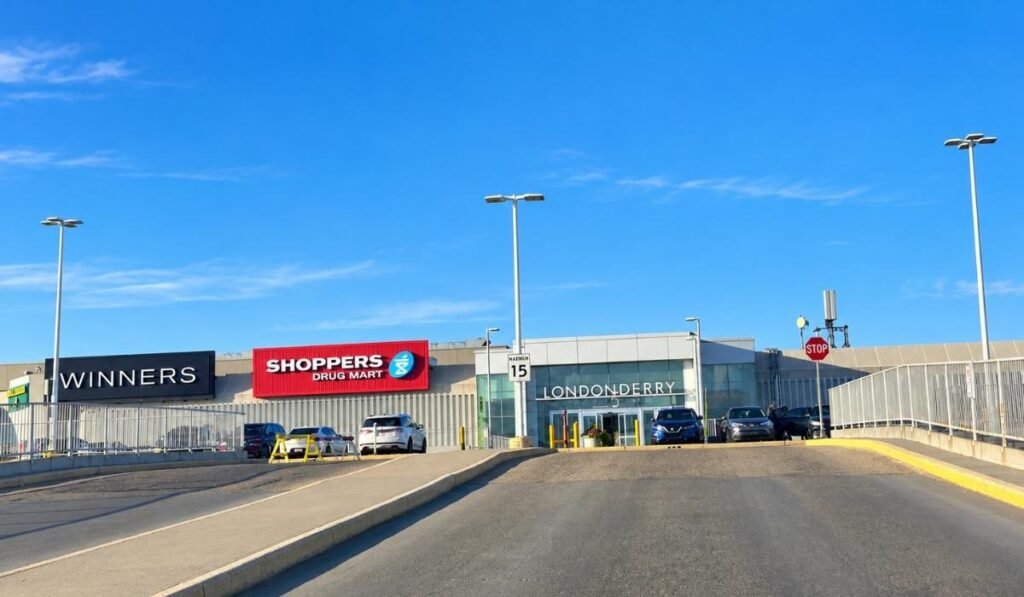
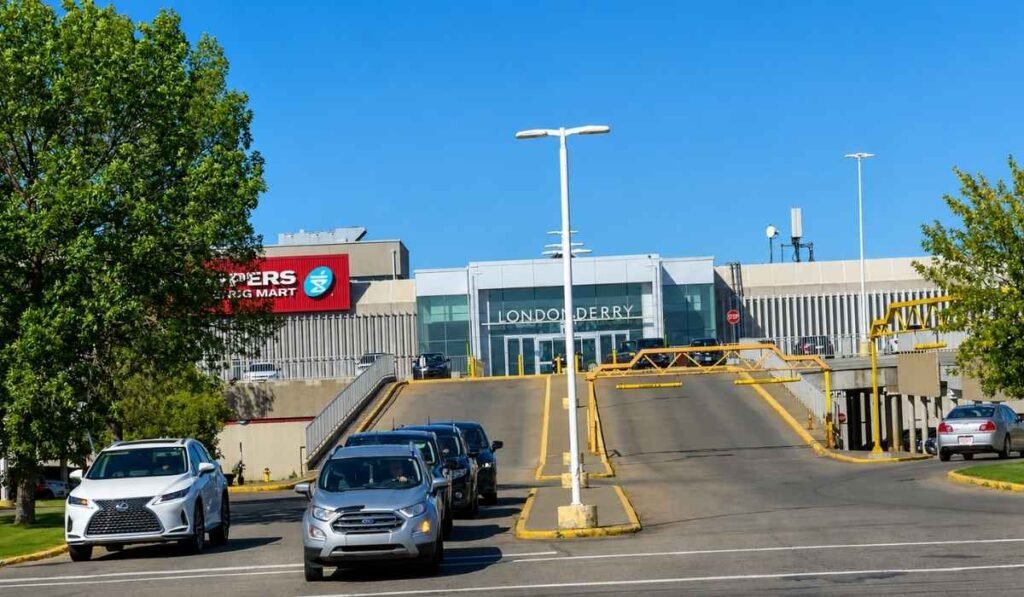
Londonderry Mall is at 137 Avenue and 66 Street in northeast Edmonton. It is a two-level enclosed mall with over 150 stores, and a major renovation in recent years left it brighter and more modern than when it opened in 1972.
Simons, Winners, H&M, No Frills and Shoppers Drug Mart anchor the centre, and there are practical services on site including Service Canada and several banks. The Simons store is a full two-level location, which gives Londonderry more fashion weight than a typical suburban mall.
The mall also holds a small piece of Canadian retail history. Zellers reopened here on October 30, 2025, taking part of the former Hudson's Bay space.
Londonderry is one of the two malls I use regularly myself. I shop here, and I go to the Fit4Less gym inside the mall, which is worth knowing about if you are staying nearby for a while and want to keep training.
One of my favourite restaurants in North Edmonton is Sixty6 Bar N' Grill, located at Londonderry Mall. I visit regularly for their omelette breakfast and also enjoy stopping by for steak dinner. It is a convenient place to eat when I want to combine a meal with shopping or other errands at the mall.
Londonderry Mall offers a quieter and more relaxed shopping experience than Kingsway Mall or West Edmonton Mall. It is a convenient place to shop if you are staying in northeast Edmonton, with a mix of clothing stores, gifts, groceries, personal services and places to eat.
The mall is especially useful for families, visitors staying near 137 Avenue, and anyone looking for a comfortable indoor place to spend some time during Edmonton's cold or rainy weather.
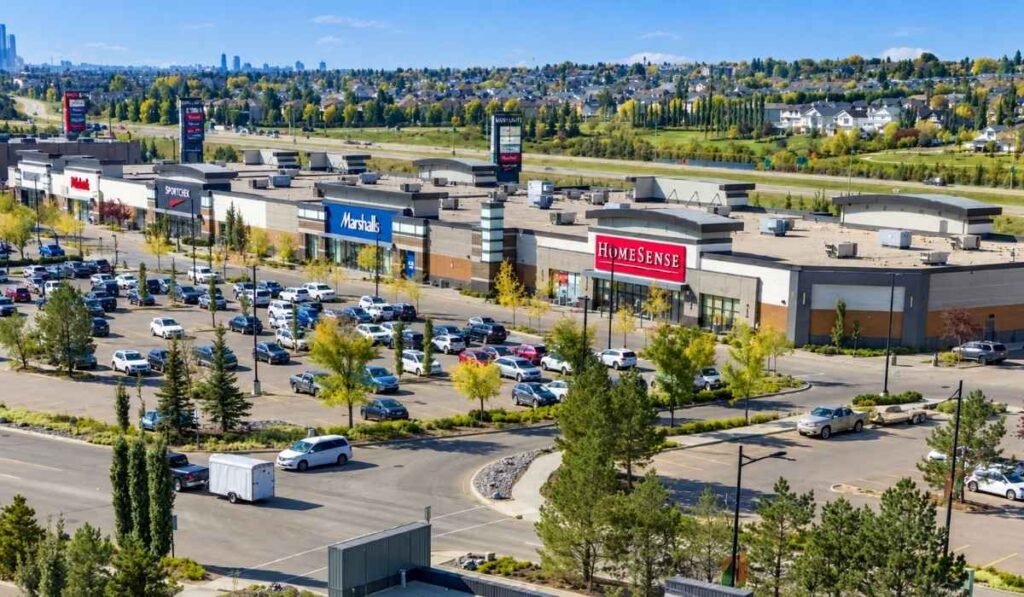
Manning Town Centre offers a very different shopping experience. It sits at Manning Drive and 153 Avenue in northeast Edmonton, close to Anthony Henday Drive, and it is an open-air power centre rather than an enclosed mall. The site covers about 75 acres, and together with the neighbouring Manning Village, it forms one of the largest retail areas on this side of the city.
You will find large-format stores, home improvement, chain restaurants, fast food and a Cineplex cinema on site. That combination is the reason to come. You can pick up what you need, eat dinner and catch a movie without moving your car more than once or twice.
I often shop at Manning Town Centre because Marshalls and Old Navy are close together, making it easy to find children's clothing in one trip. If you are travelling with young kids and need to top up on clothing, that pairing is the most useful thing at Manning.
Cabela's is the other stop worth knowing about, especially if you are road-tripping through Alberta. It is a large outdoor and hunting store with display tanks and mounted wildlife inside, and it is genuinely interesting to walk through even if you buy nothing.
It feels like a modern suburban shopping district. Wide roads, big parking lots, buildings spread out in clusters. It is designed for convenience rather than atmosphere.
Weather matters here more than it does at an indoor mall. Walking between stores is pleasant from May through September. In deep winter, when Edmonton can sit below -25 C for days at a time, you will find yourself driving from one parking lot to the next, and an enclosed mall starts to look a lot more appealing.
Manning Town Centre suits families, anyone with a rental car, travellers staying in northeast Edmonton or Fort Saskatchewan, and visitors who want shopping and entertainment in the same trip.
These two face each other across the same intersection at 97 Street and 137 Avenue, which makes this one of the most useful shopping corners in North Edmonton. Between them, you get an enclosed mall and an open-air centre in one stop.
Northgate Centre
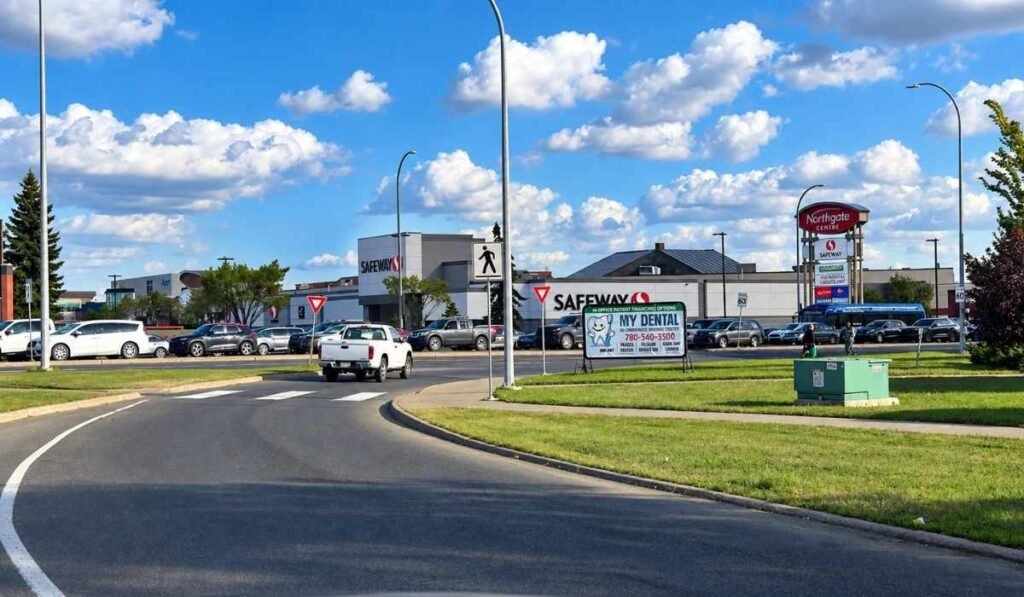
Northgate Centre is an established enclosed shopping centre on the southwest side of the intersection, anchored by Safeway, Walmart and Dollarama. It sits directly across from the North Edmonton transit terminal, so it is one of the easier places to reach without a car.
The rest is everyday retail: clothing, footwear, phone stores, salons, a food court and a range of services. It is a practical mall rather than a destination, and it is best treated that way. If you need groceries, a prescription and a new pair of jeans in one trip, it does the job well.
Northgate is the other mall I use myself, and the services are one of the reasons. Alongside the shops, there is a medical clinic, X-ray laboratory and ultrasound, plus a Dynalife lab for blood work. That matters more than it sounds. If you fall ill during a longer stay in Edmonton and your doctor sends you for imaging or lab tests, you can get all of it done in the same building.
North Town Centre
Across 137 Avenue, North Town Centre occupies the northeast corner. It was an enclosed mall until a redevelopment turned it into the current open-air format. London Drugs, T&T Supermarket and Indigo Books anchor it, with Marshalls, PetSmart, Dollarama and a run of quick-service restaurants alongside.
T&T Supermarket is a standout of North Town Centre for visitors. It is a large Asian supermarket and an interesting place to browse even if you are only picking up a few things.
I often shop at the seafood counter for fresh tilapia and tiger shrimp, and it is one of my favourite places in North Edmonton to buy seafood. If you are staying in a hotel suite with a kitchen or cooking for family during your visit, T&T is worth knowing about.
Clareview Town Centre
Address: 4250 137 Ave NW, Edmonton, AB T5Y 2W7
Clareview Town Centre is an open-air shopping centre near 137 Avenue and 50 Street in northeast Edmonton. It is a convenient place to pick up groceries, pharmacy items and other everyday essentials, with Real Canadian Superstore, Best Buy and Shoppers Drug Mart among the main retailers nearby.
The wider Clareview area also has several other major retailers, restaurants and services nearby, so you can usually find what you need without travelling far. This makes it particularly convenient for visitors staying in northeast Edmonton or passing through the area.
Clareview is well connected by public transit, with Clareview Station serving the neighbourhood. The station is not directly beside all of the shopping areas, however, so visitors without a car may need to take a bus or plan for a short additional trip.
Overall, Clareview is best for practical shopping rather than a leisurely day at the mall. If you are staying nearby, it is a convenient area for groceries, everyday supplies, meals and other essentials.
Namao Centre
Namao Centre is in far North Edmonton around 97 Street and 160 Avenue, near the Eaux Claires area. Unlike Kingsway or Londonderry, this is not a traditional mall. Instead, the shopping is spread across several plazas and freestanding businesses.
The area is useful for everyday needs, including groceries, pharmacies, banking, restaurants and other services. If you are staying in one of the newer neighbourhoods in far North Edmonton, it can save you a longer trip south to one of the larger malls.
Namao Centre is best for convenience. It is a good place to stop for supplies before continuing your trip or to pick up anything you need while staying in the area. Having a car makes getting around much easier.
Skyview Power Centre runs along the north side of 137 Avenue in northwest Edmonton, roughly between 133 Street and 140 Street. It is the largest open-air retail centre in this quadrant, with close to a kilometre of frontage along the avenue.
This is a power centre, not a mall. Stores face the parking lot, and you drive or walk between them outdoors. Tenants include Winners, HomeSense, Michaels, Golf Town, Urban Barn and Structube, with The Keg on site and a Home Depot next door.
It works best for a targeted trip: home goods, sporting goods, or a specific store you already have in mind. If you are staying near Griesbach or along St. Albert Trail, it is the closest large retail cluster.
Other Shopping Areas in North Edmonton
North Edmonton has several other shopping areas that are useful when you are staying nearby.
St. Albert Trail and 137 Avenue is one of the busiest retail corridors on the north side. The area has a mix of larger stores, restaurants, services and entertainment, with more businesses continuing north toward St. Albert.
137 Avenue is another important shopping corridor. It connects several of North Edmonton's major retail areas, including Skyview, Northgate, North Town, Londonderry and Clareview. Driving along this route gives you access to much of the shopping available across the north side of the city.
Smaller shopping plazas along 97 Street, 66 Street, Manning Drive and 153 Avenue will give you access to groceries, pharmacies, restaurants, coffee shops and other everyday services.
Which North Edmonton Shopping Centre Is Best?
If you are looking for
Best option
A traditional indoor shopping mall
Kingsway Mall
Big-box stores and entertainment
Manning Town Centre
Indoor everyday shopping
Northgate Centre
Shopping in northeast Edmonton
Londonderry Mall
Open-air shopping and quick errands
Clareview Town Centre
Shopping in far North Edmonton
Namao Centre
Practical retail and big-box shopping
Skyview Power Centre
Fresh seafood and Asian groceries
North Town Centre
Affordable baby and kids' clothing
Manning Town Centre, Skyview Power Centre
For most visitors, Kingsway Mall is the best overall choice. It has the widest selection, the best transit access and the most complete indoor mall experience in North Edmonton.
If you have a car and want big-box stores, dinner and a movie in one place, Manning Town Centre is the better pick.
Tips for Shopping in North Edmonton
Parking. Almost every centre on this list has a large surface lot, and Kingsway adds a parkade. Parking here is far simpler than downtown, though rules can differ by property, so check posted signs rather than assuming.
Bring a car if you can. The open-air centres are spread out. Manning Town Centre, Skyview, Namao and Clareview all involve real distances between store clusters, and crossing 137 Avenue or Manning Drive on foot is not pleasant. Buses serve these areas, but the trips take time.
Plan around winter. Edmonton winters can be very cold, and indoor malls such as Kingsway Mall, Londonderry Mall and Northgate Centre are more comfortable when temperatures drop. Open-air shopping centres are still accessible in winter, but you may find yourself driving between stores rather than walking.
Check hours before you go. Mall hours and individual store hours often differ, and holiday hours vary widely. Grocery and pharmacy anchors usually open earlier and close later than the mall around them. A quick look at the mall or store website will save you a wasted trip.
Final Thoughts
North Edmonton is not the city's headline shopping destination, and this guide has not tried to pretend otherwise. Instead, the shopping malls in North Edmonton offer convenience. If you are staying on the north side, almost everything you are likely to need is close.
Kingsway Mall is the strongest choice for a traditional indoor mall with a broad range of stores, food and good transit access. Manning Town Centre is the better option for big-box shopping, restaurants and a movie in one visit. Londonderry Mall, Northgate Centre, North Town Centre and the open-air centres along 137 Avenue are all worth your time when you are already nearby.
Pick the one closest to where you are staying, and match it to what you actually need that day.
FAQ About Malls in North Edmonton
What is the best mall in North Edmonton?
Kingsway Mall is the best choice for visitors looking for a traditional indoor shopping experience. It has more than 160 stores and services, a food court and convenient access to public transit, including the nearby Kingsway/Royal Alex LRT station.
Is there a large shopping mall in North Edmonton?
Yes. Kingsway Mall is the main large enclosed mall on the north side and the second largest in Edmonton overall. Londonderry Mall is the other substantial indoor mall, with over 150 stores in the northeast. Most other centres in North Edmonton are open-air retail areas rather than traditional malls.
Where can I shop in northeast Edmonton?
Londonderry Mall at 137 Avenue and 66 Street is the main indoor option. Manning Town Centre at Manning Drive and 153 Avenue covers big-box stores, restaurants and a cinema. Clareview Town Centre near 137 Avenue and 50 Street handles groceries and everyday shopping.
Is Kingsway Mall close to downtown Edmonton?
Yes. It sits just north of downtown at 109 Street and Kingsway Avenue, a short drive or a few minutes on the LRT. It is also within easy reach of NAIT and the Royal Alexandra Hospital.
Do I need a car to shop in North Edmonton?
Not for everything. Kingsway Mall, Northgate Centre and North Town Centre all sit beside major transit hubs, and frequent bus routes serve Londonderry. For the open-air centres such as Manning Town Centre, Skyview Power Centre and Namao Centre, a car makes the trip much easier.
North Edmonton is where a large share of the city actually lives. It is not Edmonton's traditional tourist area, but it offers a different side of the city.
There is no strip of historic storefronts like Old Strathcona, no cluster of arenas and galleries like downtown. What you get instead is river valley parks, a strong food scene built around immigrant communities, family recreation centres, plenty of shopping, and fast access to the highways out of town.
That mix makes it a good choice for some travellers, while others may prefer a more central part of Edmonton. I live near Castle Downs in the northwest, and the thing I notice most is how little time I spend fighting traffic.
I can reach a major shopping centre, a river valley park and the Anthony Henday ring road without ever driving through the core. I have lived in two different parts of the north side over the years and have never wanted to move to another quadrant of the city.
This guide covers the best places to visit, where to eat and where to stay in North Edmonton. For the wider picture, start with the ultimate Edmonton travel guide.
Where Is North Edmonton?
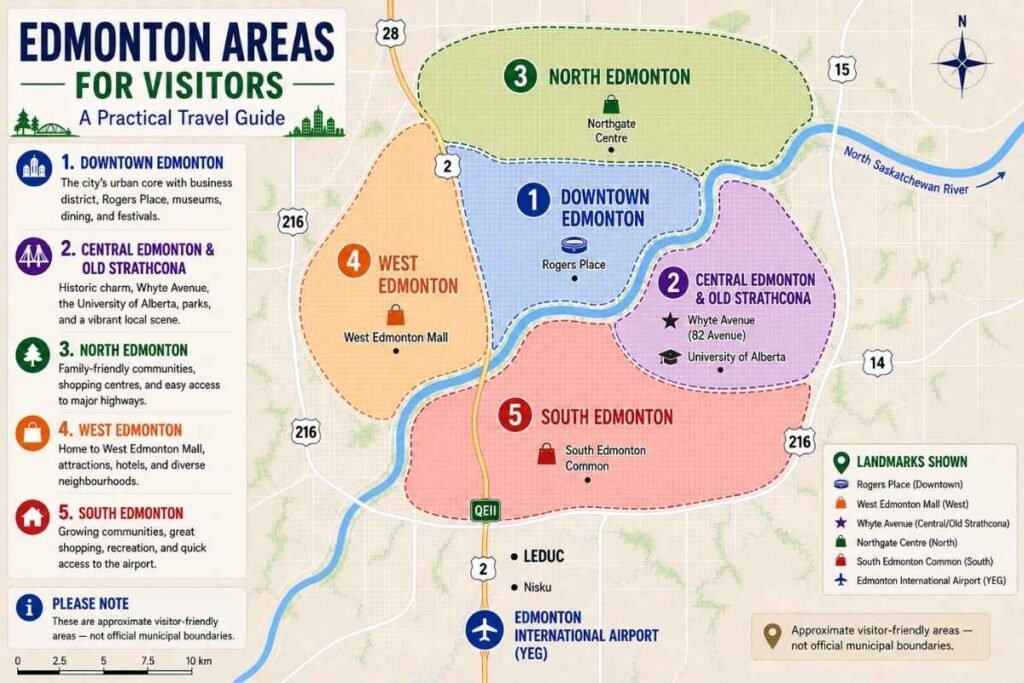
North Edmonton is not an official district with fixed borders. Most people use it loosely for everything north of downtown and the river valley: Blatchford and Griesbach in the middle, Castle Downs and Northgate to the northwest, and Londonderry, Clareview, Hermitage and Beverly to the northeast.
For visitors, a few roads matter more than the neighbourhood names:
Road
Why it matters to visitors
97 Street
The main north-south spine. Runs from downtown straight up through the north side and continues toward CFB Edmonton.
137 Avenue
The main east-west commercial strip. Most of the shopping, hotels and restaurants sit on or near it.
Yellowhead Trail (Highway 16)
Cuts across the south edge of the area. Your route west toward Jasper or east toward Elk Island.
Anthony Henday Drive
The ring road along the north edge. Lets you cross the city without touching downtown.
St. Albert Trail
Runs northwest out of the city into St. Albert.
Manning Drive
The northeast route toward Fort Saskatchewan and the industrial Heartland.
The practical takeaway: if your trip includes St. Albert, Fort Saskatchewan or Elk Island National Park, staying here saves you real driving. If your trip is mostly downtown and Old Strathcona, it does not.
Is North Edmonton Worth Visiting?
North Edmonton is not a major tourist destination on its own, but it can be a convenient place to explore and a good base for the right type of visitor.
It suits travellers with a car, families looking for parks, pools and outdoor recreation, people visiting friends and relatives here, anyone heading out of the city on day trips, and anyone who eats well on a budget.
It may not be the best choice if you want to walk to major attractions or want an evening out beyond your hotel lobby. Those visitors should look at the Downtown Edmonton guide instead, or the Edmonton areas guide to compare five parts of the city.
Best Things to Do in North Edmonton
Alberta Aviation Museum
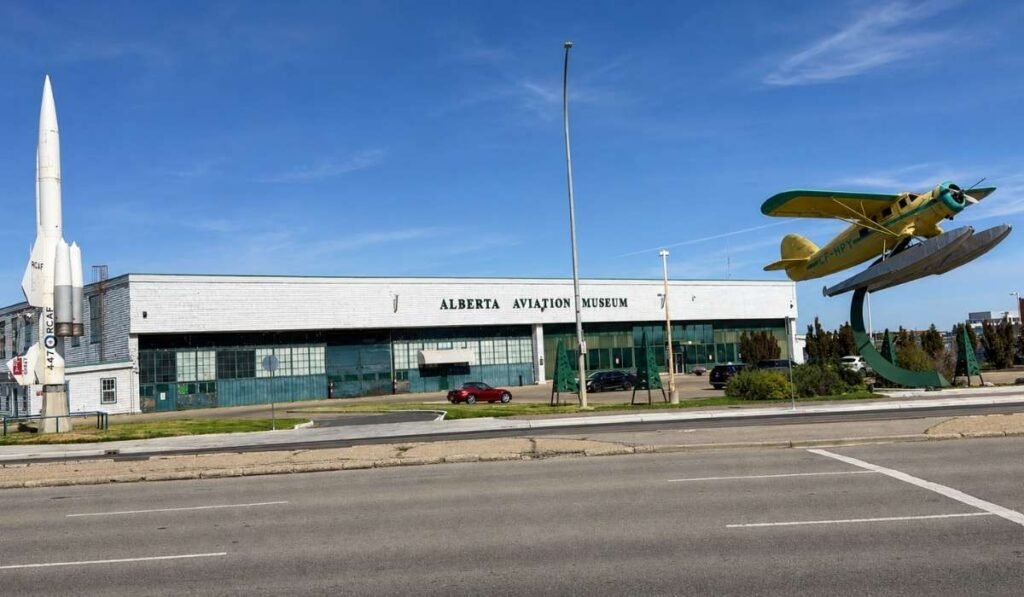
The Alberta Aviation Museum is one of the most interesting attractions in North Edmonton, and the building is half the reason to go. The museum sits in Hangar 14 on the site of the former Edmonton City Centre Airport, now the Blatchford redevelopment.
The hangar is one of the last surviving "double-double" wooden hangars built for the British Commonwealth Air Training Plan during the Second World War, and standing inside it gives you a sense of scale that photos do not.
The collection runs to more than 30 aircraft, from bush planes to military and jet-era machines, with displays on Edmonton's role as the gateway to the North.
Give yourself about an hour and a half, or two if you read every panel or get talking with the volunteers. It works well for older kids and anyone interested in history or machinery, and younger children may run out of patience faster. Check the museum's website for current hours and admission.
Rundle Park
Rundle is the best all-round park on the north side and the one I would send a visitor to first. It sits in the river valley in the northeast, off 118 Avenue, and there is plenty of space even when the park is busy.
In warmer months, you get paved multi-use trails that connect straight into the wider river valley network, an 18-hole disc golf course that is one of the busiest in the city, a short public golf course, beach volleyball, tennis courts, playgrounds and picnic sites, six of which can be booked.
A pedestrian bridge links the park to Gold Bar Park across the river, which makes a good longer walk or ride. The ACT Aquatic and Recreation Centre sits inside the park with an indoor pool and gym, so a wet afternoon does not end the visit.
In winter, the park runs the IceWay, a lit skating trail of roughly two kilometres through the trees, plus a shinny area and toboggan hills. Skating on city ice surfaces is free, and rentals are available on site in season. Check the City of Edmonton's ice surface page first, because a warm spell can close it.
Hermitage Park
Hermitage is quieter than Rundle. It sits further northeast along the river, with natural-surface trails, two large ponds, a big off-leash dog area and a lot of birdlife. American white pelicans turn up here, which surprises people.
The southern pond is stocked with rainbow and brown trout and is free to fish with a valid Alberta licence. Canoes, kayaks and paddleboards are allowed; motors are not. There are picnic tables throughout, and in winter the open ground is used for cross-country skiing.
Hermitage Park is best for visitors who enjoy a quieter outdoor experience. It is a good place to spend an hour or two if you are staying nearby, walking a dog, or looking for somewhere calm to eat lunch outside.
Castle Downs Park
Castle Downs is a community recreation hub rather than a sight. It has one of the largest playgrounds in the city, a free drop-in spray park, a skate park, ball diamonds, sports fields including a cricket pitch, and an outdoor rink and skating oval in winter. The Castle Downs Recreation Centre on site holds an arena and a YMCA.
If you are in the northwest with young kids, this is where you take them for an afternoon. It is mainly worth visiting for families with young children.
Griesbach
Griesbach is worth exploring if you enjoy walking through an attractive Edmonton neighbourhood. It was built on the site of the former CFB Griesbach army base, which Canada Lands Company acquired in 2003 and redeveloped over the following fifteen years.
The result does not look like the rest of north Edmonton. It is laid out around a central park, four small lakes that double as stormwater ponds, walking paths and a community garden, with front porches, back lanes and mature trees kept from the base. Street names and memorials keep the military history visible.
Griesbach is my old neighbourhood, so I am biased. What I would tell a visitor is that it is the one part of north Edmonton where walking is genuinely the point. The paths connect, the lakes break up the sightlines, and you are never far from a bench.
Treat it as a thirty to forty minute stroll with a coffee, not an attraction. There are no formal attractions or visitor facilities, which is part of why I recommend simply enjoying it as a walk.
Parks and Outdoor Activities in North Edmonton
If you only have time for one outdoor stop, here is how I would choose between them.
Young kids: Castle Downs Park. Playground, spray park and washrooms in one place.
Walking or cycling: Rundle Park, then across the footbridge into Gold Bar. The paved trails link straight into Edmonton's river valley network, the largest urban park system in Canada.
Winter: the Rundle IceWay for skating and tobogganing, or Castle Downs for the outdoor rink.
A quiet afternoon, dogs, or fishing: Hermitage Park.
Rundle is the one I keep going back to, in every season. Hermitage I have been to and enjoyed, but it offers a quieter and more relaxed experience, and I would not send someone across the city for it.
Check conditions before you drive out. Trails flood, ice melts, and spray parks shut down. The City of Edmonton posts current status for parks and ice surfaces.
Shopping in North Edmonton
North Edmonton is convenient for shopping without being a major shopping destination. If you are staying on the north side, you will find most of what you need within a short drive, usually with free parking.
The main shopping areas include:
97 Street and 137 Avenue. Northgate Centre is an enclosed mall with more than 70 stores and services, along with many medical offices. North Town Centre sits across the intersection, with big-box stores and a T&T Supermarket for Asian groceries.
66 Street and 137 Avenue. Londonderry Mall is the largest enclosed mall in the area. It has been recently renovated and includes Simons, Winners, H&M, a grocery store, a library branch and a Service Canada office.
Kingsway area. Kingsway Mall is close to the Alberta Aviation Museum and is a convenient place to shop or grab something to eat before or after visiting the museum. It offers a larger selection of stores and restaurants than most neighbourhood shopping centres.
Northeast Edmonton and St. Albert Trail. Manning Town Centre, Clareview and the shopping areas along St. Albert Trail cover much of the big-box shopping in and around North Edmonton.
Londonderry and Northgate are where I do most of my own shopping, which is probably the most honest measure of them: they are practical places where I can easily find what I need for everyday life. Kingsway Mall is a useful option when I am closer to the Alberta Aviation Museum or the Kingsway area.
Where to Eat in North Edmonton
One of the things I enjoy most about North Edmonton is its diverse food scene. Decades of immigration have filled 97 Street, 137 Avenue, 118 Avenue and the northeast with family-run restaurants that serve excellent food in locations that visitors might easily overlook. Prices are low, portions are large, and most places are family-friendly.
Some starting points:
Middle Eastern. Jerusalem Shawarma on 137 Avenue is one of the busiest shawarma spots in the city. Alhuda Pita Bakery and Abu Nawras, both on 97 Street, do fresh pita, manakish, falafel and grilled plates. Ali Baba Turkish Grill further north on 97 Street is the pick for kebab platters.
Filipino. Edmonton has a large Filipino community and the north side is its centre of gravity. Manila Grill Express on 140 Avenue and Kuya Allan's Lechon Pinoy on 97 Street both do the classics. The Filipino food counters at Northgate Centre are also worth considering for a quick and affordable meal.
Vietnamese. The 118 Avenue corridor, known locally as the Avenue of Nations, is the place to look. Dang Good near 133 Street is a long-standing favourite with an unusually good vegan menu alongside the regular one.
Indian and South Asian. Savoy's South Indian Kitchen in Clareview covers dosa and biryani. Spicebros in Griesbach does Indian street food and stays open late, which is rare on this side of the city.
Coffee and dessert. Mokha Coffee House and Parama Cafe, near Griesbach and 137 Avenue, are Middle Eastern-style cafés that stay open into the night.
If you want something familiar, when I go out for a proper sit-down dinner on the north side, it is usually Earls Kitchen + Bar on 50 Street near 137 Avenue, or the Keg Steakhouse at Skyview on the west end of 137 Avenue. Neither is a local discovery. But both are close to the north-side hotels, both take reservations, and both work when you are travelling with people who want a predictable meal and a table they can sit at for two hours. The Keg is the pricier of the two.
Hours change often at the independent restaurants, and some close on their own schedule rather than a posted one. Call or check before you drive out. For a wider list across the city, see the Edmonton restaurants guide.
Where to Stay in North Edmonton
Most north-side hotels sit near 137 Avenue or along the Yellowhead. Their locations are convenient for travellers driving in and out of the city rather than visitors who want to walk to attractions.
Fairfield by Marriott Inn & Suites Edmonton North, on Griesbach Parade. The best family choice, with a pool and waterslide, beside the 137 Avenue restaurants and shops.
Holiday Inn Express & Suites Edmonton North, at 50 Street and 137 Avenue. Handy if your plans point northeast toward Fort Saskatchewan or Elk Island.
Chateau Nova Yellowhead, on Yellowhead Trail. Good if you are driving west afterward toward Jasper.
Rosslyn Inn & Suites, at 97 Street and 137 Avenue. Older and plainer, but cheap and central.
Rates change constantly, so check pricing directly. Parking is usually free, which is a real difference from downtown.
Staying in North Edmonton involves a few trade-offs. You get easier driving, cheaper rooms and a faster exit toward St. Albert, Fort Saskatchewan and Elk Island National Park.
Getting Around North Edmonton
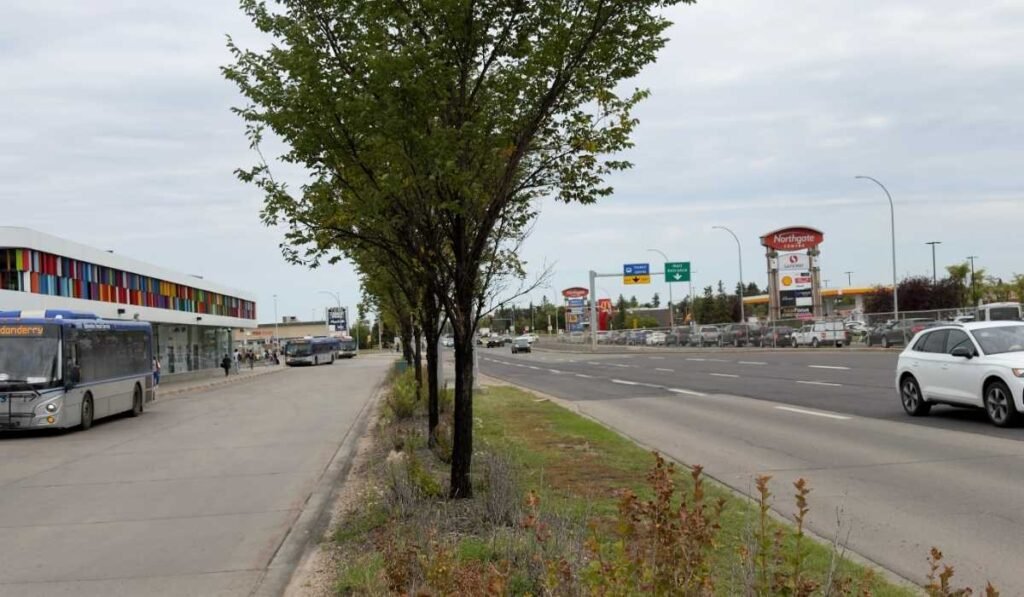
Northgate Centre and Edmonton Transit buses at Northgate Transit Centre on the left.
By car
Having a car makes exploring North Edmonton much easier. Distances are long, and the attractions are spread across roughly fifteen kilometres. Use the roads in the table above, and note that Yellowhead Trail carries heavy truck traffic sometimes, and has been under construction in sections for years.
Parking is free at nearly every park, mall and hotel on the north side.
By public transit
Transit works, but not everywhere equally.
The Capital Line LRT runs from Clareview in the northeast through Belvedere and Coliseum, into downtown and south to Century Park. If you are staying near Clareview, that is a genuine car-free option for reaching downtown. The Metro Line runs northwest from downtown to NAIT/Blatchford Market station, which puts you close to the Alberta Aviation Museum.
Everything else is buses, routed through transit centres at Northgate, Castle Downs, Eaux Claires and Clareview. Service is generally better along the main corridors than in residential areas between them. Getting from a north-side hotel to a north-side park by bus is slower than it looks on the map.
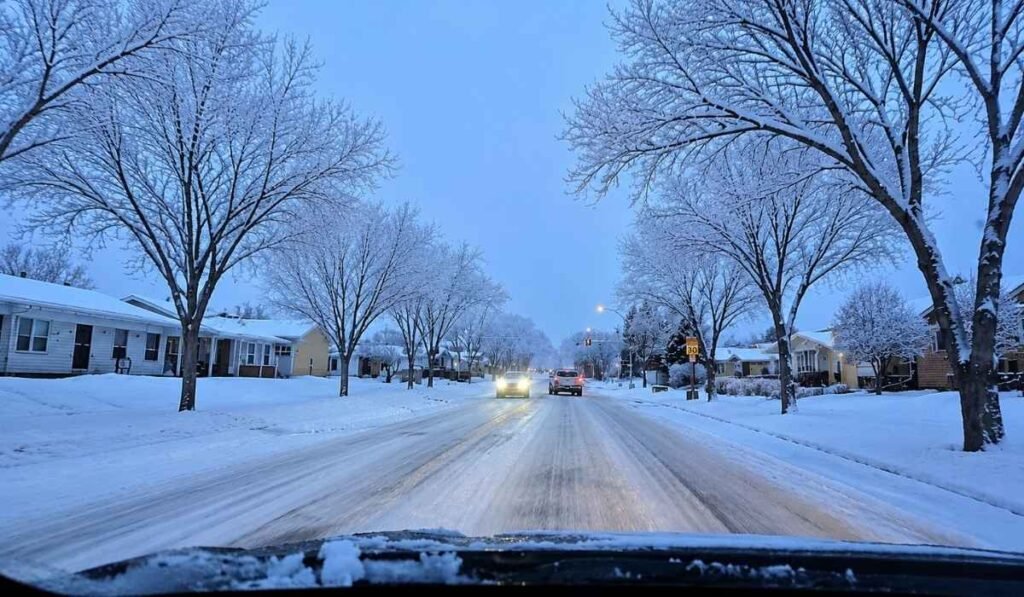
A snowy residential street in North Edmonton during winter. Side streets can remain covered with snow for extended periods during cold weather.
Edmonton winters are long and cold, and locals do not spend them hiding indoors. We plan around the day rather than the season. A minus five day with sun is a good day to be outside. A minus twenty-eight day with wind is a day for a museum and a pool.
Winter options on the north side:
Skating the Rundle Park IceWay, then warming up at a fire pit along the trail
Tobogganing at Rundle or on the hill at Castle Downs
Indoor swimming at the ACT Aquatic and Recreation Centre or the Castle Downs YMCA
The Alberta Aviation Museum, which is heated but is still a hangar, so wear a jacket
Cross-country skiing at Hermitage Park
Driving in North Edmonton during winter requires a little extra preparation. Clear the entire windshield before setting off; leave extra following distance because some side streets can stay covered with packed snow for weeks. Plug in the block heater overnight during deep cold temperatures if your vehicle has one.
Visiting North Edmonton in Summer
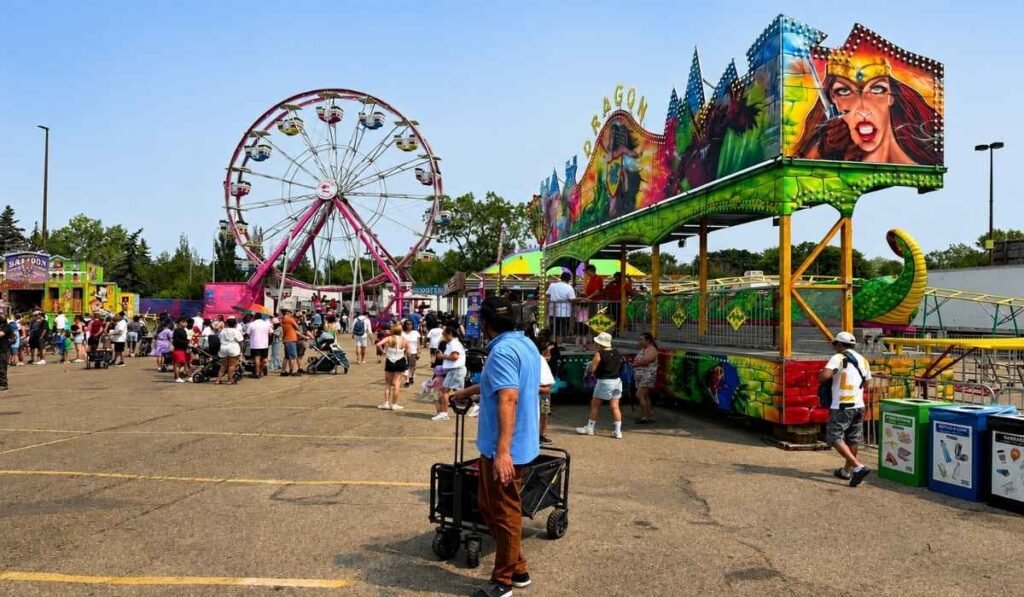
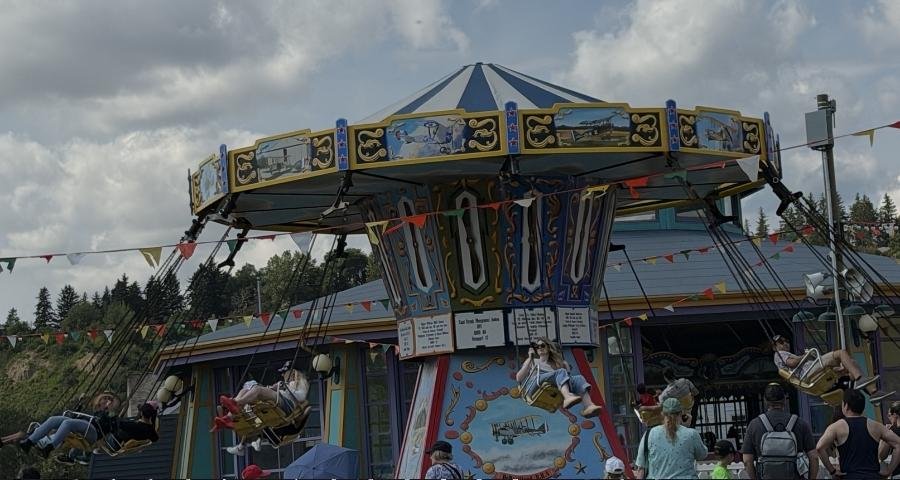
K-Days brings carnival rides, food, entertainment and large crowds to Edmonton each summer.
Summer is my favourite time to explore North Edmonton. The days are long, with daylight lasting well past 10 p.m.
This is when I think North Edmonton's parks are at their best. Rundle and Hermitage are great for walking and spending time outdoors, spray parks are open, the disc golf course is busy, and the river valley trail network is ideal for cycling.
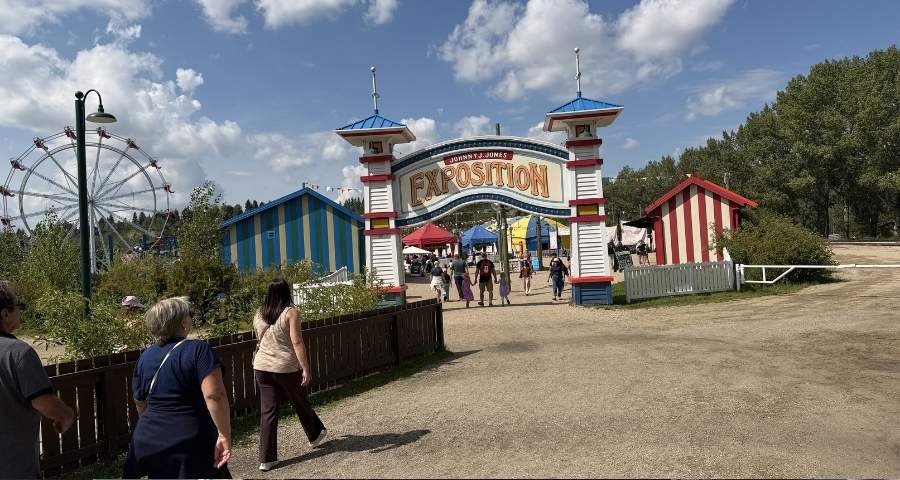
Summer also brings one of Edmonton's biggest annual summer festivals to North Edmonton. K-Days, held at the Edmonton EXPO Centre and surrounding grounds, brings midway rides, food, entertainment and other events to the area each July. If you are visiting during the festival, I recommend checking the current schedule and planning your visit ahead.
Is North Edmonton a Good Place to Stay?
Stay here if:
You have a car
You are visiting family or friends on the north side
You are travelling with kids and want space, pools and parks
You want easier parking and lower room rates
Your trip includes St. Albert, Fort Saskatchewan or Elk Island
You would rather be in a quiet residential area than a busy core
Stay somewhere else if:
You want to walk to attractions
You want restaurants, bars or live music near your hotel at night
You plan to spend most of your time downtown or in Old Strathcona
You are not renting a car
Frequently Asked Questions
Is North Edmonton a good place to stay?
It is a good base if you have a car, are visiting family, or are travelling with children. It may not be the best base if you want to walk to attractions or spend your evenings out. Rooms are generally cheaper, and parking is easier than downtown.
What are the best things to do in North Edmonton?
The Alberta Aviation Museum, Rundle Park, and Castle Downs Park if you have children.
Do you need a car in North Edmonton?
For most visitors, yes. The LRT reaches Clareview and NAIT/Blatchford and buses cover the main corridors, but the parks and restaurants are spread out and slow to reach without one.
What are the best parks in North Edmonton?
Rundle Park for range and trails, Hermitage Park for quiet, wildlife and fishing, and Castle Downs Park for young families.
What is North Edmonton known for?
Residential neighbourhoods, river valley parks in the northeast, diverse and inexpensive restaurants, shopping along 137 Avenue, and quick highway access to St. Albert, Fort Saskatchewan and Elk Island.
Is North Edmonton safe for visitors?
Yes, generally. North Edmonton is a practical and generally safe area for visitors, particularly around major hotels, shopping centres, and residential neighbourhoods. As in any large city, use common sense: keep valuables out of sight in your vehicle, use well-lit areas at night, and stay aware of your surroundings.
Final Thoughts
North Edmonton may not be the first part of Edmonton that visitors think about, but it offers a more local side of the city. This is where many Edmontonians live, shop, eat and spend time outdoors.
For visitors, its strengths are its parks, diverse restaurants, family recreation, convenient shopping and easy access to major roads. I have lived in different parts of North Edmonton over the years, and one of the things I appreciate most is how easy it is to get around without having to drive through the city centre.
North Edmonton is a particularly good choice for visitors with a car, families, and people visiting friends or relatives on the north side. If you want a highly walkable area with major attractions, nightlife and restaurants outside your hotel, Downtown Edmonton or Old Strathcona may be a better fit.
But if you want to experience a different and more residential side of Edmonton, North Edmonton is well worth exploring.
The first sound I heard at Jurassic Forest was not a dinosaur. It was mosquitoes.
They found me in the parking lot and stayed with me for most of the walk. I am telling you that first because if I had known, I would have packed differently. Now you know. The rest of the day was better than I expected. I walked a wooden boardwalk through real old forest, and every so often something enormous started moving in the trees beside me and roaring.
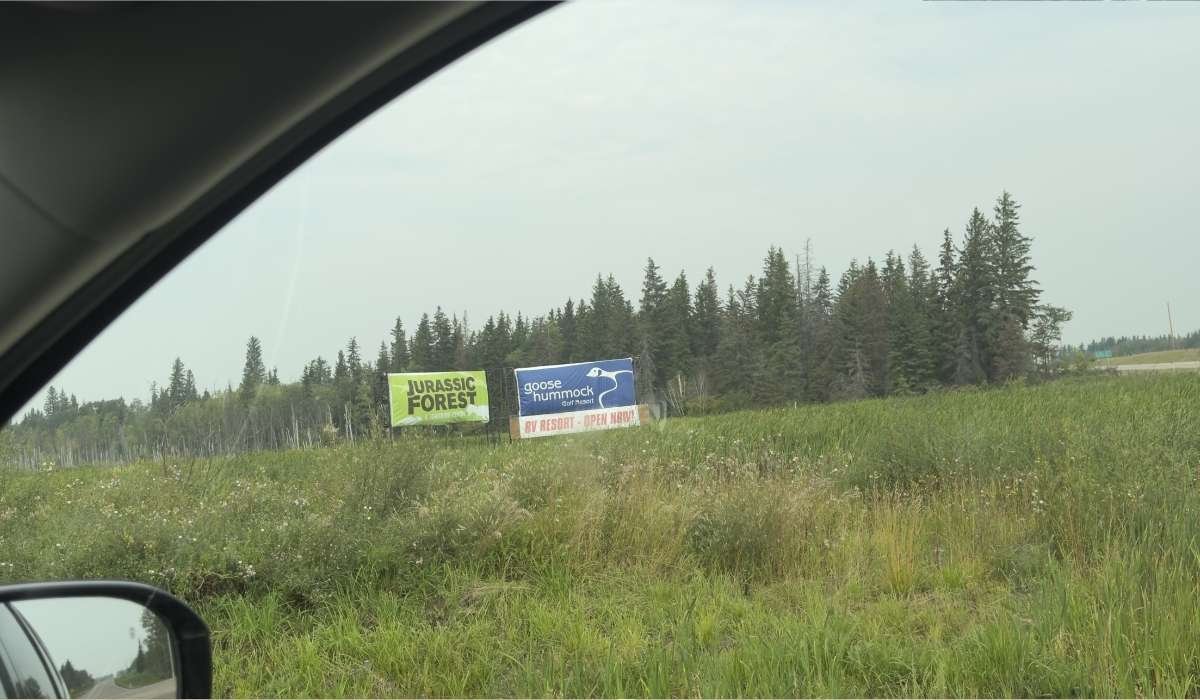
Here is the first thing I want to clear up. Jurassic Forest is not in Edmonton, even though nearly everyone searches for it that way. I drove out to Gibbons, Alberta, about 30 minutes north of the city on Highway 28. It is one of the easiest day trips from Edmonton I have done, and I did not plan it much at all. I went today, and this is what I would tell a friend who asked me about it.
What Is Jurassic Forest?
I want to set your expectations properly, because I had the wrong idea going in.
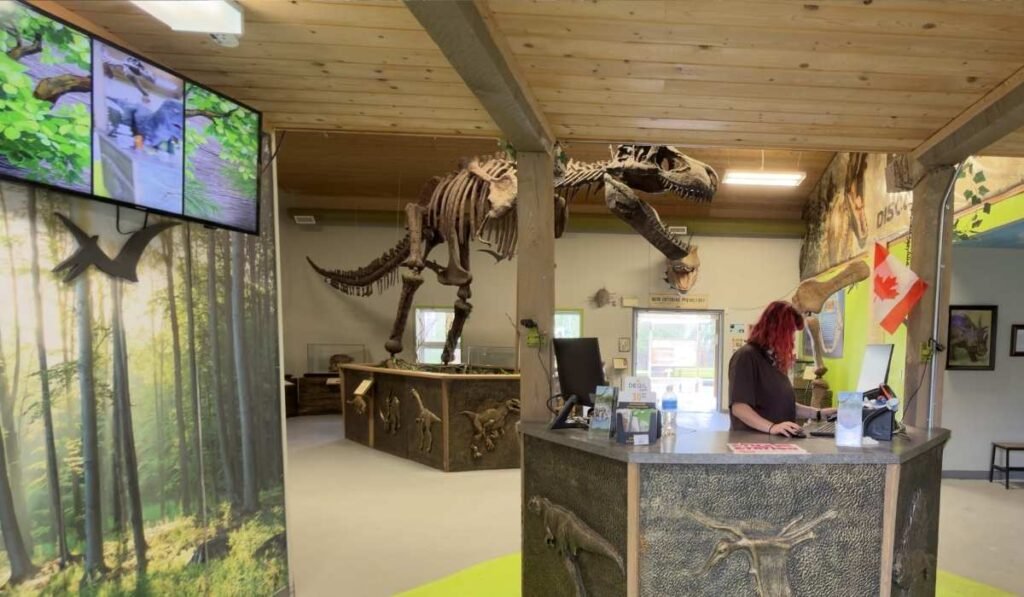
Jurassic Forest is an outdoor dinosaur park. It is not a museum with fossils behind glass, and it is not an amusement park with rides. The main thing you do there is walk.
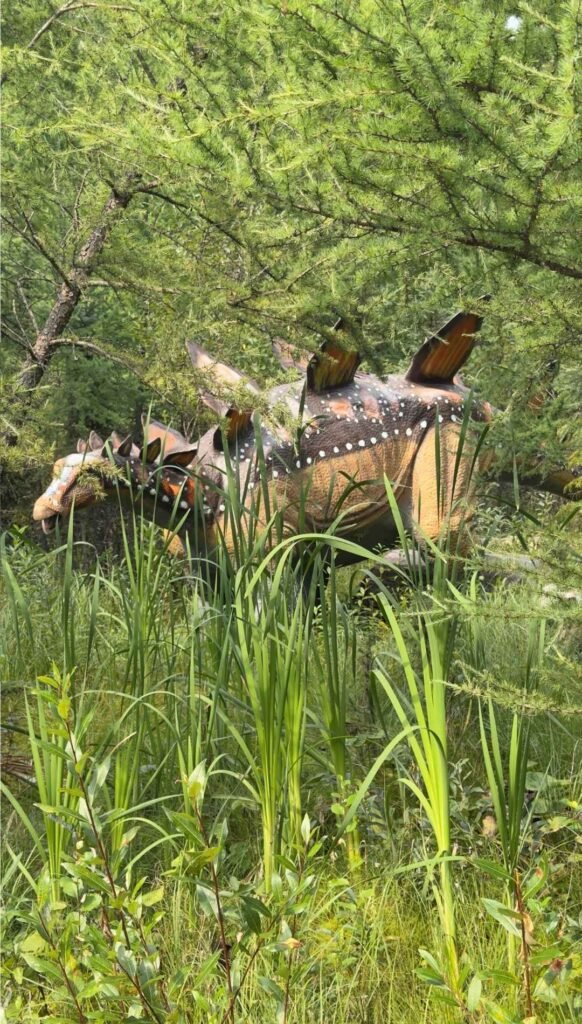
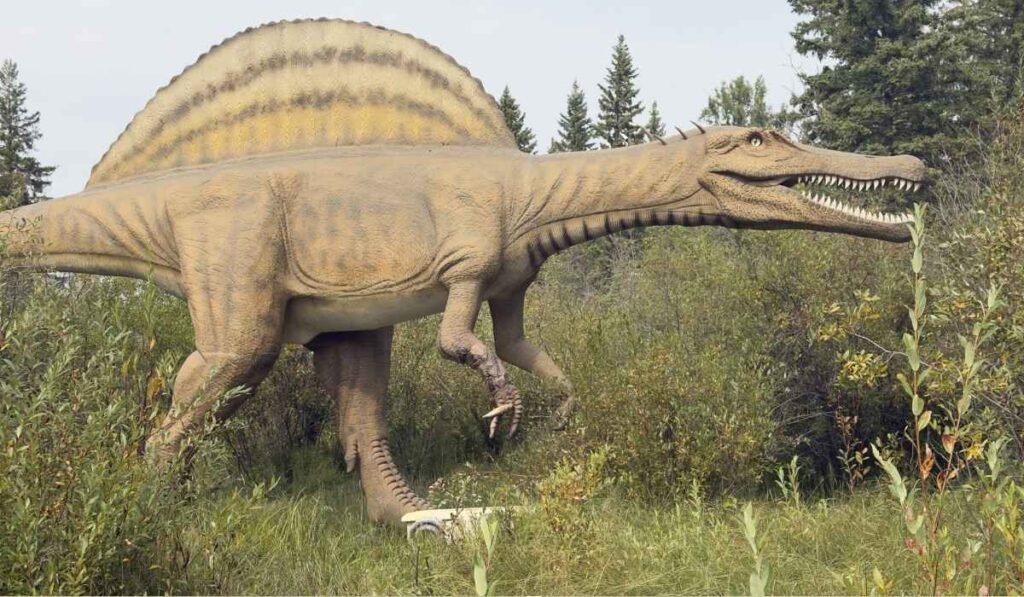
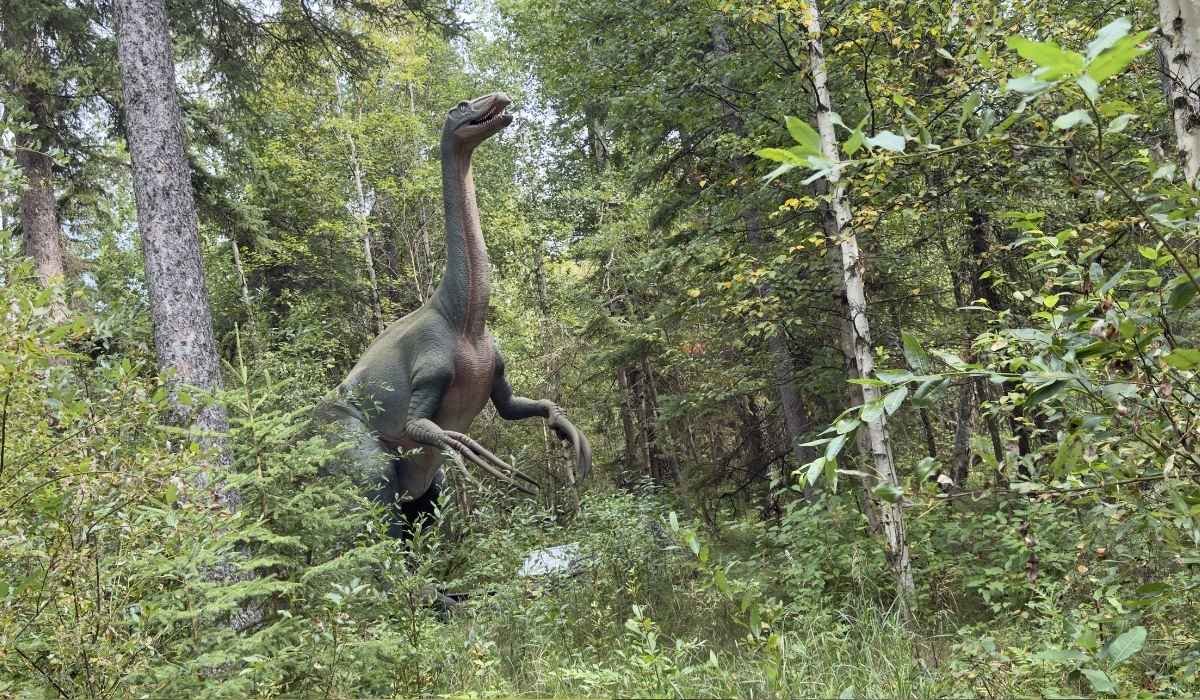
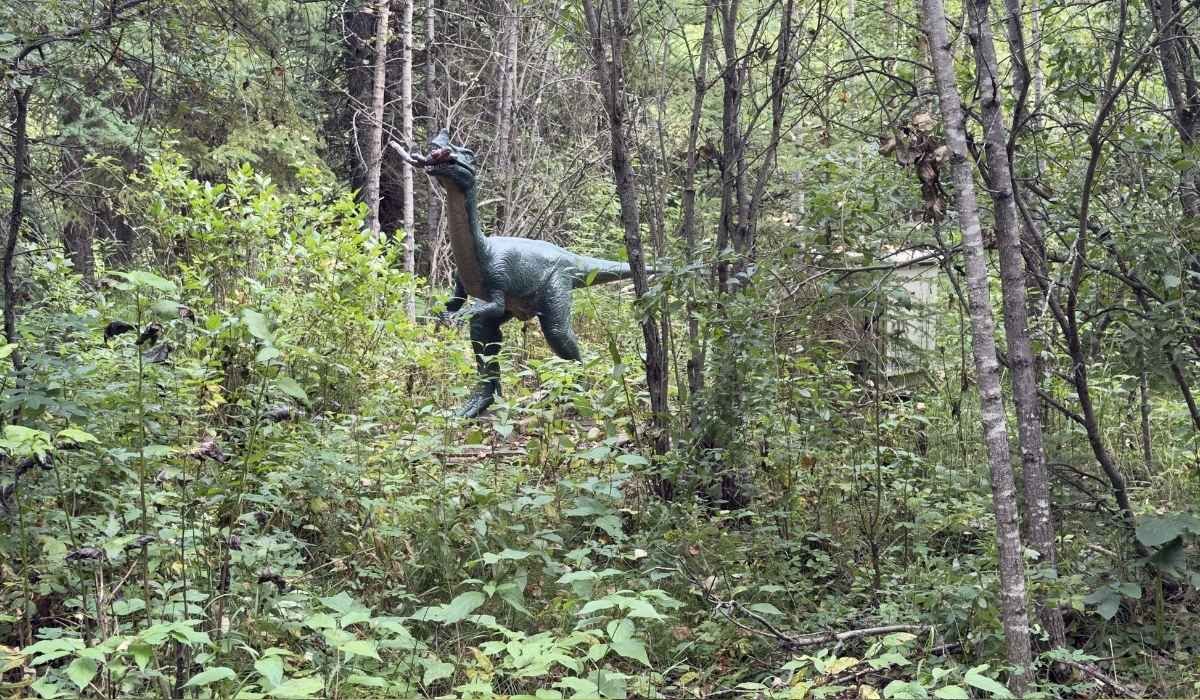
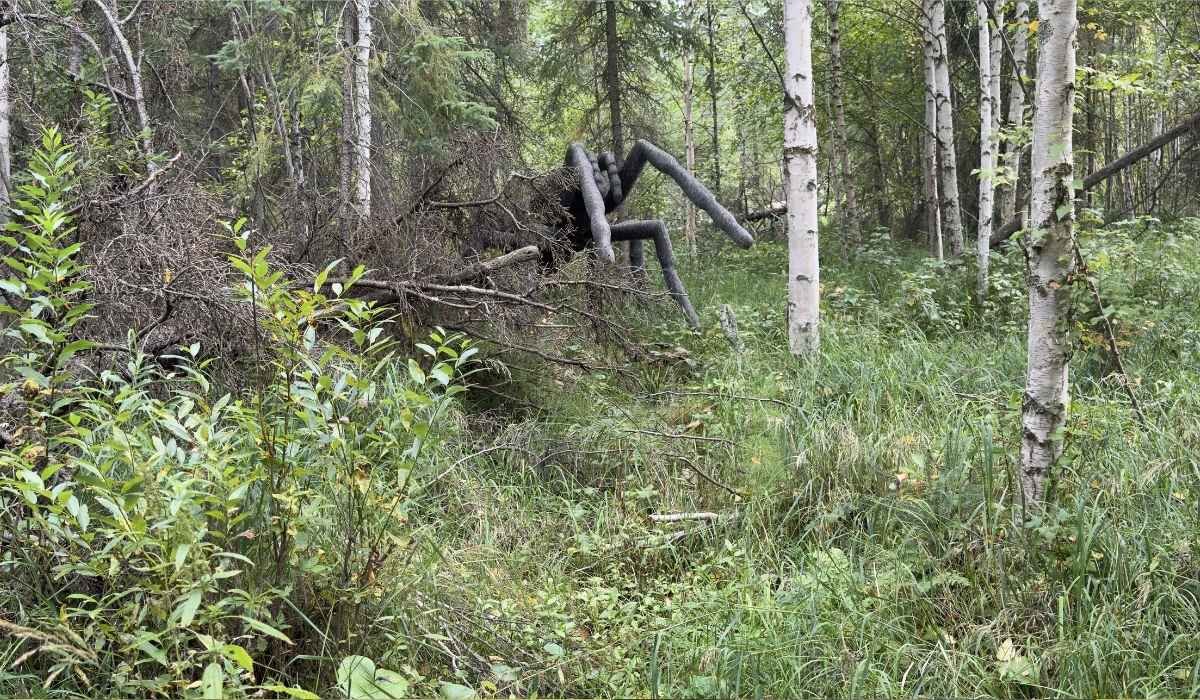
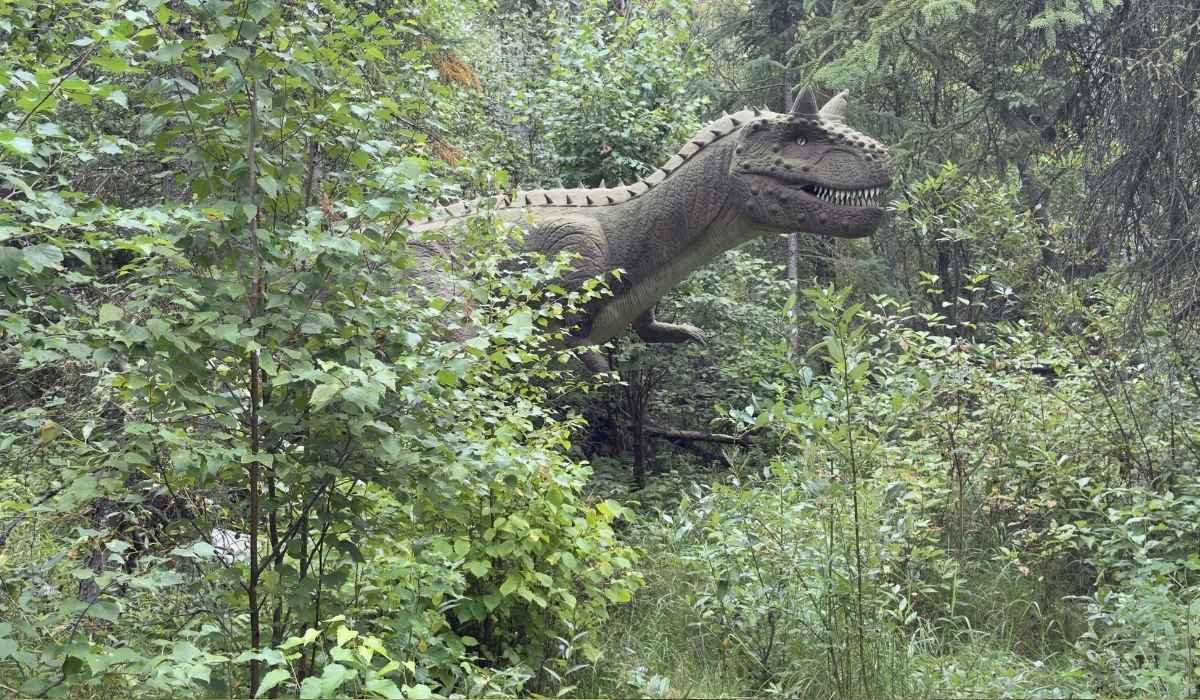
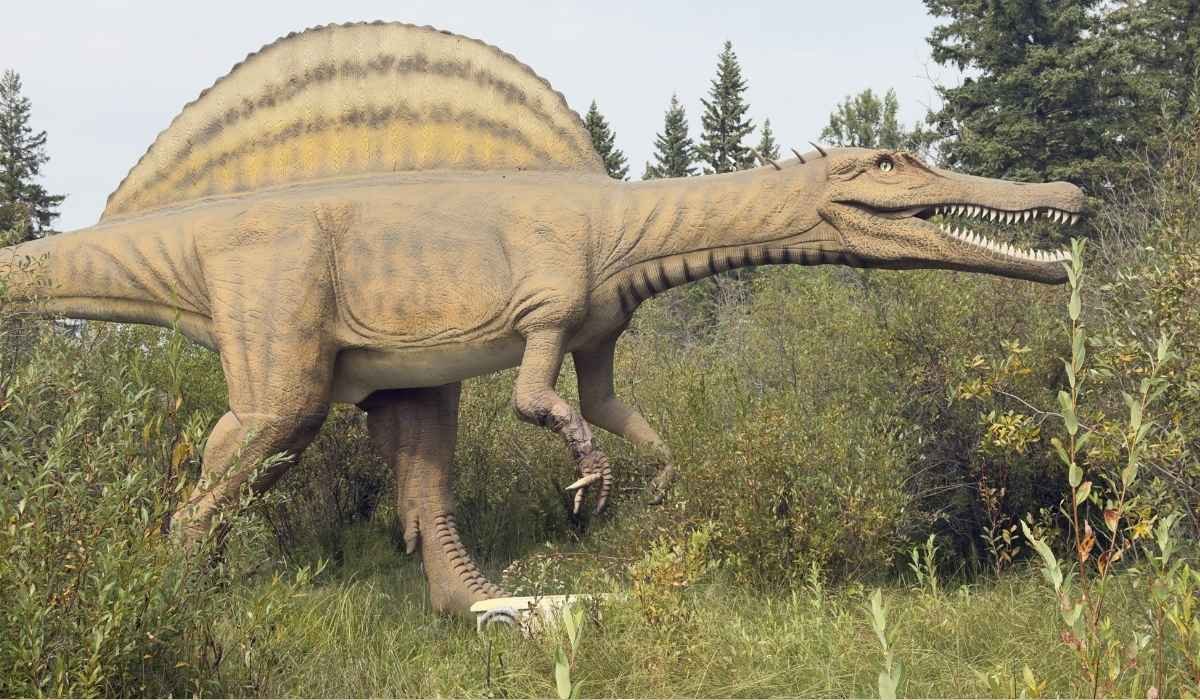
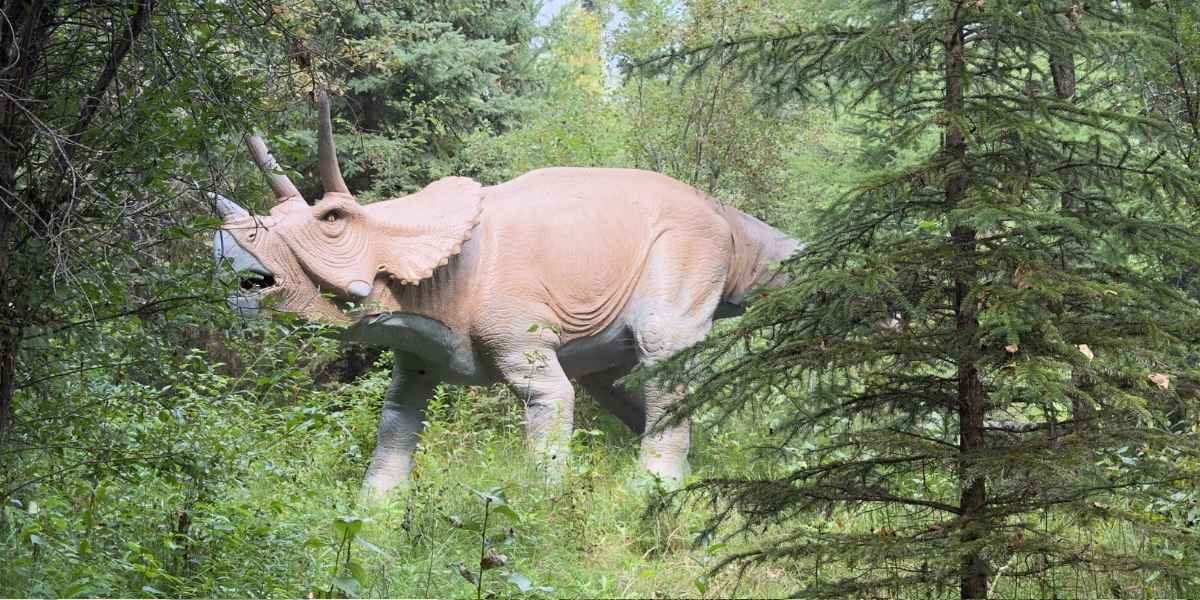
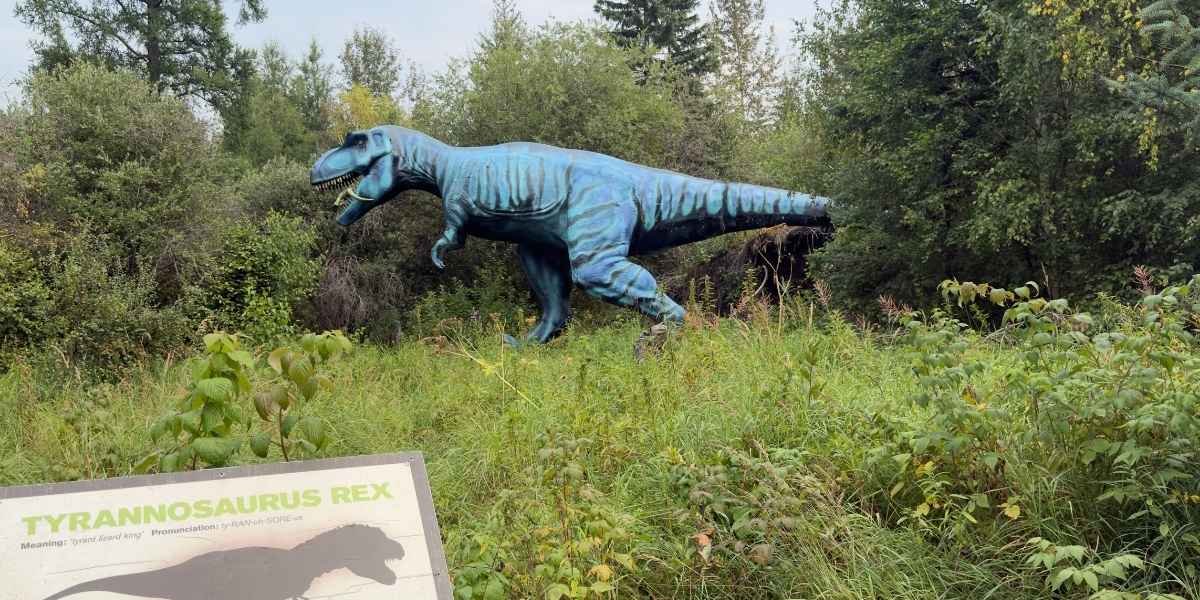
The park has more than 40 life-size animatronic dinosaurs spread along a 2 km boardwalk trail through old forest. Motion sensors set them off as you come near, so they move and make noise when you round a corner.
That is what makes it work, and I did not understand it until I was standing on the trail. The forest is thick and shaded, so I usually heard a dinosaur before I saw it. I was not looking at a statue in an open field. I was walking a path, and the path kept interrupting me.
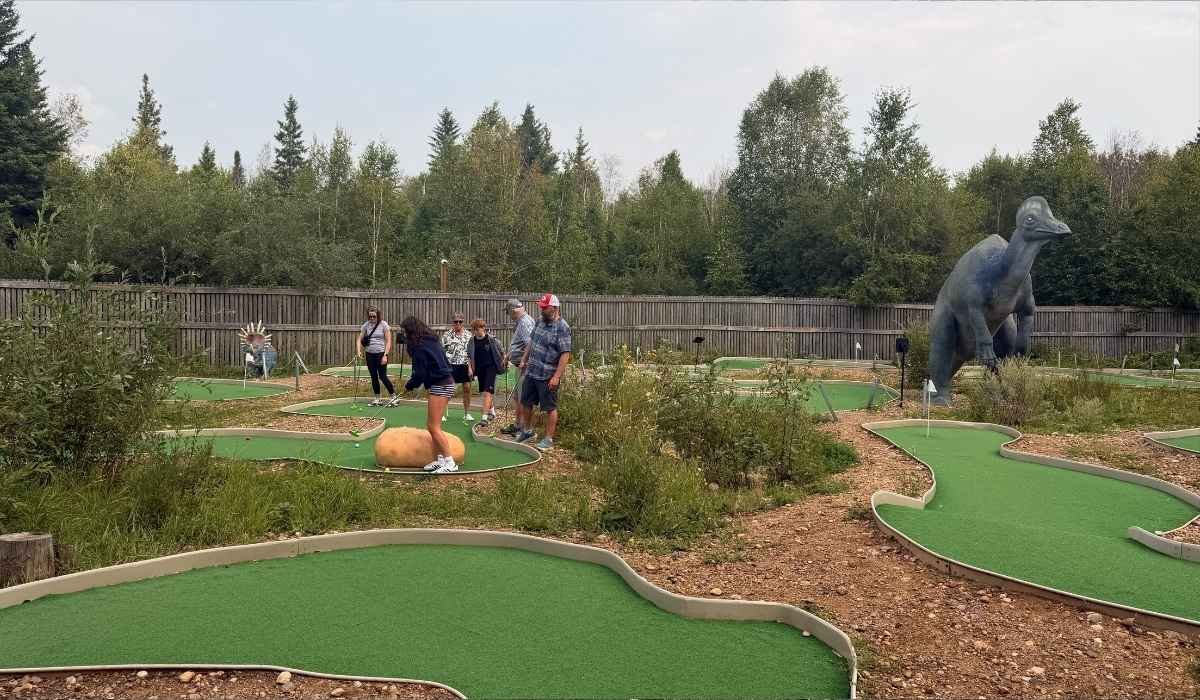
There is more than the trail. There is also an 18-hole dinosaur mini golf course called Journey to Extinction, an outdoor play area called the Active Learning Park where kids can brush for bones in sand, and two food spots, the Tar Pit Café and the Cretaceous Concession.
My Visit to Jurassic Forest
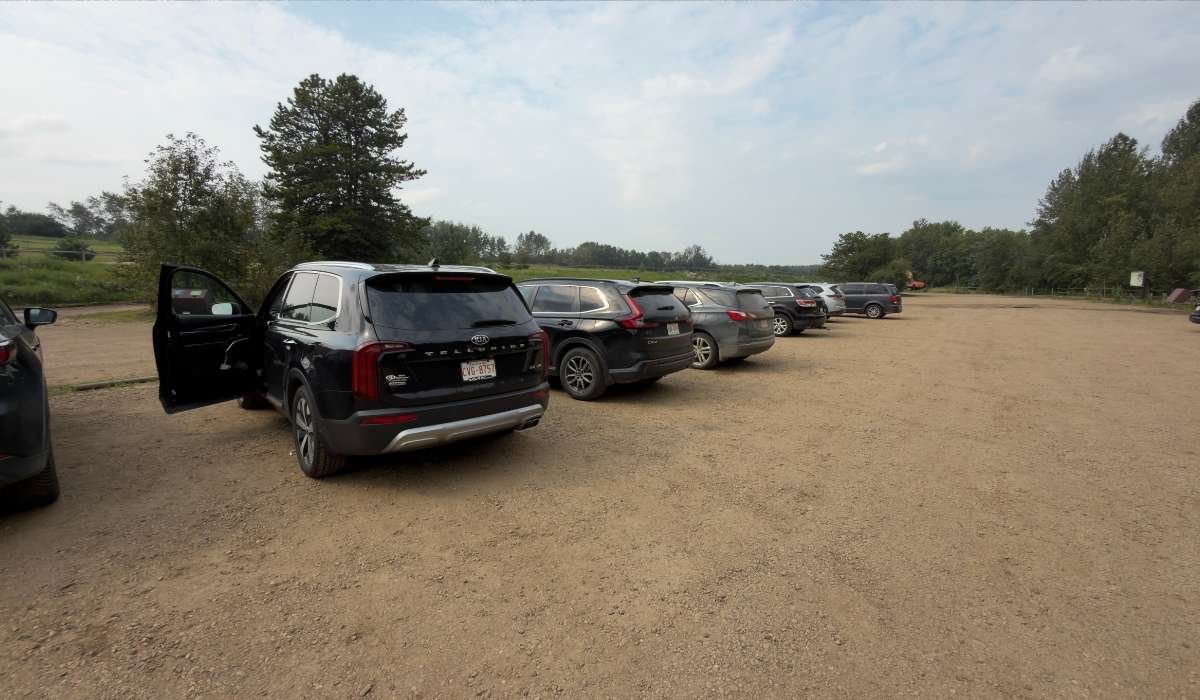
Getting there was simple. The drive north out of Edmonton is flat farmland and grain bins, and then I turned onto a township road and the trees closed in around me. Parking is free and sits right at the entrance. There was plenty of room when I pulled in.
The mosquitoes started at the car. I am not blaming the park for this. It is an old forest with wet ground in late August, and mosquitoes are simply part of that in this corner of Alberta. I just did not have repellent with me, and I paid for it all afternoon.
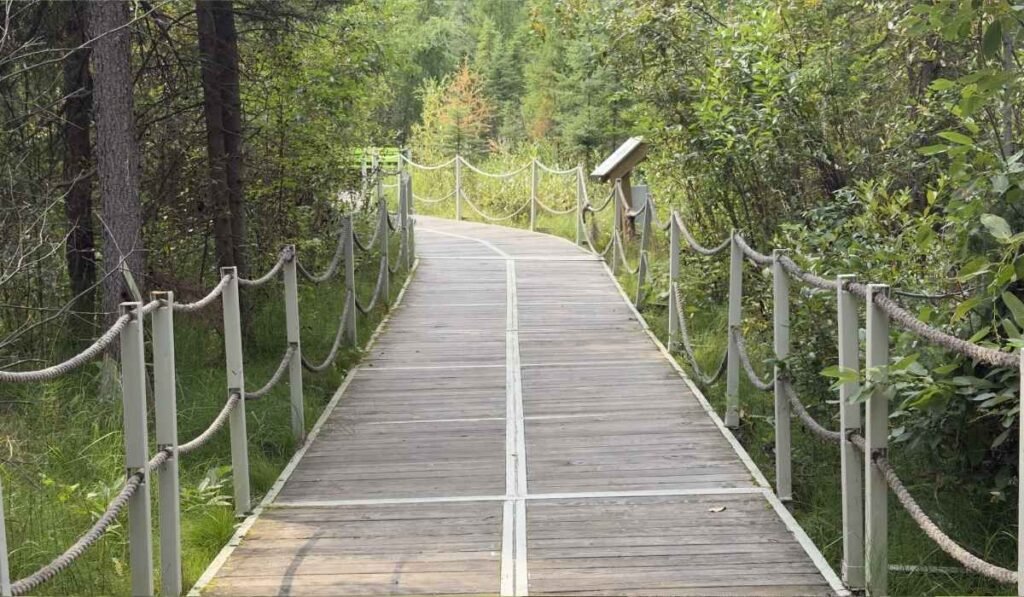
Once I stepped onto the boardwalk, the forest seemed to take over. The entire trail is a raised wooden boardwalk, so I never had to worry about mud, and the walk was easy. Sunlight filtered through the trees in patches, and the trail was quiet between the displays. Then, without warning, a sensor would pick up my movement, and a full-size dinosaur would suddenly start moving just a few metres away.
That is also where I learned how my kids felt about the whole idea. My toddler was a little afraid, and my baby was scared outright and refused to stand on the trail at all. We ended up carrying the little one for most of the walk.
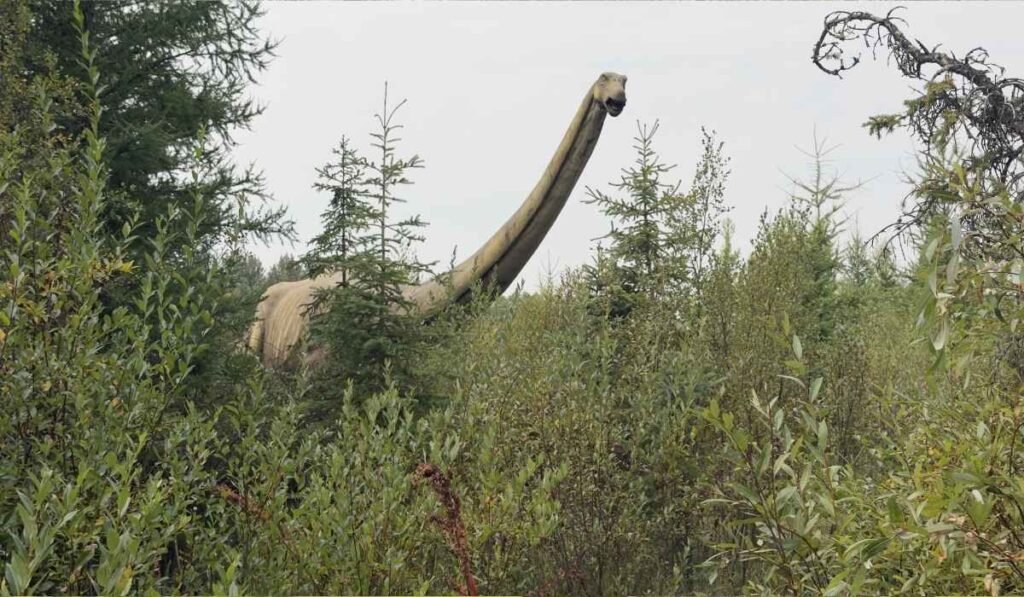
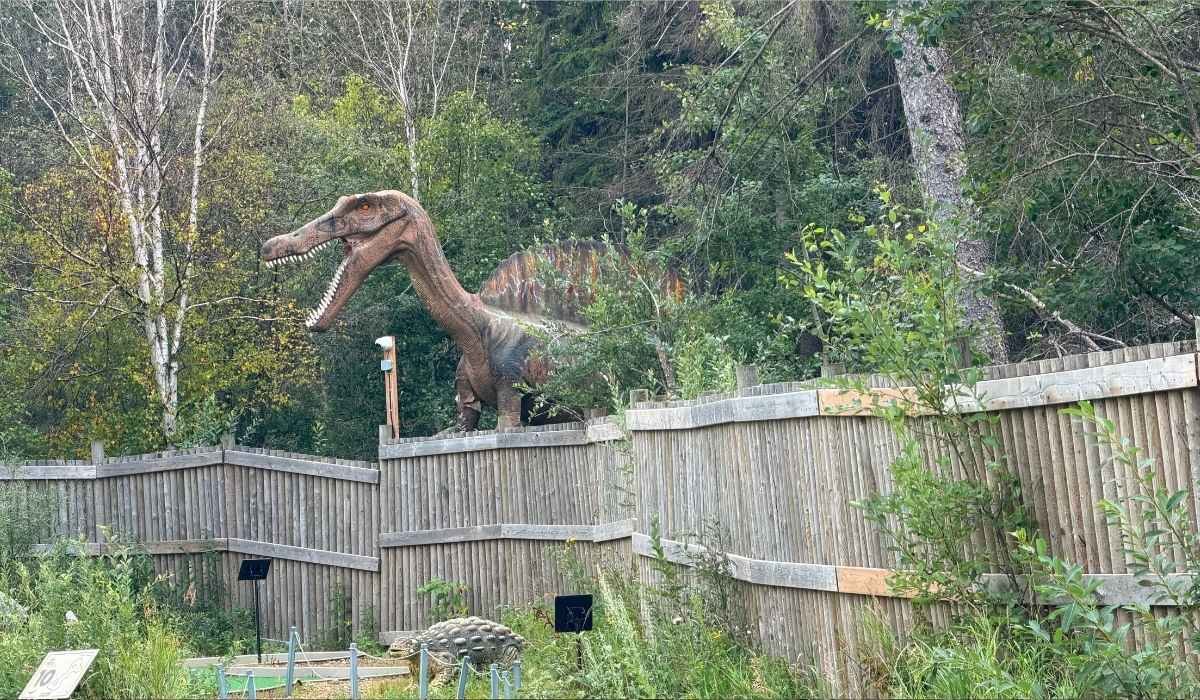
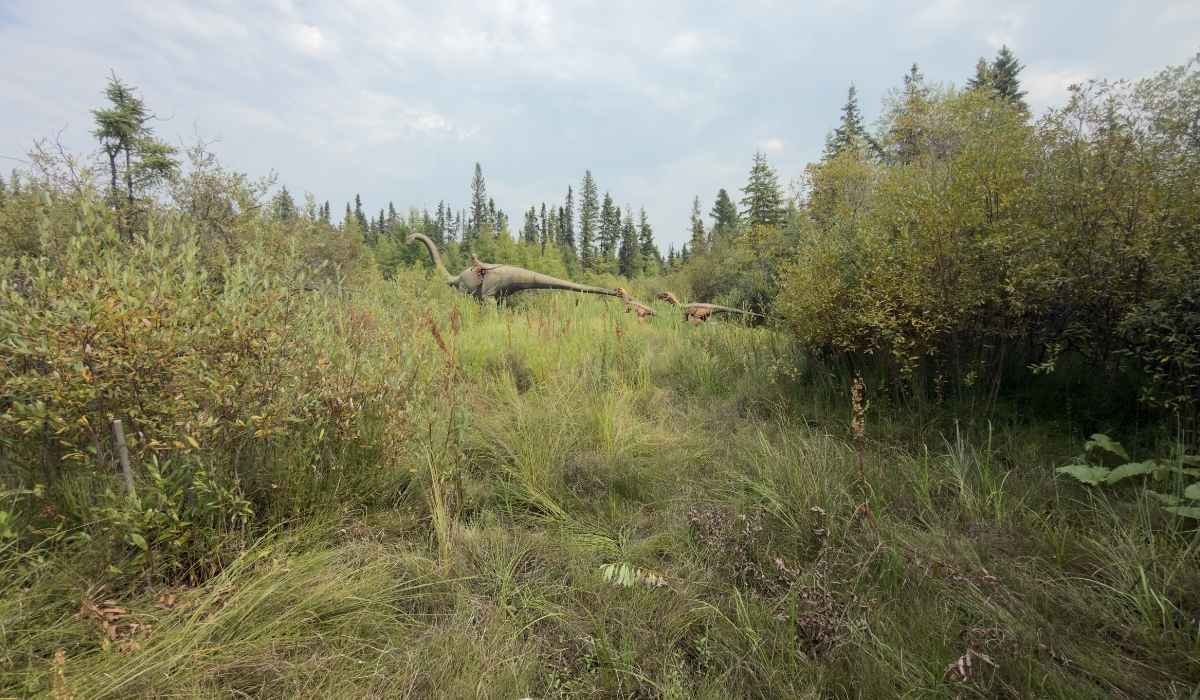
The scale is what surprised me most. Photos online don't really capture how large these dinosaurs feel. From the trail, the long-necked dinosaurs looked like they belonged among the trees around them, while the meat-eaters were positioned low and close to the boardwalk, making them feel surprisingly near.
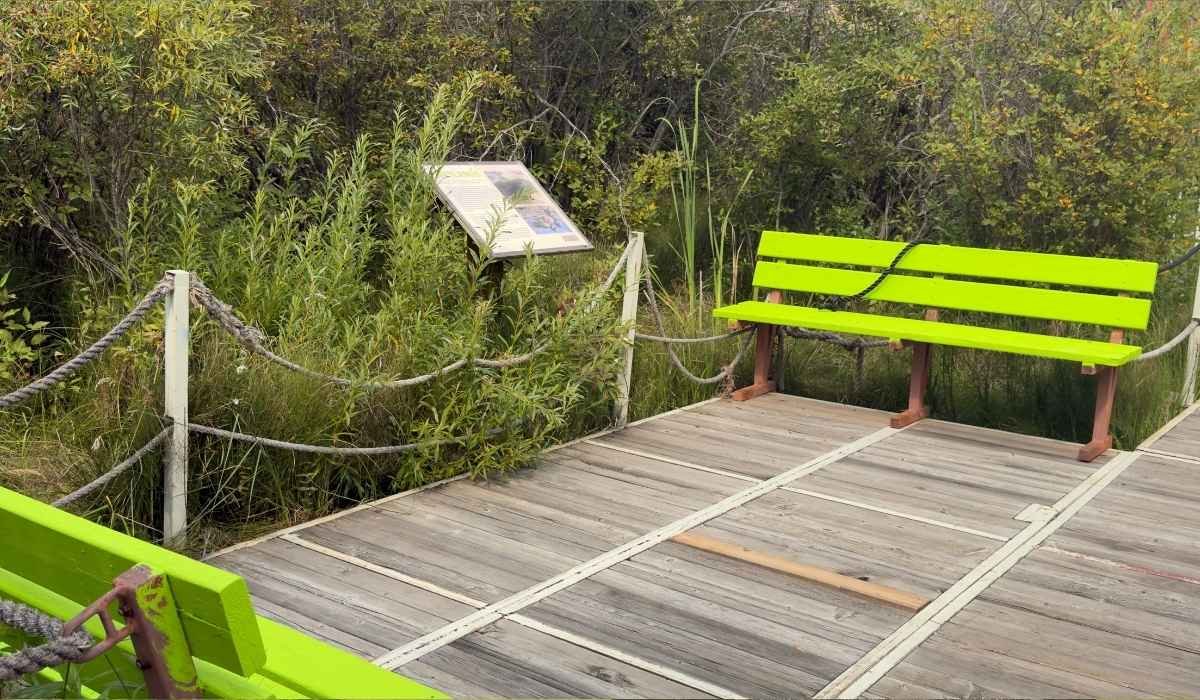
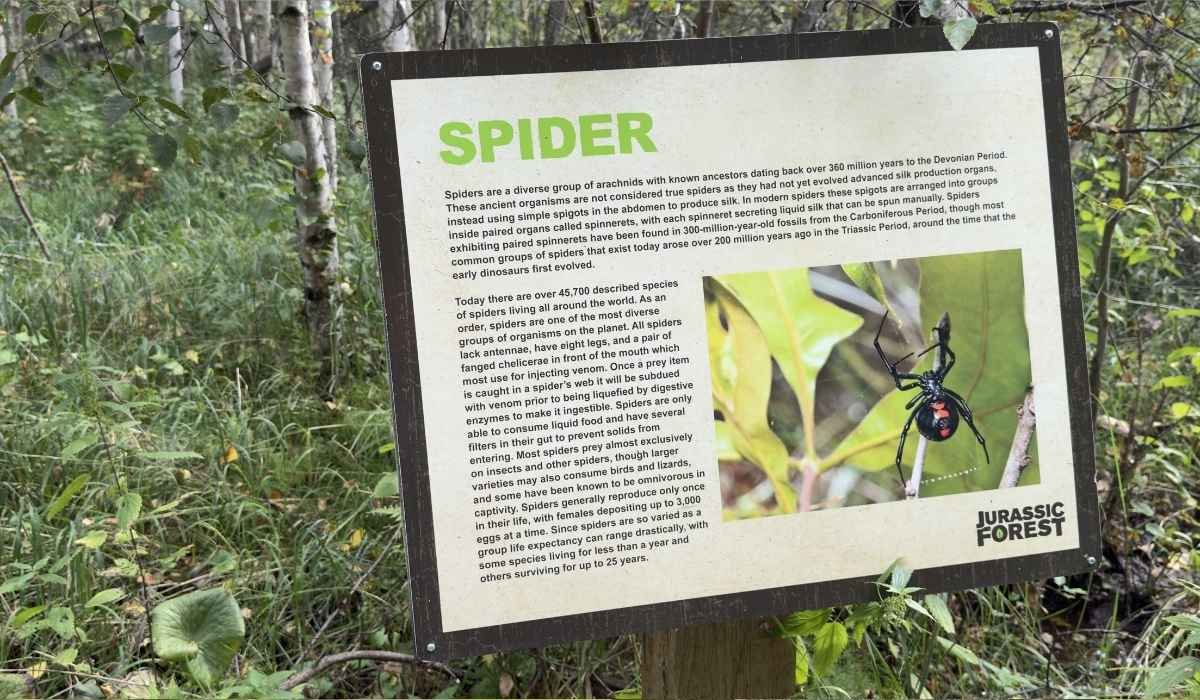
I found information boards along the route. Some are about the dinosaurs, and others explain the forest I was standing in, including the wetland sections the boardwalk crosses. I wanted to read more of them than I did, but I could not because of the bugs and a nervous baby in my arms.
My walk took about 15 minutes, and I was moving faster than I meant to. If you have repellent on and you can stand still without being eaten, you will take much longer than I did, and you should.
Three things I noticed that I think will help you. The boardwalk is smooth and wide, and I watched people push strollers along it without any struggle.
There are benches spaced out along the trail, often right beside an information board with a view into the trees, so you can sit whenever you want instead of pushing through to the end. And the sensors do not all fire at the same moment for every group, so if a dinosaur looks still, wait a second before you walk past it.
What You'll See at Jurassic Forest
The wooden boardwalk winds through the forest and past the dinosaur displays.
The trail is the main event. You will pass a mix of plant eaters and predators. Species you can expect to encounter include Albertosaurus, Tyrannosaurus rex, Triceratops and Stegosaurus, plus the very large long-necked dinosaurs that are impossible to miss.
I would not go in with a checklist of species. I got more out of letting the trail surprise me and reading the boards for the ones I liked.
Here is what else I found worth knowing about.
Discovery Trails
The boardwalk loop is 2 km in total, the dinosaurs are motion-activated, and it is all included with general admission. The park also offers printable scavenger hunt sheets in two age levels, one for ages 4 to 7 and one for ages 8 to 12. If you are visiting with older children, the scavenger hunt can be an easy way to keep them engaged throughout the walk. It is a free way to keep them interested for the whole walk.
Journey to Extinction Mini Golf
An outdoor 18-hole course with dinosaur-themed obstacles. It is an add-on rather than part of general admission. I saw the price posted as $8 per person on the admissions board at the gate when I visited, and you can play it on its own without paying full park admission.
Active Learning Park
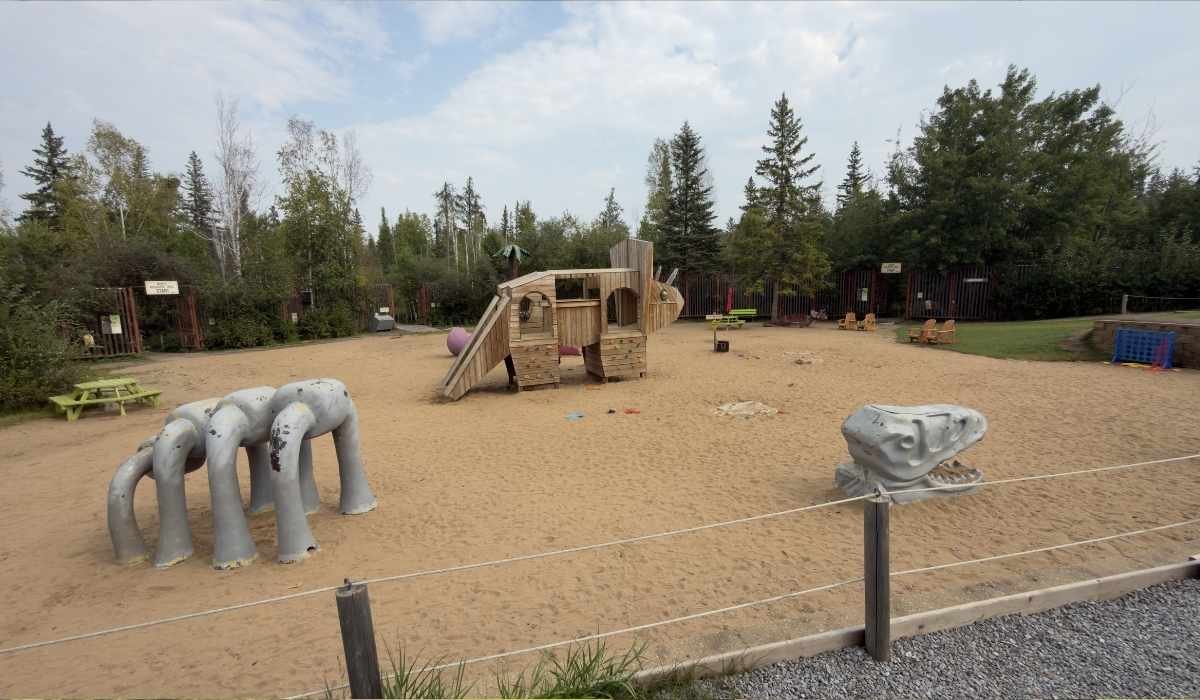
A dinosaur-themed outdoor playground with climbing and slides, plus a sand pit where kids can brush for bones. I noticed families with younger kids spending extra time here.
Food Options
The Tar Pit Café serves coffee, tea and baked goods, including gluten-free options, and there is also the Cretaceous Concession. You can bring your own food and snacks in, though barbecues, stoves and cooking equipment are not allowed.
How Long Do You Need at Jurassic Forest?
I can tell you the trail goes quickly if you let it. Ours took roughly 15 minutes, but that pace was set by mosquitoes and a scared baby, not by interest. At a normal pace, stopping at the boards and letting each dinosaur finish its cycle, I would give it closer to an hour.
If you add everything else, the time climbs. Mini golf, the play park and a stop at the café can push a visit to two or three hours without much effort. Families with small kids may stay longer, especially if they spend time in the playground, mostly because the playground is hard to leave.
The things that will stretch your visit:
Actually reading the information boards
Waiting for each dinosaur to finish moving
Photography, because the forest light is good
Kids who want to see every display twice
Mini golf and the play area
One handy detail: you get a stamp when you arrive, and re-entry is allowed, so you can go back out to your vehicle for a jacket or a cooler and come straight back in.
Is Jurassic Forest Good for Families?
Yes, and I think the boardwalk is the reason why.
The park lists the Discovery Trails as stroller-friendly and suitable for most mobility levels. Every pathway is a wooden boardwalk; the park says it is fully wheelchair accessible, and there are accessible washrooms on site. I do not see that often at an outdoor attraction, and it means a nap in the stroller does not end your day.
A few things I would want a friend to know before taking their kids:
A few things I would want a friend to know before taking their kids. The biggest one is fear. My toddler was a little afraid and was hurrying me up to finish the trail quickly so she could get out of there, and my baby was scared enough to refuse to stand on the trail for pictures, so we carried the little one through.
The dinosaur displays are loud, and they move suddenly, and that is exactly the point that scared my kids more. Older kids love that. Very small ones may not.
If your child gets nervous easily, walk the first few metres and watch how they react before you commit to the whole loop.
It is fully outdoors. Once you're on the trail, there is nowhere indoors to escape if the weather turns, so check the forecast and dress for the conditions you’re likely to encounter.
If you are visiting with small children, the bugs may be harder for them to ignore than they were for me. Repellent on your kids matters more than repellent on you. I learned that lesson the hard way on my own arms.
Pets are not allowed anywhere in the park, so leave the dog at home rather than in the car.
Jurassic Forest for Adults
I went as an adult, and I enjoyed it, so I do not want to leave you thinking this is only a kids' attraction.
If you like photography, the mix of forest light and enormous dinosaur displays gives you plenty of interesting subjects to photograph. And if you have an interest in paleontology, seeing a full-size Albertosaurus in an Alberta forest feels very different from seeing one in a book.
It also works as a change of pace. If you have already worked through the best tourist attractions in Edmonton and you want something outdoors and a bit unusual, this fits. I think grandparents would do fine here too. The surface is flat and even, and those benches along the trail mean you can rest as often as you need.
Where Is Jurassic Forest?
Jurassic Forest sits near Gibbons, Alberta, north of Edmonton and slightly to the east. The address is 23210 Township Rd 564 #2, Gibbons, AB T0A 1N5.
The town of Gibbons is a few minutes away and has fuel and groceries if you want to stock up before or after. The attraction is in Sturgeon County, and the drive is mostly straightforward farmland highway, and the drive is straight farmland highway the whole way.
Calling it "Jurassic Forest Edmonton" is a habit more than a fact. It is close enough to the city for an easy afternoon, but you are leaving Edmonton to get there.
How to Get to Jurassic Forest from Edmonton
Drive. The park says it is roughly 30 minutes north of Edmonton on Highway 28 north, and there is plenty of on-site parking, including space for school buses. Parking is free, so there is no lot fee to add on top of your tickets.
Coming from north Edmonton, that 30-minute estimate held up for me. If you are starting from the south side or Sherwood Park, give yourself extra time just to cross the city first.
The last turn takes you onto a rural township road. Just type "Jurassic Forest" into Google Maps by name rather than entering the street address. Then watch for the sign once you leave the highway.
There is no practical public transit out there, and the site is rural, so plan on driving.
When Is the Best Time to Visit Jurassic Forest?
Jurassic Forest runs seasonally from May through October, and it stays open in rain, shine or smoke unless conditions are unsafe. Hours are 9:00 am to 7:00 pm daily with last admission at 6:00 pm, though they can shorten later in the fall, so confirm before a September or October trip.
What I would tell you about timing:
Mid to late summer is peak mosquito season in a wet forest like this one. That is the single thing I would change about my own visit. Do not treat repellent as optional.
September and early October should give you cooler temperatures, and a late-season visit may also mean fewer mosquitoes than I experienced in late August.
The canopy keeps the trail cooler than open ground on a hot day, which I appreciated. That is a real advantage in July and August.
Weekends and holidays can be busier, so booking online is a good idea to skip the line, though you can still buy at the gate.
What to Bring
Short and practical, based on what I wished I had:
Insect repellent. The one thing I would not leave home without again.
Comfortable walking shoes. The boardwalk is flat, but you are on your feet.
A light jacket or long sleeves. More bug protection, and useful in the shade.
Water bottle. Easier than having to buy drinks on site.
Sunscreen and a hat. The open areas near the entrance and mini golf have no cover.
Rain gear. The park stays open in wet weather.
Camera or phone. The size of these displays is worth capturing.
The park's own suggestion list is close to mine: repellent, sunscreen, a water bottle, a hat and a jacket.
Jurassic Forest Tickets, Hours and Practical Information
The prices below are what I saw posted on the admissions board at the gate on the day I visited, and the rest comes from the park's own visitor pages. Admission, add-on pricing and hours can change, so check jurassicforest.com for current information before you drive out.
Location: 23210 Township Rd 564 #2, Gibbons, AB T0A 1N5
Season: May through October
Hours: Daily 9:00 am to 7:00 pm, last admission 6:00 pm
Admission: Adult (18+) $18, Youth (13 to 17) $15, Senior (55+) $15, Child (3 to 12) $12, Family of Four $60, children 2 and under free
Add-ons: Dino Wagon $6, Mini Golf $8, both priced per person on top of admission
Parking: Free on site, with room for school buses
Accessibility: All pathways are wooden boardwalk; the park states they are fully wheelchair accessible, and accessible washrooms are available
Food: Tar Pit Café and Cretaceous Concession on site; outside food and snacks allowed, no cooking equipment
Booking: Online booking recommended to skip the line, gate tickets available, and online day passes can be used on any day of the season
Rules to know: No pets, no smoking or vaping, no bikes or scooters, stay on the boardwalk, and do not touch the displays or motion sensors
Season memberships are available if you think you will go back more than once.
🏨
Looking for a Place to Stay?
Staying overnight in Edmonton? Find a hotel that puts you within easy reach of Jurassic Forest.
For me, yes, and I would tell a friend to go. I would say go if you have kids roughly between 3 and 12, if you like dinosaurs, or if you want a short outdoor trip from Edmonton that does not eat a whole day in the car.
The boardwalk setting is the best part of it. Walking through real forest and running into a moving Albertosaurus felt different from looking at a skeleton behind glass, and the flat trail makes it work for people who usually get left out of outdoor attractions.
I will be honest about the other side. If you only do the trail, it is a smaller experience than the ticket price suggests, because the walk can be over quickly. If you want to make more of a day of it, add mini golf, the play park and a slower walk along the trail instead of treating it as a quick stop.
You might prefer somewhere else if you want real fossils and museum-grade science. In that case, the Royal Tyrrell Museum in Drumheller is the better drive, or the Royal Alberta Museum in Edmonton for an indoor day. I would also skip it if bugs ruin your mood and you will not spray, because on a warm late-summer afternoon in that forest, they will find you the way they found me.
I am glad I went. I would go back in late September with repellent in my pocket, and I would give myself the time to read every board I walked past today.
Jurassic Forest Photos
Click on each image to expand.
Final Thoughts on Jurassic Forest
Jurassic Forest is one of those Edmonton-area attractions that is easy to enjoy at your own pace. The trail takes you through a natural forest setting, with life-sized dinosaurs appearing among the trees and vegetation along the way. It feels less like walking through a traditional exhibit and more like discovering dinosaurs in their natural environment.
I especially enjoyed the combination of the forest trail, dinosaur displays, and quiet outdoor setting. The boardwalk, resting areas, and educational signs also make it an easy experience for families and visitors who want to take their time.
If you're looking for a fun outdoor attraction near Edmonton that combines dinosaurs, nature, and a little adventure, Jurassic Forest is well worth adding to your Edmonton itinerary.
Frequently Asked Questions
Where is Jurassic Forest located?
It is near Gibbons, Alberta, north of Edmonton. The address is 23210 Township Rd 564 #2, Gibbons, AB T0A 1N5. It is not inside Edmonton city limits, though it is close enough to feel like it.
How far is Jurassic Forest from Edmonton?
It is about 30 minutes north of Edmonton on Highway 28 north, and that matched my drive from the north side. Starting from south Edmonton, allow extra time to cross the city.
How much does Jurassic Forest cost?
The board at the gate on the day I visited listed $18 for adults 18 and over, $15 for youth 13 to 17, $15 for seniors 55 and over, $12 for children 3 to 12, and $60 for a family of four. Children 2 and under get in free. Mini golf is $8, and the Dino Wagon is $6 on top of admission, and parking is free. Confirm current pricing on the official site before you go.
How long does it take to visit Jurassic Forest?
My walk took about 15 minutes, but I was hurrying away from mosquitoes. Give the trail closer to an hour at a normal pace, and expect two to three hours once you add mini golf, the play park and food.
Is Jurassic Forest good for young children?
Yes. The trail is stroller-friendly. The one thing I would watch for is noise, since the animatronics move suddenly and roar; it makes my children scared. Yours may be scared too.
What should I wear to Jurassic Forest?
Comfortable walking shoes, clothes for the day's forecast, and long sleeves if the bugs are out. It is fully outdoors, and the park stays open in rain, shine or smoke unless conditions are unsafe.
Is Jurassic Forest open year-round?
No. It runs seasonally from May through October. Fall hours can be shorter than summer hours, so check before a late-season visit.
Downtown Edmonton is the heart of Alberta's capital city, stretching between the North Saskatchewan River valley and the city's central neighbourhoods. It brings together some of Edmonton's best-known attractions, cultural venues, restaurants, shops and entertainment districts, making it a convenient place to start exploring the city.
From the museums and galleries around Churchill Square to the restaurants and historic buildings along 104 Street and the sports and entertainment of the ICE District, downtown offers plenty to see and do within a relatively compact area. The river valley is also close by, giving you an easy way to combine city sightseeing with trails, parks and scenic views.
This Downtown Edmonton Guide covers the area's top attractions, neighbourhoods, places to eat and stay, nightlife, transportation, parking, seasonal tips and suggested itineraries to help you plan your visit.
Downtown Edmonton at a Glance
Where it is
Central Edmonton, north of the North Saskatchewan River valley.
Best for
First-time visitors, concert and game trips, museum days, festival season, business travel with free time
Main attractions
Royal Alberta Museum, Art Gallery of Alberta, Churchill Square, ICE District, 104 Street, Legislature grounds, river valley access
Time needed
Half a day for highlights, one full day to do it properly
Walkability
High. Flat, gridded, with an indoor pedway linking many buildings and three LRT stations
Public transit
Capital, Metro and Valley Line LRT, plus most major bus routes
Nearby areas
Old Strathcona and Whyte Avenue, 124 Street, Chinatown, the river valley parks
Best time to visit
July for festivals, September for weather without crowds, winter for hockey and skating
Where Is Downtown Edmonton?
Downtown Edmonton sits in the central part of the city, immediately north of the North Saskatchewan River valley. For visitors, “Downtown Edmonton” generally refers to the central urban core around Jasper Avenue, 104 Street, Churchill Square and the ICE District, extending west toward the Government Centre area.
The downtown area is relatively compact, but it has several distinct districts worth knowing. Churchill Square and the Arts District are home to major museums, galleries and cultural venues. 104 Street and the Warehouse District are known for restaurants, cafés, historic buildings and the Downtown Farmers' Market. The ICE District is Edmonton's major sports and entertainment area, centred on Rogers Place.
One of downtown's biggest advantages is its proximity to the North Saskatchewan River valley. The 100 Street Funicular connects the downtown core with the river valley, where you can find walking trails, parks and viewpoints.
Why Visit Downtown Edmonton?
Downtown Edmonton is one of the easiest places to experience several sides of the city in a single visit. The area brings together major cultural attractions, restaurants, entertainment venues and public spaces, making it a convenient starting point for exploring Edmonton.
Culture is a major draw, with museums, galleries, theatres and other attractions concentrated around the downtown core. The ICE District adds a lively sports and entertainment scene, especially during Edmonton Oilers games, concerts and major events.
Downtown also has a good mix of restaurants, cafés and bars, particularly around 104 Street, Jasper Avenue and the ICE District. During the warmer months, festivals and outdoor events bring even more activity to the area.
Another advantage is the North Saskatchewan River valley, which sits just south of downtown and offers trails, parks and scenic views. With the LRT, pedestrian connections and nearby attractions, you can explore much of downtown without needing a car.
For first-time visitors, downtown is a practical place to begin discovering Edmonton.
Downtown Edmonton Areas to Know
Downtown is not one uniform place. These pockets each feel different.
Area
Best known for
Churchill Square & Arts District
Museums, galleries and festivals
104 Street & Warehouse District
Restaurants, cafés and historic buildings
ICE District
Rogers Place, sports and concerts
Jasper Avenue
Hotels, restaurants and central-city access
Government Centre
Legislature and river valley access
The rhythms differ. The Jasper Avenue office core is busiest at weekday lunch. ICE District runs on the event calendar. Churchill Square and 104 Street are at their best on summer weekends.
Best Things to Do in Downtown Edmonton
Downtown Edmonton has a mix of museums, galleries, public spaces, entertainment venues and river valley experiences. You can explore the city's culture during the day, catch a game or concert in the evening, or simply walk between some of the area's most interesting districts.
1. Royal Alberta Museum
Discover Alberta's natural and human history through exhibits covering wildlife, Indigenous cultures, dinosaurs and the province's past. It's one of the city's best indoor attractions at the Royal Alberta Museum, especially on a cold or rainy day.
2. Art Gallery of Alberta
Located near Churchill Square, the Art Gallery of Alberta features Canadian and international art in a striking modern building. It's a good choice for visitors interested in art, architecture and culture.
3. Churchill Square
This central public square is one of downtown's main gathering places and hosts festivals, concerts and seasonal events. It's also surrounded by several of Edmonton's major cultural attractions.
4. Explore 104 Street
Walk along 104 Street to see historic warehouse buildings, cafés, restaurants and independent businesses. The area is especially lively during the Downtown Farmers' Market.
5. Visit the ICE District
The ICE District is downtown's major sports and entertainment hub, centred around Rogers Place. Check the schedule for an Edmonton Oilers game, concert or other major event during your visit.
6. Ride the 100 Street Funicular
Take the funicular down from downtown toward the North Saskatchewan River valley. It's an easy way to reach river valley trails and enjoy views of the city.
7. Explore the River Valley
Just south of downtown, Edmonton's river valley offers walking and cycling trails, parks and scenic viewpoints. It's a chance to experience the city's natural side without leaving the central area.
8. See a Show
The Citadel Theatre and Winspear Centre make downtown an important destination for theatre, music and live performances. Check what's playing during your visit.
Where to Stay in Downtown Edmonton
Staying downtown makes sense if you are attending an event at Rogers Place, doing a museum-focused trip, or would rather walk than drive. It makes less sense if your plans revolve around West Edmonton Mall or an early flight.
There are three useful clusters. ICE District puts you minutes from Rogers Place, which matters on a game night. Churchill Square and Jasper Avenue are the best all-round position for museums and pedway access to the LRT. The river valley edge, near 100 Street south of Jasper Avenue, gives you valley views and the funicular on your doorstep.
Downtown has everything from luxury hotels to mid-range and suite-style properties. Rates can increase around Oilers games, concerts and major conventions, so check the event calendar if your dates are flexible.
Where to Eat in Downtown Edmonton
Downtown Edmonton has a diverse dining scene, from casual cafés and quick bites to upscale restaurants, international cuisine and lively spots for a night out.
104 Street and the Warehouse District are popular choices for restaurants, cafés and casual dining, with a mix of independent businesses and more polished dining options. Jasper Avenue has another concentration of restaurants and bars, making it convenient for a meal before exploring downtown or heading to an evening event.
Around the ICE District, you'll find restaurants, pubs and casual spots that are especially convenient before or after an Edmonton Oilers game or concert at Rogers Place. The Arts District also has several places to eat close to museums, galleries, theatres and Churchill Square.
Whether you're looking for a quick coffee, a relaxed lunch, international flavours or a restaurant for a special evening, you won't have to go far to find something downtown.
Downtown Edmonton Nightlife
Nightlife concentrates in three areas: 104 Street, the Jasper Avenue corridor near 109 Street, and ICE District.
Event nights change everything. When the Oilers are home or a big concert is on, bars near Rogers Place fill hours beforehand and stay busy afterward. When nothing is scheduled, the same blocks can be quiet midweek.
Beyond bars, the evening scene leans toward performance: the Winspear for symphony and touring music, the Citadel for theatre, and late dining rather than late clubbing. If you want a dense strip of pubs and live bands, Whyte Avenue across the river is the better bet, and the LRT gets you there.
How to Get Around Downtown Edmonton
Walking. Downtown is walkable. It is flat, the grid is logical, and most attractions sit 15 to 20 minutes apart at most. Churchill Square to 104 Street or to Rogers Place is about ten minutes. The indoor pedway connects many towers, hotels and three LRT stations, though signage is poor and hours vary because segments run through private buildings.
LRT. Genuinely useful for visitors. The Capital and Metro lines share an underground tunnel through the core, stopping at Corona, Bay/Enterprise Square, Central, Churchill, MacEwan and Government Centre. The Valley Line runs at street level and stops at 102 Street.
Fares are flat at $3.00 tapping an Arc card or a contactless bank card, $3.75 cash on buses, with no cash on the LRT. One fare covers 90 minutes including transfers, and daily fare capping replaced day passes. Children 12 and under ride free with a paying rider. Fares and payment options can change, so check the current ETS information before your trip.
Driving. A car is not necessary if you are staying downtown, and ongoing Valley Line West LRT construction has closed and reconfigured streets across the core. Park once and walk.
From the airport.Edmonton International Airport is about 30 km south, a 30 to 45 minute drive. There is no LRT to the airport. By transit, take Route 747 from Door 8 to Century Park Transit Centre on a separate fare, then the Capital Line north. Budget an hour door to door.
Cycling. Downtown has a growing protected bike lane network, shifted in places during construction. The payoff is the river valley trail system below the bank, and the funicular takes bikes.
Parking in Downtown Edmonton
Downtown has street parking and several parkades, including options near Churchill Square and the ICE District. Event-day parking can be more expensive and busier around Rogers Place, so check posted signs before leaving your car. If you're spending the day downtown, parking once and walking is often the easiest option.
Parkades suit longer stays, including City Hall, the Milner Library and the ICE District parkade, which connects into the pedway.
On event days, on-street rates near Rogers Place switch to higher event pricing when a large crowd is expected, and the streets around 104 Avenue congest before and after. Rates and rules change, so read the signage. Because the attractions cluster so tightly, the simplest approach is to park once near Churchill Square and cover the rest on foot.
Downtown Edmonton in Winter
Edmonton winters are long and genuinely cold, and downtown is built with that in mind more than most Canadian cores.
The pedway system is the first thing to understand. Enclosed walkways and tunnels link many office towers, hotels, the shopping centre and three LRT stations, so you can cross much of downtown without going outside. Pull up the city's pedway map before relying on it, since signage is limited and some segments close outside business hours.
Indoor attractions carry the season: the Royal Alberta Museum, the Art Gallery of Alberta, the Milner Library, the Winspear and the Citadel. The farmers' market moves inside City Hall from mid-October to mid-May. Skating is free at the City Hall rink on Churchill Square, with free skate rentals during select hours and weekend programming through January and February.
Hockey season is one of the reasons winter can be a great time to visit. An Oilers game is the most reliably lively thing happening downtown between November and April.
Daylight is short, with sunset before 4:30 p.m. around the solstice, so plan outdoor walking for early afternoon. Dress in layers with a windproof shell, wear boots with real grip, and cover your ears. Sidewalks near construction get icy and detoured, and cold slows transit, so build in extra time.
Events and Festivals
Downtown Edmonton comes alive throughout the year with festivals, concerts, sporting events and community celebrations. Churchill Square is one of the city's main gathering places, hosting outdoor festivals, performances and seasonal events, particularly during the warmer months.
Summer is the busiest season for downtown events, with recurring celebrations such as the Edmonton International Street Performers Festival, Taste of Edmonton, The Works Art & Design Festival and Cariwest Caribbean Arts Festival bringing performances, food, art and entertainment to the city centre.
The ICE District provides year-round entertainment, with Edmonton Oilers games, concerts and other major events at Rogers Place. If you're visiting during hockey season, checking the Rogers Place schedule can help you plan an evening around a game or concert.
Downtown also hosts seasonal markets, holiday activities and smaller cultural events throughout the year. Event schedules change from season to season, so check official event websites before your visit to see what's happening during your dates.
Is Downtown Edmonton Safe?
Downtown Edmonton along 100 Street, with high-rise buildings lining the city centre.
Downtown Edmonton is safe for most visitors most of the time, though how comfortable it feels varies by block and time of day.
Visitors are rarely targeted. What you are more likely to notice is visible homelessness and street disorder in parts of the core and around some transit stations, particularly late at night.
Normal urban precautions cover the rest. Stay aware of your surroundings, keep valuables out of sight and leave nothing visible in a parked car, use well-lit and busier streets after dark, and take a rideshare rather than a long late walk alone.
Best Time to Visit Downtown Edmonton
The best time to visit Downtown Edmonton depends on what you want to do and how much you want to spend.
Summer (late June to August) is the busiest season and the best time for outdoor sightseeing. Long daylight hours, outdoor patios, festivals and the Downtown Farmers' Market make the city centre especially lively. This is also when hotel rates tend to be highest.
Fall (September to October) is a quieter alternative, with comfortable early-fall temperatures, fewer crowds and colourful foliage in the nearby river valley. Hotel rates may also be lower than during the summer peak.
Winter (November to March) is cold, but downtown remains active with Edmonton Oilers games, concerts, skating and indoor attractions. It's a good time to experience Edmonton's winter atmosphere, provided you're prepared for freezing temperatures and snow.
Spring (April to May) is generally quieter and can offer lower accommodation rates. However, weather can be unpredictable, with lingering snow and muddy conditions in the river valley. By late spring, outdoor activities and downtown events begin picking up again.
For most first-time visitors, summer and early fall offer the easiest combination of pleasant weather, long days and things to do.
How Many Days Do You Need?
A few hours covers Churchill Square, one major indoor attraction, and either a walk down 104 Street or a funicular ride to the river valley lookout.
One day is enough for downtown itself: a museum in the morning, the square and gallery in the afternoon, 104 Street and ICE District on foot, the valley before dinner, and an evening event.
Two days lets you slow down and add nearby areas, most naturally Old Strathcona and Whyte Avenue across the river, or the Muttart Conservatory in the valley.
Downtown Edmonton Itineraries
Half-day
Start at Churchill Square, spend two hours at the Royal Alberta Museum a block away, eat lunch on 104 Street, then walk south to the Fairmont and take the funicular down to the river valley lookout. About four hours without rushing.
One day
Morning: coffee on 104 Street, then the Royal Alberta Museum at opening. On a summer Saturday, do the farmers' market first.
Lunch: Churchill Square, or back toward 104 Street and Rice Howard Way.
Afternoon: Visit the Art Gallery of Alberta or another nearby cultural attraction. If it's closed on your visit, use the Legislature or another downtown attraction as an alternative.
Late afternoon: the funicular down to the lookout and part of the Louise McKinney trail.
Evening: dinner in the core, then a show at the Citadel or Winspear, or an Oilers game if the schedule cooperates.
Two days
Day one follows the plan above. On day two, cross the river. In summer, the High Level Bridge Streetcar runs from downtown's Jasper Plaza terminus to Whyte Avenue, which makes the trip an attraction in itself. Spend the morning in Old Strathcona, stop at the Muttart Conservatory in the valley on the way back, and finish with dinner downtown.
Places Near Downtown Edmonton
Close enough to combine with a downtown visit, but separate destinations.
Old Strathcona and Whyte Avenue sit across the river on the south side, 10 to 15 minutes by car. Independent shops, vintage stores, live music, a Saturday farmers' market and the Fringe grounds in August. The seasonal High Level Bridge Streetcar connects the two areas from roughly the May long weekend to Thanksgiving.
Muttart Conservatory, four glass pyramids in the river valley in Cloverdale, is visible from downtown and a short drive or Valley Line trip away. Plan around two hours for all four pyramids.
The Edmonton River Valley connects directly to downtown by funicular and stairways, with Louise McKinney Riverfront Park closest.
124 Street, about 20 minutes on foot west of downtown, has galleries, design shops and one of the city's better restaurant strips.
What Isn't Actually Downtown Edmonton?
Travel lists often group Edmonton attractions together as "downtown" when they sit in very different parts of the city, which leads to wasted time. To be clear:
Old Strathcona is across the river on the south side, not downtown.
Whyte Avenue is the main street of Old Strathcona, also south of the river.
Muttart Conservatory is close, but sits in the river valley in Cloverdale on the other side of the water.
West Edmonton Mall is in the far west end, 20 to 30 minutes away by car.
Fort Edmonton Park is in the river valley in the southwest, well outside the core.
124 Street and Wîhkwêntôwin are just west of downtown, part of central Edmonton rather than the core.
All are worth visiting. Just budget separate travel time rather than assuming you can walk there from a downtown hotel.
Frequently Asked Questions
Is Downtown Edmonton worth visiting? Yes, particularly for museums, live events and river valley access, all within walking distance of each other.
What is Downtown Edmonton known for? Rogers Place and ICE District, Churchill Square and its summer festivals, the Arts District museums and theatres, the warehouse blocks on 104 Street, and the river valley below.
Is Downtown Edmonton walkable? Yes. It is flat and gridded, with most attractions 15 to 20 minutes apart, plus an indoor pedway linking three LRT stations. LRT construction creates some detours.
Where should I stay in Downtown Edmonton? ICE District for events at Rogers Place, Churchill Square or Jasper Avenue for museums and pedway access, the river valley edge for views.
Is Downtown Edmonton safe for tourists? Generally yes, with normal urban precautions. Visitors are rarely targeted, though you may notice street disorder in parts of the core and near some transit stations at night.
How do I get downtown from the airport? About 30 km, or a 30 to 45 minute drive. There is no direct LRT. By transit, take Route 747 to Century Park, then the Capital Line north, roughly an hour door to door.
What attractions are near Downtown Edmonton? Old Strathcona and Whyte Avenue across the river, the Muttart Conservatory, the 124 Street strip, and the river valley park system.
Final Thoughts
Downtown Edmonton rewards visitors who know what it is: a compact, walkable district with a strong museum and gallery cluster, an NHL arena at its centre, a square that hosts festivals and events throughout the summer, and a river valley you can reach ten minutes after leaving your hotel.
Give it a full day rather than a rushed couple of hours, and go past the obvious stops. Walk the 104 Street warehouse blocks. Take the funicular down and stand on the lookout.
Use this Downtown Edmonton Guide as your starting point, then dig into the detail with our guides below.
Edmonton is bigger than most first-time visitors expect. The city covers more than 700 square kilometres, making it larger in area than Toronto, Montreal or Vancouver. The North Saskatchewan River Valley cuts through Edmonton, and the city stretches across a large area, making some neighbourhoods feel surprisingly far apart.
That is why it helps to think about Edmonton areas before you think about individual attractions. Where you base yourself changes almost everything about your trip:
How far you are from the attractions you actually came to see
Whether you can walk to restaurants at night or need to drive
How much shopping is within easy reach
How quickly you can get into the river valley
Whether transit works for you, or whether you need a car
The general feel of your mornings and evenings
Edmonton is a driving city for most visitors. Distances are real, and winter weather can slow things down. A 15-minute trip in July can take 30 minutes in January. Getting the location right the first time saves you a lot of backtracking.
Map of Edmonton’s five visitor-friendly areas and their approximate locations.
To keep things simple, this guide breaks the city into five broad areas: Downtown, Central Edmonton and Old Strathcona, North Edmonton, West Edmonton and South Edmonton. These are visitor-friendly groupings rather than official city boundaries; locals use them loosely, and you will hear other names too. They are just the clearest way to understand the different areas of the city before you book anything. If you want the wider picture first, our ultimate Edmonton travel guide covers seasons, history and trip length.
Downtown Edmonton
Rogers Place and high-rise buildings in Downtown Edmonton.
Downtown sits on the north bank of the river, roughly between 97 Street and 109 Street, with Jasper Avenue running through it as one of its main streets. Almost everything else in the city is described in relation to it, so it is worth understanding even if you decide to stay somewhere else.
This is the most compact part of Edmonton and the easiest to explore on foot. It is also the part of the city that has changed the most in the last decade. The ICE District, built around Rogers Place arena, added hotels, towers, restaurants and a public plaza to what used to be a quiet stretch of downtown. When the Oilers are playing, or a concert is on, the area fills up quickly.
The other downtown anchors are close together. Churchill Square hosts festivals through the summer and sits beside the Art Gallery of Alberta, the Stanley A. Milner Library and the Citadel Theatre. The Royal Alberta Museum is one of Western Canada's major museums and is easily worth half a day if you take your time.
The Edmonton Convention Centre sits along the riverbank overlooking the valley, and the Alberta Legislature grounds sit at the southwest edge of downtown, with free public gardens and a wading pool that turns into a skating rink in winter. If museums are a priority for your trip, our roundup of the best museums in Edmonton covers what is worth your time across the city.
Downtown Edmonton along 100 Street, with high-rise buildings lining the city centre.
River valley access is one of the underrated things about staying downtown. You can be on a trail in Louise McKinney Riverfront Park or Victoria Park within 10 or 15 minutes of leaving a downtown hotel, which is not true of most city centres. Several of the free things to do in Edmonton are in or near this area.
Downtown also has the strongest transit connections in the city. The Capital, Metro and Valley Line LRT routes all pass through here, which matters if you are travelling without a car.
Downtown suits you if you are visiting Edmonton for the first time, coming for an event at Rogers Place or the Convention Centre, travelling for business, or you simply want restaurants and bars within walking distance of your room. It is less ideal if you are travelling with young kids who need space and easy parking, since most downtown hotels charge for parking.
One practical note for 2026: Valley Line West LRT construction is affecting 102 Avenue downtown, with lane closures in place through the construction season. Give yourself extra driving time in the core.
Old Strathcona along 83 Avenue, one of Edmonton's most lively areas.
Central Edmonton is the ring of older, denser neighbourhoods around downtown, on both sides of the river. It gets its own section because the feel is genuinely different: fewer towers, more main streets, and more of the day-to-day life of the city.
The best-known part is Old Strathcona, on the south side of the river. This was a separate town until 1912, and the brick storefronts along Whyte Avenue (82 Avenue) still show it. Whyte is where you go for independent shops, record stores, pubs, coffee, live music and late-night food.
The Old Strathcona Farmers' Market runs on Saturdays year-round and is a good place to start a morning. In August, the Edmonton International Fringe Theatre Festival takes over the whole district. It is the largest and oldest fringe festival in North America, and the streets change completely for about ten days. Our festivals and events section tracks what is on through the year.
Just north and west of Whyte is Garneau, a leafy older neighbourhood beside the University of Alberta campus. The student population keeps the area lively, with plenty of cafés, restaurants and shops serving the university community. Walk north from campus, and you reach the High Level Bridge, which carries you back to downtown on foot.
In summer, the High Level Bridge Streetcar runs across it, a restored streetcar with a genuinely good view of the valley, and one of the more memorable things you can do in the city for a few dollars.
The Old Strathcona Farmers' Market in Edmonton.
On the north side of the river, Wîhkwêntôwin, the neighbourhood many people still call Oliver, was officially renamed in 2025 and sits immediately west of downtown. It is one of Edmonton's most densely populated areas, with good restaurants along 104 Street and Jasper Avenue and quick access to Victoria Park. A little further west, 124 Street has galleries, patios and a summer farmers' market.
Central Edmonton also has the best river valley access of any area. The Muttart Conservatory and its four glass pyramids sit in Cloverdale, just across the water from downtown, and the trail network connects most of these neighbourhoods to each other.
Central Edmonton suits you if you would rather stay in a neighbourhood than a hotel district. You want to walk to breakfast, browse shops in the afternoon and eat somewhere local at night. Accommodation here leans toward smaller hotels and short-term rentals rather than large chains, so book earlier than you would downtown, especially during Fringe in August.
Explore Central Edmonton & Old Strathcona →
North Edmonton
Northgate Centre and Edmonton Transit buses in North Edmonton.
North Edmonton covers a wide band of the city above downtown, stretching from the Yellowhead Trail up to Anthony Henday Drive and out to both the northwest and northeast corners. Most visitors group all of it together, and that is how we treat it here.
The character is mostly residential. A large share of Edmontonians live here, in a mix of 1960s and 70s neighbourhoods and much newer developments. Castle Downs and the Northgate area sit in the central and northwest parts of North Edmonton. Clareview and Londonderry are further east.
Griesbach, built on a former military base, is one of the newer communities and is noticeably different in layout from the older grid around it.
You will not find a dense cluster of headline attractions up here, and it is worth being honest about that. What you will find is everyday convenience: large grocery stores, big-box shopping along 137 Avenue, chain restaurants, recreation centres, arenas and some of the city's better neighbourhood parks.
Hermitage Park and Rundle Park in the northeast both sit along the river valley, with paved trails, picnic areas and open space that rarely feels crowded. The TELUS World of Science in Coronation Park, northwest of downtown, is the main family attraction in this part of the city.
Skyview Centre along 137 Street in North Edmonton.
Getting around is straightforward if you have a car. Anthony Henday Drive rings the north side of the city, so you can reach the west end or cross to the south without going through the core.
The Capital Line LRT runs north to Clareview, and Edmonton Transit Service connects most of these neighbourhoods, though service is less frequent than in the centre. Our Edmonton Transit Service guide explains how fares and Arc cards work.
North Edmonton suits you if you are visiting family, you want a hotel with free surface parking rather than a downtown parkade, or you are heading somewhere north of the city: St. Albert, Fort Saskatchewan or the drive toward Elk Island National Park in the northeast.
Be realistic about the trade-off. If your plan is to walk to downtown attractions, restaurants and nightlife, North Edmonton will mean driving or a transit trip every single day. Choose it for a reason, not by default.
Explore North Edmonton →
West Edmonton
Yellowhead Trail and 170 Street in West Edmonton.
For many visitors, West Edmonton is synonymous with one attraction: West Edmonton Mall.
West Edmonton Mall opened in 1981 and is one of North America's largest shopping and entertainment complexes, with more than 800 stores and services. Calling it a mall undersells what it actually is: there is an indoor amusement park (Galaxyland), an indoor waterpark with a wave pool and slides, an ice rink, a sea lion habitat, a mini-golf course, two hotels attached to the property and more than 100 places to eat.
Families regularly build entire trips around it, particularly in winter when the weather makes outdoor plans unreliable. Our complete West Edmonton Mall guide covers tickets, timing and how to plan a day there without burning out.
The mall sits near 170 Street and 87 Avenue, and the surrounding area has developed around it. There is a large cluster of hotels within a few minutes' drive, at a wider range of prices than you will find downtown, and most of them have free parking, a real consideration if you are travelling by car. We keep an updated list of hotels near West Edmonton Mall if you are comparing options.
West Edmonton Mall, one of Edmonton's best-known shopping and entertainment destinations.
There is more out here than the mall, though. The Edmonton Valley Zoo sits in the river valley on the west side and is a manageable size for young children. Fort Edmonton Park, Canada's largest living history museum, is in the valley near Whitemud Drive, with costumed interpreters, four historical eras, a steam train and a midway.
Whitemud Park and the Terwillegar trail system are close by for walking and cycling. Beyond that, west Edmonton is made up of established neighbourhoods like Jasper Place, Meadowlark and Callingwood, and newer ones out toward Lewis Farms.
Road access is good. Whitemud Drive runs east-west across the south end of the area, Stony Plain Road heads into the core, and Anthony Henday Drive gets you around the city quickly. If you are continuing west toward Jasper, starting from here saves you crossing the whole city.
West Edmonton suits you if you are travelling with kids, you plan to spend more than a day at the mall, you want a hotel with easy parking, or shopping is a real part of your trip. More options are listed in our shopping and malls section.
One heads-up: Valley Line West LRT construction along 87 Avenue continues through 2026, with lane reductions between 161 Street and Anthony Henday Drive. When the line opens in 2028, it will connect the mall directly to downtown, but for now, budget extra driving time.
Explore West Edmonton →
South Edmonton
83 Street near Bonnie Doon, one of the key areas of Edmonton’s south side.
South Edmonton is the largest and most varied of the five areas, covering everything below the river from Terwillegar in the west across to Mill Woods in the east, and south to the city limits near Ellerslie and Heritage Valley.
It contains two different kinds of neighbourhood. There are established communities built from the 1960s through the 1980s (Mill Woods, Riverbend, Millbourne) and then a large band of newer development that has filled in over the past 20 years: Windermere, Summerside, Heritage Valley, Ellerslie, Terwillegar Towne.
The newer areas have wide roads, recent construction and shopping centres nearby. The older ones have mature trees and more established neighbourhoods.
The defining feature for visitors is retail. South Edmonton Common, near 23 Avenue and Gateway Boulevard, is one of the largest open-air shopping developments in North America, with big-box stores, restaurants and cinemas spread across a very large site. Southgate Centre, further north near 51 Avenue, is an enclosed mall connected directly to the LRT.
Mill Woods in the southeast is more established, while Windermere in the southwest is newer and quieter. Together, these areas have a wide range of shopping options and restaurants, including some of Edmonton's best South Asian, Filipino, and Vietnamese food in and around Mill Woods.
The river valley curves along the northern edge of the area, and the ravine systems reach further south than people expect. Whitemud Creek and the Terwillegar Park trails are genuinely good walking, and Snow Valley operates as a small ski and tube hill right inside the city limits in winter.
South Edmonton also has a large selection of newer hotels, particularly in the Gateway Boulevard and Ellerslie corridors, and it is one of the most convenient areas of Edmonton for reaching Edmonton International Airport, which sits about 30 km south near Leduc.
If you have an early flight, staying south saves you a long drive. The Valley Line LRT connects Mill Woods to downtown, and Route 747 links the airport to Century Park station.
South Edmonton suits you if you have a car, you want newer accommodation, you are doing serious shopping, you are visiting family, or you are flying out early. Compare options across the city in our where to stay section.
The one thing to watch: this area is enormous. A hotel in Windermere and a hotel in Mill Woods are both "south Edmonton" and roughly 25 minutes apart. Before booking, check the actual address against wherever you plan to spend your days.
Explore South Edmonton →
Which Area of Edmonton Is Best for Your Trip?
There is no single best area to stay in Edmonton. It depends entirely on what you came for and whether you are driving. This table compares the five areas of Edmonton at a glance.
Area
Best For
General Character
Downtown Edmonton
First-time visitors, events at Rogers Place, business travel, nightlife
Older, denser main streets on both sides of the river
North Edmonton
Visiting family, parking, heading north of the city
Mostly residential and spread out
West Edmonton
Families, shopping, West Edmonton Mall stays
Shopping and attraction focused, car friendly
South Edmonton
Shopping, newer hotels, early flights, longer stays
Very large and varied, driving essential
A few honest points that the table cannot capture:
Without a car, downtown or Old Strathcona are the practical choices. The LRT and bus network work well in the core and get thinner as you move outward.
With a car, the calculation flips. Parking is free and plentiful in the outer areas and costs money downtown.
Winter changes things. Between November and March, an indoor-heavy plan built around West Edmonton Mall, museums or the Muttart makes more sense than a walking-based itinerary.
Two nights in different areas is not a bad idea on longer trips: a couple of nights central, then a couple near the mall, for example.
Edmonton Areas at a Glance
Downtown: Central attractions, arena events, hotels and nightlife within walking distance.
Central Edmonton & Old Strathcona: Whyte Avenue, restaurants, cafés, arts, festivals and river valley access.
North Edmonton: Residential communities, everyday shopping, parks, and a base for trips north of the city.
West Edmonton: West Edmonton Mall, family attractions, and hotels with easy parking.
South Edmonton: The biggest shopping districts, newer hotels, and the closest area to the airport.
Frequently Asked Questions About Edmonton Areas
What are the main areas of Edmonton?
For visitors, Edmonton can be grouped into five main areas: Downtown, Central Edmonton & Old Strathcona, North Edmonton, West Edmonton, and South Edmonton. Each has a different mix of attractions, restaurants, hotels, and things to do.
Is Edmonton divided into quadrants?
Yes. Edmonton uses a street-address system with quadrant designations, with NW being the most common. However, the five-area approach in this guide is easier for visitors planning their trip.
What is the best area to stay in Edmonton for a first visit?
Downtown is a good choice for first-time visitors because it is close to major attractions, Rogers Place, the river valley, restaurants, and public transit. Old Strathcona is another great option for a livelier neighbourhood atmosphere.
Do you need a car in Edmonton?
You can get around without a car if you stay in Downtown or Old Strathcona. For exploring attractions across the city, however, having a car is more convenient.
How far is West Edmonton Mall from downtown?
West Edmonton Mall is about 15 km from downtown, usually taking around 20–30 minutes by car, depending on traffic and weather.
Which area of Edmonton is best for families?
West Edmonton is a popular choice for families because of West Edmonton Mall, Galaxyland, the World Waterpark, Fort Edmonton Park, and the Edmonton Valley Zoo.
Which area is closest to Edmonton International Airport?
South Edmonton is one of the most convenient areas for reaching Edmonton International Airport. Staying around Gateway Boulevard or Ellerslie can be useful for early flights.
Which area of Edmonton is best for nightlife?
Old Strathcona is one of the best areas for nightlife, with pubs, restaurants, live music and entertainment around Whyte Avenue. Downtown is another good option, especially around 104 Street and Rogers Place.
Conclusion on Edmonton Areas
Edmonton makes far more sense once you stop looking at it as one large city and start looking at it area by area. The distances stop being a surprise, the hotel choices start to mean something, and it becomes obvious why a stay near West Edmonton Mall feels nothing like a stay on Whyte Avenue.
Use these five Edmonton areas as your starting framework, pick the one that matches the trip you actually want, and then dig into the detail. Each area has its own full guide:
Most museums ask you to look at history through glass. Fort Edmonton Park asks you to walk down the middle of it, on wooden sidewalks, past shopfronts that look the way they did more than a hundred years ago.
I visited Fort Edmonton Park for a family day out, which turned out to be the right way to see it. We walked more than we expected, we got tired in places, and we found out the hard way which parts are worth planning around.
Inside one ticket, you can ride a steam train, walk through four different eras of the city, and lose half an hour to a midway game. The trick is knowing the order to do it in.
This guide covers what to see, how long you actually need, what tickets cost, and how to get there.
What Is Fort Edmonton Park?
Fort Edmonton Park is a living history museum in the river valley, run by the City of Edmonton and the largest of its kind in Canada. It works nothing like the other museums in Edmonton.
Instead of display cases, it is laid out as full-size historical settings you walk through in order: a fur trade fort, then three streets set in 1885, 1905, and 1920. An indoor Indigenous Peoples Experience covers thousands of years of history here before and after that timeline begins. The buildings are staffed by costumed interpreters who stay in the role of someone living in that period.
Why it matters to Edmonton is simple. Much of the city's early architecture is gone. This is where a lot of it still stands, either as original buildings moved here or as careful reconstructions.
My Visit to Fort Edmonton Park
The first thing I noticed is how big it is. This is not a two-hour attraction, and the walking distances between areas are real.
We started at the front entry and walked the historical streets rather than taking the train down first. By the time we reached the 1846 Fort at the far end, our legs were weak. The fort sits at the back, and walking there uses more energy than you expect.
What saved us was the horse-drawn wagon on 1885 Street. It passed the fort and carried on through the settlement era past Ottewell Farm, and sitting down for it was as much a rest as a ride.
We left the Midway for the way back, after the streets were done, and that was the right order. The games are addicting, and I would not have wanted to walk the streets afterwards.
Our last ride was the 1919 Baldwin steam train. It circles the park on its own track around the outside, unlike the streetcar, which runs along the historical streets themselves. Finishing on the train, sitting down and watching the park go past, was a good way to end.
This is mostly an outdoor site, so the weather you get is the visit you get.
Fort Edmonton Park Map
Things to Do at Fort Edmonton Park
What to expect in each area during the summer season, and roughly how long to give it.
Area
Good for
Suggested time
Indigenous Peoples Experience
All ages, indoor break
45–60 min
1846 Fort
History fans, kids
45–60 min
1885 Street
Everyone
45–75 min
1905 Street
Everyone
45–75 min
1920 Street
Families, food stops
60–90 min
Midway
Kids and teens
45–90 min
Train and streetcar
All ages
20–40 min total
Indigenous Peoples Experience
An indoor, interactive exhibit built with input from Treaty 6 First Nations and the Métis Nation of Alberta, covering the history and culture of Indigenous Peoples here well before the fur trade. It is the most modern space in the park and a good quiet break on a hot day. A market inside sells hand-crafted goods.
1846 Fort
A reconstruction of the Hudson's Bay Company trading post that gave the park its name. Inside the palisade gates are the trading room, workshops, living quarters, and the Chief Factor's house. Kids like it because the buildings are small and easy to explore, and adults get more from the interpreters. It sits at the far end of the site.
1885 Street
Edmonton as a small settlement finding its feet after the fort era, and the most rural of the three streets. Along it are Kelly's Saloon, Lauder's Bakery, Ottewell Farm and its animals, and McDougall's General Store, which sells pioneer goods and ride tickets. The horse-drawn wagon runs here.
1905 Street
By 1905, Alberta was a province, and Edmonton was growing fast. This street shows that, with larger buildings and a busier main-street feel. The Masonic Hall operates as a food hall, a practical lunch stop halfway through the park. The change from 1885 to 1905 is the clearest jump here.
1920 Street
The largest and busiest street, closest to a recognizable modern city. It has the Capitol Theatre, Hotel Selkirk, Johnson's Cafe, Bill's Confectionery, and Tom Thumb Mini Golf. Families spend the most time here, partly for the food and partly because there is more to do than walk.
The Midway and Exhibition
The fairground area. Admission covers unlimited rides and games, and it is the part of the ticket I rate highest.
Kids and teenagers will push for this section, and it works as a reward for getting through the streets first. Fair warning: the games are addicting, and you will spend longer here than you plan. The Treasure Trove candy store is here too.
Train and Streetcar Rides
Two different experiences, both worth doing. The 1919 Baldwin steam train runs on about four kilometres of track from the front entry station to a platform at the back near the 1846 Fort. The streetcar line is roughly one kilometre, with stops on 1905 and 1920 Streets, running along the streets rather than around.
Both are included and work as transport. The streetcar takes no strollers, walkers, or wheelchairs; the steam train is wheelchair-equipped.
Wagon, Pony, and Carriage Rides
The horse-drawn wagon at Kelly's Saloon on 1885 Street. This is the wagon starting point and last stop.
The one thing not covered by your ticket, and it caught me out. Pony rides for children 10 and under and horse-drawn wagon rides both cost $8 per person; children 2 and under are free on the wagon. The wagon runs along 1885 Street past Ottewell Farm. Buy tickets online or at McDougall's General Store.
The midway costs nothing extra, so it is easy to assume the wagon does too. I would still pay it: arriving there with tired legs, sitting down behind a pair of horses was worth $8.
A private vis-à-vis carriage ride, about 20 minutes, covers a wider part of the park on selected dates. The park also keeps horses, ponies, donkeys, goats, pigs, sheep, chickens, and turkeys, and asks you not to feed them.
One safety note from my visit: I went to rub a horse from behind and was corrected straight away. Approach from the front and rub the forehead. Standing behind a horse puts you where it can kick.
Capitol Theatre and Events
The Capitol Theatre runs programming through the season. There is also an escape game, weekend brunch at Johnson's Cafe, and summer stays at Hotel Selkirk. Check the calendar before booking.
Food and Shops
Food is spread across the site:
Front entry: café and gift shop
1885 Street: Kelly's Saloon, Lauder's Bakery, McDougall's General Store
Johnson's Cafe in Hotel Selkirk is the only sit-down option. The I.A.M Collective and the Indigenous Market sell hand-crafted Indigenous goods.
What I Liked About Fort Edmonton Park
The strongest thing here is the structure. Moving from 1846 to 1920 gives the visit a shape a normal museum cannot match. You feel the city changing under your feet.
I also liked that most extras are included. Unlimited midway rides and games, the train, and the streetcars are covered by admission. The horse-drawn wagon is the exception.
Variety is the other strength: an indoor exhibit, four historical areas, a fairground, mini golf, farm animals, live theatre, and places to eat. Having three different ways to ride around it matters more than it sounds, because it lets you keep going once the walking catches up with you. The river-valley setting helps, too, since the city noise mostly disappears.
Is Fort Edmonton Park Worth Visiting?
Yes, for most people, as long as you give it enough time and go in the summer.
You will probably enjoy it if you are:
A family with kids roughly 4 to 12, who get the most from the interpreters, animals, and rides
Someone interested in Edmonton or Western Canadian history
A visitor with a couple of days in the city, working through an Edmonton itinerary
A local who last went on a school trip
You may want to skip it if:
You have only a couple of hours, or you are out with toddlers. The Edmonton Valley Zoo is an easier day at that age
Mobility is a concern. The site is large, only partly accessible, and several historic buildings are hard or impossible to enter with a wheelchair
You are visiting in fall or winter and expect the full park. Only the Indigenous Peoples Experience stays open then
One more honest note: the price is not small for a family, and rain would take a lot away from the day.
How Long Do You Need at Fort Edmonton Park?
The park's own advice is at least four hours, and that is fair.
2 to 3 hours. The Indigenous Peoples Experience, the train, and one or two streets. You will skip most buildings.
Half a day, 4 hours. All four historical areas at a decent pace, the train, a streetcar, and a meal.
Most of a day, 5 to 7 hours. What I would recommend: time to go inside buildings, talk to interpreters, eat properly, and let kids loose on the Midway.
Best Time to Visit Fort Edmonton Park
Season matters here more than at almost any other Edmonton attraction.
Summer is when the full park operates: 10:00 AM to 5:00 PM, Wednesday through Sunday plus holiday Mondays, closed Mondays and Tuesdays. Last admission is an hour before closing. Watch the tail end of the season: in 2026 the Wednesday-to-Sunday schedule runs to early September, then the final stretch is Saturdays and Sundays only, September 12 to 20.
Fall and winter are limited. The general park closes, and select exhibits such as the Indigenous Peoples Experience stay open on reduced schedules. Ticketed events still run through the off-season, including winter wagon rides, Indigenous storytelling, and seasonal evening events, but do not arrive in November expecting to walk 1905 Street.
Aim for a weekday in July or August, or one of those September weekends once crowds thin. If you are planning around Alberta as a whole, the same months work. Arrive close to opening, since the main lot fills by afternoon.
Fort Edmonton Park Tickets and Admission
Buy online in advance. The gate sells tickets too, with cash, debit, Visa, or Mastercard, but capacity can limit that on busy days.
The rates posted at the gate for 2026, with 10% off all summer. GST is added on top.
Ticket
Posted
With 10% off
Adult
$31.00
about $27.90
Child
$24.75
about $22.28
Senior
$24.75
about $22.28
Family pass (2 adults, up to 4 children)
$112.00
about $100.80
Children 2 and under are free but still need a ticket. The family pass only beats separate tickets once you have three or more children.
Admission includes unlimited midway rides and games, the train, and the streetcars. Pony and wagon rides are $8 per person on top.
It is not a cheap day out, so if the budget is tight, check out the free things to do in Edmonton article. Prices change between seasons, so check the official site. Tickets are non-refundable but can usually be exchanged for another date, Leisure Access Passes are accepted in summer, free admission is extended to Indigenous Peoples, and group discounts exist. A membership pays for itself in two or three visits.
How to Get to Fort Edmonton Park
The park is at 7000 143 Street NW, Edmonton, down in the river valley on the south side.
Driving. Take Fox Drive to Fort Edmonton Park Road and follow it in. Parking is free, but the main lot fills by afternoon. An overflow lot sits near the administration building.
Public transit. No regular bus drops you at the gate. Get to the South Campus/Fort Edmonton Park Transit Centre by LRT or bus, then book an On Demand Transit trip. Check fares on the City of Edmonton site.
Cycling. The park connects to the river valley trail system, and it is too far to walk from anywhere.
Tips for Visiting Fort Edmonton Park
Check the calendar first. The park is closed Mondays and Tuesdays, and the season is shorter than people assume.
Arrive within the first hour of opening. Easier parking, quieter streets, more attention from interpreters.
Wear shoes you can walk in all day. You will cover several kilometres on gravel, boardwalk, and grass.
Take the steam train down to the fort first. We walked instead and paid for it. Riding down and walking back saves your legs for the streets.
Save the Midway for the end. The historical streets are harder to face after the games.
Dress for changing weather. A hat, sunscreen, and a layer for wind or rain all earn their place.
Download the park app. Buildings occasionally close for maintenance, and the app shows what is open.
Plan your food stop around the map. Sit-down dining is on 1920 Street and the food hall on 1905 Street, so eating at the wrong moment means walking back.
Talk to the interpreters. A direct question is the difference between looking at old buildings and learning something.
Budget $8 each for the wagon ride, and bring a stroller for small kids. The wagon doubles as a sit-down break near the far end of the park. Stroller rentals are not available, and strollers are not allowed on the streetcar.
Fort Edmonton Park vs. Other Edmonton Attractions
The Royal Alberta Museum gives you the province's story indoors in a couple of hours, in any weather. Muttart Conservatory is a focused, ninety-minute visit. West Edmonton Mall is an all-weather day of shopping and rides with no historical angle at all.
Of the main attractions in Edmonton, this is the only one where the draw is a place rather than a collection: you are not looking at Edmonton's history, you are inside a version of it. It also depends far more on the season, which is the main thing to weigh when you pick a date.
Frequently Asked Questions
Is Fort Edmonton Park worth visiting?
Yes, if you go in summer and give it at least four hours. First-timers and lifelong Edmontonians both get something out of it.
How long should I spend at Fort Edmonton Park?
Four hours is the practical minimum; five to seven is better, especially with kids.
What can you do at Fort Edmonton Park?
Explore four historical areas and the Indigenous Peoples Experience, ride a steam train and streetcars, go on midway rides and games, play mini golf, see farm animals, eat at period restaurants, and shop.
Are wagon rides included in the admission?
No, they are $8 per person, as are pony rides. Midway rides and games, the steam train, and the streetcars are included.
Is Fort Edmonton Park good for families?
Very good. Children roughly 4 to 12 get the most out of it, and admission covers the rides and transport that would normally cost extra.
What is the difference between the train and the streetcar in Fort Edmonton Park?
The steam train loops around the park on its own track between the front entry and the 1846 Fort. The streetcar runs along 1905 and 1920 Streets. Both are included and show you different parts of the site.
Is Fort Edmonton Park indoors or outdoors?
Mostly outdoors. Many buildings are open to enter, and the Indigenous Peoples Experience is indoors, but the walking happens outside.
Can you visit Fort Edmonton Park in winter?
Only in a limited way. The general park closes and select exhibits stay open on reduced schedules. Ticketed seasonal events do run.
Where is Fort Edmonton Park located?
At 7000 143 Street NW, in Edmonton's river valley on the south side, reached from Fox Drive.
Final Verdict
Fort Edmonton Park earns the time it asks for. A plan, comfortable shoes, and a free afternoon make the difference between a decent day and a good one. Pace yourself, and use the rides.
I would recommend it most to families with school-age kids, to anyone curious about how Edmonton grew from a trading post into a city, and to visitors who have done the obvious stops. I would not squeeze it into a spare couple of hours, and I would check the forecast first.
Ask an Edmontonian to name the buildings that define their city, and the four glass pyramids in the river valley come up almost every time. The Muttart Conservatory has been part of Edmonton's skyline for decades, and it remains one of the city's most rewarding places to spend a couple of hours.
Even after living in Edmonton for years, walking into the Muttart Conservatory still feels like stepping into something new. You step out of a prairie winter or a windy spring day, and within a few minutes you are standing under palm leaves in air so warm and humid that it can fog your glasses.
That contrast is the whole magic of the place. It is one of the best indoor attractions Edmonton has, and it earns a spot on any Edmonton itinerary, summer or winter.
This guide covers what each pyramid is like, how to get there, tickets, accessibility, photography, food nearby, and the practical tips that make a visit go smoothly.
About this guide: During my visit to Muttart Conservatory, I spent about two hours exploring all four pyramids without feeling rushed. Every photo in this guide was taken during my visit. What follows combines that first-hand experience with practical advice to help you plan your own trip.
Quick Facts
Location: 9626 96A Street, Edmonton, in the North Saskatchewan River Valley
The 4 glass pyramids: Tropical, Temperate, Arid, and a rotating Feature pyramid
Open every day of the year except December 25
On-site parking: On-site.
Typical visit: 1 to 2 hours
What is Muttart Conservatory?
The Muttart Conservatory is Edmonton's botanical garden, housed inside four glass pyramids on the south bank of the North Saskatchewan River.
Three pyramids each recreate a different climate zone, and the fourth changes its entire display several times a year. Together they hold hundreds of plant species, cared for year-round by City of Edmonton horticulture staff.
History
The Muttart Conservatory opened in 1976 and was named after the Muttart Foundation, which helped fund its construction. After a major renovation between 2018 and 2021, it reopened with improved accessibility, a new restaurant, and refreshed displays while preserving its four iconic glass pyramids. Today, it's one of Edmonton's best-known landmarks, with generations of locals returning for everything from family outings to wedding and graduation photos.
Architecture
Designed by renowned Edmonton architect Peter Hemingway, the conservatory features four separate glass pyramids, each with its own climate-controlled environment. This innovative design allows visitors to experience tropical, temperate, arid, and seasonal displays in one visit, while the illuminated pyramids have become one of Edmonton's most recognizable sights, especially after dark.
The four glass pyramids
Two large pyramids and two smaller ones sit around a central indoor courtyard, with a fifth, much smaller pyramid above it as a skylight. Each display pyramid has its own temperature, humidity, and lighting, so walking between them feels like crossing continents in ten steps.
Why it's unique in Canada
Plenty of Canadian cities have conservatories. None look like this. The pyramid architecture, the river valley setting, and the rotating Feature pyramid make the Muttart one of a kind, and it is one of the few botanical attractions in Canada that is genuinely better in winter, when the contrast with the cold outside is strongest.
Where is Muttart Conservatory?
The Muttart sits at 9626 96A Street, directly across the river from downtown Edmonton, in Cloverdale, a quiet river valley neighbourhood beside Gallagher Park, home of the Edmonton Folk Music Festival every August.
Driving
From downtown, it is about a five-minute drive across the river; from West Edmonton Mall or the south side, plan for 15 to 25 minutes. Once you are in the river valley, the pyramids are impossible to miss.
Transit
The Valley Line LRT has its own Muttart stop, a short walk from the entrance, and two bus stops serve the area. If you are staying downtown without a car, the LRT is the simplest option.
Parking
Parking is available on site, and the lot is conveniently located right beside the conservatory. During my visit, visitors were required to register their vehicle's licence plate inside the building to receive complimentary parking, so don't forget to do this before you start exploring.
The lot can fill up on weekend afternoons and during popular Feature Pyramid shows, so arriving earlier in the day is a good idea.
Walking and cycling
The Muttart connects directly to Edmonton's river valley trail system. In summer, walking or biking from downtown across the Low Level Bridge is a genuinely nice trip. For directions, search "Muttart Conservatory" on Google Maps.
Getting There
Details
Address
9626 96A Street, Edmonton, AB
Neighbourhood
Cloverdale, in the river valley
Driving from downtown
About 5 minutes
LRT
Valley Line, Muttart stop
Parking
On-site parking is available
Walking
Connected to river valley trails
The Four Pyramids
The pyramids are the reason you come. Here is what to expect in each one.
Tropical Pyramid
Click on an image to expand.
This is the big one, and it was my favourite. Walking in felt like stepping into another country: warm, heavy, humid air, winding paths, and greenery thick enough to make you forget you are still in Edmonton. It smells green in there, like soil and leaves and growing things, and it fogs camera lenses and glasses instantly.
Inside are palms, banana plants, orchids, and plants you normally only see in produce aisles, including a papaya tree that sometimes carries real fruit. A waterfall anchors the space, and the sound of moving water follows you around the path.
The tropical pyramid is at its best in January and February. Standing in jungle humidity while snow slides down the glass above you is a strange and wonderful experience, and the single best argument for visiting in winter.
Photography here is rewarding but tricky: give your lens a few minutes to warm up, or everything will be fog. Who will enjoy it: everyone, especially anyone stuck in an Edmonton winter.
Temperate Pyramid
Click on an image to expand.
The temperate pyramid feels the most familiar to Canadians, holding plants from climates like ours and slightly milder ones across Australia, Asia, and North America. The air is comfortable, neither hot nor humid, a nice place to slow down after the tropical pyramid.
It also has a lovely pond, which became one of our favourite spots. Watching the colourful koi swim beneath the reflections of the glass overhead was surprisingly relaxing, and it is exactly the kind of thing you miss if you rush through.
This pyramid changes with the seasons more than the others. Spring brings blossoms, autumn brings colour changes, and the gardeners rotate displays through the year. Repeat visitors often say this is the pyramid that rewards coming back.
It is also the calmest of the four. There are benches throughout the conservatory, and this is the pyramid where you will most want to use one, with a few quiet minutes among the trees. Who will enjoy it: garden lovers, seniors, and anyone who wants a peaceful corner.
Arid Biomes Pyramid
Click on an image to expand.
The arid pyramid flips the script: dry air, warm light, and an entire landscape of cacti, succulents, and desert plants from Africa, the Americas, and Australia. Some of the cacti are enormous, far bigger than anything you can grow on a windowsill, and the shapes and textures are fantastic to look at up close.
The light in this pyramid is beautiful, especially on sunny afternoons when shadows from the glass panels fall across the sand and stone. It tends to photograph better than you expect.
One practical note: the arid pyramid has some steps and uneven sections, so it is the least accessible of the four. There is still plenty to see from the main path. Who will enjoy it: photographers, kids who think cacti are cool (most kids), and anyone curious about desert plants.
Feature Pyramid
Click on an image to expand.
The feature pyramid is the wild card. Its entire display changes several times a year, built around a theme or season. Past shows have covered everything from prehistoric plants to harvest scenes and holiday displays.
During my visit, the Feature Pyramid had a themed seasonal display that completely transformed the space. One of the things I like most about the Muttart is that this pyramid changes throughout the year, giving returning visitors a different experience each time.
The feature pyramid is the reason locals buy annual memberships and come back every couple of months. Check the official website to see what is on before you go.
Did You Know? A fifth, smaller pyramid sits above the central courtyard. It works as a skylight, flooding the space between the four display pyramids with natural light.
What Surprised Me Most
What surprised me most wasn't the plants—it was how peaceful the Muttart Conservatory felt. Even with other visitors around, everyone seemed to slow down and enjoy the surroundings. Each pyramid had its own personality, making every transition feel like a new adventure rather than another greenhouse.
I also didn't expect to take so many photos. The changing light through the glass, colourful plant life, koi pond, and unique architecture kept giving me new scenes to capture. My daughter especially enjoyed the fish, flowers, and different environments, and before we knew it, two hours had flown by.
The Muttart offers more than beautiful gardens. Thoughtful amenities like Café Bloom, the gift shop, and seasonal Feature Pyramid displays make it easy to spend a relaxed afternoon here.
Best Time to Visit
The honest answer: there is no bad time, but some times are clearly better.
By season, winter is the sleeper pick. The tropical pyramid feels like a vacation when it is minus twenty outside, and the pyramids look beautiful in snow. Spring and fall bring the best temperate pyramid displays. Summer works too, paired with river valley walks, but July in Edmonton has a lot of competition.
By weekday, Monday through Thursday mornings are the quietest. Weekends are busiest, especially Saturday and Sunday afternoons and any weekend during a popular feature show.
Morning versus afternoon: mornings win for quiet and for photography without crowds. Afternoons win for light in the arid pyramid.
Rainy days are perfect. The Muttart is one of the best attractions in Edmonton, and a grey, wet day outside makes the pyramids feel even more like a refuge.
One more thing: Wednesday evenings are adults-only at the Muttart, which locals use for date nights. If you are planning an evening visit with kids, pick a different night and check current evening hours on the official website first.
When
Crowd Level
Best For
Weekday mornings
Low
Quiet visits, photography
Weekday afternoons
Low to medium
Flexible visits
Weekend mornings
Medium
Families beating the rush
Weekend afternoons
High
Expect crowds during feature shows
Winter days
Varies
The tropical-pyramid-in-a-blizzard experience
Wednesday evenings
Low
Adults-only visits and date nights
How Long Does It Take?
Visitor Type
Recommended Time
Best For
Quick Visit
45–60 minutes
Seeing all four pyramids at a relaxed pace.
Most Visitors
1.5–2 hours
Exploring every pyramid, reading displays, and taking photos.
Photography Enthusiasts
2–3 hours
Waiting for good lighting, letting lenses adjust to humidity, and capturing different angles.
Families
2+ hours
Exploring at a child's pace, visiting the Feature Pyramid, and stopping at Café Bloom or the gift shop.
Local tip: The Muttart Conservatory isn't a full-day attraction. Pair it with the Royal Alberta Museum, the Edmonton River Valley, or the Alberta Legislature Grounds to create a memorable half-day or full-day Edmonton itinerary.
Tickets
You can purchase tickets online or inside the facility. Ticket prices are reasonable, roughly in line with a museum visit, and kids under two are free. Family rates are available, and the feature pyramid shows are included with general admission.
Prices change from time to time, so check the official City of Edmonton Muttart Conservatory page for current rates rather than trusting numbers in any article. You can buy tickets online with a timed entry or at the door. Walk-ups are welcome, but booking online is smart on weekends and during popular shows.
If you live in the Edmonton area, look at the annual membership. It pays for itself in a few visits, and the rotating feature pyramid gives members a different experience each time. Combo discounts exist with other city attractions, so ask if you already hold a zoo or attractions pass.
Budget Tip The LRT stops at the door and parking is free if you drive. So getting there costs little. Watch the city's website and social channels for occasional special admission days too.
Facility Hours
The Muttart is open year-round, every day except December 25. Doors open mid-morning, and on Wednesdays and Thursdays the conservatory stays open into the evening, which is when it is at its most atmospheric: the pyramids glow, and the crowds thin out. Wednesday evenings are reserved for adults only. Last admission is 30 minutes before closing.
Exact opening and closing times shift occasionally with seasons and events, so confirm current hours on the official City of Edmonton website before you go, especially for an evening visit.
Hours at a Glance
Details
Open
Every day of the year except December 25
Evenings
Extended hours on Wednesday and Thursday
Wednesday evenings
Adults only
Last admission
30 minutes before closing
Exact times
Check the official website before visiting
Accessibility
The Muttart Conservatory is one of Edmonton's more accessible attractions. The entrance, central courtyard, and the Tropical, Temperate, and Feature pyramids are wheelchair-friendly, with wide, mostly level paths throughout. Accessible washrooms are located near the lobby.
The Arid Pyramid is the only exception. It includes a few steps and uneven sections, so it is only partially accessible, although much of the display can still be viewed from the main path. Strollers can access the rest of the conservatory without difficulty, making it a good choice for families with young children.
Benches are available throughout the conservatory for anyone who wants to take a break, and the single-level layout makes it easy to move between the pyramids. If you have specific accessibility questions, call 311.
If you have specific accessibility questions, call 311 in Edmonton or check the accessibility section of the official page before your visit.
Photography Tips
The Muttart is one of the most photogenic indoor spaces in Alberta, and it will punish you if you are not prepared for the humidity. I went in planning to take a handful of photos and left with far more than I expected. The sunlight through the glass creates light and shadow patterns all through the building, and it makes shooting here more enjoyable than most indoor attractions.
Best pyramid: tropical for lush, dense frames; arid for clean shapes, texture, and dramatic light.
Lens fog is the big enemy. Your gear comes in cold and hits warm, wet air. Let your camera or phone sit for five to ten minutes in the tropical pyramid before shooting, and keep a microfibre cloth in your pocket.
Best lighting: late morning to mid-afternoon on sunny days, when light through the glass panels creates strong shadow patterns, especially in the arid pyramid.
Camera settings: bump your ISO rather than using flash. Flash flattens the plants and bothers other visitors. A wide aperture helps isolate single blooms like orchids.
Phone photography: portrait mode on orchids and cacti works surprisingly well. Wipe your lens often; humidity smears build up fast.
Shoot up. The pyramid geometry overhead, with leaves against the glass grid, makes some of the best frames in the building.
Outside, the trails toward the river give you the pyramids-plus-skyline shot. Blue hour, when the pyramids glow from inside, is the money shot.
Be respectful: stay on paths, never move or touch plants for a photo, and give other visitors space. Tripods can be awkward on busy days; if a professional shoot is your goal, contact the Muttart about their photo policies first.
Photography Tip If winter photography is your thing, visit during or right after a snowfall. Snow sliding down the glass above the tropical canopy is a shot most people never think to look up for.
Tips Before You Visit
Dress in layers. You will move between a jungle, a desert, and a mild zone, and a heavy winter coat becomes a burden fast.
Use the coat hooks or carry a light bag so your hands are free.
Book online for weekend visits and popular feature shows; walk up on quiet weekdays.
Check what the feature pyramid is showing before you go. It changes several times a year and shapes the whole visit.
Go on a weekday morning if you want the place close to yourself.
Give your camera time to defog in the tropical pyramid before judging your shots.
Wear glasses? Expect them to fog on entry. It passes in a minute.
Start with the tropical pyramid and save the feature pyramid for last.
Build in time to just sit. The courtyard and temperate pyramid benches are half the experience.
Bring a water bottle; the tropical pyramid is genuinely warm.
Kids' energy burns fast in the humidity, so plan a snack stop at Cafe Bloom.
The gift shop sells live plants. In winter, ask them to wrap plants for the trip to the car, because tropical plants and minus twenty do not mix.
Pair your visit with a river valley walk in summer or the Royal Alberta Museum in winter.
Remember Wednesday evenings are adults-only, and confirm evening hours online before planning a night visit.
Visiting at Christmas time? The Muttart is open every day except December 25, and the holiday feature shows are popular, so book ahead.
Locals: price out a membership if you think you will come twice or more in a year.
Family Tip The Muttart runs drop-in programs for preschoolers on weekday mornings, and the feature shows are often built with kids in mind. Regular admission covers the programs, so a toddler morning here is one of the best-value activities in Edmonton.
Who Should Visit?
Families: yes, strongly. I visited with my daughter, and the mix of flowers, koi, and changing environments held her interest the whole way through. Wide paths and kid-focused feature shows help too. If you're travelling with children, don't miss my guide to Family Attractions in Edmonton for Kids.
Couples: yes. The Wednesday adults-only evenings exist for a reason, and Cafe Bloom's dinner events make it a proper date.
Photographers: yes, with the fog warnings above taken seriously.
Garden lovers: obviously. Plan extra time to read every label.
Tourists: yes. It is one of the few attractions that shows you something you cannot see in most other Canadian cities.
Locals: yes, especially with a membership, since the feature pyramid resets the experience a few times each year.
Kids: the tropical waterfall, giant cacti, and themed shows do the work for you.
Seniors: comfortable, mostly flat, plenty of seating, and quiet on weekday mornings.
Who might find it underwhelming: anyone expecting acres of outdoor gardens. The Muttart is compact and indoors, which is its strength in winter and its limit in summer.
Nearby Attractions
The Muttart sits in the middle of Edmonton's best sightseeing corridor, so if you are building a list of things to do in Edmonton, it pairs easily with several of them in a single day.
Café Bloom (on site): The most convenient option for coffee, snacks, lunch, and seasonal dinner events.
Little Brick (Riverdale): A charming café in a historic house, perfect for brunch or coffee after your visit.
Old Strathcona / Whyte Avenue: Just 5–10 minutes away, with everything from casual cafés to upscale restaurants.
Downtown Edmonton: A wide selection of restaurants, including the historic Hotel Macdonald for a special meal with river valley views.
Hours and menus can change, so check the restaurant's website before your visit, especially for Café Bloom's seasonal dinner events.
Frequently Asked Questions
How long do you need at the Muttart Conservatory?
Most people spend 1 to 2 hours. A quick walk-through takes 45 minutes; photographers and families should plan for two hours or more.
Is the Muttart Conservatory worth visiting?
Yes, especially in winter, when the tropical pyramid feels like a two-hour vacation. It is compact, so expect a rich 90 minutes rather than a full day.
Is the Muttart Conservatory open in winter?
Yes. It is open every day of the year except December 25, and winter is arguably the best season to visit.
How much does it cost?
Prices are similar to a museum admission, with discounts for kids, and children under two are free. Check the official City of Edmonton website for current rates, since they change periodically.
Do I need to book tickets in advance?
Not usually. Walk-ups are welcome. Booking a timed entry online is smart for weekends, holidays, and popular feature pyramid shows.
Is parking free at the Muttart Conservatory?
Yes, but the lot can fill up on weekend afternoons, and the LRT is a good alternative.
Can you get there by LRT?
Yes. The Valley Line LRT has a Muttart stop, a short walk from the entrance.
Is the Muttart Conservatory good for kids?
Very. Paths are stroller-friendly, feature shows are often kid-themed, and weekday preschool drop-in programs run in the mornings.
Is it wheelchair accessible?
Mostly, yes. The entrance, courtyard, and three of the four pyramids are accessible. The Arid pyramid has steps and is only partially accessible.
What are the four pyramids at the Muttart?
Tropical, Temperate, Arid, and the Feature pyramid, which changes its entire display several times a year.
Can you take photos inside Muttart Conservatory?
Yes, and it is a photographer's favourite. Expect lens fog in the tropical pyramid, skip the flash, and contact the Muttart first if you are planning a professional or wedding shoot.
Is there food at the Muttart Conservatory?
Yes. Cafe Bloom operates on site, serving lunch and hosting special dinner events in the colder months.
Are dogs allowed?
No, only service animals. Pets stay home for this one.
How old is the Muttart Conservatory?
It opened in 1976 and was fully renovated between 2018 and 2021.
Is the Muttart busy?
Weekday mornings are quiet. Weekend afternoons and popular feature shows draw crowds. Wednesday evenings are adults-only and generally calm.
Can you see the Muttart pyramids without paying?
From outside, yes. The nearby river valley trails offer free views, but the plants are all inside the paid area.
Final Verdict on Muttart Conservatory
The Muttart Conservatory may sound simple on paper—four glass pyramids filled with plants—but after exploring it, I left with a completely different impression.
From the warm, fragrant eucalyptus trees in the Tropical Pyramid to the cooler alpine displays and ever-changing seasonal exhibits, every pyramid offers a different perspective on the world's remarkable plant life. It's easy to see why the Muttart has become one of Edmonton's most recognizable landmarks.
I recommend visiting if you're travelling with children, enjoy photography, appreciate nature, or simply want a peaceful escape from the city's pace. It's especially rewarding during the colder months, when stepping from an Alberta winter into a lush tropical environment feels almost surreal. If you're hoping for a sprawling outdoor botanical garden, this may not be the right attraction, but if you enjoy discovering unique places at a relaxed pace, the Muttart Conservatory is well worth your time.
Used only with old Urchin versions of Google Analytics and not with GA.js. Was used to distinguish between new sessions and visits at the end of a session.
End of session (browser)
__utmz
Contains information about the traffic source or campaign that directed user to the website. The cookie is set when the GA.js javascript is loaded and updated when data is sent to the Google Anaytics server
6 months after last activity
__utmv
Contains custom information set by the web developer via the _setCustomVar method in Google Analytics. This cookie is updated every time new data is sent to the Google Analytics server.
2 years after last activity
__utmx
Used to determine whether a user is included in an A / B or Multivariate test.
18 months
_ga
ID used to identify users
2 years
_gali
Used by Google Analytics to determine which links on a page are being clicked
30 seconds
_ga_
ID used to identify users
2 years
_gid
ID used to identify users for 24 hours after last activity
24 hours
_gat
Used to monitor number of Google Analytics server requests when using Google Tag Manager
1 minute
_gac_
Contains information related to marketing campaigns of the user. These are shared with Google AdWords / Google Ads when the Google Ads and Google Analytics accounts are linked together.
90 days
__utma
ID used to identify users and sessions
2 years after last activity
__utmt
Used to monitor number of Google Analytics server requests
10 minutes
__utmb
Used to distinguish new sessions and visits. This cookie is set when the GA.js javascript library is loaded and there is no existing __utmb cookie. The cookie is updated every time data is sent to the Google Analytics server.